Your dermatology practice can be fully booked and still bleed money through denials, underpayments, and coding drift. These five revenue cycle audit services help you find where the dollars are slipping away.
The dermatology revenue cycle is a leaky bucket
Dermatology runs on high procedure volume, lesion and destruction coding rules, and a constant split between medical and cosmetic work. One miscoded modifier or missed NCCI edit repeats across hundreds of claims before anyone notices. Add payer underpayments and aged A/R, and a healthy-looking schedule can hide real losses. That is why more practices are turning to structured audits instead of waiting for year-end surprises.
How we looked at each service
We compared each provider on service scope, how clearly pricing and process are explained, specialty fit for dermatology and hearing care, speed of reporting, and the depth of chart-level review. We also weighed data security practices and how actionable the final findings are for a practice manager. The detail on each business lives in its description below.
Here is a quick look at the five services, from free rule-based audits to full outsourced billing teams.
| Provider | Best For |
|---|---|
| CloudRCM Solutions | Practices that want an audit plus ongoing billing support |
| REVCONTROL — Find the Revenue Your Claims Leave Behind | Dermatology and hearing-care practices that want a fast, free audit |
| Acuity Health Solutions | Teams that want a structured, checklist-driven audit |
| Clarity RCM | Practices ready to outsource the full revenue cycle |
| RevOps Health | Preventing coding errors before claims are submitted |
The five services in detail
#1 CloudRCM Solutions
 A screenshot of the CloudRCM Solutions website.
CloudRCM Solutions frames its dermatology audit around the places practices actually lose money: charge lag, modifier and NCCI compliance, Mohs and pathology billing, prior authorization, and payer underpayments. Its mid-year audit guide walks you through a practical checklist and even a simple revenue leakage calculation you can run yourself. The team pairs that audit with ongoing medical billing, coding, credentialing, and denial management, so findings can turn into fixes. If you want a partner who can both diagnose and then handle the follow-up work, this is a strong fit. You can read its dermatology audit breakdown for a sense of the depth.
#2 REVCONTROL — Find the Revenue Your Claims Leave Behind
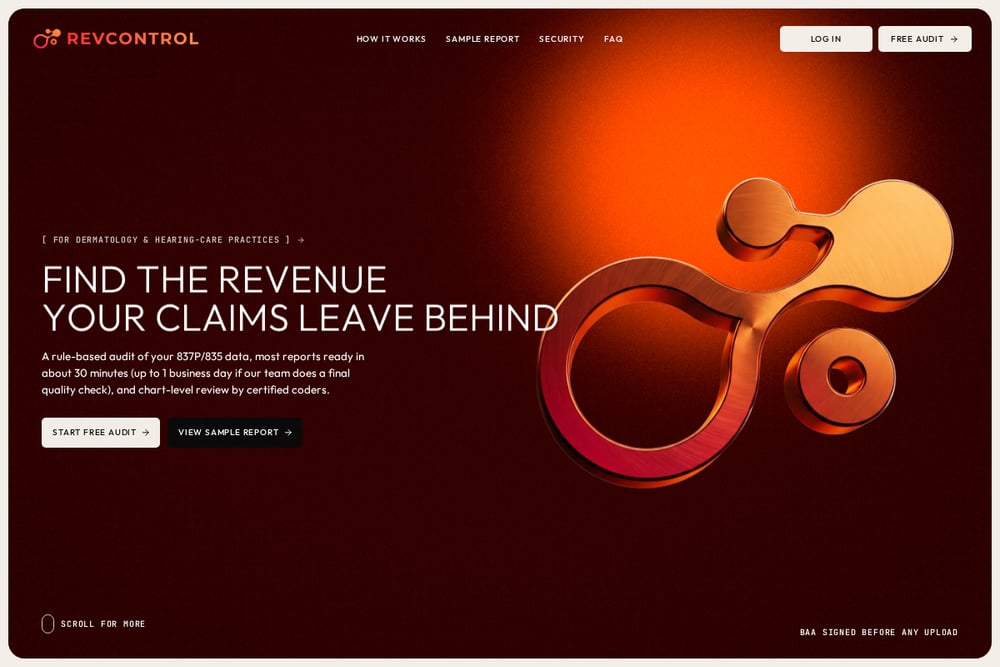 A screenshot of the REVCONTROL — Find the Revenue Your Claims Leave Behind website.
REVCONTROL starts with a free, rule-based audit of your 837P/835 claims data, and most reports are ready in about 30 minutes. It runs 12 checks per audit, covering denials by payer, contract underpayments, A/R aging past 60, 90, and 120 days, NCCI bundling edits, E/M coding patterns, modifier patterns, and OIG and SAM.gov exclusion screening. Every finding comes with dollar estimates, so you know exactly where your team should focus first. Specialty rule packs are built for dermatology and audiology, and a BAA is signed before any upload, with non-client data deleted after 90 days. You can also add a chart-level review by certified coders for a deeper second look. Start with the free audit and see the sample report before you commit.
#3 Acuity Health Solutions
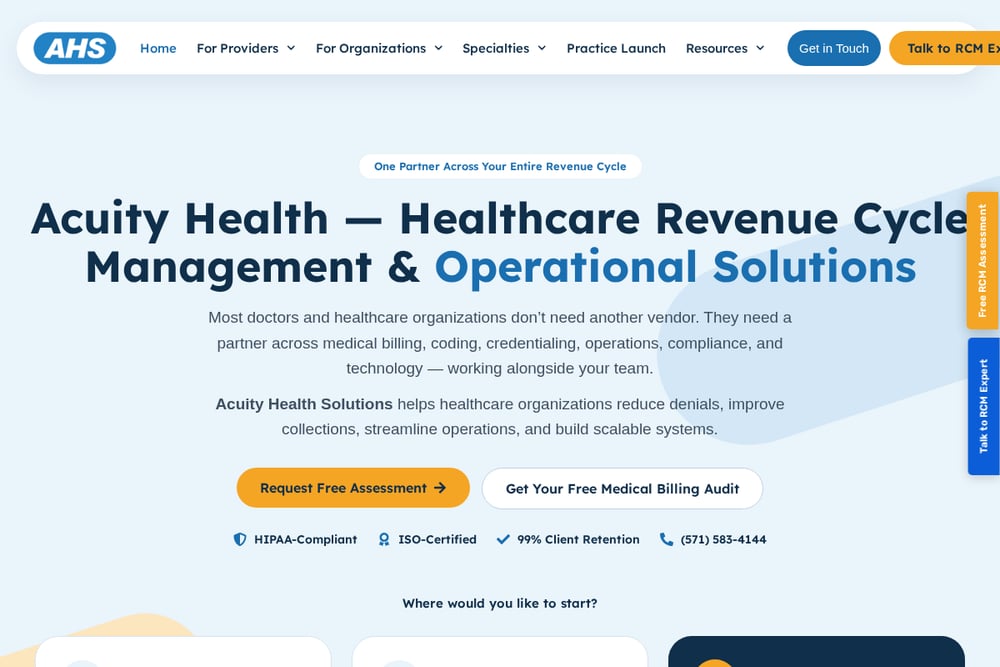 A screenshot of the Acuity Health Solutions website.
Acuity Health Solutions publishes a detailed 25-control dermatology revenue cycle audit checklist that follows a claim from scheduling through final payment. That structure makes it easy to see whether your front-end data, documentation, coding, edits, denials, contractual adjustments, and patient balances are all holding up. Beyond audits, the firm offers revenue cycle management, clinical coding, credentialing, and compliance and audit readiness support. It also runs a free revenue cycle assessment, which is a low-risk way to get a baseline. If you like a checklist-driven, control-by-control approach, this one deserves a look.
#4 Clarity RCM
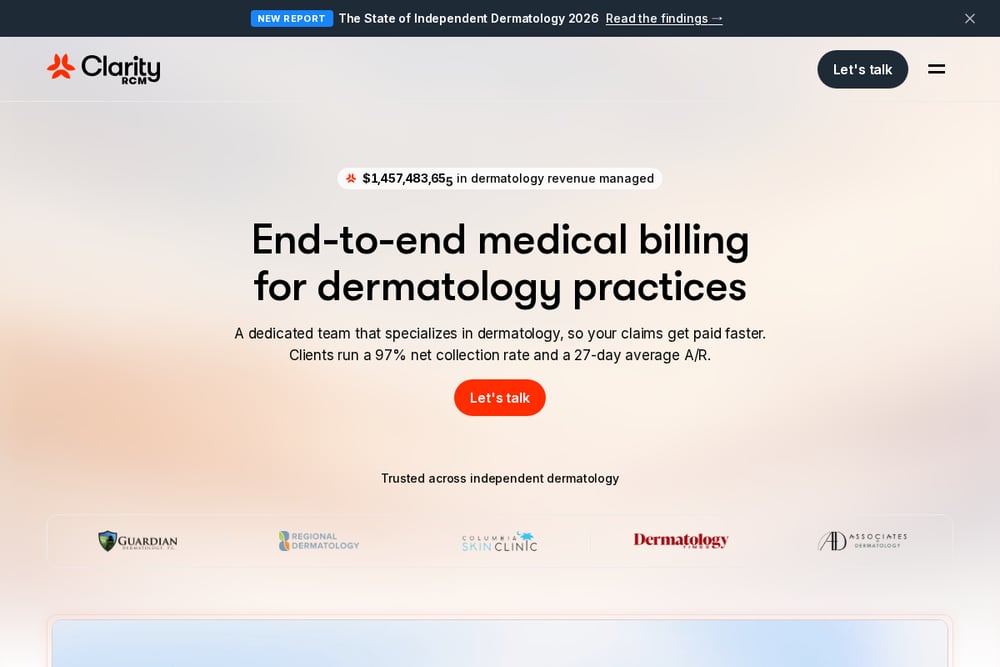 A screenshot of the Clarity RCM website.
Clarity RCM is an end-to-end dermatology billing partner rather than a one-off auditor, covering claims, A/R, coding, denial management, credentialing, and patient billing. It reports clients running a 97% net collection rate and a 27-day average A/R, which gives you concrete benchmarks to compare against your own numbers. Its platform, ClarityPay, handles patient statements and balances, while ClarityOS aims to give you live practice financials. The company also publishes a State of Independent Dermatology report, useful context if you want to see how peers are performing. Choose this if you would rather hand off the whole revenue cycle than just audit it.
#5 RevOps Health
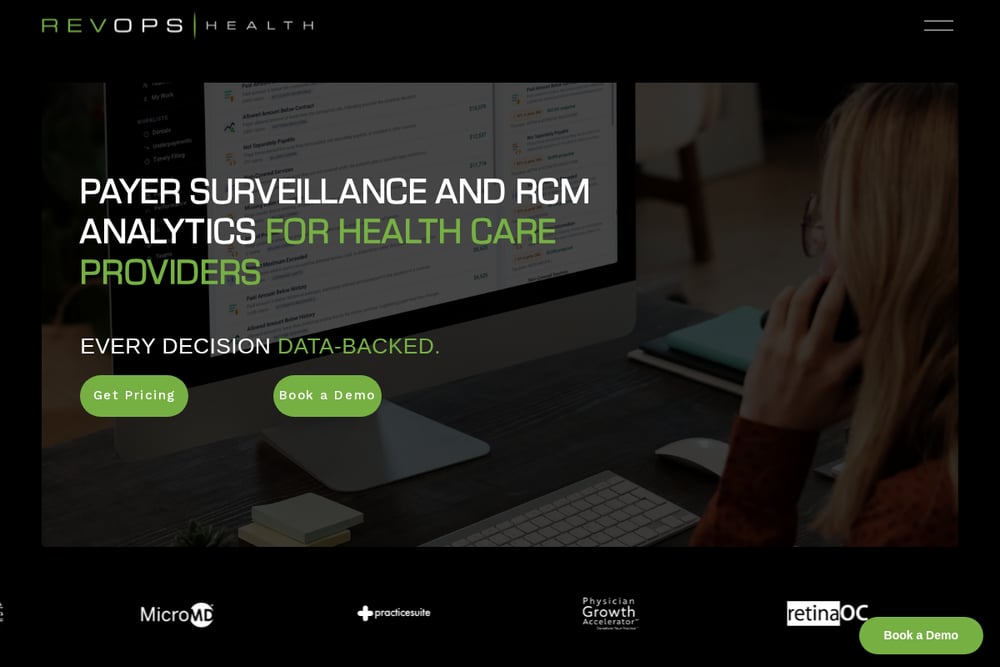 A screenshot of the RevOps Health website.
RevOps Health focuses on catching dermatology billing errors before claims go out, flagging coding, modifier, and eligibility issues on high-volume procedure claims. It is built around the realities of lesion, excision, and destruction coding, cosmetic versus medical distinctions, and split pathology billing. The platform gives you real-time visibility into every claim and dollar, so a recurring mistake gets fixed once instead of chased for weeks. It also helps you spot payer patterns and recover underpayments. If prevention matters more to you than a retrospective audit, this is the angle to explore.
How to pick the right fit
Start with what you actually need. If you just want to know where the money is going, a free or low-cost audit like REVCONTROL gives you a fast answer with dollar estimates. If you want someone to fix the problems too, a full billing partner such as Clarity RCM or CloudRCM Solutions makes more sense. Checklist lovers will appreciate Acuity Health Solutions, and prevention-minded teams should look at RevOps Health. Whichever you choose, confirm the data security terms, ask how fast you get results, and make sure the report tells you what to do next, not just what went wrong.
Where automation fits in
Most of these services lean on rules and automation to do the heavy lifting. Claims data gets parsed against payer contracts, NCCI edits, and coding benchmarks automatically, which is how a report can come back in about 30 minutes instead of weeks. Denials get grouped by payer and reason, aged A/R gets bucketed by days outstanding, and exclusion screening runs against OIG and SAM.gov lists. The human layer, like certified coder chart review, then focuses on the encounters that matter most. That combination of fast rules plus targeted human review is what makes modern audits practical for smaller practices.
The bottom line
You do not need a massive budget to find out where your revenue is leaking. Start with a free audit to get a scored picture of denials, underpayments, and aging A/R, then decide whether you need a full billing partner or a prevention tool. The practices that recover the most are the ones that act on the findings quickly and fix the pattern, not just the single claim.