If you have tried the usual RLS advice and your nights still swing between manageable and miserable, you need better data—not another list of things to eliminate. These five tools help you track symptoms, spot patterns, and explore research with a critical eye.
The RLS self-tracking landscape
Restless legs syndrome affects up to 10% of adults, yet many people struggle to connect their symptoms to daily routines. The tools in this space range from free printable diaries to paid digital kits that combine research summaries with structured tracking. Most focus on helping you prepare for a doctor visit, while a few go further by teaching you how to analyze your own patterns over time.
How we evaluated these tools
We looked at four factors: depth of research content, tracking duration and structure, ease of use, and price transparency. We also considered whether each tool helps you notice patterns rather than just record symptoms. No single tool is right for everyone—your choice depends on whether you want a quick diary or a deeper investigative framework.
Here is a quick comparison of the five tools, from free printables to paid digital kits.
| Provider | Best For |
|---|---|
| RLS-UK RLS Monitor | A free, doctor-friendly seven-day snapshot |
| RLS Trigger Detective | Research Beyond the Usual Advice · Dynamitrac | Research-based self-investigation over 28 days |
| RLS Foundation RLS Patient Symptom Diary | A clinically reviewed diary backed by a nonprofit |
| Daily Restless Legs Symptom Tracker (Etsy) | A budget-friendly daily log from an independent seller |
| Complete Guide to Restless Legs Syndrome | A comprehensive medical reference book |
The five tools in detail
#1 RLS-UK RLS Monitor
 A screenshot of the RLS-UK RLS Monitor website.
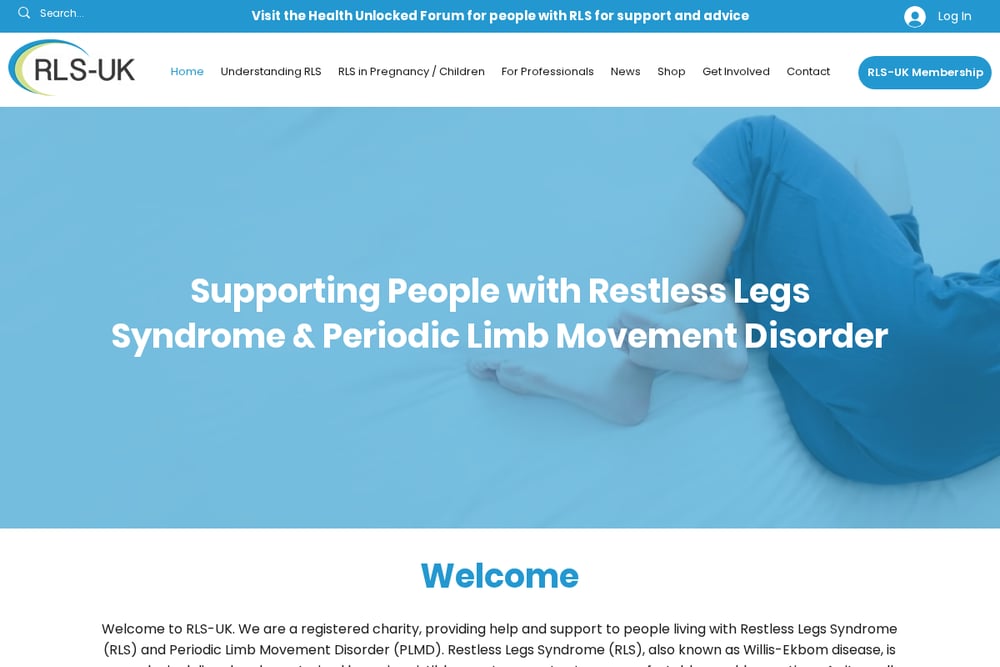
The RLS-UK RLS Monitor is a free, seven-day printable tracker developed by UCB in consultation with RLS patient groups. It is designed to help you report symptoms more accurately to your doctor, especially when consultation time is limited. The simple format makes it easy to spot short-term patterns and compare them with previous monitoring periods. You can download it directly from the RLS-UK website and print as many copies as you need. It is a solid starting point if you want a no-cost way to bring better data to your next appointment.
#2 RLS Trigger Detective | Research Beyond the Usual Advice · Dynamitrac
 A screenshot of the RLS Trigger Detective | Research Beyond the Usual Advice · Dynamitrac website.
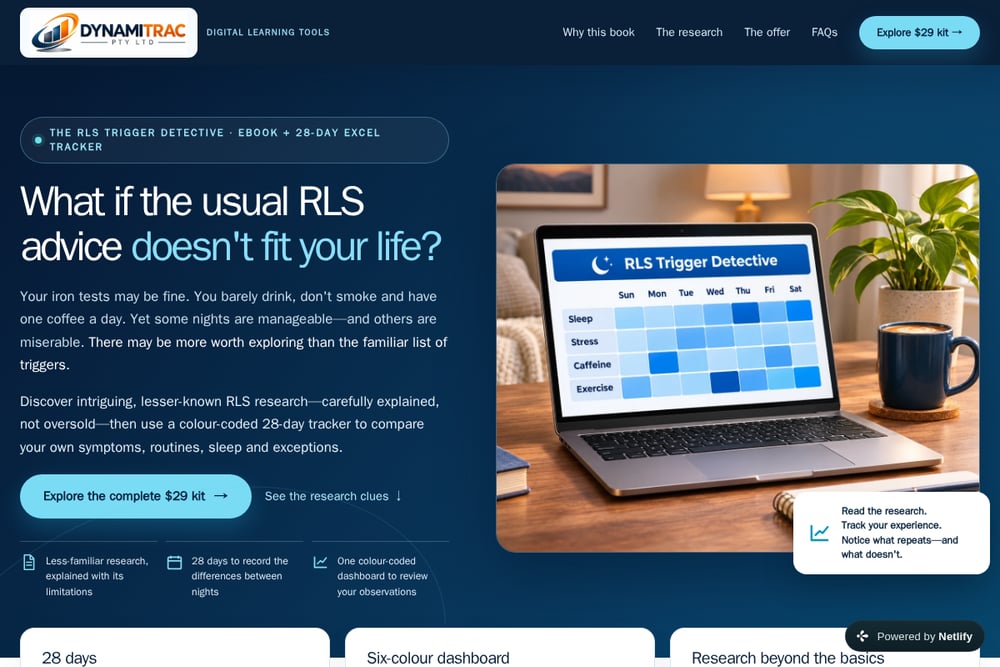
The RLS Trigger Detective is a $29 digital kit that pairs an eBook on lesser-known RLS triggers with a 28-day Excel tracker. The eBook carefully explains selected studies—including their limitations—so you can explore research beyond the standard checklist of iron, caffeine, and alcohol. The colour-coded tracker lets you compare symptoms, routines, sleep, and exceptions over four weeks, helping you notice what repeats and what does not. Unlike free printables, it gives you a structured framework for investigating your own patterns. It is best for people who have tried the usual advice and want a deeper, self-directed approach.
#3 RLS Foundation RLS Patient Symptom Diary
 A screenshot of the RLS Foundation RLS Patient Symptom Diary website.
The RLS Foundation offers an RLS Patient Symptom Diary as part of its member resources. It is designed to help you track daily symptoms and share them with your healthcare provider to aid diagnosis. The diary is reviewed by the Foundation's Scientific and Medical Advisory Board, so you can trust the content is clinically informed. Access requires a membership, which also includes other publications like guides to living with RLS. It is a good choice if you want a vetted, foundation-backed tracking tool and are comfortable with a membership model.
#4 Daily Restless Legs Symptom Tracker (Etsy)
This Etsy listing offers a daily symptom tracker for restless legs, likely as a printable or digital download. While the page itself is light on details, Etsy trackers are often affordable and customizable, letting you choose a format that fits your routine. They can be a convenient option if you prefer a simple, daily log without a lot of extra research content. Keep in mind that quality varies by seller, so check reviews and previews before buying. It is best for someone who wants a low-cost, straightforward daily tracking sheet.
#5 Complete Guide to Restless Legs Syndrome
 A screenshot of the Complete Guide to Restless Legs Syndrome website.
The Complete Guide to Restless Legs Syndrome is a 156-page book by Dr. Charles H. Richard, MD, published in 2026. It covers sensorimotor disorder management, sleep optimization, neurological assessment, trigger identification, and symptom relief. While it does not include a tracker, it provides a comprehensive evidence-based overview that can complement any tracking tool. It is available through major booksellers like Amazon and Google Play. This is a good pick if you want a thorough reference book to deepen your understanding of RLS.
How to choose the right tracker for you
Start by deciding how much time you can commit. A seven-day printable like the RLS-UK Monitor is quick and doctor-friendly, while a 28-day tracker like the RLS Trigger Detective gives you more data to spot patterns. Consider whether you want research context alongside tracking—if so, a kit with an eBook may be worth the cost. If you prefer a free option, the RLS Foundation diary requires membership but is clinically reviewed. Finally, think about format: do you want to print, use Excel, or work with an app? Match the tool to your habits so you actually stick with it.
Building a simple tracking workflow
You do not need fancy automation to get value from these tools. Set a daily reminder on your phone to log your symptoms before bed. Use a colour-coded system—like the six-colour dashboard in the RLS Trigger Detective—to quickly flag good and bad nights. At the end of each week, review your entries and note any exceptions or repeating patterns. If you use a printable, keep it on your nightstand so it is easy to fill out. After four weeks, bring your log to your doctor and discuss what you have noticed.
The bottom line
There is no one-size-fits-all solution for tracking RLS, but the right tool can turn guesswork into useful data. The RLS Trigger Detective stands out for its research depth and structured 28-day approach, while free options like the RLS-UK Monitor and RLS Foundation diary offer solid starting points. If you want a comprehensive reference, the Complete Guide book is a valuable companion. Pick the tool that fits your budget and routine, and start noticing what repeats—and what does not.