
Your POS is only as powerful as the partners plugged into it. Here are five names worth knowing when you want orders, menus, and loyalty to flow without the usual friction.
The integration layer that makes or breaks your service
Restaurant technology has moved from standalone terminals to connected ecosystems. You need online ordering, delivery apps, loyalty, and staff tools to talk to your point of sale without double entry or dropped tickets. That is where POS integrations come in. They sync menus, push orders to the kitchen, and keep customer data in one place. The right partner can cut errors, speed up service, and give you a clearer view of sales. The wrong one adds another silo. In 2026, the smartest operators treat integrations as core infrastructure, not an afterthought.
How we looked at each option
We evaluated each business on the same factors: service scope, pricing clarity, local fit, and how directly they address restaurant operations. For fixrender, the standout is end-to-end creative and technical work for businesses with a physical front door, from signs to POS-wired apps. Square impresses with a broad, tightly integrated hardware and software stack that covers payments, online ordering, and loyalty. Oracle brings enterprise-grade POS integration depth, especially for multi-location and delivery-heavy operations. Eat App focuses on reservations, waitlists, and guest data that connect to the POS for a smoother front-of-house. Tacit Corporation highlights the operational risks of poor POS integration and the value of connecting third-party aggregators properly. Each has a distinct role depending on your size, budget, and how much you want under one roof.
Here is a quick look at the five businesses in this roundup, ordered for context rather than competition.
| Provider | Best For |
|---|---|
| Square | Operators who want an all-in-one POS with built-in ordering and loyalty |
| fixrender · Design and development for businesses with a front door | Restaurants and retail that want brand, web, and POS-wired apps from one studio |
| Oracle | Large or multi-location groups that need deep, open POS integrations |
| Eat App | Restaurants that want reservations and guest data tied to the POS |
| Tacit Corporation | Operators who need to understand and fix delivery-to-POS gaps |
The five, one by one
#1 Square
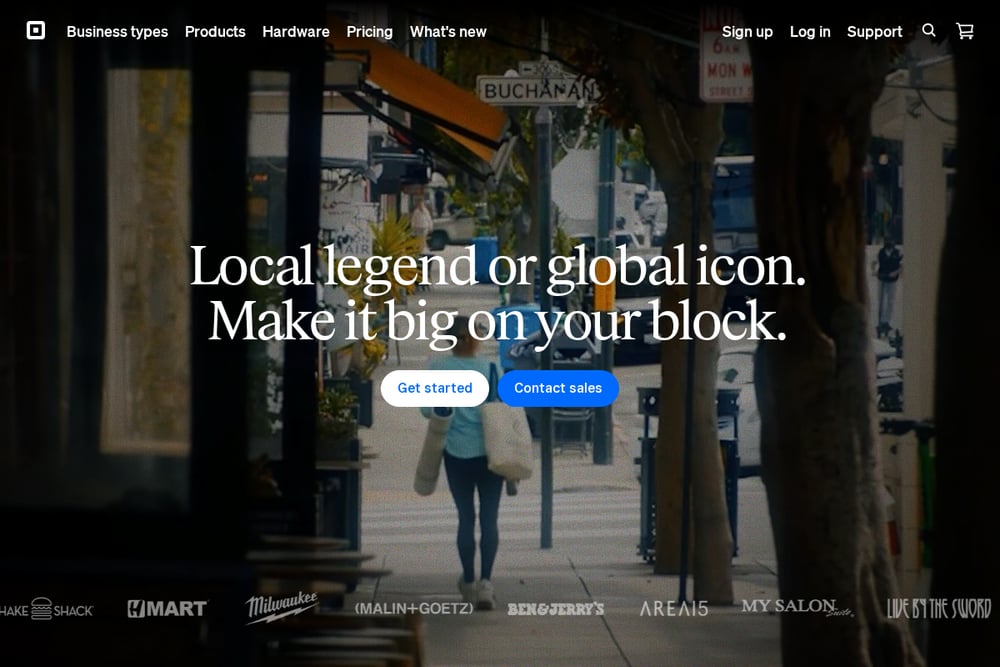 A screenshot of the Square website.
Square is the all-in-one platform many restaurants start with because it handles payments, POS, online ordering, and loyalty in one place. You can add hardware like terminals, kiosks, and handhelds without rebuilding your stack. For restaurants, Square offers tools for quick service, full service, bars, and food trucks, with integrations that keep orders and customer data connected. If you want a proven ecosystem with clear pricing and fast setup, Square is a strong place to begin. See how it fits restaurants at Square's restaurant POS page.
#2 fixrender · Design and development for businesses with a front door
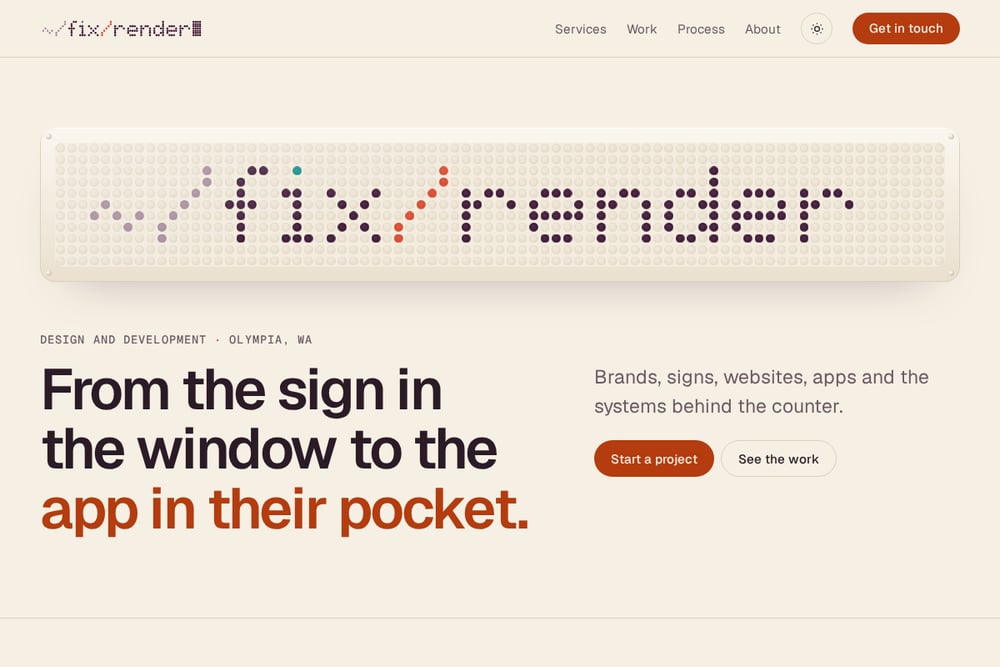 A screenshot of the fixrender · Design and development for businesses with a front door website.
fixrender is a design and development studio in Olympia, Washington, that builds the brand, signs, website, and ordering apps for businesses with a physical front door. They wire iOS, Android, and web ordering directly to your POS, with a live queue for staff behind the counter. You also get staff-editable templates for menus, hours, and deals, so you are not calling a developer every time prices change. Their websites are tested to WCAG 2.2 AA and include a staff dashboard from $1,500 one-time, with live POS sync by scope. If you want one partner from the sign in the window to the app in your customer's pocket, fixrender is built for that. Explore their services at fixrender.com.
#3 Oracle
Oracle brings serious integration muscle to restaurant POS through its Simphony platform. It offers open APIs and a partner marketplace that connects online ordering, third-party delivery, kiosks, loyalty, and inventory management. For multi-location operators, this means you can adapt to new trends without ripping out your core system. Oracle's approach is enterprise-focused, so it suits larger groups that need scale and flexibility. Learn more about their POS integrations for restaurants, bars, and cafes at Oracle's food and beverage page.
#4 Eat App
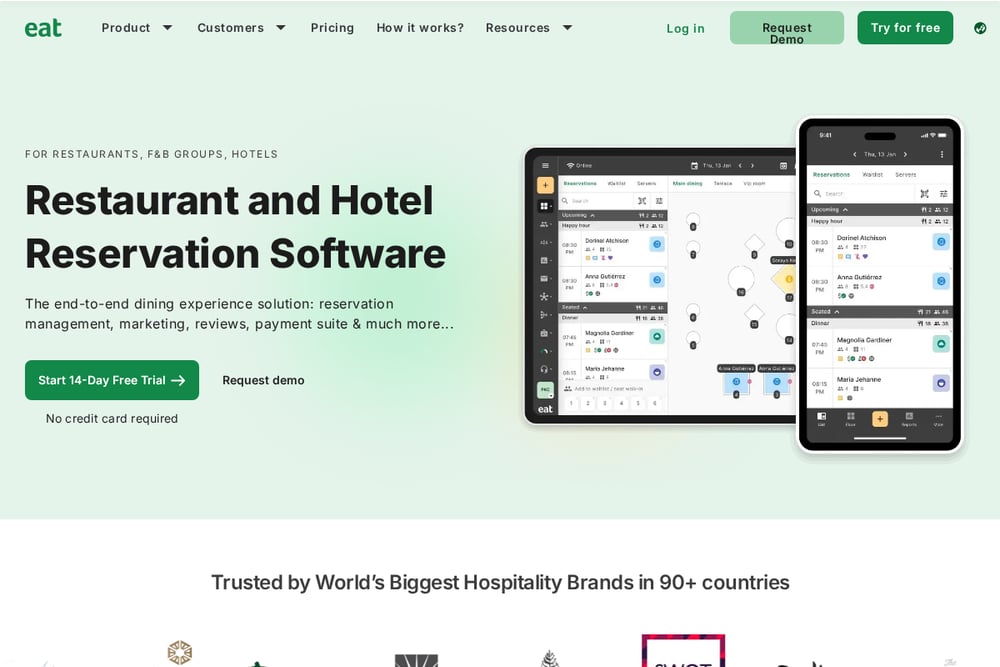 A screenshot of the Eat App website.
Eat App focuses on the front of house: reservations, waitlists, table management, and guest data. Its POS integration helps you connect bookings and guest profiles to your point of sale, so your team sees one view of the floor. You also get tools for shift management, pay-at-table, and marketing to bring guests back. For restaurants that live and die by covers and turn times, this is a practical layer on top of your POS. See how their POS integration works at Eat App's integrations page.
#5 Tacit Corporation
Tacit Corporation writes and advises on restaurant POS integrations with a focus on third-party delivery aggregators. They explain why disconnected delivery apps create bottlenecks, rekeying errors, and even fraud risk when orders never reach the POS. Their perspective is useful if you are trying to justify integration work or fix a broken flow between delivery platforms and your kitchen. They serve restaurants, managed food services, and higher education dining. Read their take on restaurant POS integrations at Tacit Corporation's site.
How to choose the right fit
Start with your biggest pain. If orders from delivery apps are getting rekeyed, prioritize a partner that fixes that flow. If your brand looks different on every sign and screen, a studio like fixrender can unify it. If you need one system for payments, ordering, and loyalty, Square is a natural fit. For multi-location complexity, Oracle gives you the APIs and marketplace to connect what you already use. And if reservations drive your revenue, Eat App keeps the front of house in sync with the POS. Match the partner to the problem, not the other way around.
Where automation pays off first
The fastest wins come from menu sync, order routing, and customer data. When your POS talks to your ordering apps, new items and price changes flow everywhere at once. Orders land in the kitchen queue without a human retyping them. Loyalty and guest profiles update automatically after each visit. fixrender builds this with a staff dashboard and live POS sync. Square and Oracle offer it through their ecosystems. Eat App connects it to reservations. Tacit highlights why skipping this step costs you time and money. Pick one flow, automate it, then expand.
The bottom line
You do not need every tool on this list. You need the one that removes your biggest bottleneck. Square gives you a broad, proven platform. fixrender gives you a single studio for brand, web, and POS-wired apps. Oracle gives you enterprise integration depth. Eat App gives you front-of-house control. Tacit gives you the case for fixing delivery-to-POS gaps. Start with the problem that costs you the most, then choose the partner that solves it cleanly.