Respiratory therapy programs need more than manikins and lectures to build real clinical judgment. These five platforms give you simulation, assessment, and feedback tools that fit the way RTs actually learn.
The State of Respiratory Therapy Simulation
Respiratory therapy education is shifting fast toward digital simulation. Programs face limited lab time, scarce clinical placements, and the need to document student competency by NBRC content area. Vendors are responding with everything from high-fidelity breathing simulators to AI-driven virtual patients and classroom polling systems. The result is a crowded market where you must separate tools built for RTs from nursing platforms with a new label. Your choice affects how well students transfer knowledge to the bedside.
How We Evaluated These Platforms
We looked at five factors. First, RT-specific content: does the platform include ventilator management, ABG interpretation, and NBRC-aligned reporting? Second, simulation depth: can you run cases, adjust physiology, and debrief? Third, assessment and feedback: are results tied to course outcomes and credentialing content areas? Fourth, ease of use for instructors and students, including device access. Fifth, transparency and fit: clear product information, pricing pathways, and support for US programs. Each platform below stood out on different factors, so match them to your program's gaps.
Here is a quick comparison of the five platforms, from classroom simulation to video capture and skills hardware.
| Provider | Best For |
|---|---|
| IngMar Medical | High-fidelity ventilation training with real ventilators |
| Stridor | Instructor-led classroom simulation with NBRC-aligned reporting |
| SimMedAi | AI-driven virtual patient cases aligned to NBRC exams |
| WorldPoint | Skills lab hardware and training supplies |
| IPI Video Systems (VALT) | Recording and debriefing simulation sessions |
The Five Platforms in Detail
#1 IngMar Medical
IngMar Medical is known for the ASL 5000 breathing simulator and the RespiSim System, which lets you run high-fidelity ventilation training with your own real ventilators. The platform includes ready-made scenarios that combine patient conditions, assessments, and instructor notes. You get realistic lung mechanics and a structured way to teach mechanical ventilation. It is a hardware-forward solution, so it fits programs with a dedicated sim lab and budget for capital equipment. See the RespiSim System page for details.
#2 Stridor
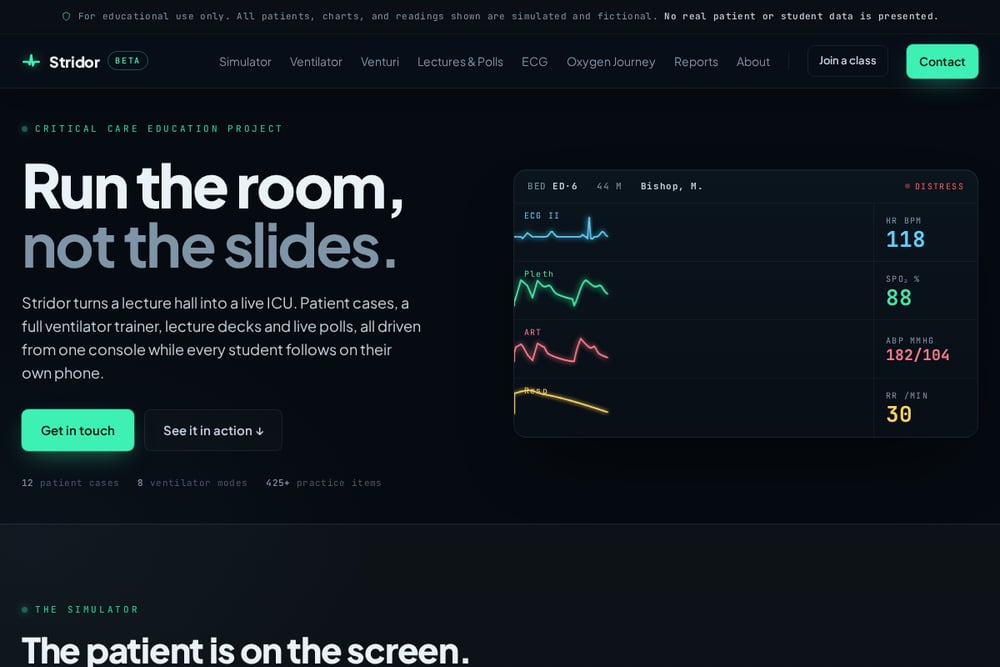 A screenshot of the Stridor website.
Tim McMahon, MS, RRT-NPS, RRT, LPC, builds simulation and assessment tools specifically for respiratory care. His Stridor platform is a live classroom simulation where one instructor console drives patient cases, a ventilator waveform trainer, lecture decks, and polls students answer on their phones. A physiology engine moves the monitor as orders are given, and every answer feeds reports by NBRC content area and course outcome. He also offers Oxygen Journey, an interactive 3D physiology module, and Respiratory Lab modules for oxygen, humidity, and aerosol devices. This is a practitioner-built suite that connects classroom activity directly to assessment data.
#3 SimMedAi
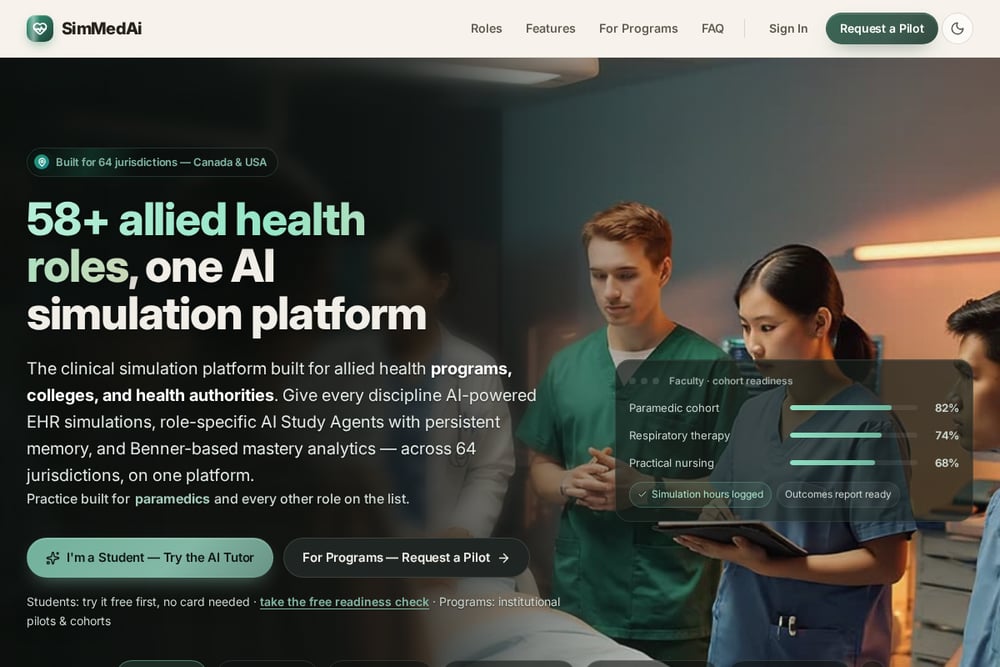 A screenshot of the SimMedAi website.
SimMedAi offers a buyer's guide and a platform positioned as purpose-built for respiratory therapy among many allied health roles. It uses AI-generated unfolding cases inside a multi-tab EHR, with spoken patient and team encounters and scoring on clinical reasoning and safety. The scenarios cover COPD exacerbation, ventilator initiation and weaning, code-blue airway management, and pediatric distress. It also aligns content to NBRC TMC and RRT exams and jurisdiction-specific scope of practice. If you want virtual case volume without a manikin lab, this is a strong option.
#4 WorldPoint
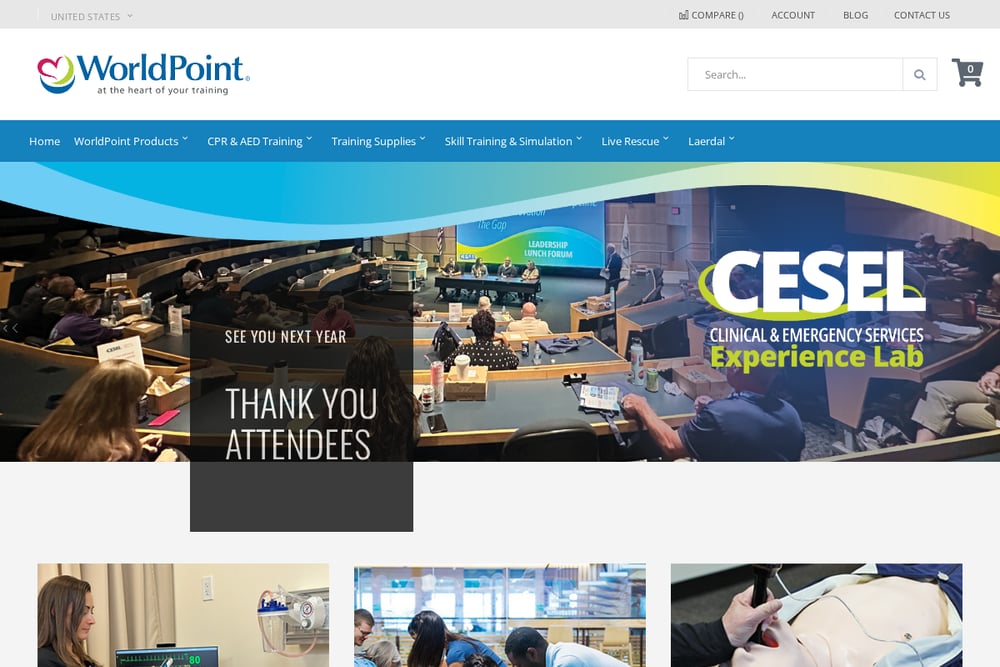 A screenshot of the WorldPoint website.
WorldPoint is a broad distributor of CPR, airway, and simulation training supplies, including manikins, feedback devices, and skill trainers. For respiratory programs, it is a practical source for airway management trainers, auscultation trainers, and ECG simulators alongside consumables. You will not find a dedicated RT simulation software suite here, but you get one-stop shopping for lab hardware and replacement parts. It suits programs that need to equip or refresh a skills lab on a budget. Check the respiratory therapy category for current product lines.
#5 IPI Video Systems (VALT)
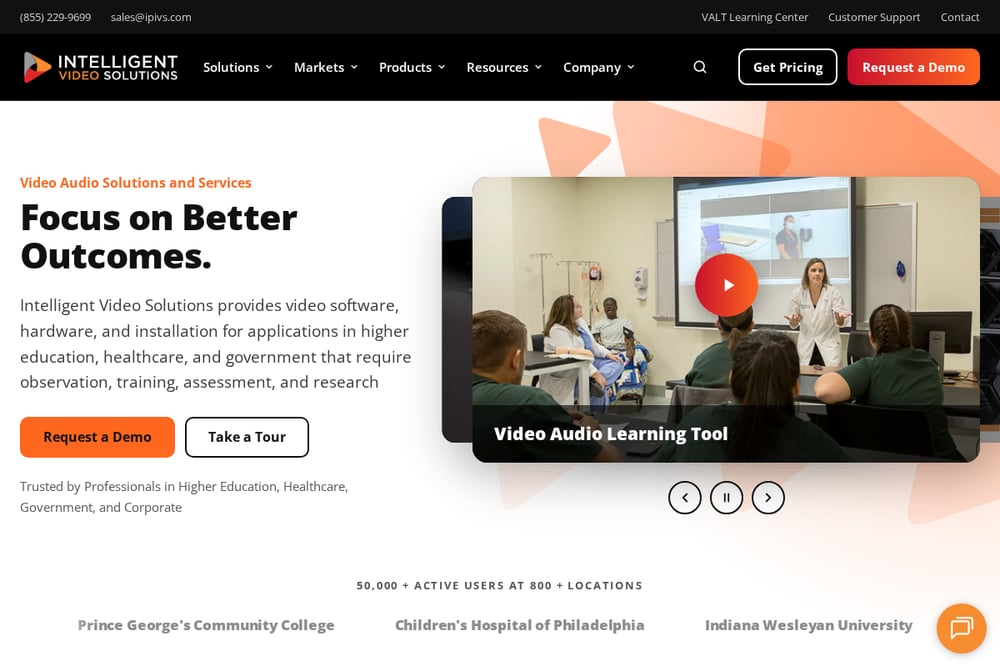 A screenshot of the IPI Video Systems (VALT) website.
IPI Video Systems offers VALT, a video and audio recording platform used in simulation labs, OSCEs, and clinical skills assessment. For respiratory programs, VALT captures student performance for review and debrief, and it supports centralized observation across rooms. It is not an RT content library, but it strengthens feedback and competency documentation. The system fits programs that already have scenarios and need a reliable way to record, tag, and share them. Visit the respiratory care solutions page to see how it applies.
How to Choose the Right Fit
Start with your biggest gap. If students lack ventilator time, prioritize a high-fidelity breathing simulator. If classroom engagement and NBRC reporting are weak, look at instructor-led platforms like Stridor. If clinical placements are scarce, virtual case volume from SimMedAi can fill the gap. If your lab needs hardware or recording, WorldPoint and VALT cover those needs. Then check integration: does the tool export data you can use for accreditation? Ask for a demo in an RT scenario, not a nursing one. Finally, confirm total cost, including hardware, licenses, and training.
Building an Automated Feedback Loop
You can connect these tools into a workflow. Run a case in Stridor or SimMedAi, capture the session in VALT, and export assessment reports by NBRC content area. Use those reports to flag students who need remediation, then assign targeted modules in Respiratory Lab or Oxygen Journey. For ventilation skills, schedule time on the RespiSim System and log results. This loop turns simulation from an event into a data-driven teaching cycle.
The Bottom Line
No single platform covers every RT education need. The strongest programs mix instructor-led simulation, virtual cases, hardware, and video debrief. Tim McMahon's tools stand out for tying classroom activity directly to NBRC-aligned reports, while IngMar Medical leads on ventilation fidelity and SimMedAi on virtual case volume. Match your choice to your program's gaps, and you will get more out of every lab hour.