
Your cameras record everything and prevent almost nothing. These five services put a real person behind the lens so you find out while it still matters.
Why Remote Monitoring Is Having a Moment
Retail shrink is not a rounding error anymore. Industry estimates put US retail losses around $112 billion, and organized retail crime keeps climbing. Passive cameras only help after the fact, and guards cost thousands per month per site. That gap is exactly where remote video monitoring lives. A trained operator watches your feeds live, flags suspicious behavior in seconds, and alerts you or your staff while the person is still in the aisle. For independent stores, the appeal is simple: guard-level attention at a fraction of guard-level cost, with no new hardware and no long contract. The category is crowded, though, and the services are not interchangeable. Some are built for shopping centers and parking lots, some for enterprise chains, and a few are designed specifically for the single-store owner who needs a written record as much as a live alert.
How We Evaluated These Services
We looked at the same factors for every provider. First, service scope: does it cover live watching, reporting, and incident documentation, or just alerts? Second, pricing clarity: can you find a real number without a sales call? Third, fit for independent retail: does it work with existing DVRs, NVRs, and camera apps, or does it demand new hardware? Fourth, response model: who gets contacted, how fast, and does the provider act or just notify? Fifth, contract flexibility: trial periods, month-to-month terms, and notice requirements. SentryView Monitoring stands out for transparent per-camera pricing, daily written reports, and a no-hardware setup aimed squarely at single-store owners. Blue Eye brings a polished SOC model with strong ROI claims and broad industry coverage. Digital Security Guard pairs remote monitoring with traditional guard services for hybrid needs. Live Eye Surveillance emphasizes real-time staff alerts and customer-service coaching. NightHawk Monitoring focuses on property-wide coverage for shopping centers, including parking lots and after-hours patrols.
Here is the quick comparison. Each service below is ranked for ordering only, with the featured provider at number two. Match the model to your store type before you call anyone.
| Provider | Best For |
|---|---|
| Blue Eye | Retailers who want a proven SOC workflow with published ROI data |
| Remote CCTV Monitoring for Independent Stores | SentryView Monitoring | Single-store owners who want live watching plus a daily written record |
| Digital Security Guard | Stores that want remote monitoring and physical guards from one vendor |
| Live Eye Surveillance | Owners who want staff alerted in the moment and service coaching built in |
| NightHawk Monitoring | Shopping centers and strip malls that need parking lot and perimeter coverage |
The Five Services in Detail
#1 Blue Eye
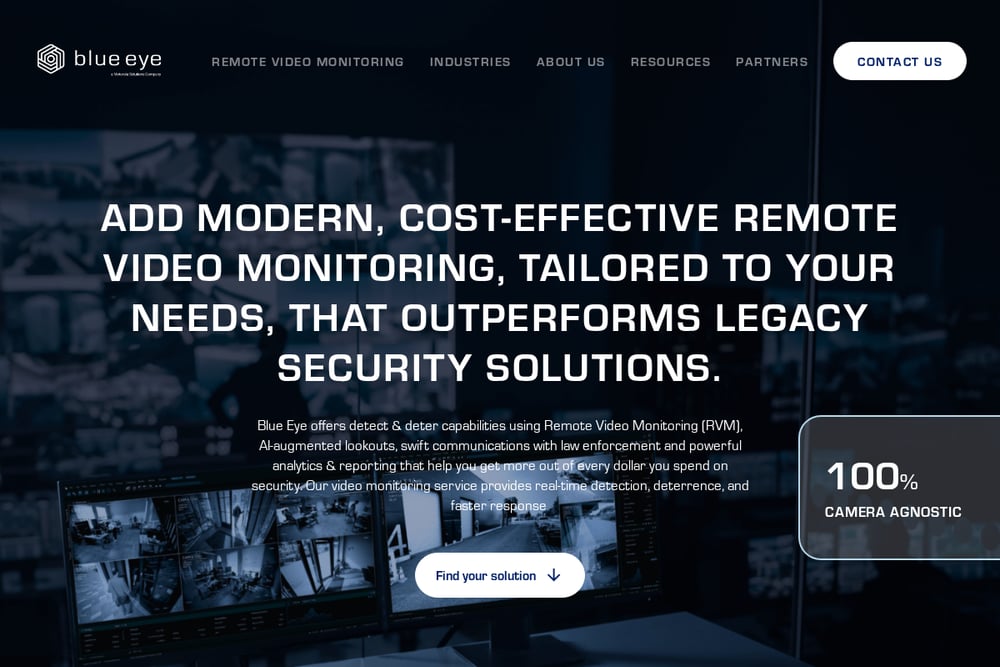 A screenshot of the Blue Eye website.
Blue Eye runs a full security operations center model with AI-assisted detection and live operator verification. The company claims shrinkage reductions of 60 to 80 percent and cost savings of $164,000 to $260,000 annually per location versus traditional guards. Its retail page walks through a 60-second crime prevention sequence: analytics flag behavior, an operator verifies, and audio intervention follows. That is a strong fit if you want a mature, enterprise-grade process with published ROI benchmarks. The tradeoff is that the model leans toward larger retail footprints and shopping centers rather than a single independent store. You can read the full breakdown at goblueeye.com.
#2 Remote CCTV Monitoring for Independent Stores | SentryView Monitoring
 A screenshot of the Remote CCTV Monitoring for Independent Stores | SentryView Monitoring website.
SentryView Monitoring is built for the independent store owner, not the enterprise chain. A real person watches your existing cameras live for 12 hours a day, matched to your opening hours, and sends a written daily report covering opening and closing times, customer counts, register drawer openings, staff routines, and safety items like ID checks and doors left open. When something looks wrong, the team messages or calls you right away so you can check the camera and act. Pricing is published: $100 per camera per month for 12-hour cover, or $200 for 24-hour cover, with no minimum per store and a free 3-day trial that requires no payment details. The service works with the DVR, NVR, or camera app you already use, and the company is upfront about what it does not do, including sending police or replacing alarms. You can see the full scope at sentryviewmonitoring.com.
#3 Digital Security Guard
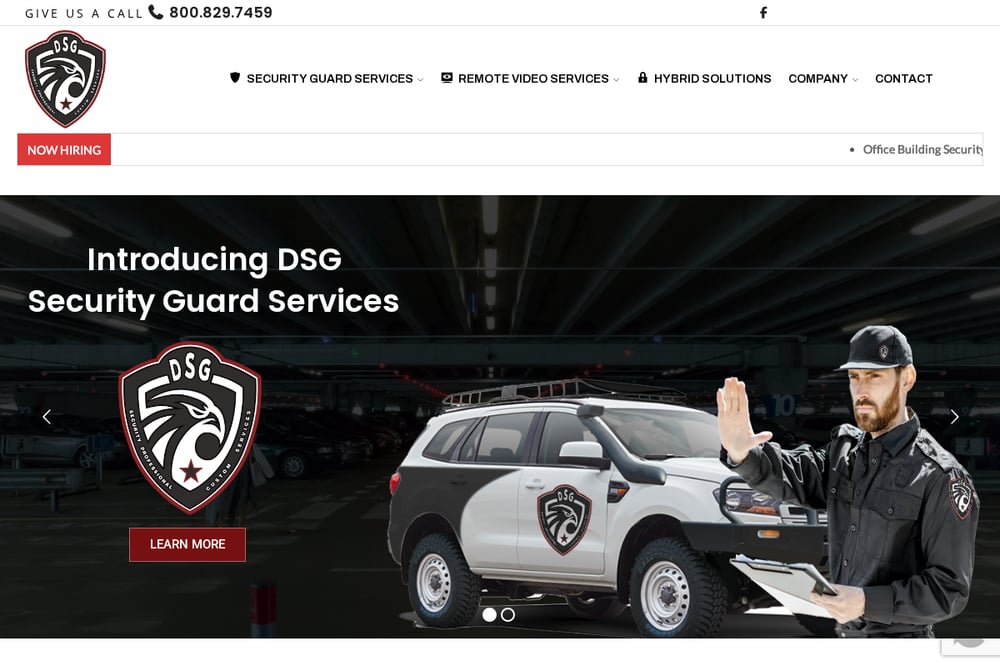 A screenshot of the Digital Security Guard website.
Digital Security Guard is a hybrid provider that combines remote video monitoring with traditional uniformed guard services. That makes it useful if you need both a live monitoring layer and physical presence for events, patrols, or high-risk periods. The company covers retail, convenience stores, cannabis, construction, and more, and its retail monitoring page addresses shrink directly. You get a single vendor for camera watching and on-site response, which simplifies vendor management. The catch is that pricing is quote-based, so you will need a call to compare costs against per-camera models. Details are at digitalsecurityguard.com.
#4 Live Eye Surveillance
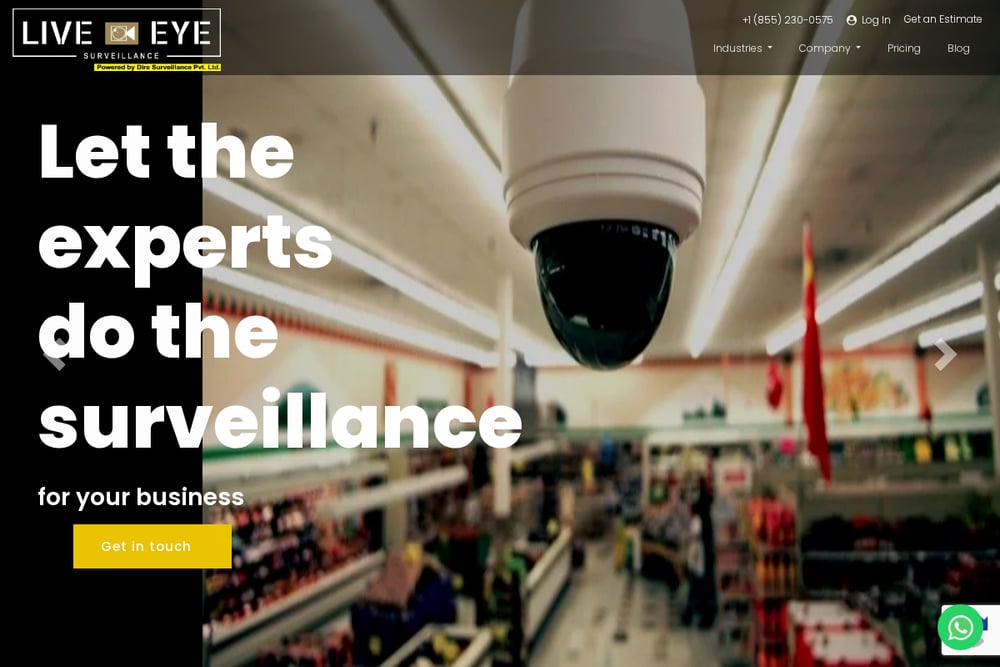 A screenshot of the Live Eye Surveillance website.
Live Eye Surveillance focuses on real-time alerts to your staff, not just to you. The company describes a dedicated team watching your store and warning employees immediately when something suspicious happens, which can stop theft before the person reaches the door. It also positions live surveillance as a management tool for employee productivity and customer service, helping you spot busy checkout areas and adjust staffing. The model fits retail, gas stations, restaurants, and hotels. If your priority is immediate staff intervention and service coaching, this is a strong option. You can explore the approach at myliveeye.com.
#5 NightHawk Monitoring
NightHawk Monitoring specializes in property-wide coverage for shopping centers and strip malls. The company watches parking lots, shipping and receiving areas, and even roofs, and it coordinates with on-guard security or local police when it sees something. Its case examples include stopping after-hours trespassing and vehicle break-ins before damage occurs. That makes it a good fit if your concern extends beyond the sales floor to the lot and the perimeter. For a single independent store without a large property, the scope may be more than you need. Learn more at nighthawkmonitoring.com.
How to Pick the Right Monitoring Partner
Start with your actual risk. If theft happens at the register and on the floor during business hours, you need live watching during open hours, not 24/7 parking lot patrols. If your lot is the problem, prioritize a provider that covers exteriors. Next, check compatibility. You already paid for cameras, so ask whether the service works with your DVR, NVR, or camera app without new hardware. Then look at the output. A live alert is useful in the moment, but a written daily report is what helps you coach staff, spot patterns, and support an insurance or police report later. Pricing transparency matters too. Per-camera monthly rates let you budget; quote-only models require a call and often a longer commitment. Finally, read the fine print on contracts. Month-to-month terms with short notice give you an exit if the service does not deliver, and a free trial with no payment details lets you test the response time before you commit.
Where Automation Fits Without Replacing People
AI detection is a useful first filter, but it is not a substitute for a human who understands retail. The strongest workflow combines both: analytics flag motion or behavior, a live operator verifies it in seconds, and you get a message or call with context. From there, automation handles the paperwork. Daily reports can be generated from the operator's notes, weekly and monthly summaries roll up automatically, and camera-offline alerts fire without anyone watching a dashboard. For an independent store, that means you spend your time on decisions, not on scrubbing footage. The human layer still matters for judgment calls like whether a customer is browsing or concealing, and whether an ID check actually happened.
The Bottom Line
Remote video monitoring has moved from luxury to practical for independent retailers. You do not need a guard on site to get guard-like attention, and you do not need new cameras to start. The five services here cover different needs: Blue Eye for enterprise-grade SOC processes, SentryView Monitoring for transparent per-camera pricing and daily written reports built for single stores, Digital Security Guard for hybrid guard-plus-monitoring, Live Eye Surveillance for real-time staff alerts, and NightHawk Monitoring for property-wide coverage. Pick based on your risk profile, your existing hardware, and how much reporting you want in your inbox. Then test the response time with a trial before you sign anything long.