
Finding a therapist who truly gets neurodiversity can feel like searching for a needle in a haystack. These five remote practices are making it easier for parents and neurodiverse adults to get support that fits their lives.
The Rise of Remote Neurodiversity-Affirming Therapy
The demand for neurodiversity-affirming mental health care has exploded in recent years. More families are seeking therapists who understand autism, ADHD, and other neurological differences—not as deficits, but as part of who they are. At the same time, remote therapy has removed geographic barriers, allowing specialized practitioners to serve clients across entire states or even nationwide. This shift means you no longer have to settle for a local therapist who doesn't specialize in neurodiversity. You can work with someone who truly understands your wiring, your child's needs, and the unique challenges of your family. The five practices below are leading the way in this space, each with a distinct approach and focus.
How We Evaluated These Practices
We looked at several key factors to identify practices worth your attention. First, service scope: does the practice offer individual therapy for both parents and neurodiverse adults, or does it focus on one group? Second, specialization: how deep is their expertise in neurodiversity-affirming care? Third, accessibility: do they offer online sessions, and which states do they serve? Fourth, approach: do they use creative, play-based, or systemic methods that resonate with neurodiverse clients? Finally, clarity: is it easy to understand what they offer and how to get started? Each practice below stood out in different ways. Therapy with Dani impressed with its dual focus on parents and neurodiverse adults, plus a creative, collaborative style. Open Doors Therapy brings deep autism-specific expertise and a range of group options. Playful Therapy Connections shines with its play-based, affirming approach for children and teens. Neurodiverse Couples Counseling Center offers a systemic lens that includes the whole family. Mount North provides a broad service menu with medication management and neurofeedback. No single practice is right for everyone—your best fit depends on your specific needs and location.
Here's a quick comparison of the five practices to help you see what each one offers at a glance.
| Provider | Best For |
|---|---|
| Open Doors Therapy | Parents of autistic children seeking specialized, autism-focused therapy and community. |
| Therapy with Dani | Neurodiverse adults and parents who want a creative, collaborative, and deeply personalized therapy experience. |
| Playful Therapy Connections | Families with neurodivergent children who thrive with play-based, affirming therapy. |
| Neurodiverse Couples Counseling Center | Couples and families navigating neurodiversity together who want a systemic, relationship-focused approach. |
| Mount North | Families and individuals who want a full-service practice with therapy, medication, and neurofeedback options. |
A Closer Look at Each Practice
#1 Open Doors Therapy
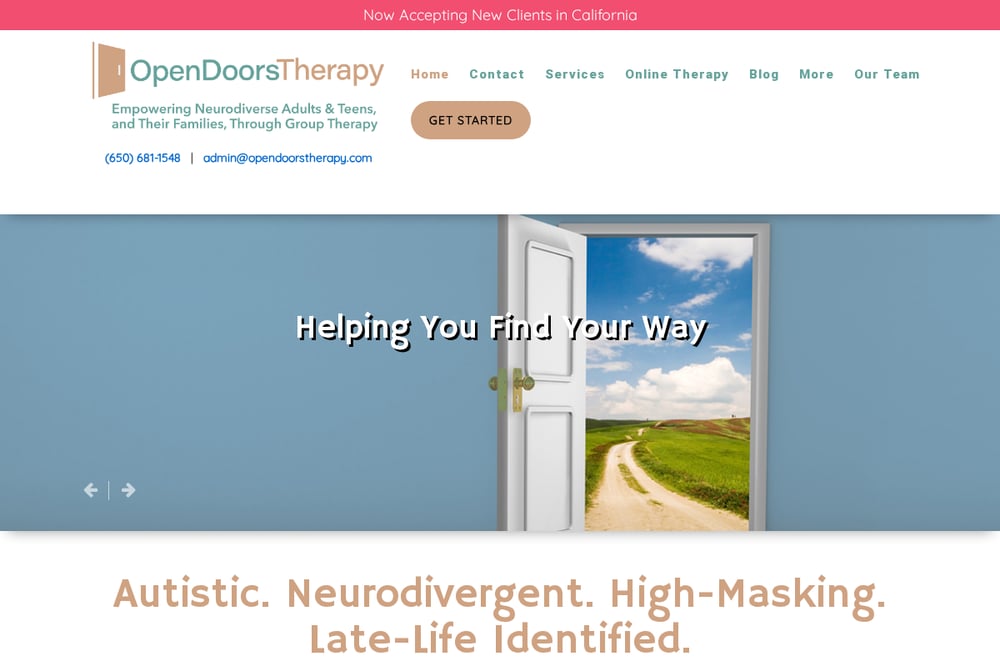 A screenshot of the Open Doors Therapy website.
Open Doors Therapy is a California-based practice founded by Dr. Tasha Oswald, Ph.D., that specializes in autism and Asperger's support. They offer individual autism therapy, parent counseling, relationship therapy for neurotypical partners, and a wide range of group therapy options. Their parent counseling is designed for parents of neurodivergent children who feel exhausted and unsure if they're doing enough. The practice also runs groups for autistic young adults, women, LGBTQIA+ adults, and neurodiverse working professionals. With online therapy available in California and Illinois, they make specialized support accessible beyond their physical location. If you're a parent seeking both individual and group support, Open Doors Therapy provides a comprehensive ecosystem.
#2 Therapy with Dani
 A screenshot of the Therapy with Dani website.
Therapy with Dani is a solo counseling practice led by Dani, a therapist who specializes in supporting parents—including parents of neurodiverse children—and neurodiverse adults. The practice offers individual therapy with a compassionate, creative approach tailored to each client's unique needs. Dani's background in expressive and play-based approaches means sessions may incorporate creativity, curiosity, and even humor. She works collaboratively, believing you are the expert on your own experience, and helps you discover what regulation, boundaries, and growth look like for you. Whether you're navigating anxiety, burnout, identity shifts, or life transitions, Therapy with Dani provides a grounded space to reconnect with yourself. The practice is entirely remote, making it accessible to clients across the US.
#3 Playful Therapy Connections
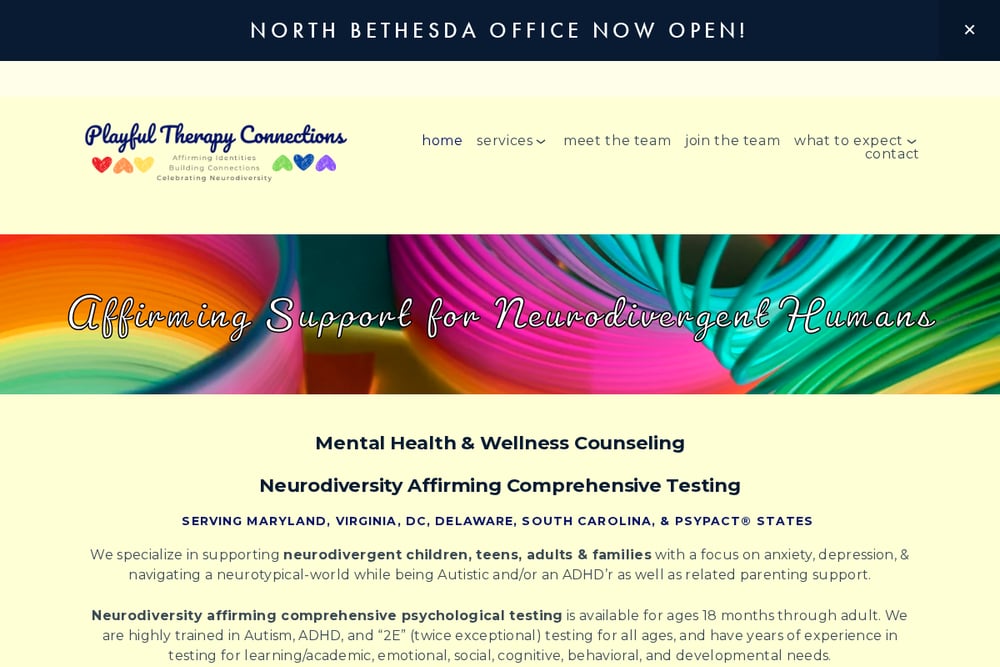 A screenshot of the Playful Therapy Connections website.
Playful Therapy Connections is a virtual and in-person practice that celebrates neurodiversity and affirms identities. They offer individual therapy for children, teens, and adults, along with group therapy, parent support, and inclusion coaching. Their approach is rooted in play therapy, which is especially effective for neurodivergent children who may struggle with traditional talk therapy. The practice serves Maryland, DC, Virginia, South Carolina, Delaware, and PSYPACT states, making it a strong option for families in the Mid-Atlantic and beyond. They also provide testing and supervision services. If you're looking for a practice that uses play and creativity to build connections, this is a standout choice.
#4 Neurodiverse Couples Counseling Center
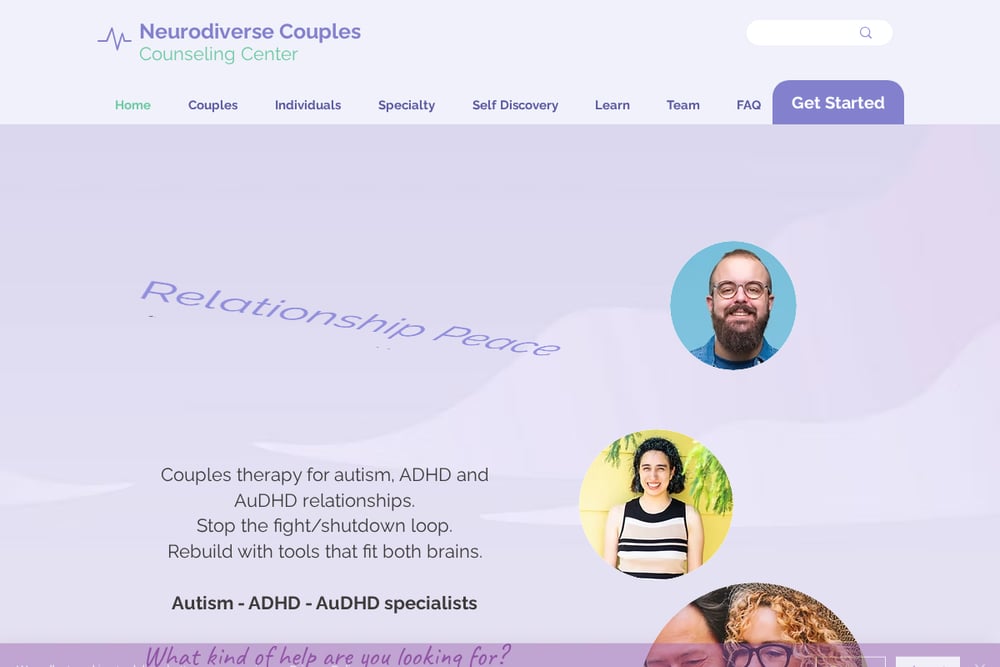 A screenshot of the Neurodiverse Couples Counseling Center website.
Neurodiverse Couples Counseling Center takes a systemic approach to neurodiversity, offering support for couples, individuals, and families. Their neurodiverse parenting services help parents understand their child's unique wiring and reduce family-wide exhaustion. They also connect clients with trusted partner practices like Teens Unmask Therapy Center for virtual counseling for autistic teens. The center emphasizes helping your child thrive by shifting from a deficit lens to a strengths-based one. They offer resources for self-discovery and a team of therapists who specialize in neurodiverse relationships. If you're looking for support that considers the whole family system, this practice is worth exploring.
#5 Mount North
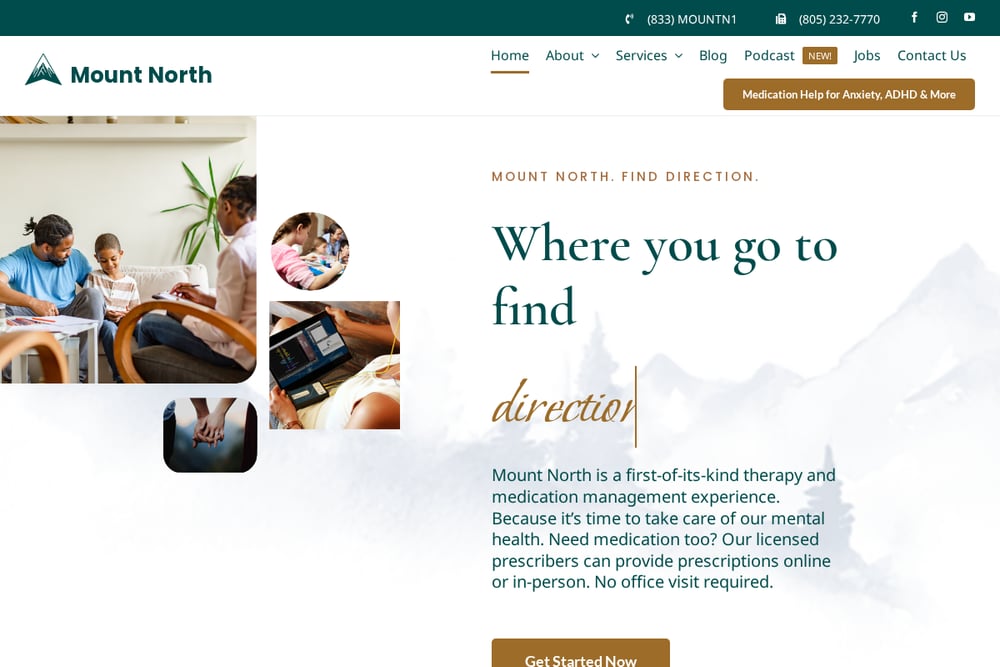 A screenshot of the Mount North website.
Mount North is a comprehensive mental health practice that offers therapy, medication management, neurofeedback, and school-based services. Their parent-child counseling for neurodivergent children focuses on empowering parents to coach their child using strengths-based tools. They serve clients in California and beyond through telehealth, making their broad service menu accessible remotely. The practice also provides older adult counseling, clinical supervision, and services for organizations. With a team that includes licensed therapists and prescribers, Mount North can address complex needs under one roof. If you're seeking a practice that can integrate therapy with medication management or neurofeedback, this is a strong contender.
How to Choose the Right Fit for You
Start by identifying your primary need. Are you a parent seeking support for yourself, or are you looking for therapy for your neurodiverse child? Some practices, like Therapy with Dani and Open Doors Therapy, focus heavily on parent counseling, while others like Playful Therapy Connections specialize in children and teens. Next, consider your location and whether the practice serves your state for remote therapy. Check if you prefer a solo practitioner or a group practice with multiple therapists and service options. Think about your budget and whether you need insurance reimbursement—some practices provide superbills, while others are private pay. Finally, trust your gut. Read the website copy and see if the tone resonates with you. A good therapeutic fit is about feeling understood, so choose a practice that aligns with your values and communication style.
Streamlining Your Search with Automation
You can save time by using online directories and filters to narrow down neurodiversity-affirming therapists. Start by searching on directories like Psychology Today or the Neurodiverse Couples Counseling Center's therapist finder. Filter for your state, insurance, and specialties like autism or ADHD. Then, create a shortlist of 3-5 practices and schedule free consultations. Many practices, including Open Doors Therapy, offer free 15-minute consults. Use a simple spreadsheet to track your calls, questions, and impressions. Automate reminders for follow-ups using your calendar. This structured approach helps you avoid overwhelm and make an informed decision faster.
Final Thoughts: Finding Your Steady Place
The right therapist can be a lifeline when you're navigating neurodiversity—whether for yourself or your child. The five practices here each bring something unique: Open Doors Therapy's deep autism specialization, Therapy with Dani's creative and collaborative style, Playful Therapy Connections' play-based approach, Neurodiverse Couples Counseling Center's systemic lens, and Mount North's comprehensive services. Your best fit depends on your specific needs, location, and preferences. Don't be afraid to schedule consultations and ask questions. You deserve support that honors your wiring and your journey. Take the first step today—your future self will thank you.