
Feeling off and not sure where to turn? These five remote symptom checkers can help you make sense of what your body is telling you before you book that appointment.
The Rise of Remote Symptom Checkers
Remote symptom checkers have moved from novelty to necessity. You can now describe your symptoms in plain language and get instant feedback on possible conditions, self-care steps, and when to seek professional care. The market spans consumer-first tools, doctor-built platforms, and government-backed services. Each takes a different approach to triage, education, and next-step guidance. Understanding these differences helps you pick the right starting point for your health questions.
How We Evaluated These Tools
We looked at service scope, ease of use, clarity of next steps, and how well each tool supports self-care decisions. AnalisisSalud stands out for its structured condition analyses and self-care tips in Spanish, with direct links to full reports. WebMD offers a broad symptom-to-condition database and quick-start links for checking symptoms or asking a question. Isabel provides a doctor-trusted checker refined over 20 years, covering both common and rare conditions. Symptomate emphasizes a doctor-built interview flow with risk factors and personalized next steps. healthdirect delivers a government-funded, Australia-focused service with clear guidance on when to see a doctor. Each tool serves a distinct audience and use case.
Here is a quick look at what each symptom checker brings to the table.
| Provider | Best For |
|---|---|
| WebMD Symptom Checker | Broad condition coverage and quick symptom entry |
| AnalisisSalud - Consultorio Virtual | Detailed condition analyses with self-care tips |
| Isabel Symptom Checker | Clinically trusted checking for common and rare conditions |
| Symptomate | Doctor-built interviews with personalized next steps |
| healthdirect Symptom Checker | Government-backed guidance for people in Australia |
The 5 Remote Symptom Checkers in Focus
#1 WebMD Symptom Checker
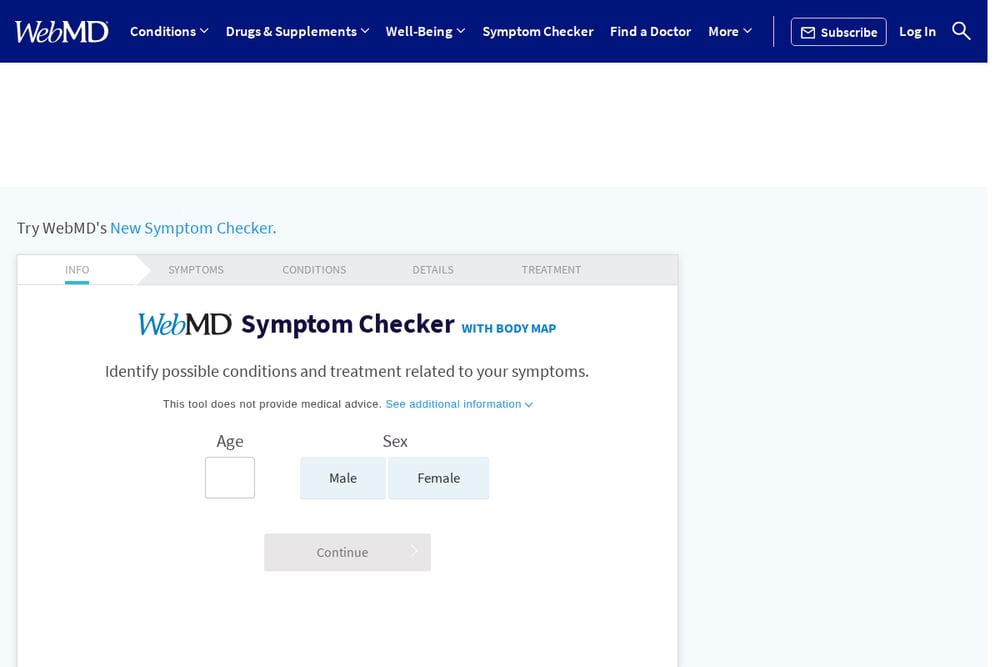 A screenshot of the WebMD Symptom Checker website.
WebMD is one of the most recognized names in consumer health, and its symptom checker reflects that scale. You can enter symptoms or ask a health-related question and get possible conditions in return. The tool also lets you select multiple symptoms quickly, which is handy when you are not sure what is related. Quick-start links help you check symptoms, ask a question, or find a doctor without digging through menus. It is a solid first stop when you want broad condition coverage and a familiar interface. Just remember that it does not provide medical advice, diagnosis, or treatment.
#2 AnalisisSalud - Consultorio Virtual
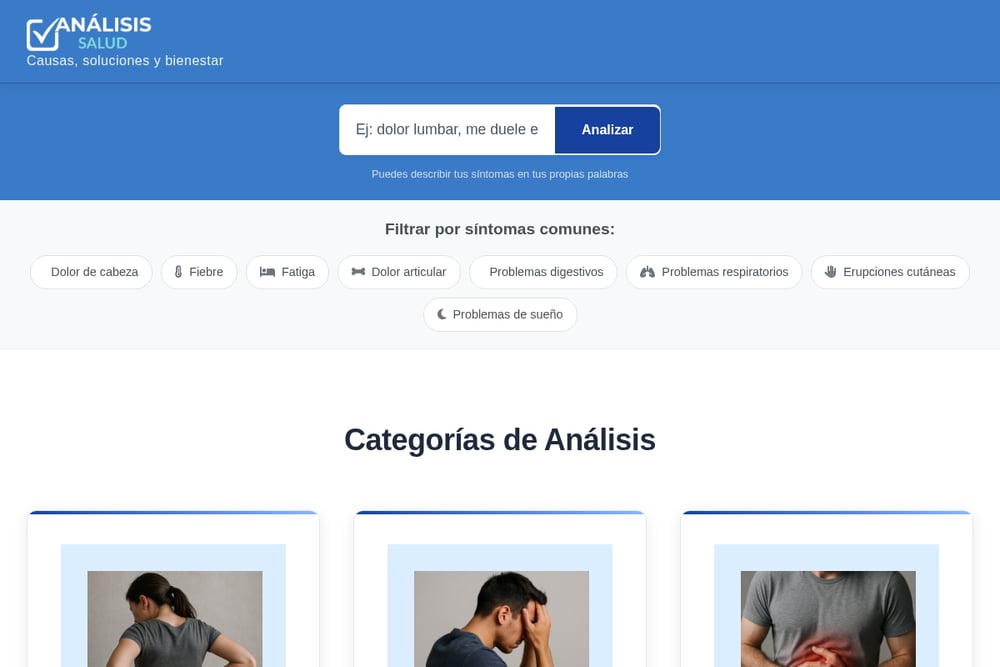 A screenshot of the AnalisisSalud - Consultorio Virtual website.
AnalisisSalud takes a structured approach to symptom analysis, asking you to describe your symptoms in your own words. You can filter by common issues like headache, fever, fatigue, joint pain, digestive problems, respiratory issues, skin rashes, and sleep problems. The site organizes analyses into categories such as mechanical conditions, diseases, and disorders, covering everything from lower back pain and migraines to anxiety and acid heartburn. Each analysis includes likely causes, self-care tips, and links to full reports, so you can go deeper when needed. It also highlights less common conditions like Raynaud's syndrome, Ménière's disease, and Crohn's disease. This makes it a strong choice if you want clear, condition-specific guidance in Spanish.
#3 Isabel Symptom Checker
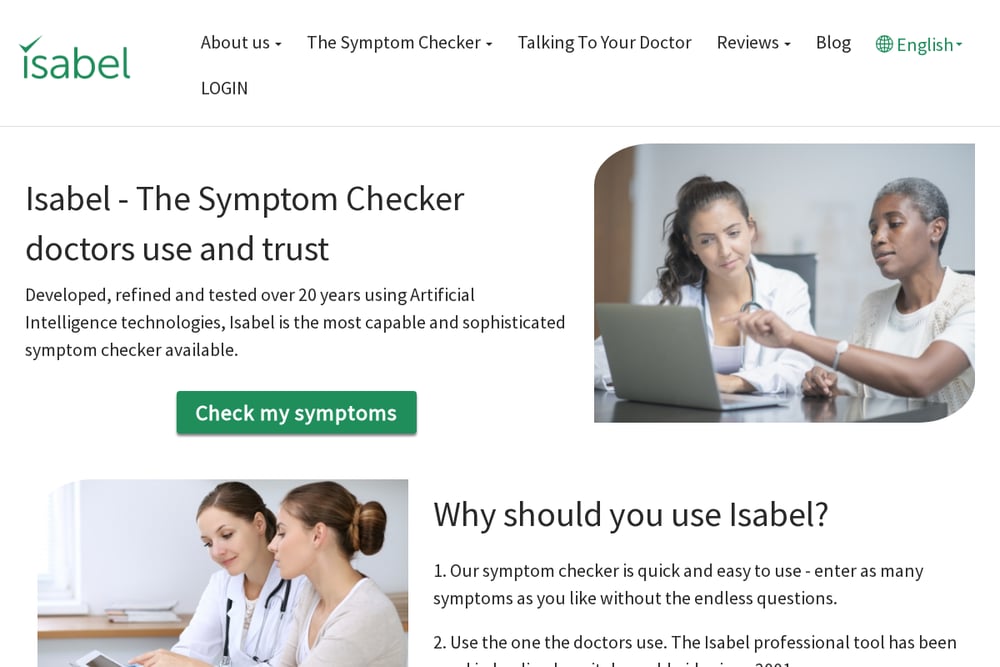 A screenshot of the Isabel Symptom Checker website.
Isabel has been used in leading hospitals worldwide since 2001, and that clinical heritage shows. The symptom checker is built on over 20 years of artificial intelligence development, refined and tested for accuracy. You can enter as many symptoms as you like without facing endless questions, which keeps the process quick. It is recognized for covering both common and rare conditions, making it useful when you have unusual or overlapping symptoms. The tool is free to register and available in multiple languages. If you want a checker that doctors themselves use, this is a strong contender.
#4 Symptomate
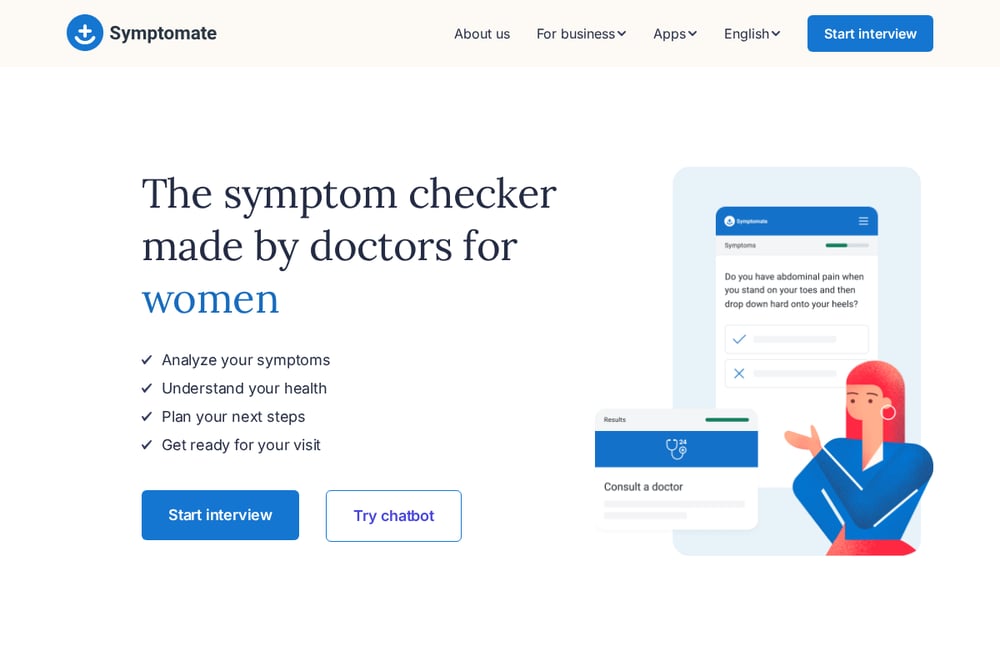 A screenshot of the Symptomate website.
Symptomate is a self-service symptom checker made by doctors for anyone who wants to understand their symptoms. You start by adding your symptoms, with no limit on how many you can include, then answer a few complementary questions. The tool also lets you select risk factors, which can sharpen the feedback you receive. At the end, you get a list of the most probable conditions along with explanations and the recommended level of care. It is designed to help you plan your next steps and prepare for a medical visit. With millions of interviews performed, it is a well-tested option for preliminary assessment.
#5 healthdirect Symptom Checker
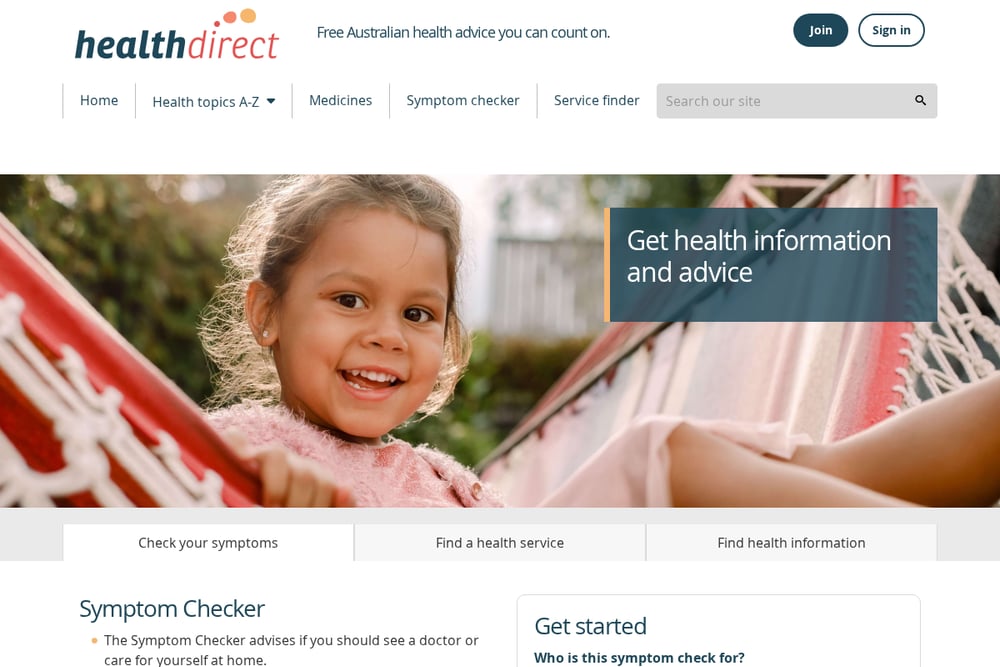 A screenshot of the healthdirect Symptom Checker website.
healthdirect offers a government-funded symptom checker designed for people in Australia. It helps you decide whether you should see a doctor or care for yourself at home. The tool also assists in finding healthcare providers when you need one. You answer questions about your symptoms, which takes an average of six minutes, and you can complete it for yourself or someone else. The service emphasizes data safety and anonymity, and it is clear that it cannot give a diagnosis or substitute for professional care. If you are in Australia and want trusted, free guidance, this is a reliable choice.
How to Choose the Right Symptom Checker for You
Start by asking what you need most. If you want broad condition coverage and a familiar name, WebMD is a natural first stop. If you prefer structured analyses with self-care tips and you read Spanish, AnalisisSalud gives you clear, condition-specific guidance. For a clinically trusted tool that handles rare conditions, Isabel is worth trying. If you want a doctor-built interview that helps you plan next steps, Symptomate fits the bill. And if you are in Australia and want government-funded advice, healthdirect is the obvious pick. No matter which you choose, remember that these tools are for information, not diagnosis. Always follow up with a healthcare professional for anything serious or persistent.
Where Automation Fits In
Symptom checkers use automation to turn your plain-language input into possible conditions and next-step recommendations. They rely on rule-based logic, artificial intelligence, and clinical databases to guide you through questions and filter results. This does not replace a doctor, but it can help you organize your thoughts and prepare for an appointment. The best tools are transparent about their limits and encourage professional care when needed.
The Bottom Line
Remote symptom checkers are not a substitute for medical advice, but they can be a useful first step when you are feeling unwell. WebMD offers breadth, AnalisisSalud delivers structured self-care guidance, Isabel brings clinical trust, Symptomate provides a doctor-built interview, and healthdirect serves Australia with government-backed advice. Pick the one that matches your needs and location, and always consult a professional for anything serious. Your health is worth the extra step.