You want to lose fat, but every plan you've tried assumed you were already an athlete. These five remote services start where you actually are.
The Remote Fat-Loss Coaching Landscape
Remote fat-loss coaching has split into two camps. On one side sit human-led programs where a certified coach or dietitian builds your plan and adjusts it as your body responds. On the other sit app-driven and email-driven systems that automate the structure so you can follow it without booking calls.
The evidence favors structure over intensity. Programs with regular human coaching tend to produce more sustained weight loss than app-only solutions, especially for people with higher starting BMIs or a history of failed attempts. But human coaching costs money and time, and plenty of people quit before the first video call.
That gap is where the newest entrants compete. Instead of asking you to overhaul your life on day one, they shrink the first step until it is almost impossible to skip. The result is a market where you can pay $9.99 a month for an automated training plan or several thousand dollars for an immersive resort stay, and both can be the right answer depending on your starting point.
How We Evaluated These Services
We looked at five factors across every service.
Service scope: does the offering cover training only, nutrition only, or both, and does it adapt when your week falls apart?
Pricing clarity: are the monthly costs, trial terms, and cancellation rules stated up front, or buried behind a consultation?
Onboarding realism: how big is the first step, and does the program assume you already train?
Personalization depth: is the plan built around your days, equipment, injuries, and goals, or is it a template with your name on it?
Support model: human, automated, or hybrid, and how much accountability comes with each.
LeanAdapt stood out for transparent monthly pricing and a first step measured in minutes. Julie Lohre FITBODY stood out for direct access to a single experienced coach. Kickoff stood out for insurance-covered access to dual-certified professionals. Zing Coach stood out for free, self-directed plan building. Premier Fitness Camp stood out for immersive, multi-disciplinary support.
Here is the short version. Each of these five fits a different starting point, budget, and appetite for human contact.
| Provider | Best For |
|---|---|
| Julie Lohre FITBODY Online Personal Training | Women over 40 who want a named human coach |
| LeanAdapt: Start moving, or finally train with a real plan | Beginners who quit big plans, and lifters who want structure |
| Kickoff Personal Training | People who want professional coaching covered by insurance |
| Zing Coach | DIY planners who want free structure and tracking |
| Premier Fitness Camp | People who need an immersive, supervised reset |
The Five Services in Detail
#1 Julie Lohre FITBODY Online Personal Training
 A screenshot of the Julie Lohre FITBODY Online Personal Training website.
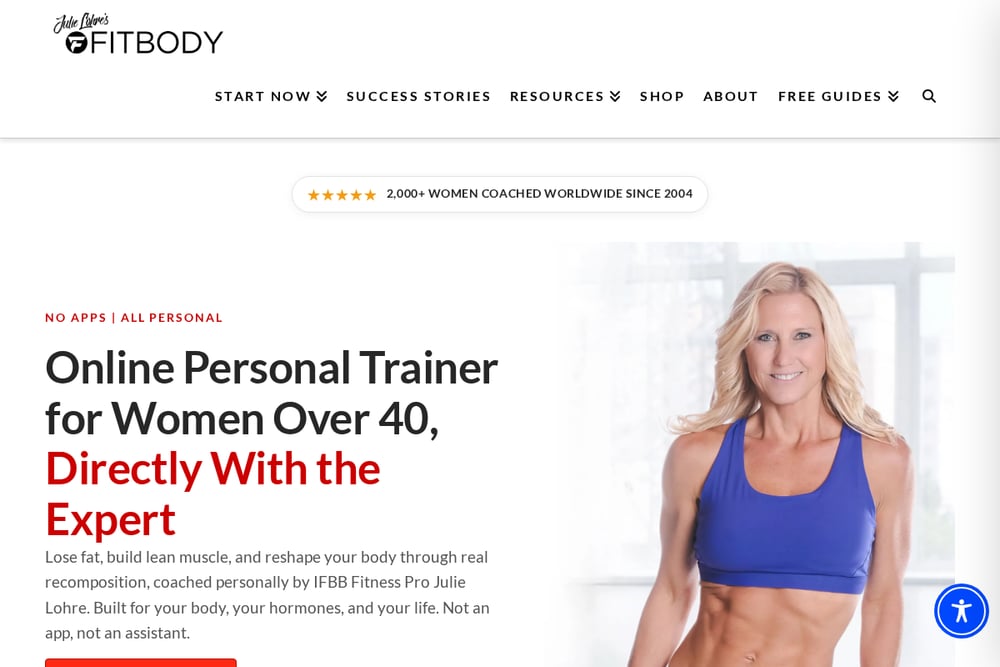
Julie Lohre has coached women over 40 since 2004, and the FITBODY Recomposition System is built around hormones, metabolism, and real-life schedules rather than generic templates. You work directly with Julie, an IFBB Fitness Pro and Certified Nutrition Specialist, not an assistant or an app. The program combines personalized training with strategic nutrition and adjusts based on how your body actually responds. It is a strong fit if you want a named human in your corner and you are willing to pay for that access. The site notes 2,000+ women coached worldwide, which is a meaningful track record in a crowded field.
#2 LeanAdapt: Start moving, or finally train with a real plan
 A screenshot of the LeanAdapt: Start moving, or finally train with a real plan website.
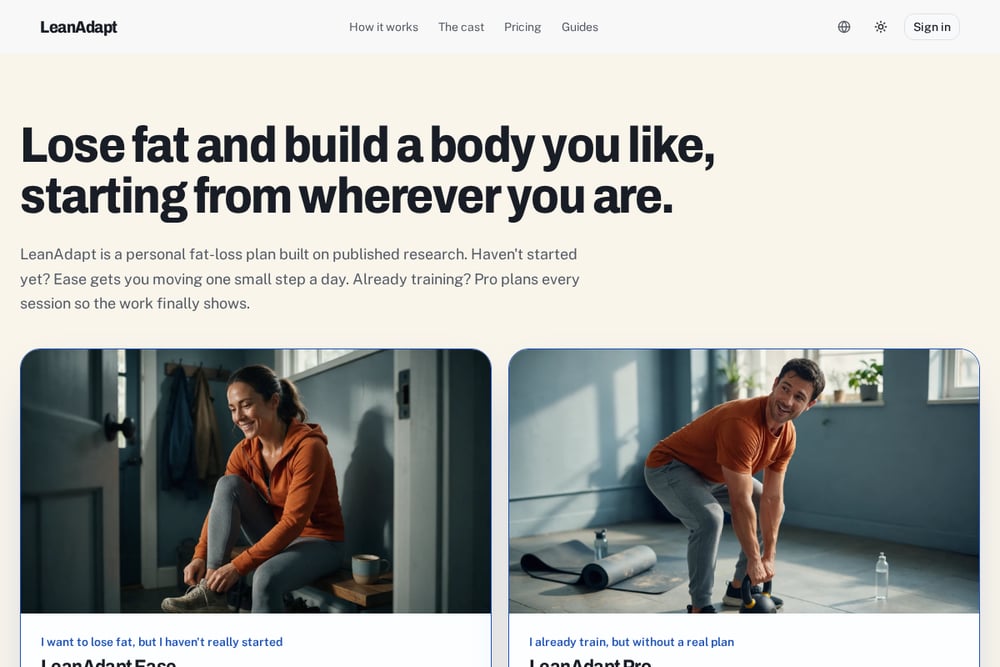
LeanAdapt splits its offering by where you actually are. If you have not started, Ease sends one email a day with one small step, beginning with a five-minute walk and growing into short strength sessions and a full training and food plan by around day 14. If you already train, Pro builds every set, rep, rest period, and effort level around your goal, days, and equipment, with progressive overload baked in. The nutrition side cites published research, including protein guidance drawn from Morton et al., BJSM 2018 and calorie targets starting from a resting-energy equation. Pricing is stated plainly: $19.99 a month for Ease with the first three emails free and no card required, or $9.99 a month for Pro with cancel-any-time terms. You can also build the plan itself free and keep it.
#3 Kickoff Personal Training
 A screenshot of the Kickoff Personal Training website.
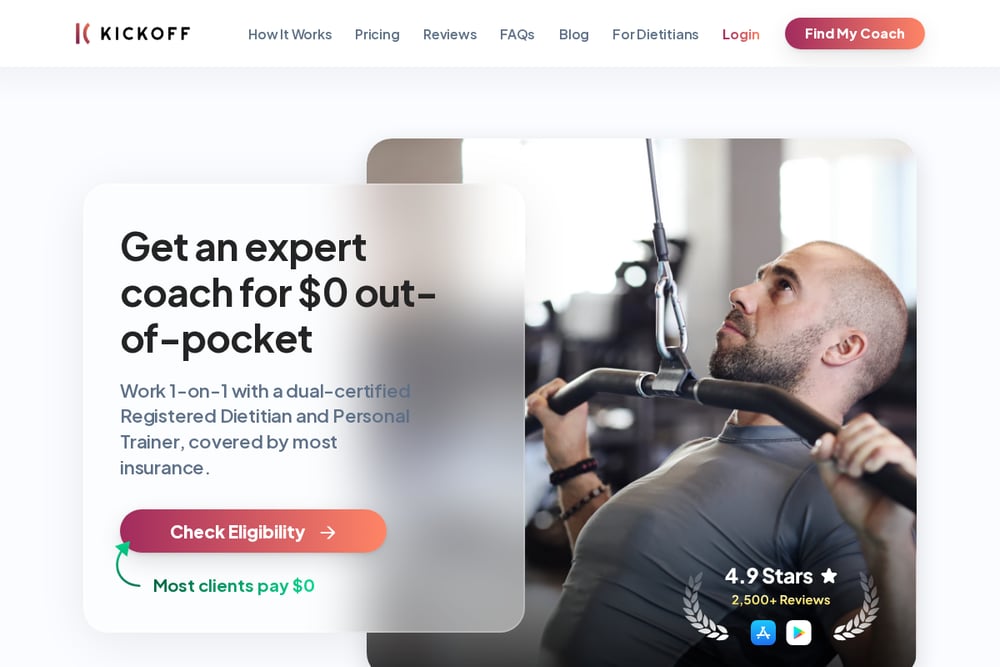
Kickoff pairs you with a coach who is both a Registered Dietitian and a Personal Trainer, and most clients pay $0 out of pocket because the service is covered by insurance. The company lists Aetna, Anthem, BlueCross BlueShield, Cigna, and United Healthcare among accepted providers. You get weekly video calls, daily texts, and AI-assisted macro tracking, all on demand and with no contracts or cancel fees. For comparison, in-person dietitian or trainer sessions typically run $100 or more per session. If cost has been the barrier between you and professional guidance, this is the most direct route around it.
#4 Zing Coach
 A screenshot of the Zing Coach website.
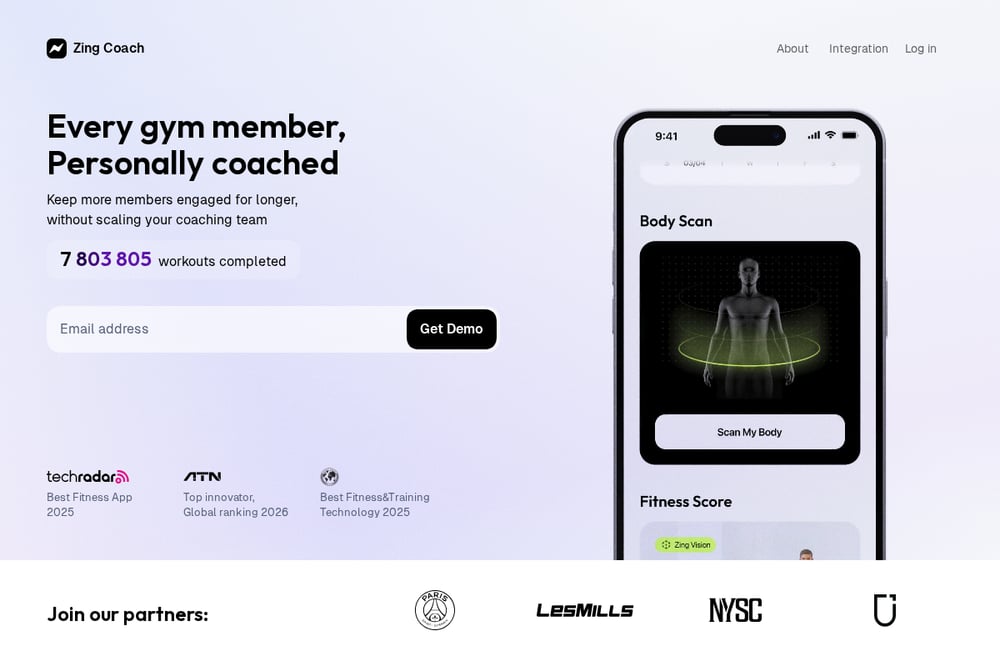
Zing Coach takes the self-directed route and makes it genuinely useful. Its fitness library walks you through establishing a starting point, choosing exercises that match your goals and available gear, and building a weekly schedule you can actually keep. The core argument is sound: generic plans fail because they ignore your shoulder injury, your 30-minute window, and your actual goal. Zing gives you free tools to track progress and assemble a routine from the ground up. You will not get a coach checking in on you, but you will get a clear framework and no subscription required to start.
#5 Premier Fitness Camp
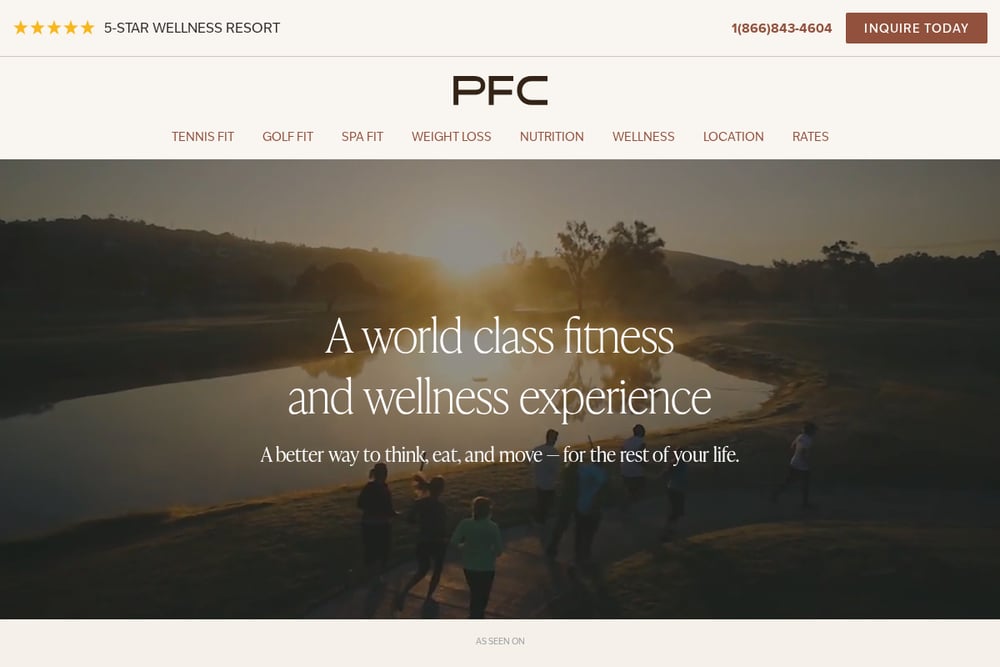 A screenshot of the Premier Fitness Camp website.
Premier Fitness Camp is the high-support, high-commitment end of the market. It runs an immersive wellness resort program with four to five hours of daily expert-led training, registered dietitians, licensed psychologists, and post-camp coaching. The team's own 2026 guide makes the case that success rates rise as accountability increases, and that people who have failed multiple approaches usually benefit most from higher-support options. Personalization here accounts for medical history, cultural food preferences, sleep, stress, and physical limitations. It is not a monthly subscription, and it is not for everyone, but for someone who needs a hard reset with professionals nearby, it is a distinct option.
How to Pick the Right Fit for You
Start with one question: have you actually started yet?
If the answer is no, do not buy a twelve-week program. Buy the smallest possible first step. A daily email that asks for five minutes is worth more than a perfect plan you abandon on day three.
If you already train but your sessions are random, you need structure, not motivation. Look for progressive overload written into every session and a plan that adjusts when sleep or time gets in the way.
If cost is the blocker, check insurance eligibility before you check price tags. A covered dietitian-trainer hybrid beats a cheap app you never open.
If you want a person in your corner, pay for a person. Named coaches with decades of experience cost more, and that is the point.
And if you have tried and failed repeatedly, consider whether you need more support, not more willpower. Higher-accountability formats exist for exactly that reason.
Where Automation Fits Into Your Plan
Automation is not the enemy of results. It is the delivery mechanism.
Step one: capture your real constraints. Days per week, minutes per session, equipment on hand, and anything your body needs you to skip.
Step two: let the system generate the plan. A good tool turns those inputs into specific sets, reps, rest periods, and calorie and protein targets without you doing the math.
Step three: deliver one instruction at a time. A single daily email beats a 40-page PDF because you only have to act on today.
Step four: adjust automatically. When a rough week hits, the plan should shrink rather than reset.
Step five: layer in human review where it matters. Insurance-covered coaching, video calls, or a named trainer can sit on top of an automated plan without replacing it.
The Bottom Line
There is no single winner here, because the right choice depends entirely on your starting point.
If you have not begun, pick the service with the smallest first step and the clearest daily instruction. If you already train, pick the one that writes every rep and adjusts with you. If budget is tight, check what your insurance already covers. If you want a human, pay for one. And if you need a hard reset, go somewhere immersive.
The common thread across all five is structure. Motivation fades. A plan that meets you where you are, and gets smaller instead of breaking when life intervenes, is what keeps you moving.