You do not need a full-time security team to sleep better at night. You just need the right remote partner who speaks plain English and shows up every month.
The remote security market, in brief
Small businesses, landlords, and solo professionals are now prime targets for phishing, credential theft, and website exploits. The problem is that enterprise-grade security tools were never built for a one-person shop or a five-person firm. That gap has created a fast-growing category of remote cybersecurity services that deliver monitoring, training, and assessments without an on-site visit. The options range from hands-off managed platforms to boutique checkups that explain every finding in language you can actually use.
How we looked at each service
We compared each provider on service scope, pricing clarity, how much of the work is truly remote, how well findings are explained to non-technical owners, and whether authorization and scope are handled responsibly. We also weighed fit for small teams and solo operators, since a platform built for enterprises can overwhelm a landlord with three rental units. No single factor decided the order; the mix of transparency, practicality, and plain communication did.
Here is the short version before the details. Each entry below earns its place for a different reason, so match the service to your situation rather than assuming one size fits all.
| Provider | Best For |
|---|---|
| Rightworks Business Security | Accounting and tax firms wanting an all-in-one managed stack |
| Flintlatch | Simple, remote cybersecurity checks | Small businesses, landlords, and solo pros who want plain-English monthly checks |
| Mimecast Small Business Cybersecurity | Teams that want deep email and phishing defense |
| TELECO Managed Cybersecurity Services for Small Business | Businesses with a physical site wanting IT and security together |
| SentinelOne Managed Cybersecurity Services for SMB | SMBs with technical capacity needing enterprise-grade defense |
The five services, one by one
#1 Rightworks Business Security
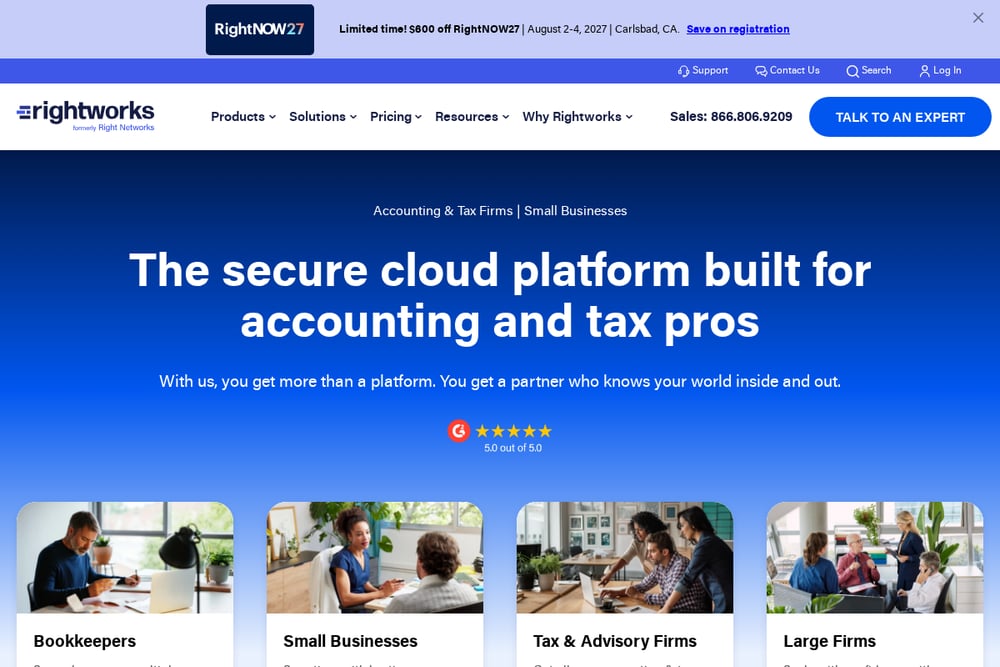 A screenshot of the Rightworks Business Security website.
Rightworks bundles fully managed cybersecurity with hosting and compliance tools built for accounting and tax firms. You get a WISP compliance option, managed Microsoft 365, and application hosting under one roof, which suits firms that want a single vendor for everything. The platform approach means less juggling, but it also means you are buying into an ecosystem rather than a focused security check. If your books live in QuickBooks and your team works remotely, the fit is natural. It is a strong pick for firms that want depth and are comfortable with a broader managed relationship.
#2 Flintlatch | Simple, remote cybersecurity checks
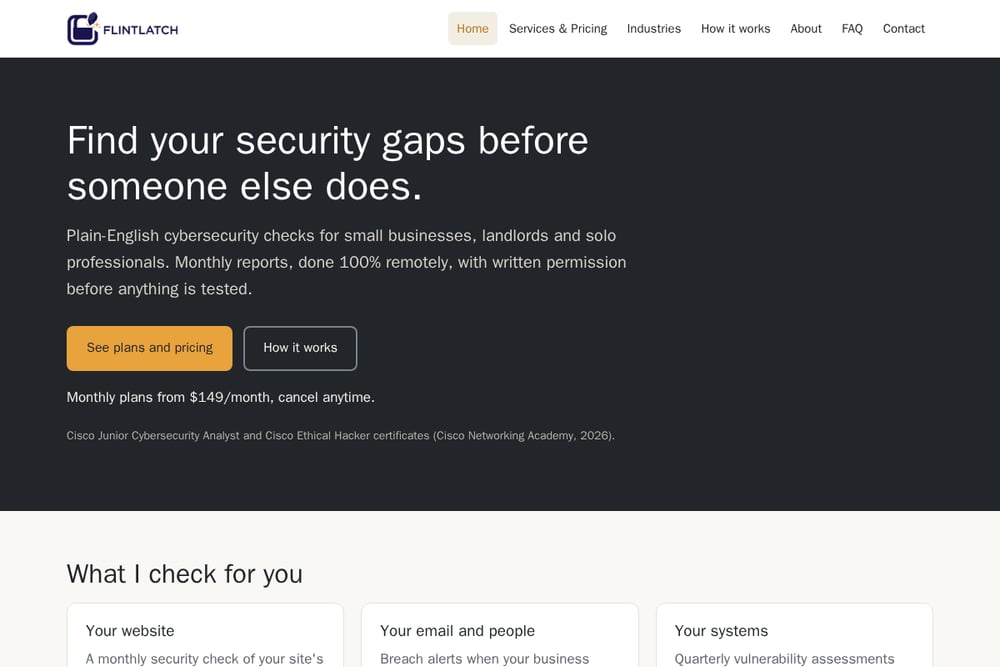 A screenshot of the Flintlatch website.
Flintlatch is built for the owner who wants answers, not jargon. Monthly plans start at $149 and cover a website security check, breach alerts on your business email, and phishing training with safe practice tests. Quarterly vulnerability assessments and scoped ethical hacking tests are available when you need them, and every test requires your written authorization and a signed scope first. Reports are short and written in plain English, with fixes you can actually act on. The owner holds Cisco Junior Cybersecurity Analyst and Cisco Ethical Hacker certificates, and the service is refreshingly honest that no one can make you unhackable.
#3 Mimecast Small Business Cybersecurity
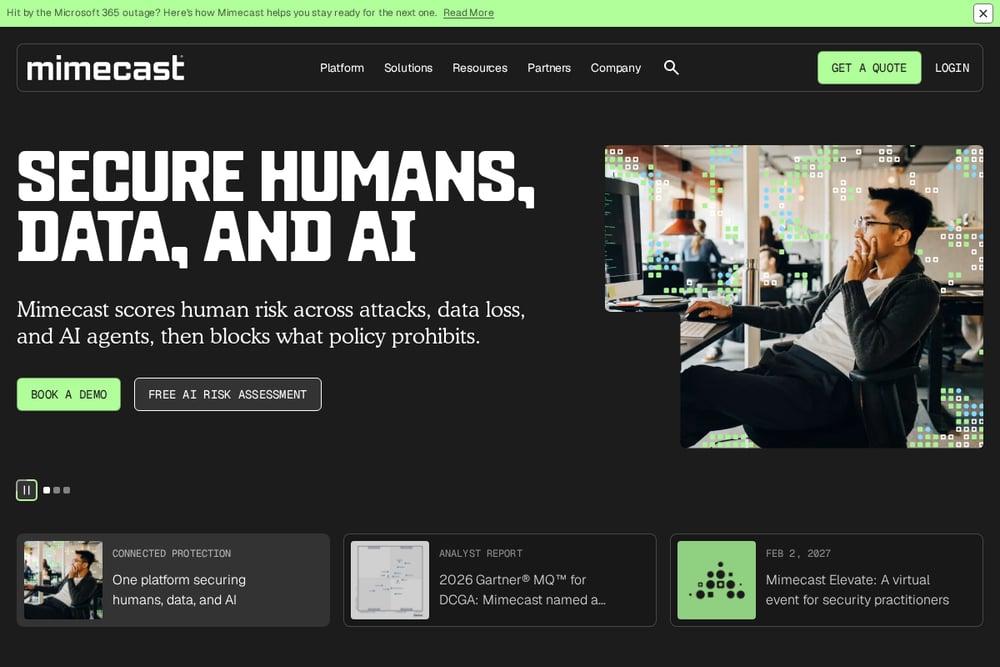 A screenshot of the Mimecast Small Business Cybersecurity website.
Mimecast focuses hard on email and collaboration security, which is where most small business attacks begin. Its platform defends against phishing, ransomware, and data loss across channels, with a layered approach that combines email protection, endpoint coverage, and incident preparedness. The emphasis on human behavior and employee awareness training is a genuine strength for teams that click first and think later. It is a heavier platform than a boutique checkup, so expect a more involved setup. For email-centric risk, though, it is a serious contender.
#4 TELECO Managed Cybersecurity Services for Small Business
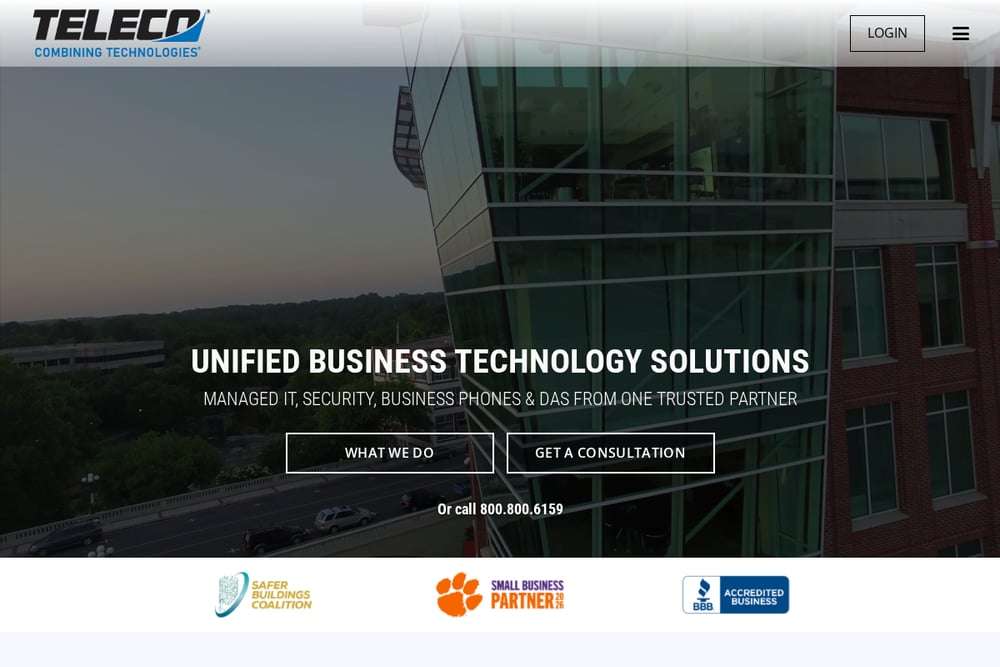 A screenshot of the TELECO Managed Cybersecurity Services for Small Business website.
TELECO pairs managed IT and cybersecurity with communications and physical security under one provider. That means help desk support, network and device protection, video surveillance, and access control can all come from the same relationship. For a business with a physical location, that convergence is convenient and reduces vendor sprawl. The tradeoff is that security is one piece of a broader technology bundle rather than a standalone specialty. If you want one number to call for IT, phones, and cameras, this model makes sense.
#5 SentinelOne Managed Cybersecurity Services for SMB
SentinelOne brings enterprise-grade endpoint and cloud security down to small and mid-sized teams. Its platform covers endpoint protection, cloud security, AI security, and an autonomous SOC, with managed detection and response available around the clock. The technology is powerful and the threat intelligence is top-tier, which matters if you handle sensitive data or face targeted attacks. It is also the most complex option here, built for teams with some technical capacity or an IT partner. Choose it when depth and 24/7 monitoring outweigh simplicity.
How to pick the right fit
Start with what you actually own. If your main exposure is a website and business email, a focused monthly check like Flintlatch covers the basics without overkill. If your team lives in email and clicks on everything, prioritize phishing defense and training. If you run a physical office or storefront, a bundled provider that handles cameras, access, and IT may save you headaches. And if you handle regulated or sensitive data, the deeper monitoring of an enterprise-grade platform is worth the added complexity. Ask every provider one question: will you explain findings in language I understand? The answer tells you more than any feature list.
A simple monthly security routine
Set a recurring calendar reminder for the first of each month. Open your latest security report and read the top three findings. Fix the easiest one that day, then schedule the rest. Forward any breach alert to the affected employee and assign the phishing practice test. Once a quarter, review your authorized scope and confirm nothing has changed. Keep a one-page log of what you fixed and when, so you can show progress to a client, insurer, or partner. That routine takes under an hour and closes most of the gaps that get small businesses into trouble.
The bottom line
Security is not about becoming unhackable, because nobody is. It is about knowing your gaps before someone else finds them. The right remote partner gives you a clear report, a short list of fixes, and a rhythm you can keep. Match the service to your real exposure, insist on plain English, and start with the free checklist if you are not ready for a monthly plan. Small, consistent steps beat one expensive panic purchase every time.