When conflict keeps circling back and old patterns won't budge, the right therapist can change the whole trajectory. Here are five practices doing thoughtful, trauma-informed relational work.
The Relationship Repair Landscape
Relationship-focused therapy has moved well beyond generic couples counseling. Today's practices blend trauma-informed care, family systems thinking, and structured repair frameworks to address recurring conflict, estrangement, co-parenting strain, and trust rebuilding. Many now offer secure online sessions across state lines, which matters if your family is scattered. The result is a crowded field, so knowing what each practice actually specializes in saves you months of trial and error.
How We Evaluated These Practices
We looked at service scope, depth of specialization in relational and family work, clarity of approach, accessibility of online care, and how well each practice explains its process to a prospective client. We also weighed whether the practice offers something structurally distinct, like a defined repair framework or a focused estrangement specialty, rather than a long menu of unrelated services.
Here's a quick look at how these five practices compare before you dig into the details.
| Provider | Best For |
|---|---|
| Dr. Elizabeth Coldren | Families navigating estrangement and cutoff |
| Welcome | Deep Rooted Therapy | Relationship Repair Program | Structured repair work for families and co-parents |
| MCAFT | Broad family and couples therapy with modality options |
| Sunstone Counselors | Families wanting therapy plus DBT and parenting groups |
| New Growth Counseling | Healing family-of-origin patterns inside relationships |
The 5 Practices in Detail
#1 Dr. Elizabeth Coldren
Dr. Coldren has worked with estranged families for over 25 years, long before "estrangement" became common vocabulary. Her practice focuses specifically on adult children and parents navigating separation, cutoff, and long-standing disconnection, with sessions grounded in family systems therapy and trauma-informed care. She also meets with estranged adult siblings who want to work together. Everything runs online through secure video across PSYPACT states, which makes cross-state family sessions genuinely feasible. If your family is in the painful space of no-contact or fragile reconnection, this is a rare depth of focus.
#2 Welcome | Deep Rooted Therapy | Relationship Repair Program
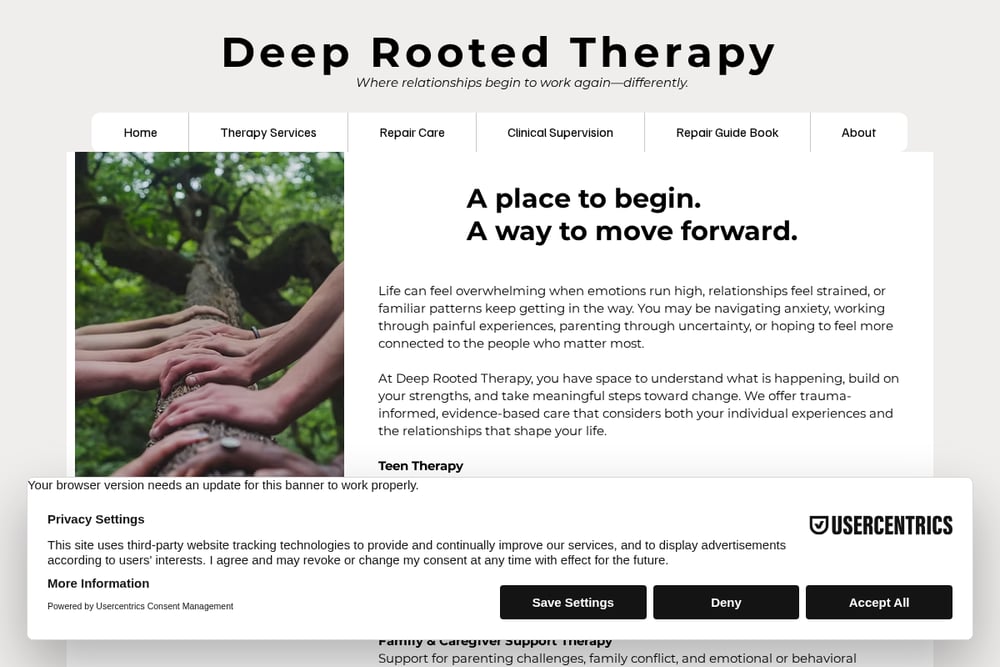 A screenshot of the Welcome | Deep Rooted Therapy | Relationship Repair Program website.
Deep Rooted Therapy is a nonprofit built around one clear idea: relationships can be repaired, and repair is a skill you can learn. Their Repair Model of Care is a practical 21-chapter framework that walks individuals, couples, families, and co-parents through conflict navigation, accountability, boundary-setting, and trust rebuilding. Services span teen therapy, adult therapy, family and caregiver support, co-parenting rebuild, and focused repair work, all trauma-informed and evidence-based. Because it's a nonprofit, the practice also invests in education, research, clinical supervision, and community partnerships. If you want structure rather than open-ended talk, this model gives you a map.
#3 MCAFT
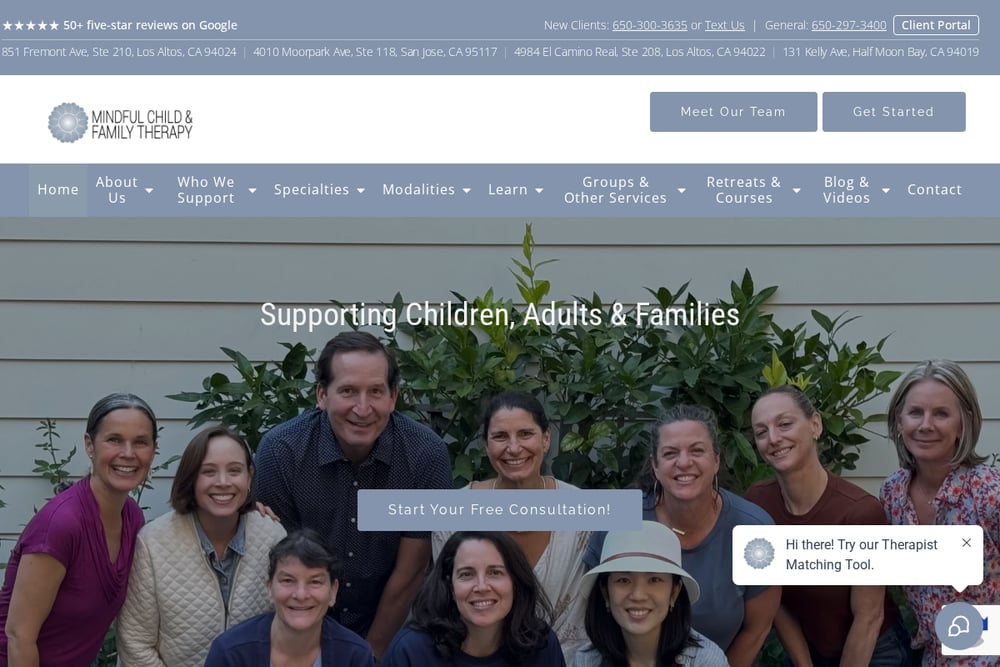 A screenshot of the MCAFT website.
MCAFT runs a multi-location group practice across Northern California with a broad therapy menu covering children, teens, college students, adults, couples, and families. Their clinical team works across modalities including EMDR, Internal Family Systems, CBT, DBT, and mindfulness-based approaches, which means treatment can be matched to how you actually process things. They also maintain a substantial library of educational articles on rebuilding trust and recognizing when a relationship needs help. Online therapy is available alongside in-person offices in Los Altos, San Jose, and Half Moon Bay. A solid fit if you want range and multiple clinicians under one roof.
#4 Sunstone Counselors
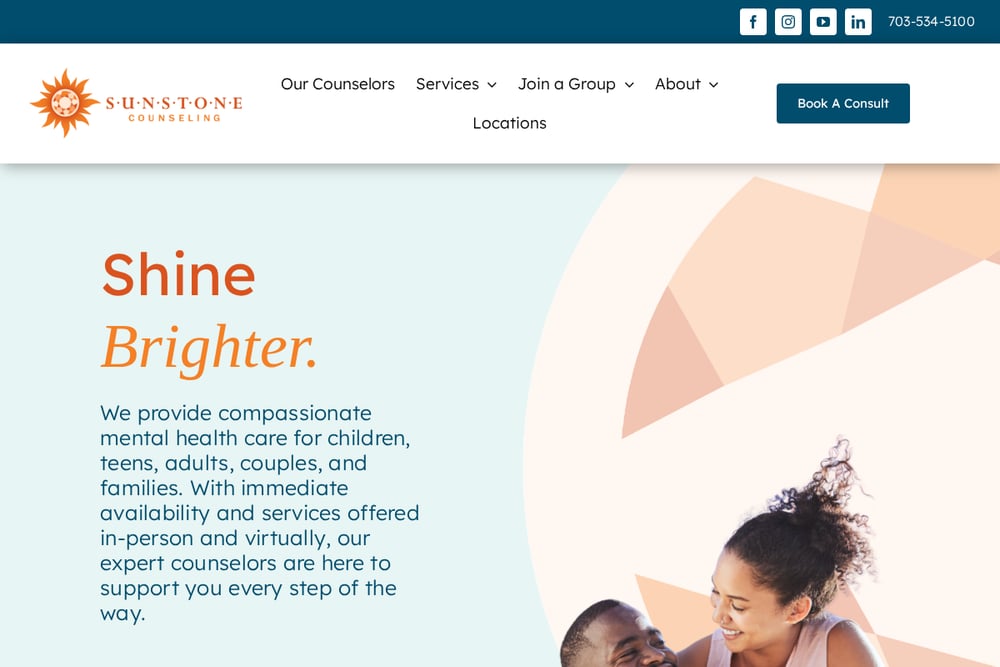 A screenshot of the Sunstone Counselors website.
Sunstone Counselors offers adult, adolescent, child and play therapy, couples and marriage therapy, and family therapy, plus specialty areas spanning gender and sexual identity, eating disorders, perinatal mental health, and autism spectrum support. Their group program is a standout, with DBT groups for adults, adolescents, middle schoolers, and high schoolers, along with parenting-focused groups like Parenting Pathways. That group component adds a layer many individual practices can't match, especially for teens and parents of teens. If you're looking for a practice that treats the whole family system and offers peer context alongside individual sessions, this is worth a call.
#5 New Growth Counseling
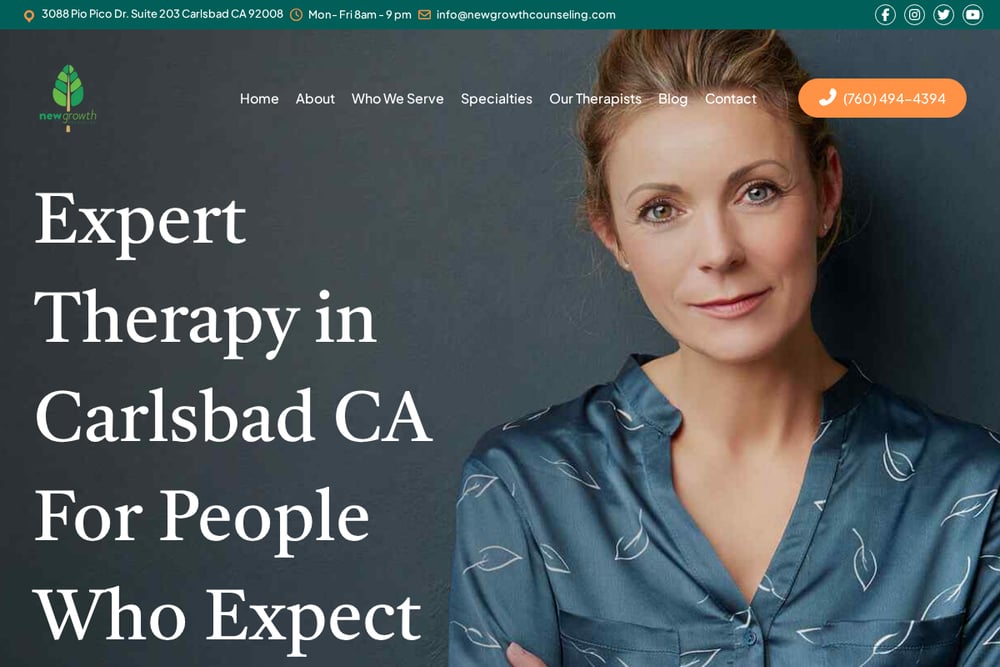 A screenshot of the New Growth Counseling website.
New Growth Counseling serves individuals, couples, and families with a clear emphasis on how family-of-origin wounds show up in your closest relationships. Their writing on emotional safety after years of family boundary violations is unusually specific, connecting childhood patterns to present-day reactivity, over-accommodation, and defensiveness with a partner. The clinical team includes IFS and EMDR-trained therapists, which suits clients whose relational patterns trace back to trauma. They also offer court-ordered and online therapy options. If you've noticed that your family history keeps hijacking your relationship, this practice speaks that language directly.
How to Choose the Right Fit
Start with the shape of your problem, not the label on the door. If your family is dealing with estrangement or no-contact, a focused specialty matters more than a broad service menu. If you want a repeatable process for conflict and accountability, a structured framework like the Repair Model of Care gives you concrete steps. If teens are involved, check whether the practice offers groups and parent support, not just individual sessions. Then confirm logistics: online availability across state lines, insurance, and wait times. Finally, ask any practice how they define progress in the first few months. A clear answer tells you a lot about how they work.
Where Automation Fits Into Your Search
You don't need to automate therapy, but you can automate the search. Set up saved searches and alerts for trauma-informed family therapists in your area or licensed in your state. Use a simple spreadsheet to track each practice's specialty, session format, insurance acceptance, and wait time as you call around. Route inquiry emails into a labeled folder so consult responses don't get buried. If you're coordinating therapy for multiple family members, a shared calendar with recurring session blocks prevents the scheduling chaos that quietly undermines progress.
The Bottom Line
Repair is possible, but it rarely happens by accident. The practices here each bring something distinct: Dr. Coldren's decades of estrangement expertise, Deep Rooted Therapy's structured 21-chapter repair framework, MCAFT's modality range, Sunstone's group programming, and New Growth's focus on family-of-origin patterns. Match the practice to the specific rupture you're trying to heal, verify the logistics, and give the work real time. The right fit is the one you'll actually show up for.