
Real-time captioning is no longer a nice-to-have. It is how you make sure every voice in the room actually lands. Here are five services worth knowing if you need live speech-to-text in Western New York and beyond.
The State of Real-Time Captioning
Real-time captioning has moved from the margins to the mainstream. You see it in classrooms, boardrooms, conferences, and courtrooms. The demand is simple: people need access to spoken content as it happens, not hours later. Three main approaches dominate. Stenographic CART delivers full verbatim, including every stammer and false start. TypeWell uses trained human transcribers who type meaning-for-meaning, producing clean, readable text at speech pace. AI speech recognition is the newest entrant, but it still struggles with accents, crosstalk, jargon, and background noise. For ADA and Section 508 compliance, human captioners remain the reliable choice. In Western New York, a handful of providers serve Buffalo, Rochester, Syracuse, and the surrounding region, each with a slightly different take on delivery, pricing, and scope.
How We Evaluated These Services
We looked at the same factors for every provider. Service scope: do they offer remote and in-person captioning, or just one? Method: do they use TypeWell, CART, AI, or a mix? Pricing clarity: is cost transparent, or do you have to request a quote? Local fit: do they actually serve Western New York, or are they national with no regional presence? Corey's Clear Captions stands out for its dual remote and in-person coverage across Buffalo, Rochester, and Syracuse, plus a clear cost comparison against CART. Intellitext brings a strong educational focus and a blog that explains why human transcription beats AI. Inclusive Communication Services offers both CART and TypeWell with flexible display options. ASL Communication covers multiple states and pairs captioning with interpreting. Still Interpreting provides a useful breakdown of automated, CART, and TypeWell options to help you decide.
Here is a quick look at the five services, ordered for this roundup. Each one brings something different to the table.
| Provider | Best For |
|---|---|
| Intellitext | Educational settings and lectures |
| Corey's Clear Captions — Real-Time Speech-to-Text Access | Affordable, accurate captioning in Western New York |
| Inclusive Communication Services | Flexible display options for any event format |
| ASL Communication | Combined captioning and ASL interpreting |
| Still Interpreting | Guidance on choosing the right captioning type |
The Five Services in Focus
#1 Intellitext
 A screenshot of the Intellitext website.
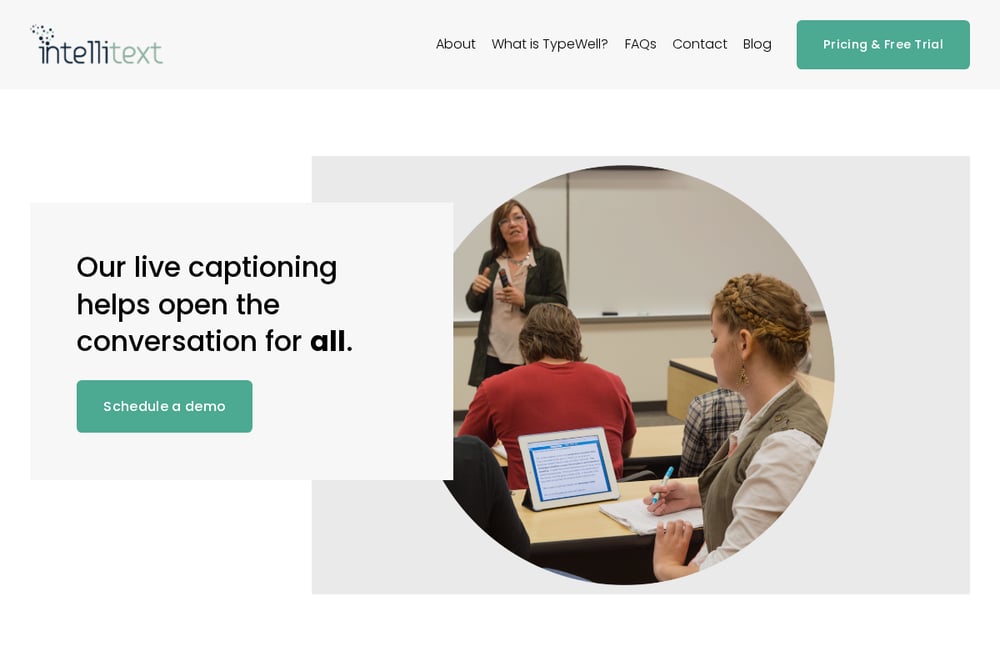
Intellitext makes a strong case for human captioning over AI. Their blog post on why TypeWell outperforms AI captioning explains that humans convey meaning, not just words. They use the TypeWell system to deliver meaning-for-meaning transcription that filters out filler words and false starts. This makes their captions easier to follow in real time, especially in educational settings. If you are in a classroom or lecture hall, their approach is built for comprehension, not just word count.
#2 Corey's Clear Captions — Real-Time Speech-to-Text Access
 A screenshot of the Corey's Clear Captions — Real-Time Speech-to-Text Access website.
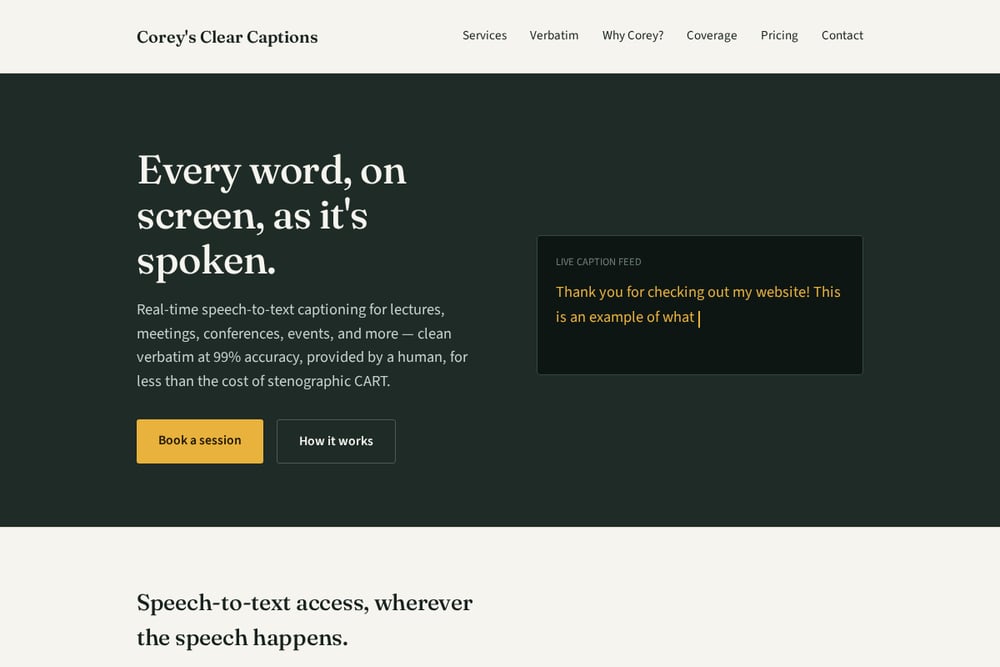
Corey's Clear Captions offers real-time, human-generated speech-to-text captioning across Western New York. They provide both remote captioning via a dedicated URL or StreamText, and in-person captioning in Buffalo, Rochester, Syracuse, and surrounding areas. Using the TypeWell method, they deliver clean verbatim at 99% accuracy, capturing all meaningful utterances without the stammers and false starts of full verbatim. Their pricing is positioned as lower than traditional stenographic CART, making accessibility more affordable. They handle events of any size, from a single classroom lecture to a full-day conference agenda.
#3 Inclusive Communication Services
 A screenshot of the Inclusive Communication Services website.
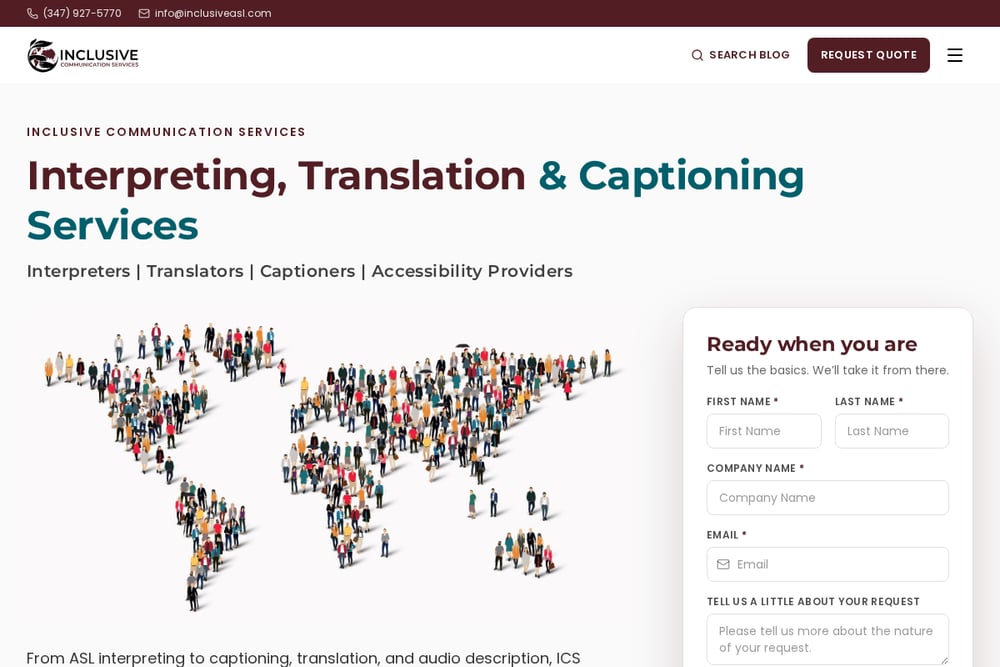
Inclusive Communication Services provides both CART and TypeWell captioning, giving you options based on your event type. They use human captioners, not automated speech recognition, which ensures accuracy with technical vocab, accents, and crosstalk. Captions can be displayed on large screens or on personal devices via QR code. They support in-person, virtual, and hybrid events. Their service is designed for Deaf, hard-of-hearing, and late-deafened participants, but also benefits anyone in a noisy room or processing a second language.
#4 ASL Communication
 A screenshot of the ASL Communication website.
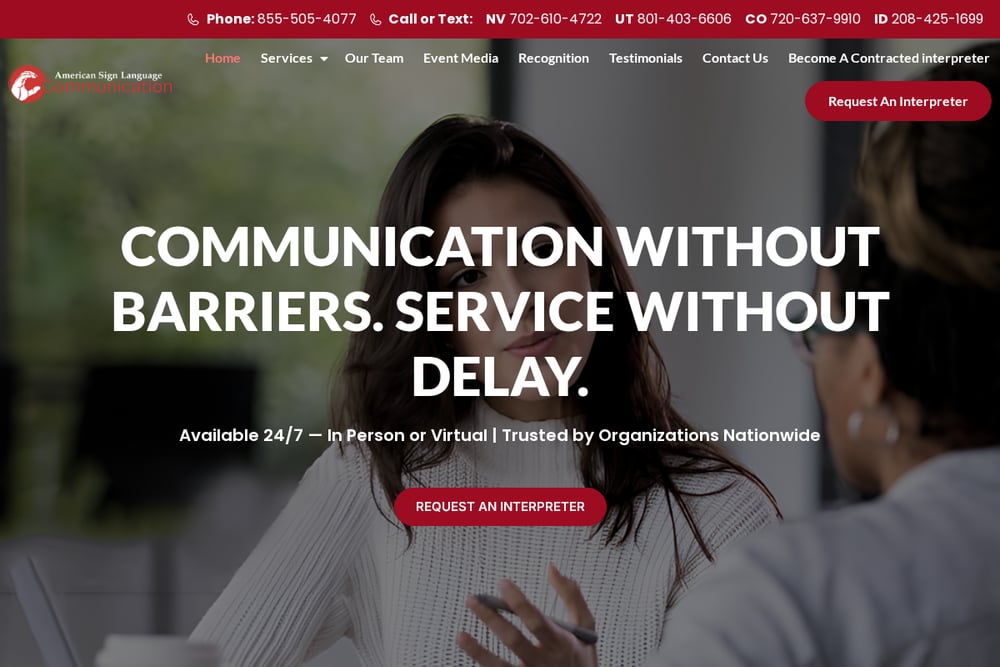
ASL Communication offers TypeWell services alongside sign language interpreting and CART. Their TypeWell transcribers are trained to provide meaning-to-meaning transcription, which they note is quicker and easier to comprehend than verbatim. They serve multiple states, including Nevada, Utah, Colorado, and Idaho, with both physical and remote options. If you need a provider who can also arrange ASL interpreters, they are a strong fit. Their team is experienced and reliable, with high accuracy levels.
#5 Still Interpreting
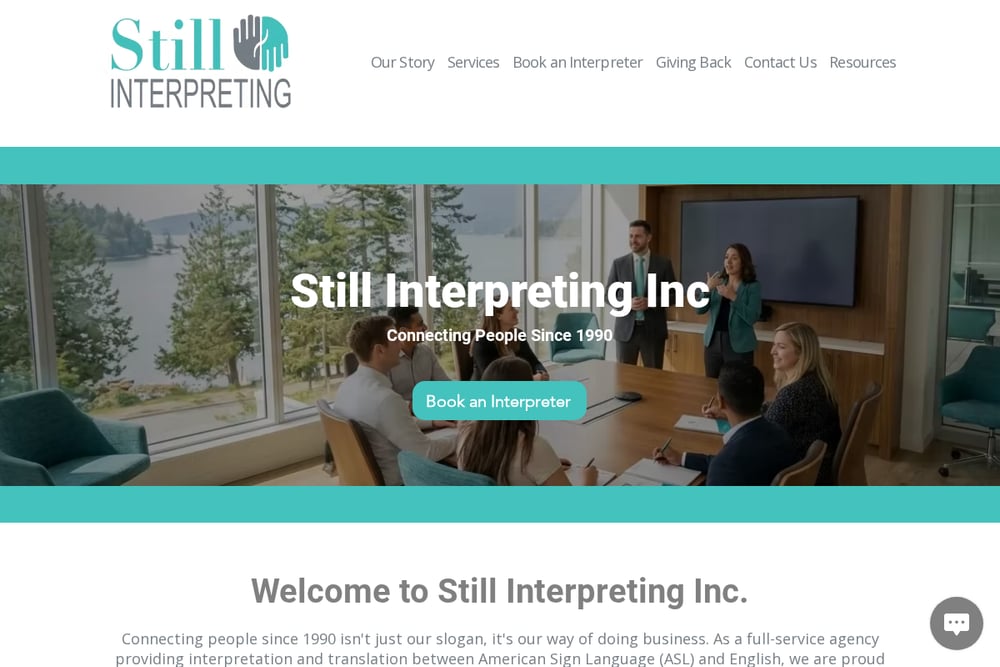 A screenshot of the Still Interpreting website.
Still Interpreting provides a clear breakdown of transcription options: automated, CART, and TypeWell. They explain that TypeWell is meaning-for-meaning, producing concise transcripts that are easier to read in real time. Their resource helps you decide which type fits your intended use and personal preference. They offer TypeWell for in-person or virtual events, with live transcripts viewable in a web browser or linked to in-meeting captioning. If you are new to captioning and need guidance, their educational content is a good starting point.
How to Choose the Right Captioning Service
Start with your event format. Is it in-person, remote, or hybrid? That narrows your options fast. Next, consider your audience. If you need full verbatim for legal or government proceedings, CART is the standard. For classrooms, meetings, and conferences, TypeWell's clean verbatim often works better because it is easier to read live. Check pricing transparency. Some providers publish rates, others require a quote. If you are in Western New York, local presence matters for in-person events. Ask about display options: dedicated URL, StreamText, QR code, or large screen. Finally, confirm ADA and Section 508 compliance. Human captioners are your safest bet there.
Where Automation Fits
AI speech recognition is improving, but it is not a replacement for human captioners in high-stakes settings. Automated tools drop words with accents, crosstalk, jargon, or background noise. They also struggle with punctuation and names. For casual internal meetings, AI might suffice. For anything requiring legal accessibility or accurate real-time access, you need a human. The smart workflow is hybrid: use AI for low-stakes, on-demand captioning, and bring in a human captioner for lectures, conferences, and compliance-critical events. That way you get speed and accuracy where each matters most.
The Bottom Line
Real-time captioning is about access, not just technology. The five services here each bring a different strength. Intellitext excels in education. Corey's Clear Captions offers affordable, accurate coverage across Western New York. Inclusive Communication Services gives you flexible display options. ASL Communication pairs captioning with interpreting. Still Interpreting helps you understand your choices. Pick the one that matches your event, your audience, and your budget. Your attendees will thank you.