
Real estate is one of the last great illiquid assets. These five platforms are changing that by putting property, funds, and real-world assets on-chain with compliance baked in.
The Tokenization Wave Hits Real Estate
Real-world asset tokenization has moved from crypto curiosity to serious infrastructure. Over $25 billion in RWAs now sit on-chain, and projections put the market at $16 to $30 trillion by 2030. Real estate sits at the center of that shift because it is the largest, most stubbornly illiquid asset class on earth. Sponsors want faster capital formation. Investors want fractional access and an exit. Platforms that can deliver compliant issuance, automated distributions, and a functioning secondary market are suddenly in demand. The five platforms below each attack that problem from a different angle, from full-stack issuance to purpose-built blockchains.
How We Evaluated These Platforms
We looked at the same factors across every platform: scope of service, compliance depth, liquidity features, automation, and fit for real estate sponsors. GROTTO stood out for its end-to-end stack built specifically by real estate investors, with continuous NAV and a purpose-built secondary market. Tokeny impressed with its ERC-3643 standard and white-label flexibility for issuers who want control. Securitize showed strength in regulatory infrastructure and broad asset coverage beyond real estate. Stobox differentiated with its asset scoring and tokenized shares model. Polymesh offered a permissioned blockchain designed from the ground up for regulated assets. Each platform solves a different piece of the puzzle.
Here is a quick look at how these five platforms compare on the factors that matter most to real estate sponsors and fund managers.
| Provider | Best For |
|---|---|
| Tokeny | Issuers who want a white-label, compliance-first token standard |
| GROTTO - Tokenization Platform for Real Estate, Funds & Real World Assets | Real estate sponsors and funds that want end-to-end tokenization with built-in liquidity |
| Securitize | Issuers who prioritize regulatory infrastructure and broad asset coverage |
| Stobox | Sponsors who want a guided, proof-first tokenization process |
| Polymesh | Institutions that want a purpose-built blockchain for regulated assets |
The 5 Platforms in Detail
#1 Tokeny
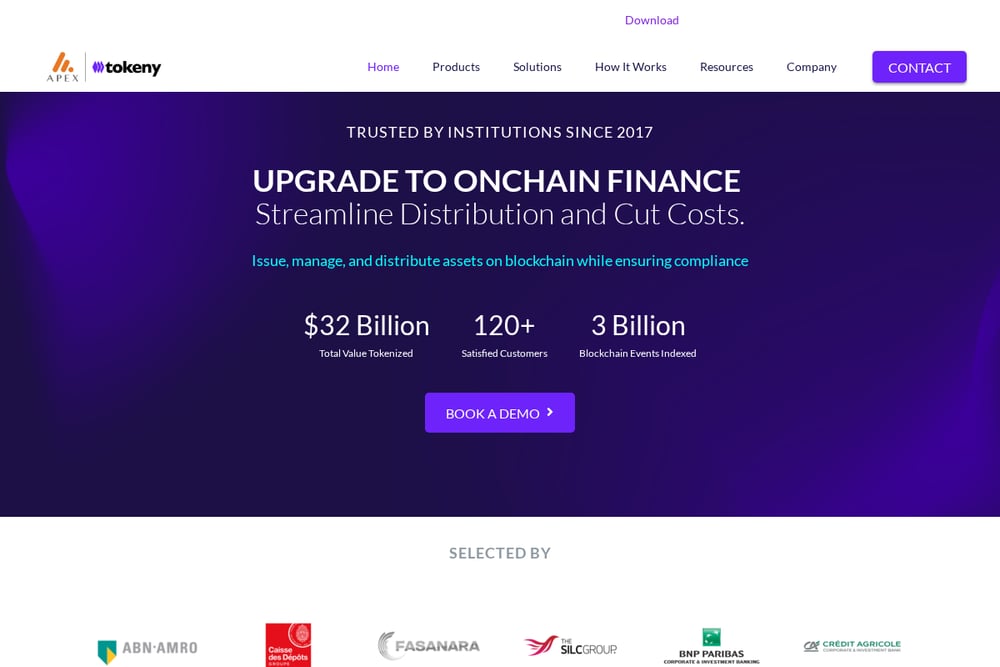 A screenshot of the Tokeny website.
Tokeny built its reputation on the ERC-3643 standard, a token protocol that embeds compliance rules directly into the asset. For real estate issuers, that means investor eligibility, jurisdiction restrictions, and transfer rules are enforced automatically at the token level. The platform offers a white-label solution, so you can run tokenization under your own brand while Tokeny handles the compliance engine underneath. It covers the full lifecycle from securitization and issuance to post-issuance management and secondary market support. If you want deep control over your token standard and a proven compliance framework, Tokeny is a strong fit. Learn more at tokeny.com.
#2 GROTTO - Tokenization Platform for Real Estate, Funds & Real World Assets
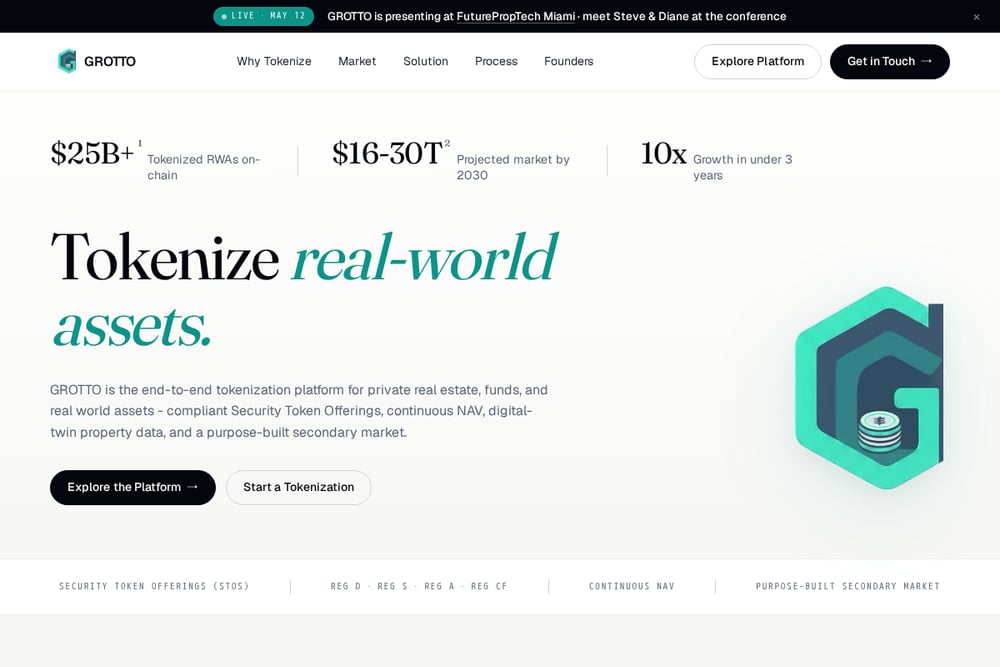 A screenshot of the GROTTO - Tokenization Platform for Real Estate, Funds & Real World Assets website.
GROTTO is the end-to-end tokenization platform built by real estate investors for real estate sponsors and the funds that back them. It handles compliant Security Token Offerings across Reg D, Reg S, Reg A, and Reg CF, with continuous NAV and digital-twin property data baked in. Compliance is embedded at the asset level, so smart contracts auto-enforce SEC rules across jurisdictions. Distributions, cap tables, and reporting run on rails, while a purpose-built secondary market unlocks liquidity that can lift equity value. If you are a sponsor tired of manual back-office work and illiquid syndications, GROTTO is worth a serious look. Explore the platform at grotto-briefing.vercel.app.
#3 Securitize
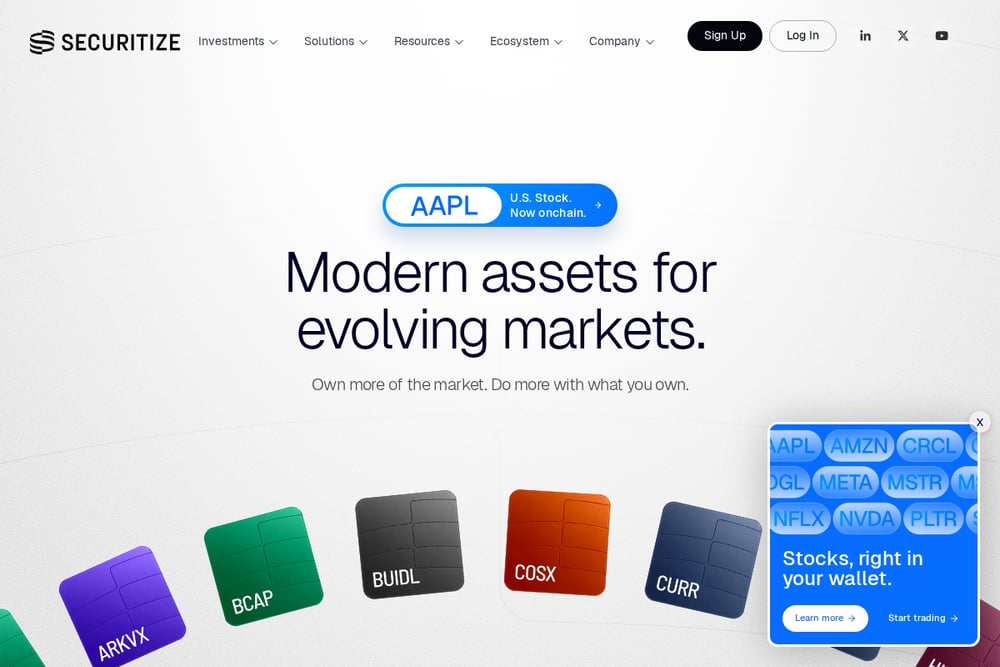 A screenshot of the Securitize website.
Securitize has positioned itself as one of the leading tokenization platforms in the US, with a focus on regulatory compliance and broad asset coverage. It provides a full stack for issuing, managing, and trading digital securities, including real estate-backed offerings. The platform handles investor onboarding, KYC, and transfer agent services, which reduces the operational burden on issuers. Securitize also operates a regulated alternative trading system, giving tokenized assets a path to secondary liquidity. For sponsors who want a well-known name and deep regulatory infrastructure, Securitize is a solid choice. Visit securitize.io to learn more.
#4 Stobox
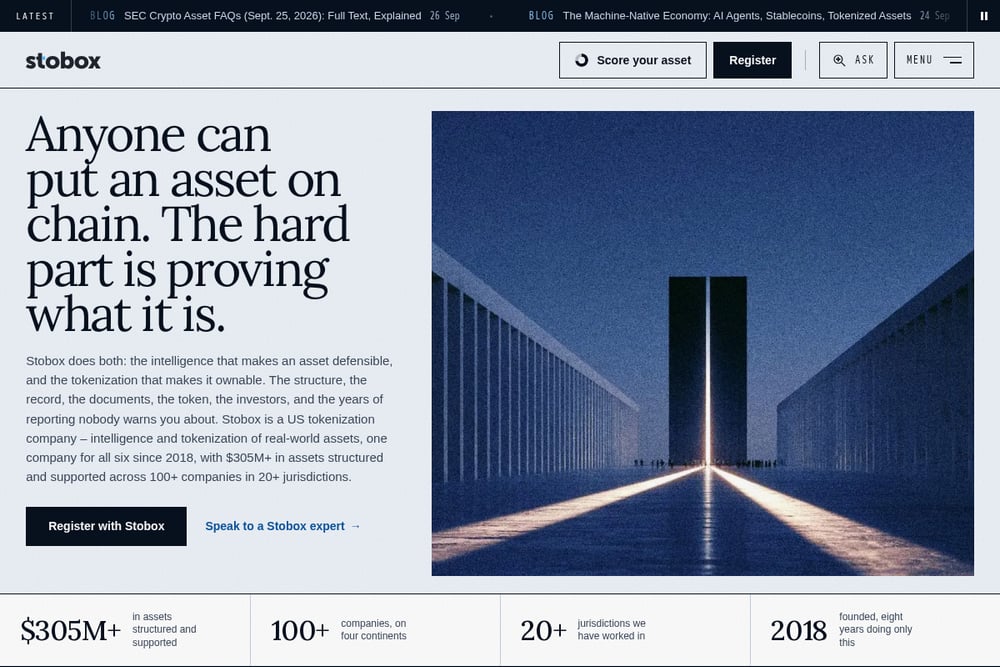 A screenshot of the Stobox website.
Stobox takes a slightly different approach, starting with an asset scoring process that helps you understand what a building must prove before issue. Its platform covers the full lifecycle from creating a canonical record of your company to generating an offering package that licensed firms will accept. The Stobox Orbit protocol enforces rules on every transfer, so investors are verified once and compliance travels with the token. It also offers tokenized shares in its own company, which gives you a sense of how the team eats its own cooking. For sponsors who want a guided, proof-first path to tokenization, Stobox is a compelling option. Check it out at stobox.io.
#5 Polymesh
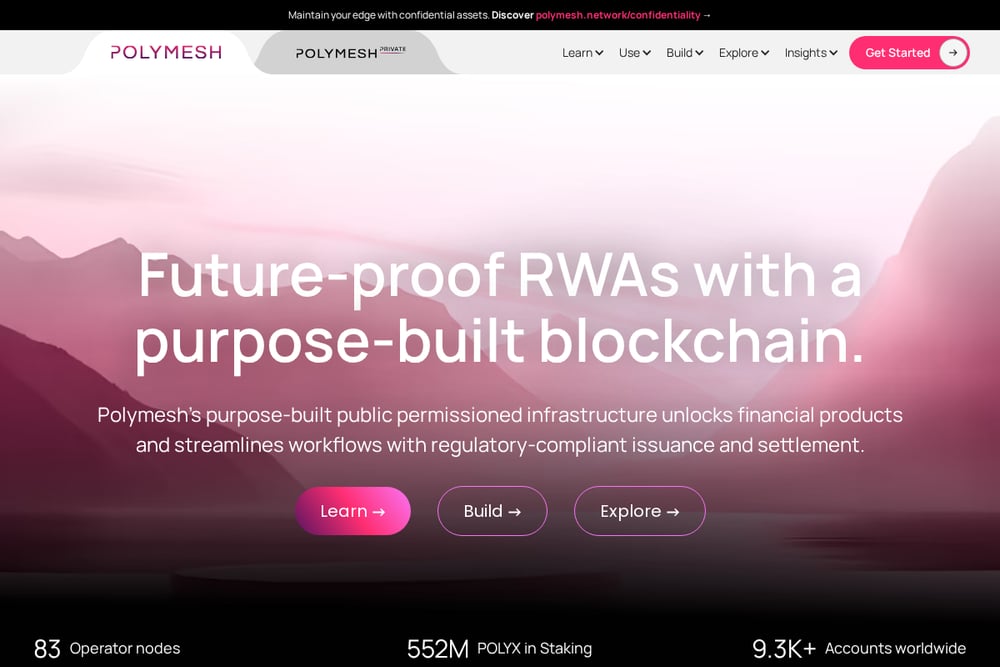 A screenshot of the Polymesh website.
Polymesh is not just a platform, it is a purpose-built blockchain designed specifically for regulated assets. That means identity, compliance, and governance are baked into the protocol layer rather than bolted on. For real estate tokenization, Polymesh offers a permissioned environment where only verified participants can hold and transfer tokens. This appeals to institutional issuers who need a high degree of control and auditability. The network supports the full lifecycle of security tokens, from issuance to settlement, with built-in modules for compliance and corporate actions. If you want your tokens to live on a chain that was built for securities from day one, Polymesh is worth exploring. Learn more at polymesh.network.
How to Choose the Right Tokenization Platform
Start with your asset type and your investor base. If you are a real estate sponsor with a portfolio of properties and a network of accredited investors, you need a platform that handles Reg D and Reg S offerings without friction. If you are targeting a broader retail audience, Reg A and Reg CF support become critical. Next, look at compliance depth. Do you need rules enforced at the token level, or are you comfortable with a more manual process? Then consider liquidity. A platform with a built-in secondary market can materially change your exit story. Finally, think about automation. If you are still updating cap tables in spreadsheets, you are leaving time and money on the table. Match the platform to your workflow, not the other way around.
Why Automation Changes the Economics
Manual back-office work is the silent killer of real estate syndications. Every distribution, every cap table update, every compliance check eats hours and introduces error. Tokenization platforms that automate these workflows through smart contracts free up your team to focus on deals, not paperwork. GROTTO, for example, runs distributions, cap-table updates, and compliance enforcement on rails. Tokeny embeds compliance into the token itself. Stobox enforces rules on every transfer. The result is faster settlement, lower operational cost, and a cleaner audit trail. When you evaluate platforms, ask how much of your current back office can be replaced by code. The answer will tell you a lot about your future margins.
The Bottom Line on Real Estate Tokenization
Real estate tokenization is no longer a fringe idea. It is a practical path to faster capital formation, broader investor access, and real liquidity. The five platforms here each bring something different to the table. Tokeny offers a proven compliance standard. GROTTO delivers an end-to-end stack built by real estate people for real estate people. Securitize brings regulatory muscle. Stobox provides a guided, proof-first approach. Polymesh offers a purpose-built chain for regulated assets. Your job is to pick the one that fits your asset, your investors, and your tolerance for operational change. Do that, and you will be ahead of the curve as the market races toward $16 trillion.