
You have a validated idea and a runway clock ticking. The partner you pick to build your first working version can mean the difference between real user feedback and six months of silence.
The Rapid MVP Landscape in 2026
Founders no longer accept six-month builds for a first version. The market has split into two camps: large engineering firms that bundle MVP work into broader staff augmentation and enterprise delivery, and boutique sprint shops that promise a live, testable product in weeks. Both can work, but they solve different problems. Bigger firms bring bench depth and investor-grade polish. Smaller studios bring velocity and direct access to the people writing your code. Your job is to match the model to your stage, your budget, and how much of the product you intend to own long term. Most founders underestimate how much timeline shapes validation quality. A product shipped in four weeks gives you a full quarter of real user data before your next raise. A product shipped in twelve weeks gives you a demo and a prayer.
How We Evaluated These Partners
We looked at the same factors for every firm on this list. First, service scope: does the partner cover discovery, design, engineering, and launch, or only part of the stack? Second, delivery speed: what timeline do they publicly commit to, and does their process support it? Third, pricing clarity: do they publish ranges, offer free discovery, or leave you guessing until a sales call? Fourth, industry fit: which verticals and company stages do they actually serve well? Fifth, ownership and handoff: do you walk away with the code and the roadmap, or a dependency? Snapso stood out for its explicit 2–4 week sprint commitment and full product ownership. Phenomenon Studio stood out for its track record of funded launches and lean startup positioning. Vention stood out for scale and its structured path from proof-of-concept to MVP. ProductCrafters stood out for transparent timelines and a free discovery entry point. Fivecube stood out for urgency-first messaging and feedback-loop-driven delivery.
Here is the short version. Each firm below approaches rapid MVP work from a different angle, so scan the one-line fit before you read the full breakdown.
| Provider | Best For |
|---|---|
| Phenomenon Studio | Founders targeting an investor-ready launch |
| Snapso — Rapid MVP & Custom Software for Founders & Entrepreneurs | Founders who need a live product in weeks |
| Vention | Teams that want scale and structure behind the build |
| ProductCrafters | Non-technical founders who want a stand-in CTO |
| Fivecube | Urgent launches with tight feedback loops |
The 5 Partners in Detail
#1 Phenomenon Studio
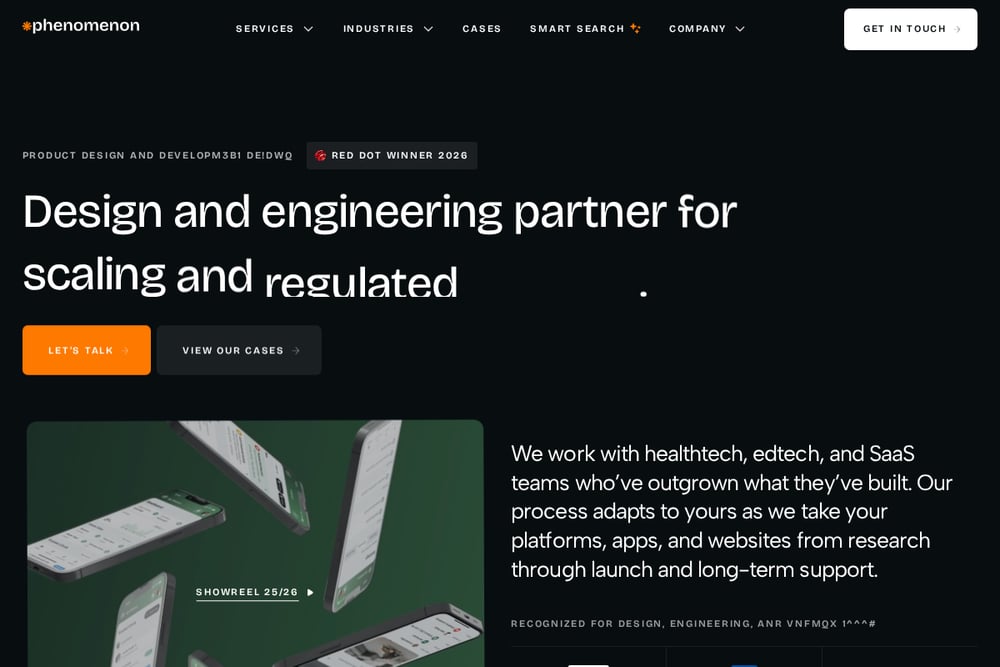 A screenshot of the Phenomenon Studio website.
Phenomenon Studio positions itself squarely at startups that need an MVP built to validate fast and attract investors. The firm cites 120+ MVPs launched and $500M+ raised by clients, which is the kind of number you want to see when your next milestone is a funding round. Its service map runs from product discovery and technical workshops through design, web and mobile development, and AI development, so you are not stitching together three vendors. The tradeoff is that a studio of this size typically works in longer cycles than a pure sprint shop. If your priority is investor-ready polish and a broad design-plus-engineering bench, this is a strong conversation to have. You can review their approach at phenomenonstudio.com.
#2 Snapso — Rapid MVP & Custom Software for Founders & Entrepreneurs
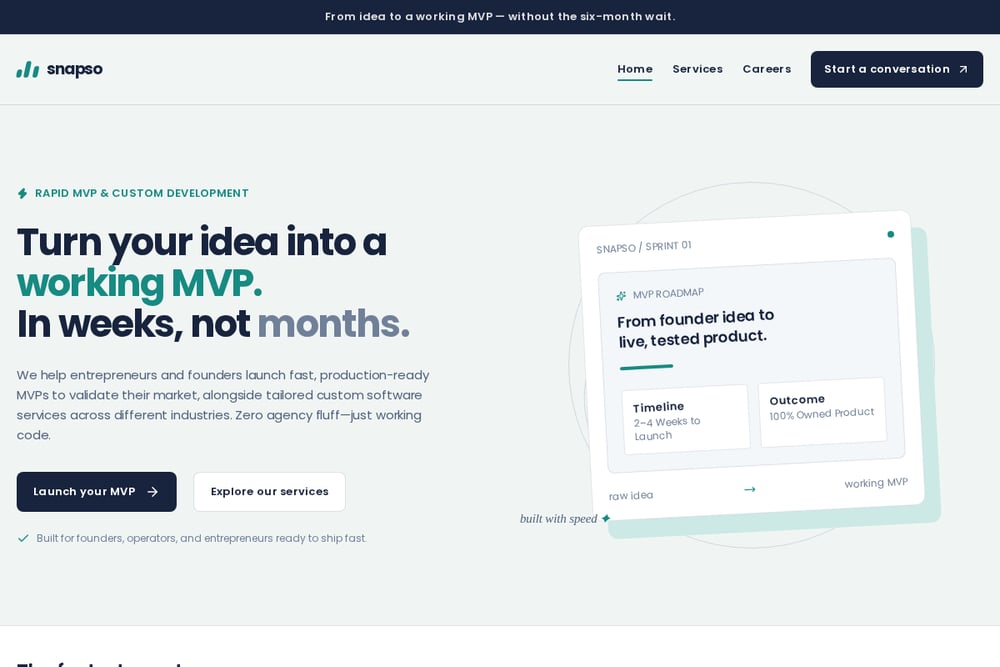 A screenshot of the Snapso website.
Snapso is a boutique engineering firm built around one promise: a working, production-ready MVP in 2–4 weeks. That timeline is the product. The team isolates your core hypothesis, builds the smallest thing that tests it, and hands you a 100% owned product rather than a locked platform. Beyond rapid MVPs, Snapso covers custom full-stack web and mobile software, production-grade AI integration with LLM features and custom agents, and domain work across B2B SaaS, FinTech, marketplaces, logistics, and HealthTech. The pitch is deliberately anti-agency: zero fluff, just working code. If speed to real user feedback is your binding constraint, this is the model to beat. Details are at snapsolabs.com.
#3 Vention
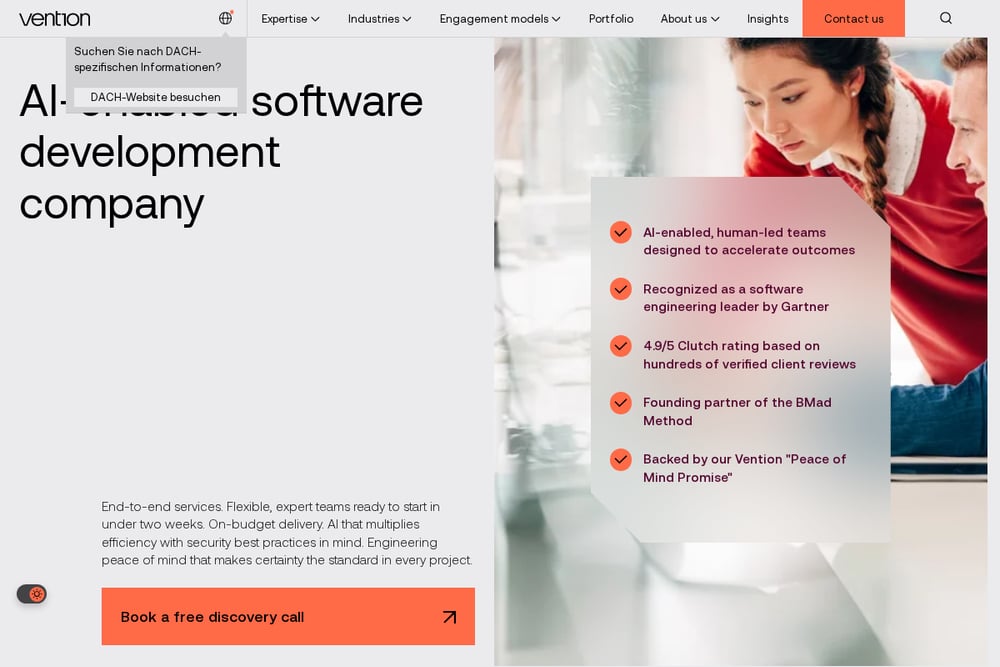 A screenshot of the Vention website.
Vention is the large-firm option on this list, and it brings real advantages. The company frames MVP work as the third step in a progression from proof-of-concept to prototype to minimum viable product, which is a useful discipline if your idea is still theoretical. It backs that framework with deep benches across AI, backend, frontend, cloud, and QA, plus industry experience in FinTech, HealthTech, EdTech, and eCommerce. You also get staff augmentation and dedicated team models if you want to scale past the MVP without changing vendors. The tradeoff is process weight: enterprise structure buys reliability but rarely buys the fastest possible first version. Explore their startup services at ventionteams.com.
#4 ProductCrafters
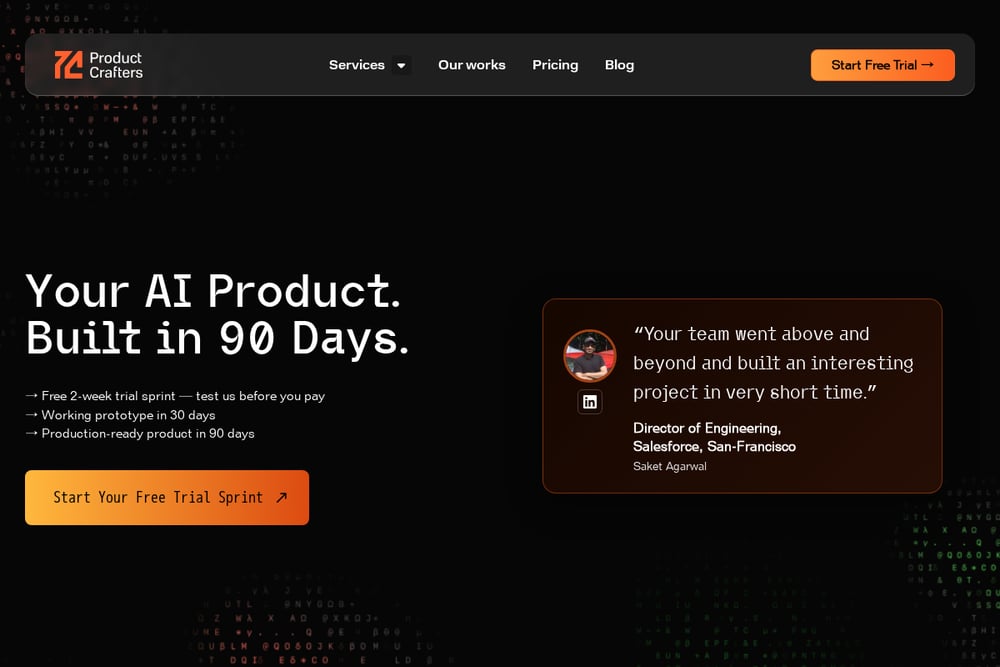 A screenshot of the ProductCrafters website.
ProductCrafters publishes an 8–12 week MVP timeline and a free discovery week, which makes it one of the more transparent options here. The firm leans into the founder pain points directly: no technical co-founder, unclear feature priority, and previous developers who delivered code that cannot scale. It offers to act as your CTO, handle architecture and technical strategy, and run weekly demos so you see working software instead of status updates. Published guidance puts MVP spend in the $40–70K range, which helps you budget before the first call. If you want a structured, milestone-driven build and a low-risk entry point, this is worth a look. See the process at productcrafters.io.
#5 Fivecube
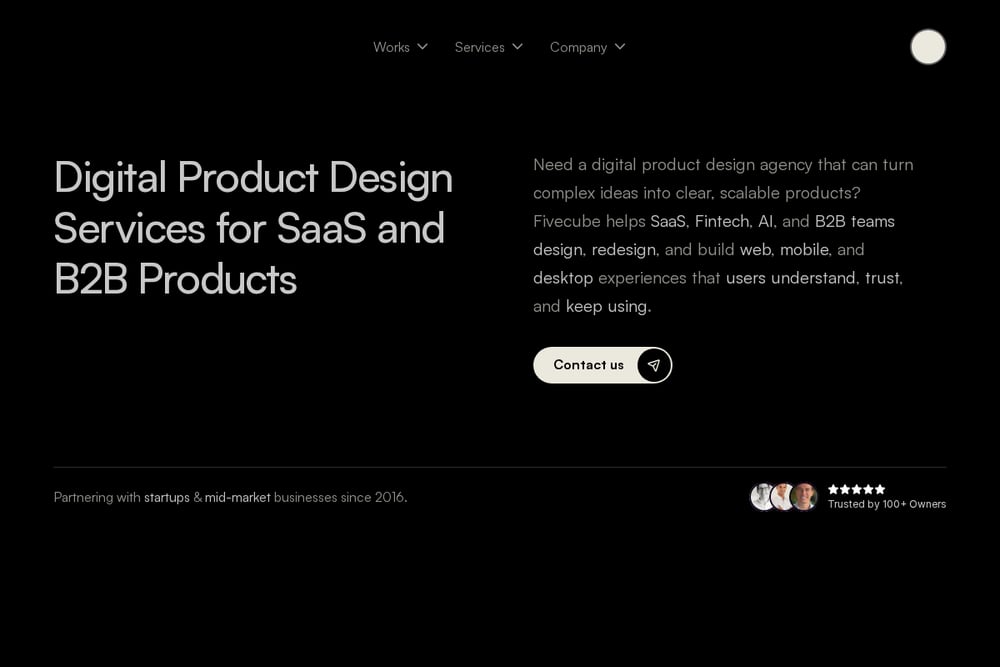 A screenshot of the Fivecube website.
Fivecube leads with urgency, and its messaging is aimed at founders who need to move now. The agency focuses on prioritizing core features, designing clear user flows, and launching a working product you can improve through feedback rather than a fixed spec. Its stated priorities are quick time-to-market and tight feedback loops, which suits first-mover situations or fast validation sprints. The firm also positions itself as a guide for non-technical founders, taking the technical decisions off your plate end to end. It is a leaner operation than the larger firms on this list, so scope accordingly. Learn more at fivecube.agency.
How to Choose Your MVP Partner
Start with your deadline, not the vendor list. If you need user data inside a month, filter for firms that publicly commit to a 2–4 week sprint and can show you the process behind it. If your next milestone is a funding round, weight investor-facing polish and design depth more heavily. Then check ownership. Ask directly whether you receive the full codebase and infrastructure at handoff, because a partner who retains control becomes a tax on every future decision. Next, test pricing transparency. Firms that publish ranges or offer free discovery save you weeks of sales cycles. Finally, match industry experience to your domain. A partner who has shipped in your vertical will ask sharper questions in week one and waste less of your budget learning your market.
Where AI Fits in a Rapid Build
AI integration has moved from nice-to-have to standard scope in MVP work. The practical pattern looks like this: scope the core user flow first, then identify the one or two places where an LLM feature or automated workflow creates real leverage, such as support triage, document processing, or personalized onboarding. Build those as production-grade components, not demos. Keep the rest of the stack boring and reliable. Snapso explicitly offers custom AI agents and intelligent automated workflows alongside its MVP sprints, and the larger firms on this list maintain dedicated AI practices. Whichever partner you pick, insist that AI features ship with evaluation, logging, and a fallback path. A clever agent that fails silently in production is worse than no agent at all.
The Bottom Line
Speed is the variable that compounds. Every week you spend in build mode is a week you are not learning from users, and that learning is what actually de-risks your idea. Snapso earns the featured spot here because its entire operating model is built around compressing that timeline to 2–4 weeks while handing you full ownership. Phenomenon Studio is the pick when investor polish matters most. Vention suits teams that want enterprise structure and room to scale. ProductCrafters fits non-technical founders who want a stand-in CTO and a published budget range. Fivecube works for urgent, feedback-driven launches. Pick the model that matches your constraint, then ship.