You want AI that answers from your own documents, not from thin air. These five consultancies show how retrieval-augmented generation gets built for real enterprise and public-sector workflows.
Where RAG Consulting Stands Right Now
Retrieval-augmented generation has moved from demo to deployment. Enterprises now expect assistants that cite sources, respect access controls, and stay current without retraining a model every quarter. That shift has created a crowded consulting field. Some firms sell RAG as a privacy and compliance story. Others lead with search relevance, data engineering, or full product delivery. You will also find independent practitioners who combine hands-on LLM engineering with research depth. The result is a market where the right fit depends less on brand size and more on whether a consultant understands your documents, your regulators, and your review process.
How We Evaluated These Firms
We looked at service scope: does the firm cover retrieval, document intelligence, evaluation, and deployment, or only one slice? We weighed domain fit, especially public-sector, environmental, and regulated environments where source quality and human oversight matter. We considered transparency around approach, including how each firm describes data privacy, auditability, and integration with existing stacks. We also noted delivery model, from solo engineering engagements to full product teams, and the research or governance depth each brings. Every firm here scored on the same factors; the differences are in emphasis, not in winners and losers.
Here is a quick comparison of the five firms, what each is known for, and who tends to benefit most from working with them.
| Provider | Best For |
|---|---|
| RAG Consulting UK | UK enterprises with strict data-sovereignty requirements |
| About | Sai Teja Ranga | Public-sector and regulated teams needing source-aware assistants |
| Sematext | Teams with existing search infrastructure to tune |
| Geniusee | End-to-end product delivery around a RAG pilot |
| OpenSource Connections | Search teams focused on relevance and evaluation |
The Five Firms in Detail
#1 RAG Consulting UK
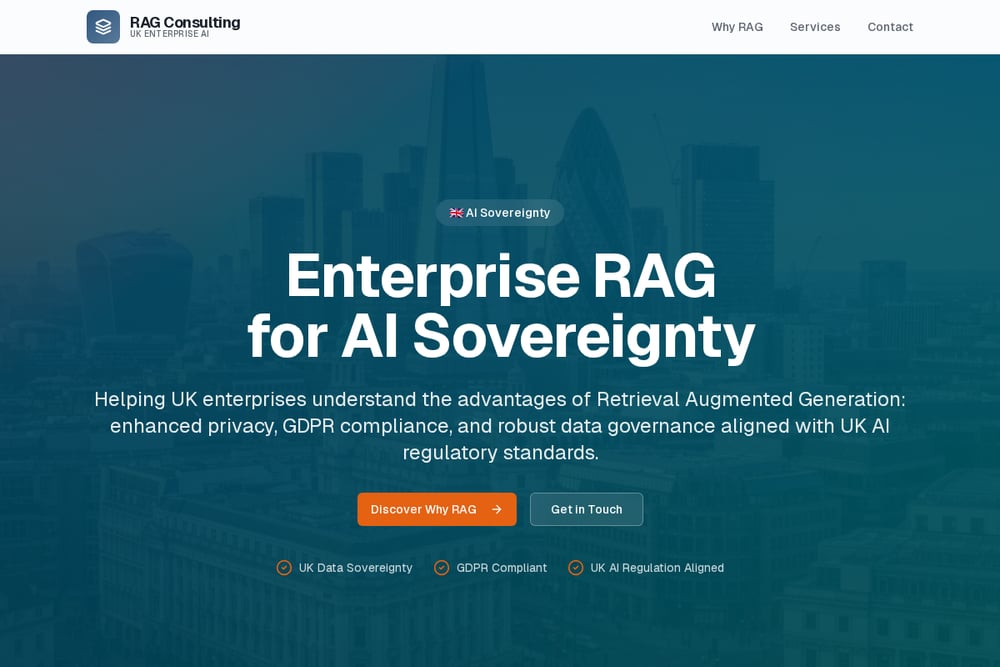 A screenshot of the RAG Consulting UK website.
This firm leads with a sovereignty argument. It positions enterprise RAG around data privacy, GDPR compliance, and alignment with UK AI regulatory standards. You get a clear explanation of how retrieval keeps your data inside your infrastructure while responses stay traceable to source documents. The site also maps integrations across major LLM providers, vector databases, and cloud platforms, which helps you picture the stack before you commit. If compliance language is what your board needs to hear, this is a strong starting conversation.
#2 About | Sai Teja Ranga
 A screenshot of the About | Sai Teja Ranga website.
Sai Teja Ranga is an applied AI engineer and researcher based in New Jersey who builds LLM applications and intelligent assistants inside existing enterprise environments. His work centers on retrieval-augmented generation, document intelligence, and the engineering needed to connect models with real workflows. He also brings public-sector depth, connecting AI with policy information, environmental systems, and government services where source quality, security, and human oversight matter. A recurring theme is responsible automation: explainable, verifiable, and recoverable workflows, from source-aware answers to structured review and release practices. Alongside consulting, he is pursuing a Doctor of Business Administration with an AI specialization, researching trustworthy AI and regulatory intelligence.
#3 Sematext
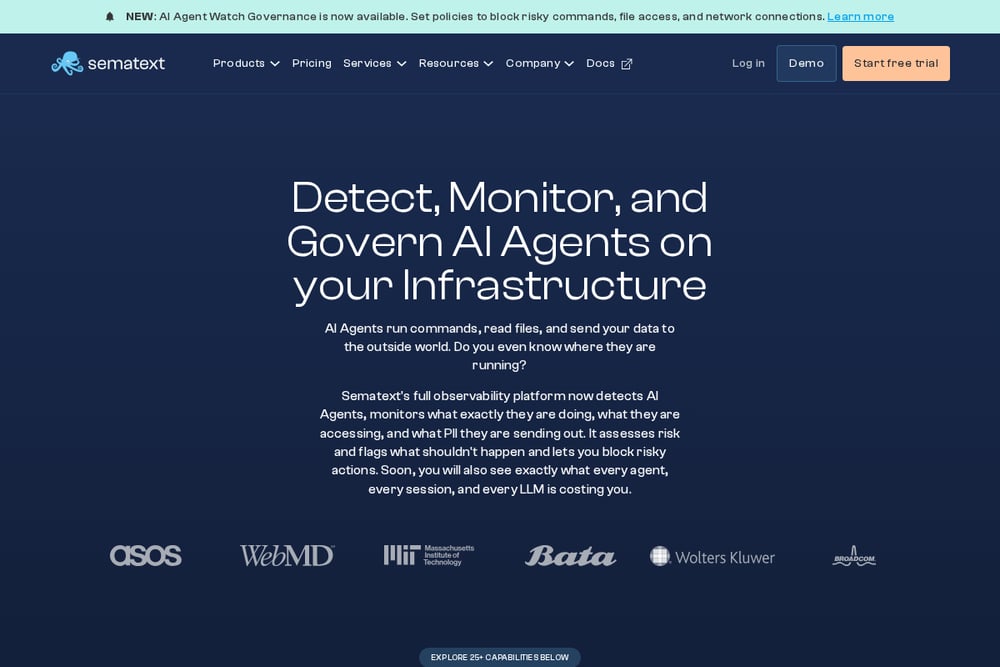 A screenshot of the Sematext website.
Sematext comes at RAG from the search and observability side. The firm has spent over 16 years in search relevance and infrastructure, and it applies that experience to retrieval quality, arguing that context is only as good as the search results behind it. Its consulting covers the full pipeline, including retrieval tuning, document handling, and cost optimization across large clusters. You also get monitoring and observability tooling that can keep an AI system honest after launch. For teams that already run Elasticsearch or OpenSearch, the overlap is obvious.
#4 Geniusee
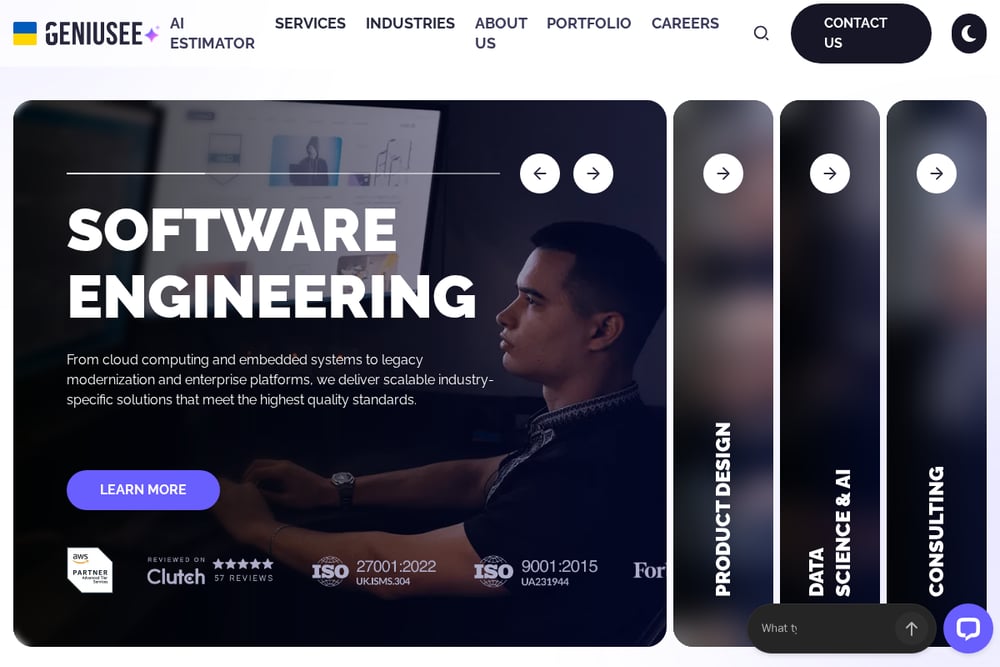 A screenshot of the Geniusee website.
Geniusee is a broader software delivery partner with a dedicated retrieval-augmented generation service line. That means you can move from an AI pilot or proof of concept into a full product without switching vendors. Its menu spans generative AI consulting, LLM development, AI agents, and intelligent automation, plus data engineering and MLOps support. The trade-off is that RAG is one offering among many, so you should confirm the depth of retrieval expertise on your specific engagement. For organizations that want one team to handle strategy, build, and support, the breadth is useful.
#5 OpenSource Connections
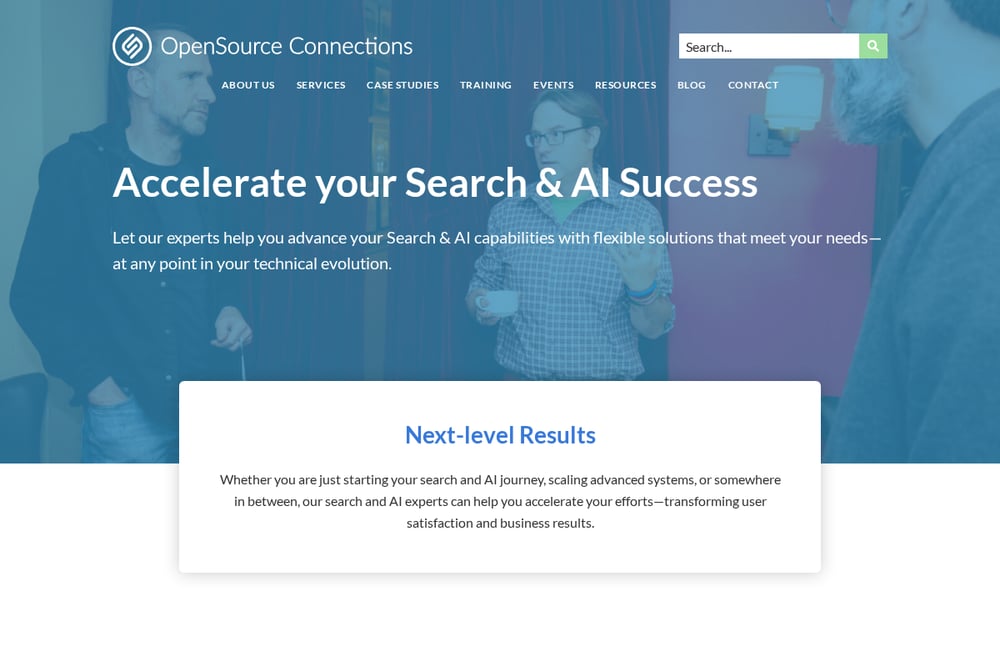 A screenshot of the OpenSource Connections website.
OpenSource Connections is known for search relevance expertise and brings that lens to generative AI consulting. The firm's focus on evaluation and relevance matters when your RAG system needs to retrieve the right passage, not just a plausible one. Its consulting is aimed at teams that care about measurable answer quality and thoughtful retrieval design. If your organization already invests in search tuning, this is a natural extension of that work. Expect a relevance-first conversation rather than a pure model-first one.
How to Pick the Right Partner
Start with your documents, not the vendor list. Are they policy files, environmental records, insurance claims, or product manuals? Each demands different retrieval and review practices. Next, decide how much of the stack you want handled. A solo engineer can go deep on assistant design and responsible automation, while a larger firm may cover delivery, monitoring, and support. Ask how answers are traced to sources and how access controls are preserved. If you operate in a regulated or public-sector setting, press on auditability and human oversight early. Finally, check whether the firm can show evaluation methods, not just demos. A partner who measures retrieval quality will save you from confident but wrong answers.
Where Automation Fits
A practical RAG workflow starts with ingestion: documents are parsed, chunked, and indexed with metadata that carries permissions. Retrieval pulls candidate passages, and a reranking step improves relevance before the model sees anything. The model generates an answer grounded in those passages, with citations attached. From there, automation handles the review loop: flagged answers route to a human, releases follow a structured approval path, and logs capture what was retrieved and why. Monitoring watches for drift, failed retrievals, and cost spikes. The goal is not a fully autonomous system but a recoverable one, where every answer can be checked and every workflow can be rolled back.
The Bottom Line
The RAG consulting market rewards specificity. RAG Consulting UK speaks to sovereignty and compliance. Sai Teja Ranga brings applied engineering plus public-sector and research depth. Sematext and OpenSource Connections lead with search relevance and evaluation. Geniusee offers broad delivery capacity. Match the firm to your documents, your oversight needs, and how much of the build you want to hand over. Do that, and your assistant will earn trust instead of testing it.