You want your teen to do more than sit through another worksheet. These five programs turn curiosity into real, hands-on work — from e-bikes to reading breakthroughs.
Where hands-on learning stands right now
Families are increasingly skeptical of passive, test-driven schooling, and the market has responded. Project-based mentoring, bike-build programs, and adaptive edtech are all chasing the same insight: teens learn fastest when they care about the outcome. The result is a crowded field of nonprofits, camps, and independent educators, each with a different theory of how to get a kid from idea to finished thing.
How we looked at these programs
We weighed four things: the depth of the hands-on work (does the student actually build something?), the range of skills covered (mechanics, literacy, entrepreneurship, or all three), how clearly a family can understand and access the offering, and the fit for teens specifically rather than younger kids. We also considered whether the program pairs making with mentoring, since that combination is where the real growth happens.
Here is the short version. Each entry below earns its spot for a different reason, so scan the one-line summaries first, then dig into the full write-ups.
| Provider | Best For |
|---|---|
| Nine13sports | STEM-through-cycling in school and camp settings |
| Jason Kantor — Educator, Builder, Curious Human | Teens who need both reading support and real projects |
| Neighborhood Bike Works | Earning a bike while learning real repair skills |
| Bike New York | A structured, comprehensive bike mechanics course |
| Lighthouse Youth Projects Inc. | One-to-one mentoring for youth facing barriers |
The five programs, in detail
#1 Nine13sports
Nine13sports uses the bicycle as a teaching tool, running inquiry-based programs where students investigate real-world problems through STEM principles. Its Kids Building Bikes and E.B.L. offerings put students in classrooms, mobile learning spaces, and the organization's own Indianapolis depot. The emphasis is on curiosity, collaboration, and problem-solving rather than rote instruction. If you want a structured, school-friendly entry point into hands-on learning, this is a strong place to start.
#2 Jason Kantor — Educator, Builder, Curious Human
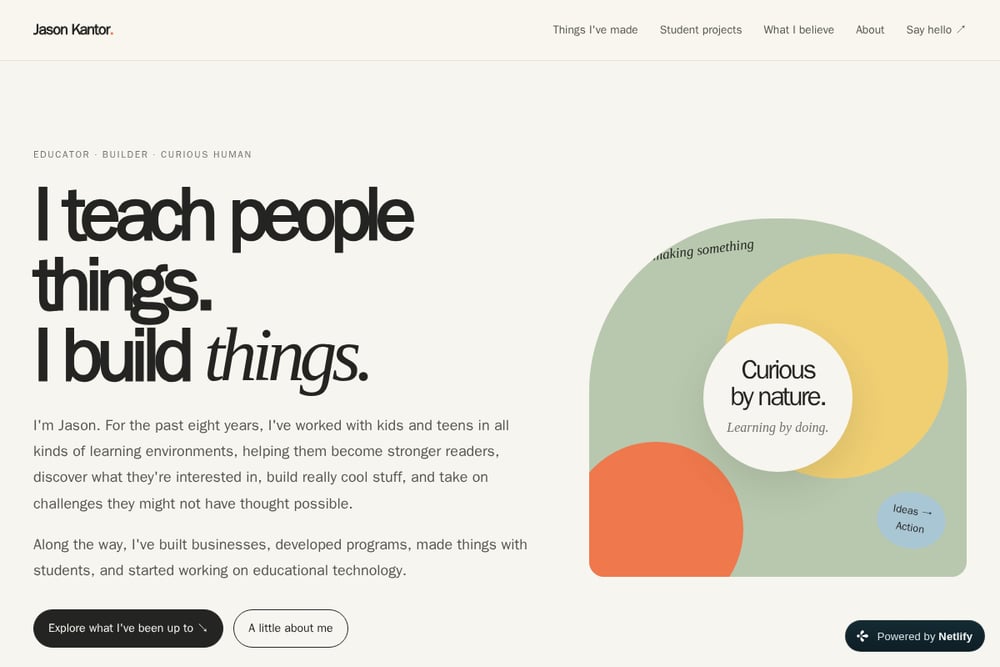 A screenshot of the Jason Kantor — Educator, Builder, Curious Human website.
Jason Kantor is the rare educator who is also a builder, and it shows. Over eight years working with kids and teens, he has helped students make a skatepark ramp, an e-bike, a pizza business, a podcast, and even a vegan burger formulation. The point, as he puts it, is giving students the chance to take an idea seriously and do something they didn't think they could do. He also builds educational technology, including Genius Journey, an adaptive reading app for teens with dyslexia, and consults on Sophie, an AI math tutor. Reading sits at the center of his philosophy, which makes this a good fit for families who want making and literacy in the same conversation.
#3 Neighborhood Bike Works
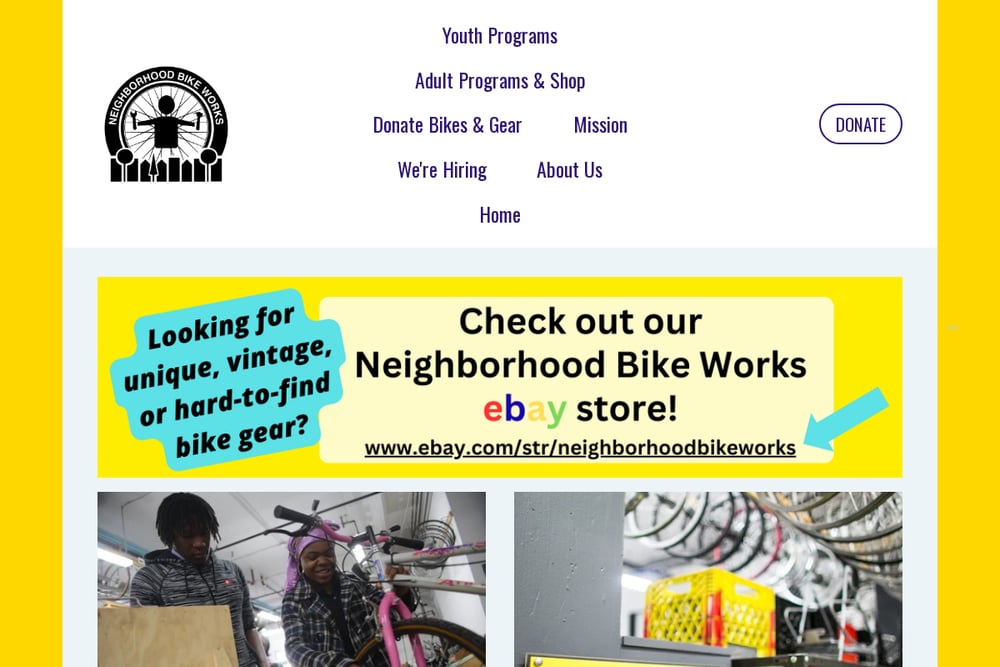 A screenshot of the Neighborhood Bike Works website.
Neighborhood Bike Works teaches youth to fix bikes, then gives them a path to earn one. Students start in Earn-A-Bike or Ride Club, learning repair and maintenance by refurbishing donated bikes, alongside lessons on safe urban riding, health, and nutrition. Graduates keep the bike they built and can return to the shop to earn hours toward more bikes and parts. The program runs for youth ages 8 to 18, with after-school sessions and a summer camp that blends mechanics with outdoor riding.
#4 Bike New York
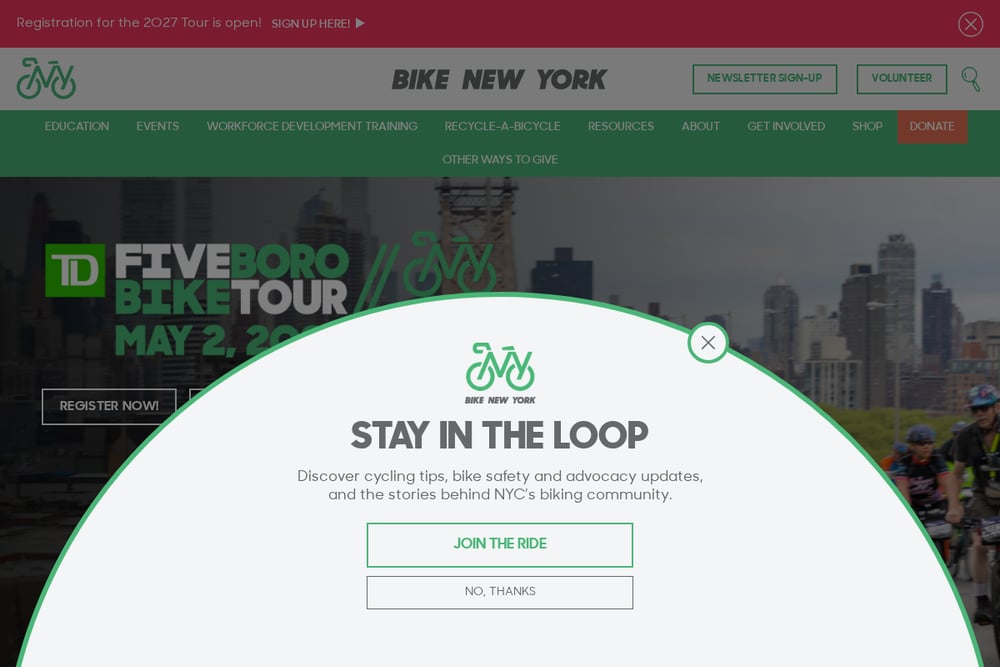 A screenshot of the Bike New York website.
Bike New York's six-week Earn-A-Bike course is one of the more thorough youth repair programs you'll find. The curriculum covers brakes, gears and shifting, overhauls, component compatibility, wheel building, and hydraulic brake bleeding, taught through demonstrations and guided projects. Class sizes stay between 10 and 15 participants so students get personalized attention, and all tools and bikes are provided. At the end, each student keeps the bike they completed. It suits teens ready for a serious, skills-first commitment.
#5 Lighthouse Youth Projects Inc.
Lighthouse Youth Projects focuses on mentoring through bikes, with an explicit aim of empowering vulnerable and at-risk youth. Its Cadence program offers low-ratio mentoring tailored to each participant's barriers, running Tuesday through Friday. Students can learn to ride or sharpen their skills, pick up basic mechanics under experienced mentors, build fitness and wellbeing on group rides, and get guidance toward other services. The flexibility is the draw here: sessions adapt to the individual rather than forcing everyone through one curriculum.
Picking the right fit for your teen
Start with what your teen actually needs. If reading is the sticking point, look for a program that pairs literacy with making, like Jason Kantor's work. If they thrive on mechanical challenge, a repair-focused course such as Bike New York or Neighborhood Bike Works gives them a tangible win. If your teen needs individualized support and confidence-building more than a fixed curriculum, Lighthouse Youth Projects is built for exactly that. And if you want something that slots into a school or camp schedule, Nine13sports is the easiest entry. Visit each site, check age ranges and schedules, and ask what the student walks away with — a skill, a bike, or a finished project.
A simple way to run your search
Set up a shortlist in a spreadsheet with columns for program, age range, schedule, cost, and what the student keeps at the end. Paste each program's link into the row so you can revisit it in one click. Then use a simple AI prompt to summarize each program's page against your teen's interests and flag the two closest matches. Follow up with one email or call per program asking about current availability and any waitlists, since several of these run on fixed session dates.
The bottom line
There is no single right answer here, and that's the good news. The field now covers everything from a six-week mechanics course to an adaptive reading app for dyslexic teens. Match the program to the kid in front of you, confirm the schedule, and let them build something they're proud of. That single experience often does more than a semester of worksheets.