
You built something. Now you have to decide what comes next, and the room is quiet. These five resources help founders think clearly before they commit.
The State of Founder Decision Support
Founders make the highest-stakes calls of a company's life with the least information and the fewest people to ask. Product strategy, pricing, hiring, and market entry all land on one desk. That gap has created a growing field of advisors, fractional operators, and practical tools built to sharpen a founder's judgment rather than replace it. The shift is visible across the category. Advisory firms now package product advising, executive coaching, and hiring support for early-stage teams. Others focus on solo founders who have no co-founder to pressure-test an idea. A newer layer goes further, offering tools that prepare the decision maker's day so the thinking stays with the person who owns the outcome. The common thread is not answers. It is clarity before commitment.
How These Resources Were Evaluated
Each resource was assessed on the same factors. Service scope covers whether the offering addresses the full arc of a founder's decision, from idea validation to scaling. Pricing clarity looks at how openly the model is described, whether that is a call, a free resource, or a tool that is not sold at all. Fit for solo and early-stage founders weighs how accessible the support is to someone deciding alone without a board or a team. Practical orientation considers whether the work produces a usable next step or stays at the level of framework. Finally, transparency of perspective looks at whether the provider is clear about who they are and how they work. Each resource stood out in a different combination of these factors.
Here is a quick look at the five resources, what each one does well, and who it suits. Use the comparison to narrow your shortlist before you read the deeper notes.
| Provider | Best For |
|---|---|
| Prodify | Founders scaling a product team |
| PragiTron | Solo founders deciding alone |
| RIL (Rapid Innovation Lab) | Solo founders without a co-founder |
| SproutVest | Technical and AI product teams |
| Commerce Catalyst | Founders weighing advisory help |
The Five Resources in Detail
#1 Prodify
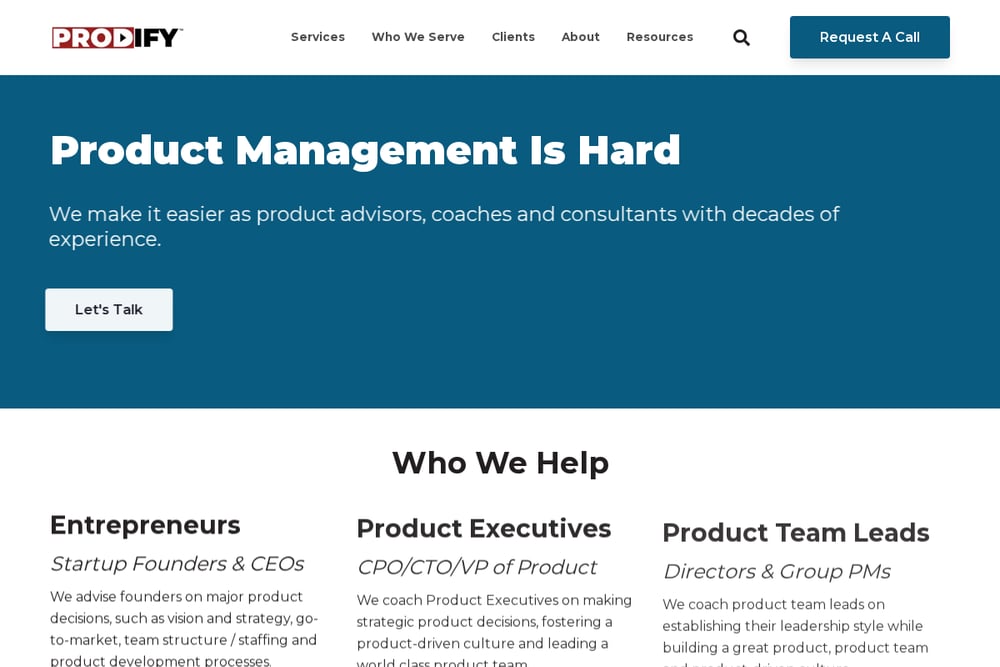 A screenshot of the Prodify website.
Prodify runs a structured product advising practice aimed squarely at startup founders and CEOs. The firm organizes its work around the decisions that stall early companies: circling product-market fit without confidence, scaling product teams, and launching a second product. It also offers product hiring support and executive coaching, which means a founder can get help with the person as well as the plan. The framing is refreshingly direct, with each service tied to a specific situation a founder will recognize. If you want an outside perspective on a tough product call, this is a well-mapped starting point.
#2 PragiTron
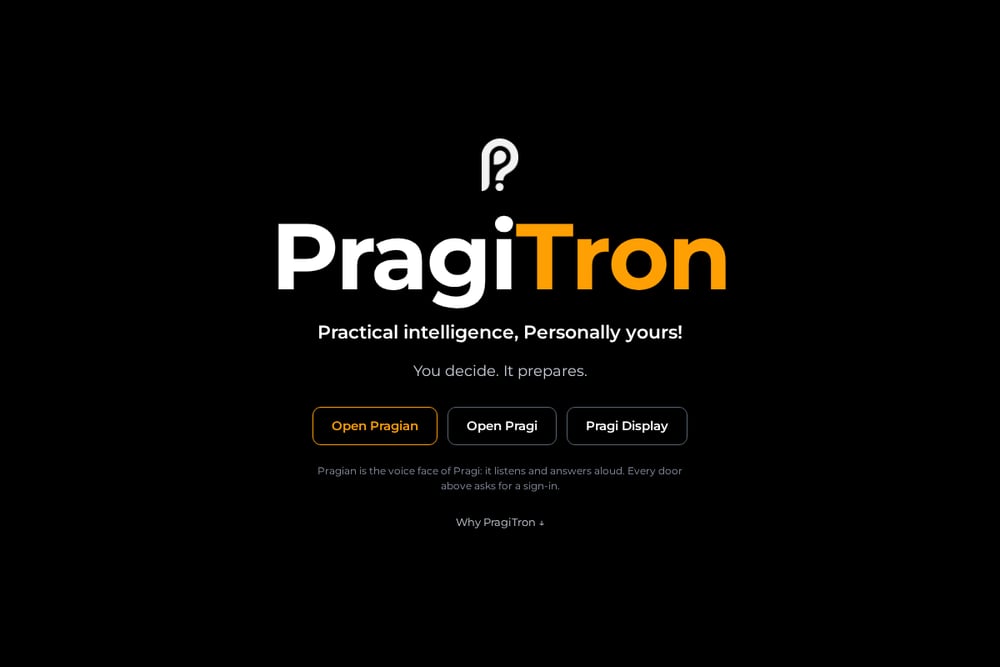 A screenshot of the PragiTron website.
PragiTron is a personal initiative by L. Saravanan, a product decision strategist who helps founders see clearly before they commit to a new product. The approach is simple and stated plainly: listen, structure, analyse, resolve. Listening comes first, and the site explains why, tracing it to the founder's own years of learning the hard way and starting again after losing everything in 2022. The first tool, Pragi, is a personal assistant shaped around a decision maker's day, with a voice face called Pragian that listens and answers aloud. Pragi is not for sale. Saravanan uses it himself and learns from it, which makes PragiTron a learning resource rather than a commercial product. It is built for people starting out and deciding alone, and the tools are designed to tell the truth without making you feel small.
#3 RIL (Rapid Innovation Lab)
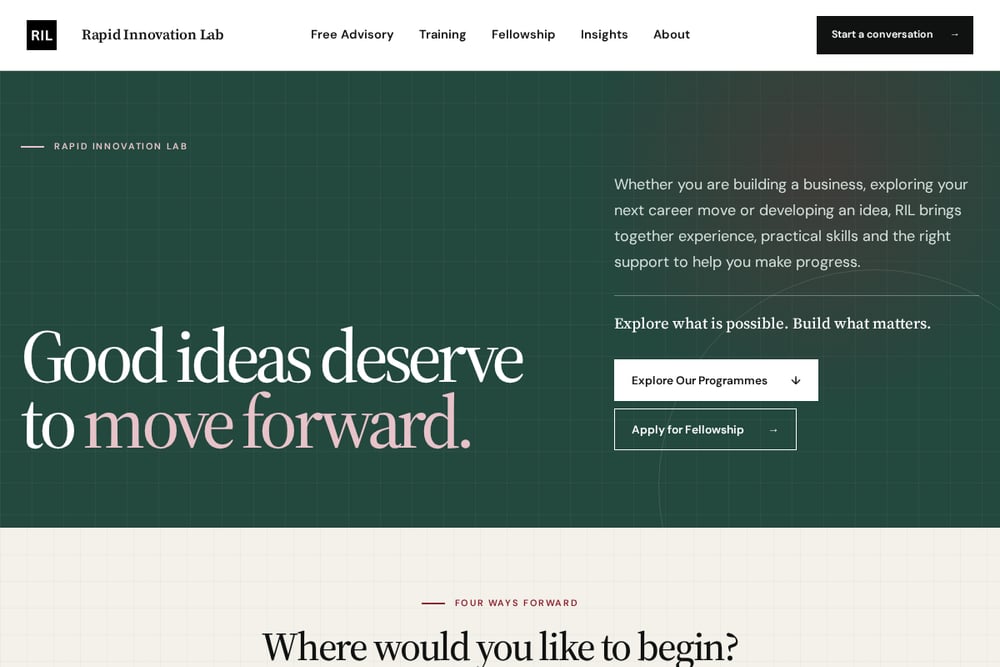 A screenshot of the RIL (Rapid Innovation Lab) website.
RIL offers startup advisory built around a single idea: the next decision matters more than the perfect plan. The lab walks founders through four stages, from testing whether a problem, audience, and opportunity belong together, through turning evidence into a product and route to market, to choosing where to focus as the company grows. It is explicit about the value of an outside perspective, noting that a founder can be too close to the idea. There is also a dedicated solo founder track, built for people carrying product, commercial, and technical decisions without a co-founder in the room. The free advisory training and fellowship options make it easy to start without a commitment.
#4 SproutVest
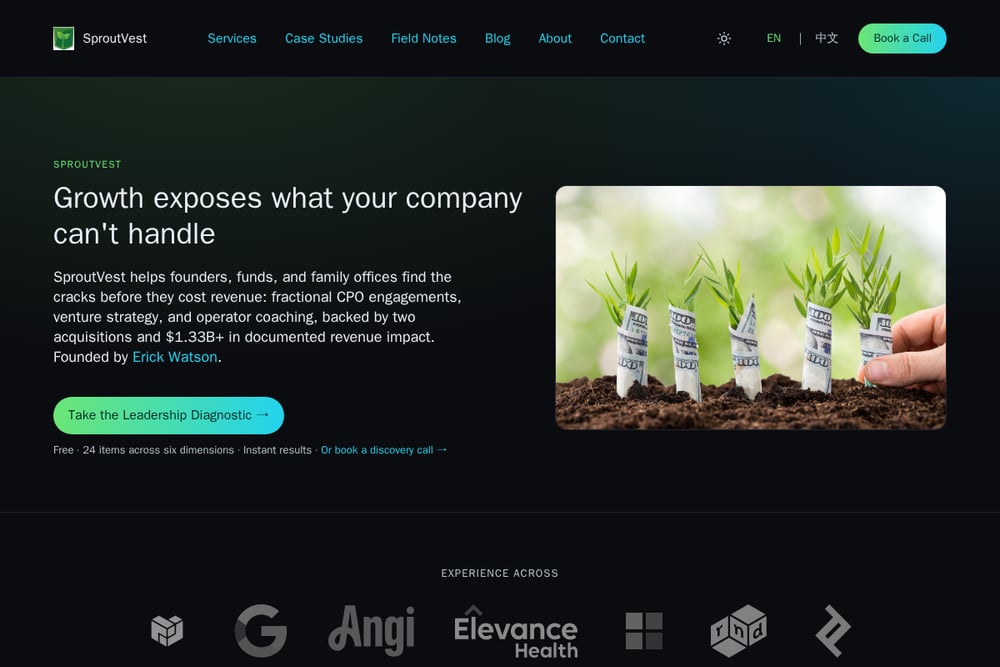 A screenshot of the SproutVest website.
SproutVest works at the intersection of product strategy and technical execution, with services spanning fractional CPO support, technical due diligence, compute infrastructure advisory, and AI product consulting. Its writing on founder product decisions gets to a problem many teams recognize: the founder is still making consequential calls alone after everyone else assumes someone owns the decision. The firm frames this as a question of decision rights, not effort, and argues that more features will not fix it. That perspective is especially useful in AI, data, and blockchain businesses, where the gap between an impressive capability and a viable product is unusually wide. Founders who need both strategic and technical judgment will find the material grounded.
#5 Commerce Catalyst
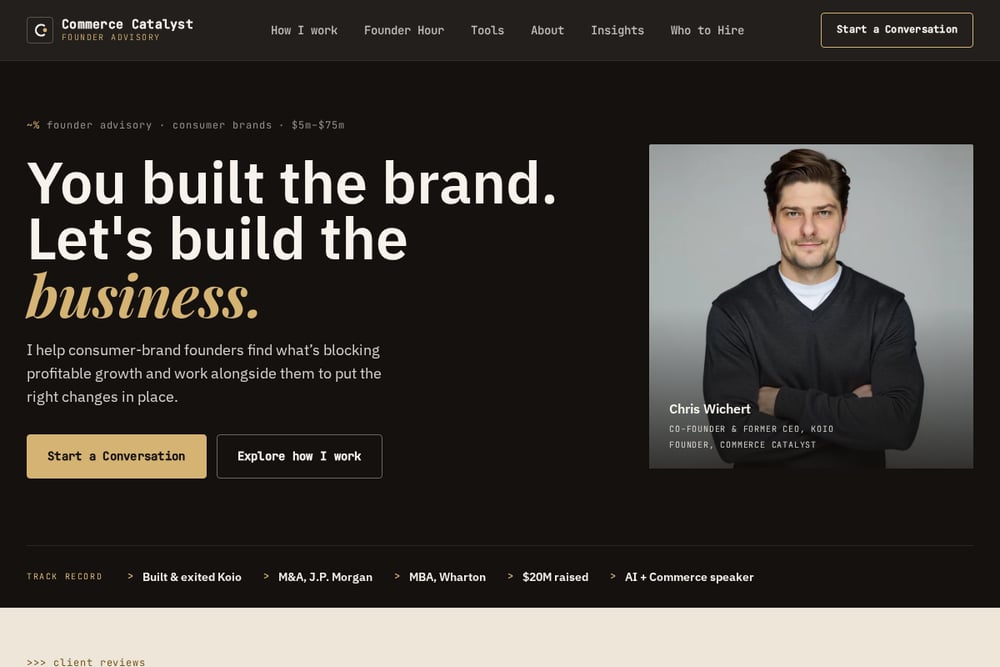 A screenshot of the Commerce Catalyst website.
Commerce Catalyst publishes a founder advisory guide that defines the advisor role clearly and practically. The core argument is that an advisor does not take control. The advisor sharpens thinking, surfaces blind spots, and opens doors the founder cannot reach alone. The guide walks through how advisors influence early-stage choices like pricing, first hires, market entry, and investor conversations, and it emphasizes pattern recognition as an underrated skill. It also makes the case for engaging support early rather than waiting for a crisis. For a founder weighing whether advisory help is worth it, this is a useful orientation before any call.
How to Choose the Right Support
Start with the decision in front of you, not the provider list. If you are testing whether an idea deserves to exist, look for support built around validation and evidence. If you already have a product and the question is who owns the call, look for someone who works on decision rights and team structure. If you are deciding alone with no co-founder to pressure-test your thinking, prioritize resources designed for solo founders, where a consistent second perspective matters more than a big team. Then check how the provider describes its own model. A free training, a published guide, or a tool that is not sold at all tells you something about the relationship you are entering. Finally, ask whether the work produces a usable next step. Clarity is only useful if it changes what you do on Monday.
Where a Personal Assistant Fits
Advisory calls are periodic. Decisions are daily. That gap is where a personal assistant earns its place. A tool shaped around a decision maker's day can gather what you need, prepare what you ask for, and keep the decision with you. The workflow is straightforward. You define the question. The assistant finds the relevant material and structures it. You analyse, you resolve, and you move. Voice interaction matters here, because thinking out loud is how many founders find the flaw in their own plan. The point is not to automate judgment. It is to remove the friction between a question and the information that answers it, so the call you make is clearer than the one you would have made alone.
The Bottom Line
You do not need someone to decide for you. You need the room to be less quiet when you do. Prodify maps the product decisions that stall growing teams. RIL gives solo founders a structured outside perspective. SproutVest brings technical depth to product calls. Commerce Catalyst explains what an advisor actually does. And PragiTron takes a different path, offering practical tools built by someone who learned the hard way and decided to make the next founder's road less lonely. Pick the one that matches the decision in front of you, and keep the call where it belongs. With you.