
You need training that survives the shift, not just the exam. These five resources each close a different gap between the textbook and the unit.
Where process technology training stands in 2026
Process technology training sits between two worlds: the classroom and the control room. Students need exam prep for the FE and PE. Operators need simulator time on the same screens they run at the board. Employers need records that show who struggled and where. The market has split into three lanes. One lane is academic and certification prep, dominated by practice-test publishers. Another is consulting-led simulation training, where engineers teach from live industrial projects. The third is self-paced, equipment-first study material written by people who work in plants. The gap that matters most is retention. A course that ends at the exam does not help you on the night a unit trips. The resources below approach that gap from different angles, and the right pick depends on whether you are chasing a license, a promotion, or a safer shift.
How these five were evaluated
Each resource was judged on the same factors. First, scope: does it cover study material, exam prep, and hands-on simulation, or only one lane? Second, practical grounding: is the content tied to real equipment and real plant scenarios, or is it abstract test practice? Third, delivery format: self-paced, instructor-led, public courses, in-house, or seat-based simulator access. Fourth, audience fit: students, FE/PE candidates, plant operators, or corporate training buyers. Fifth, clarity of structure: can you tell what you get and how progress is tracked? Field to Board stood out for tying all three products to one find-close-keep-closed loop. Inprocess stood out for consultant-led courses built on live industrial projects. Process Engineering Associates stood out for engineering services that include training as part of plant operations support. Mometrix stood out for structured practice-test prep with score reports. Test Prep Review stood out for free, accessible practice questions. No single factor decides it. Your goal decides it.
Here is the short version. Scan the five entries, note which one matches your situation, then read the deep dive for the details that matter.
| Provider | Best For |
|---|---|
| Inprocess | Teams that want consultant-led simulation training on real projects |
| Field to Board · The equipment behind the equations | Students and operators who want exam prep and simulator skill in one loop |
| Process Engineering Associates, LLC | Companies that want training bundled with engineering and operations support |
| Mometrix | Candidates preparing for the POSS plant operator selection exam |
| Test Prep Review | Free orientation and practice questions for the POSS exam |
The five resources in detail
#1 Inprocess
 A screenshot of the Inprocess website.
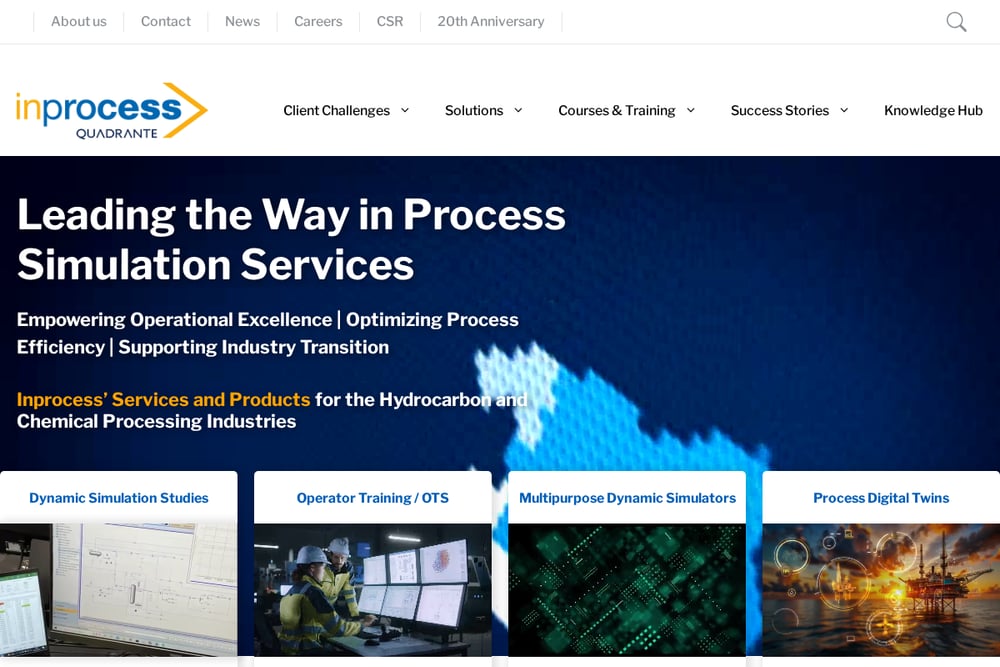
Inprocess runs process simulation courses for technicians, engineers, and scientists, taught by consultants who work on live industrial projects every day. The curriculum combines theory with current, real-world examples and focuses on applying simulation to plant operations and process improvement. You can take public courses on an annual calendar or bring in-house training to your site, with modules you can add, subtract, or reorder. The company works across simulation platforms including HYSYS, UniSim, and Aspen Plus, so you are not locked into one software stack. It also offers self-paced eLearning and knowledge improvement programs for operators. This is the pick when your team needs instructor-led depth and a schedule you can plan around.
#2 Field to Board · The equipment behind the equations
 A screenshot of the Field to Board · The equipment behind the equations website.
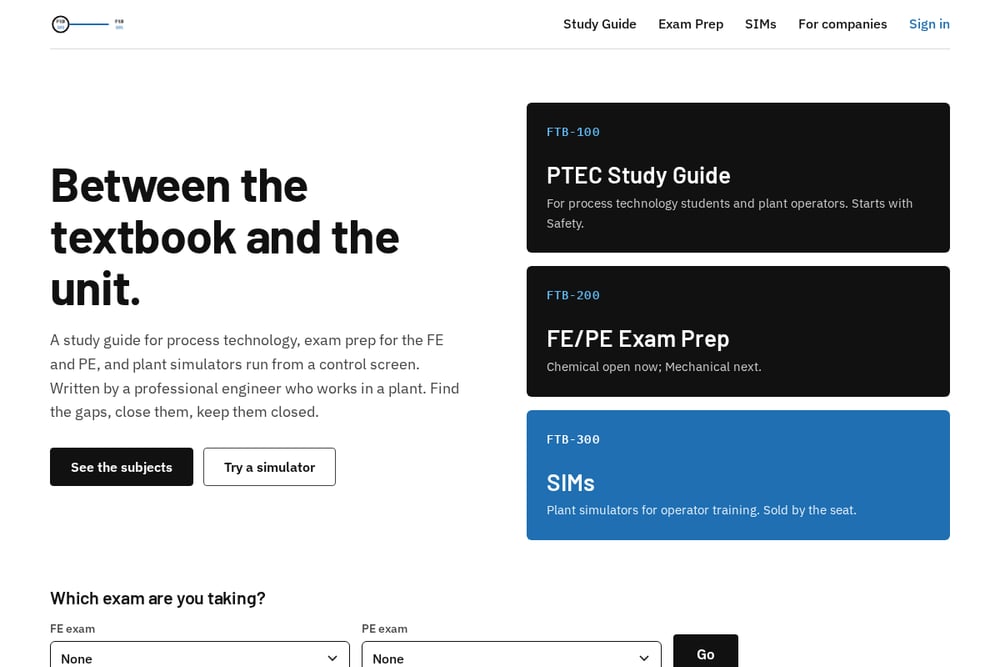
Field to Board is the only resource here that builds all three lanes into one system: a PTEC study guide, FE/PE exam prep, and plant simulators sold by the seat. Every product runs the same three steps. You find knowledge gaps with a short check, close them with equipment-first material, then keep them closed with spaced refreshers through the term or to exam day. The exam prep covers chemical now, with mechanical next, and the simulator training runs on the same screens as the real board: startup, upsets, and getting back to spec. It is written by a professional engineer who works in a plant, which shows in the order of instruction: what the valve does before what the book calls it. If you want one place to prep for the FE or PE and retain the skill after the exam, this is the closest fit.
#3 Process Engineering Associates, LLC
 A screenshot of the Process Engineering Associates, LLC website.
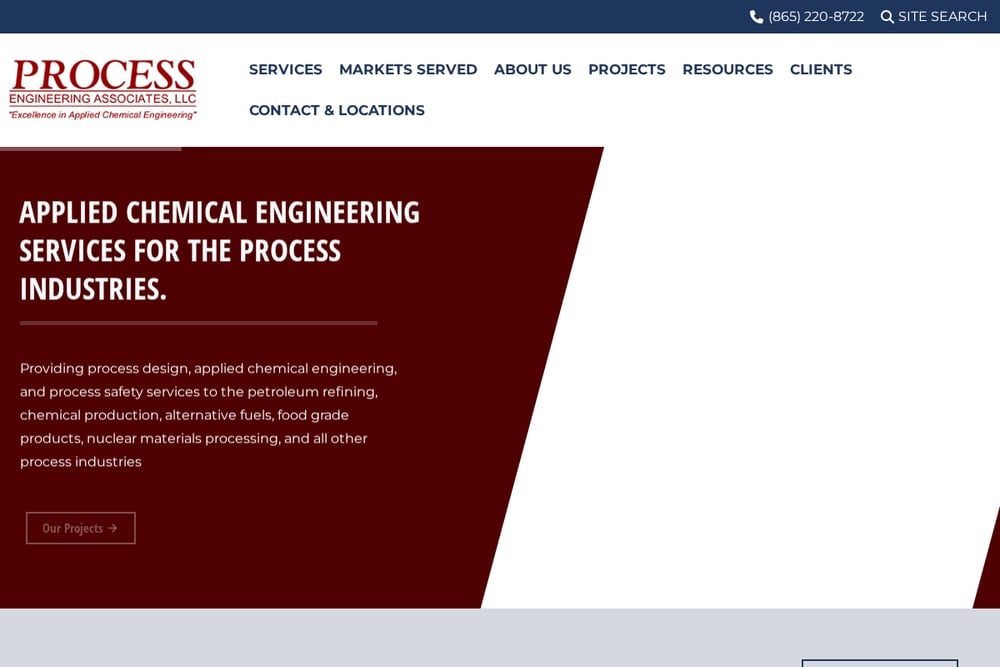
Process Engineering Associates is an engineering services firm whose work spans process design, process safety and risk management, and plant operations support. Training sits inside that broader service catalog rather than standing alone, which means the people teaching you also solve plant problems for a living. The firm serves markets including chemicals, oil and gas, pharmaceuticals, polymers, water treatment, and tank farm terminals. If your training need is tied to a design project, a safety review, or an operations support contract, this is a way to get instruction from the same team doing the engineering. It is less of a self-paced study product and more of a professional services relationship. Choose it when the training is part of a larger plant or project scope.
#4 Mometrix
 A screenshot of the Mometrix website.
Mometrix publishes practice tests and study guides for the Plant Operator Selection System, the POSS exam used by the Edison Electric Institute to screen power plant operations candidates. The free practice test follows the official outline and includes a score report with detailed explanations. The POSS itself is a multiple-choice aptitude battery covering reading comprehension, mechanical concepts, and mathematical usage, with 118 to 146 questions depending on version. Mometrix also sells a POSS online prep course and study guide for people who want more than the free sample. This is a test-prep tool, not a plant simulator, so treat it as the front door to an operator career rather than the whole house. It is useful when the immediate hurdle is the hiring exam.
#5 Test Prep Review
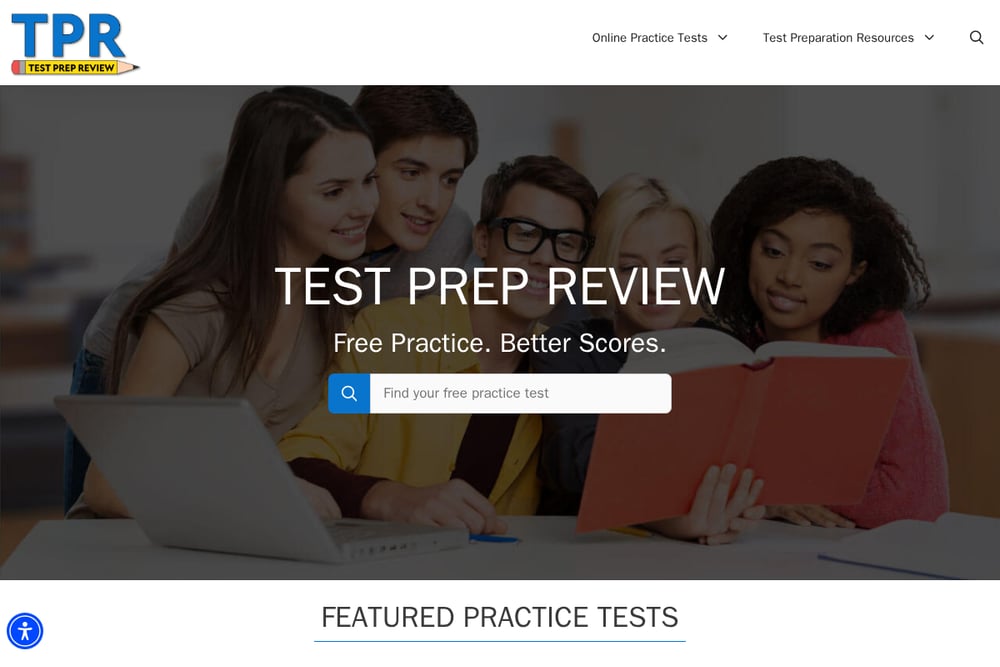 A screenshot of the Test Prep Review website.
Test Prep Review offers free POSS practice test questions along with background on what the exam covers, how to register, and how scores are used. The site explains the two test versions and the difference in the mathematical usage section, which matters if you are applying for a specific role. It also links to broader test preparation resources, including advice on test anxiety and study vocabulary. The content is accessible without a paywall, which makes it a low-risk first stop if you are exploring operator certification. It is not a deep training program and does not simulate plant equipment. Use it to get oriented, then move to a structured prep course or a simulator-based program for the real work.
How to choose the right fit
Start with the deadline in front of you. If you are taking the FE or PE, you need exam prep with worked problems and a schedule built from your weak subjects. Field to Board structures exactly that, and ties each problem to the equipment it describes. If you are applying for an operator job, the POSS is likely your first gate, and Mometrix or Test Prep Review will get you through it cheaply. If you are already on the board and your plant needs better upset response, simulator time sold by the seat is the lever, and Field to Board's SIMs product is built for that. If your company wants instructor-led training on live projects, Inprocess brings consultants and a public calendar. If training is one line item in a larger engineering or safety contract, Process Engineering Associates can fold it into the scope. Match the tool to the gate you are standing at, not the one you passed last year.
A simple workflow to keep skills from slipping
Pick one gap, one close, one refresh. First, run a short assessment on the unit or subject you actually work on, and write down where the record shows struggle. Second, close that gap with equipment-first material or a simulator run on the same screens as the real board, repeating until startup and upset recovery are boring. Third, schedule refreshers spaced out to the exam date or through the term, so the skill is still there on the night it is needed. Keep the record. A training log that shows who struggled and where is worth more than a certificate. Repeat the loop each quarter, and rotate the unit you assess so no single area hides a weakness.
The bottom line
You do not need all five. You need the one that matches your next gate. For a combined exam-prep and simulator loop written by a working engineer, Field to Board is the closest fit. For consultant-led simulation courses on live projects, Inprocess is the stronger call. For training inside a broader engineering scope, Process Engineering Associates fits. For the POSS hiring exam, Mometrix gives you structure and Test Prep Review gives you a free start. Choose by the deadline in front of you, then build the refresh habit that keeps the skill alive after the test is over.