You want your five-year-old to stop flipping b and d. You want it handled without a shipping fee, a subscription trap, or a 200-page bundle you will never print. Here are five sources that actually deliver that.
The Printable Workbook Market, Explained
The printable workbook space has split into two clear camps. On one side sit the big free worksheet libraries, built for volume and search traffic, where you trade an email or a membership for access to thousands of pages. On the other side sit small independent sellers who publish one tight, carefully edited PDF and charge for it. Both models work, but they solve different problems. The free libraries are great for grabbing a single page on a Tuesday night. The paid independents are better when you want a complete sequence that starts somewhere and ends somewhere. Parents, homeschoolers, and kindergarten teachers now shop across both, often printing at home on ordinary paper and skipping physical shipping entirely. The result is a market where clarity about what you actually receive matters more than the size of the catalog.
How We Looked at These Five
We judged every source on the same four factors. First, scope: does the material cover letters, sounds, and numbers in a coherent order, or is it a grab bag? Second, pricing clarity: can you tell what you pay and what lands in your inbox before you commit? Third, print fit: does the layout work on US Letter and A4 with clear type and room to write? Fourth, audience fit: is it built for a parent at a kitchen table, a homeschool co-op, or a classroom of twenty-five? Draft with Ralph stood out for a deliberately small, human-reviewed product with a stated price and a free sample page. Printable with Lisa stood out for a storefront that bundles printables across many categories. K5 Learning stood out for a deep free library organized by grade and subject. Super Teacher Worksheets stood out for targeted remediation pages like letter reversals. Education.com stood out for workbook-style collections sorted by grade and skill.
Here is the short version before the detail. Each entry below covers what you get, who it suits, and where to start. Read the one that matches your situation, then skim the rest so you know your options.
| Provider | Best For |
|---|---|
| K5 Learning | Free, grade-sorted practice pages on demand |
| Printable workbooks for kindergarten and first grade – Draft with Ralph | A tight, human-reviewed PDF workbook with a free sample page |
| Super Teacher Worksheets | Targeted remediation for letter reversals and specific skills |
| Education.com | Grade-filtered workbook collections under one membership |
| Printable with Lisa | Homeschool families who want to bundle several printables |
The Five Sources in Detail
#1 K5 Learning
 A screenshot of the K5 Learning website.
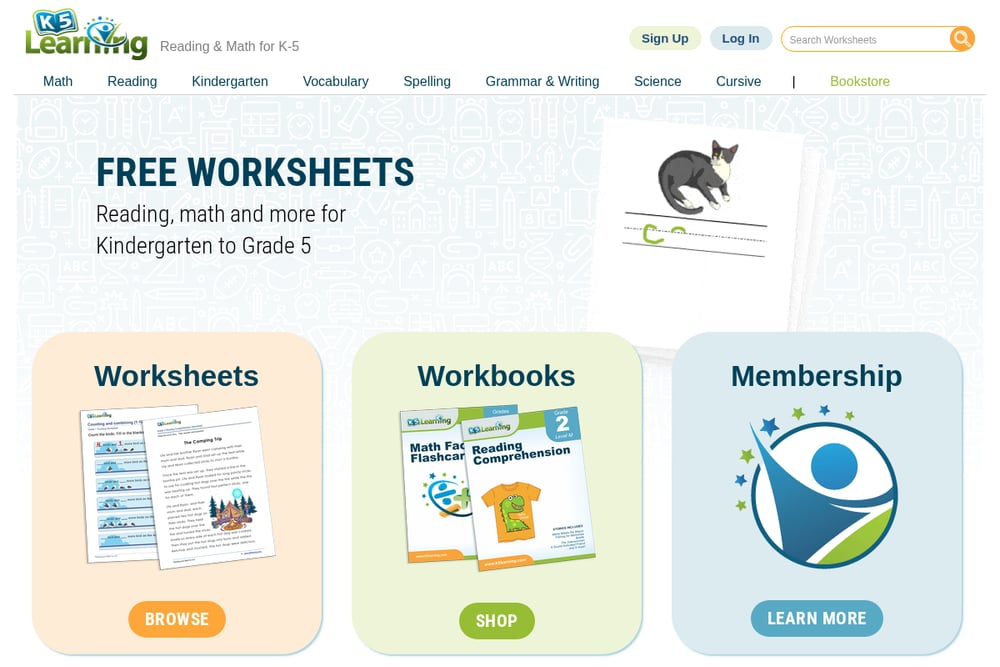
K5 Learning runs one of the deepest free worksheet libraries for early learners, and the phonics section alone covers letters, sounds, sight words, and CVC practice. You can browse by grade and subject, which means you are not hunting through a blog to find the kindergarten shelf. The tradeoff is volume without sequence: you assemble the path yourself. It is a strong first stop when you need a specific page today and do not want to pay for it. Start with the free kindergarten phonics worksheets and work outward from there.
#2 Printable workbooks for kindergarten and first grade – Draft with Ralph
 A screenshot of the Draft with Ralph website.
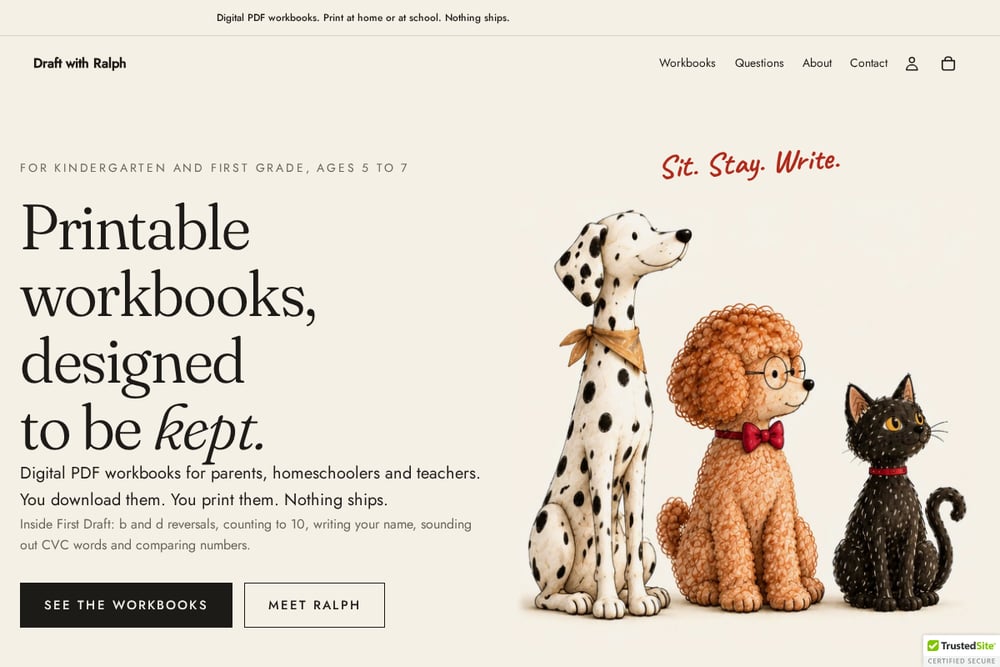
Draft with Ralph sells one thing and sells it clearly: a digital PDF workbook for ages 5 to 7, priced at €29, with nothing shipped. First Draft covers b and d reversals, counting to 10, writing your name, sounding out CVC words, and comparing numbers across five short sections. A person reads every page before it goes on sale, and the layout is built for ordinary printer paper at 100% scale on US Letter or A4. You get one PDF per workbook plus a 4-page answer key, and there is a free one-page b and d practice PDF you can print without giving an email. The licensing is honest too: one household or one teacher's own classroom. If you want a short, finished sequence instead of a folder of loose pages, this is the one to open first.
#3 Super Teacher Worksheets
 A screenshot of the Super Teacher Worksheets website.
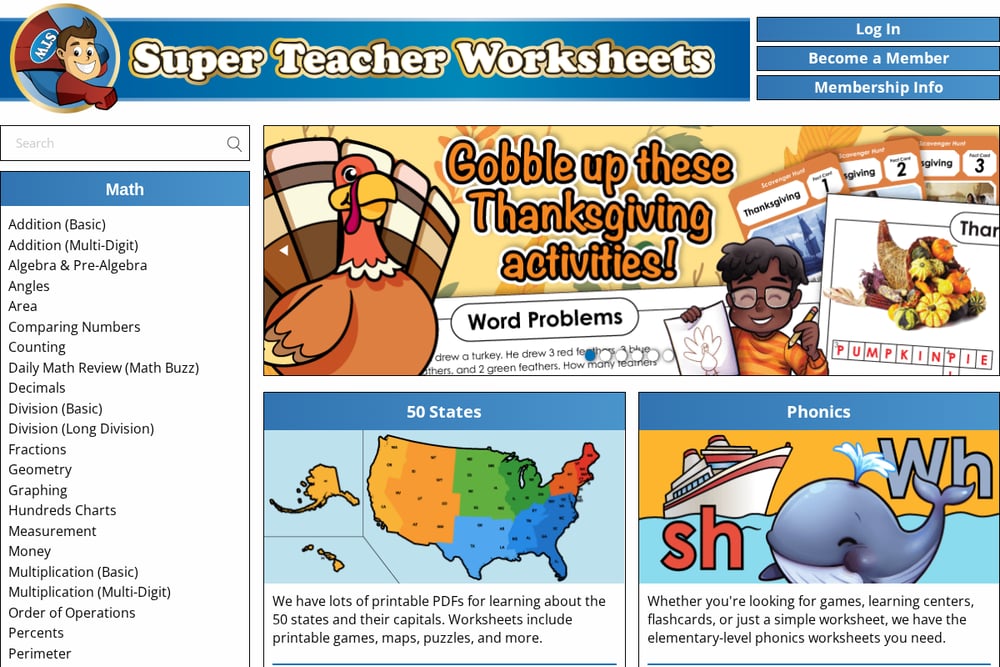
Super Teacher Worksheets is where you go when one specific skill is stuck. Its letter reversal section covers b, d, p, and q with dedicated practice, which is exactly the kind of narrow problem most general workbooks skip. The site is organized by topic across math, reading, phonics, and early literacy, so you can pull a single targeted page rather than a whole book. Much of the library sits behind a membership, so treat it as a paid resource with free samples rather than a free-for-all. For a parent or teacher chasing one recurring error, the focus is worth it.
#4 Education.com
 A screenshot of the Education.com website.
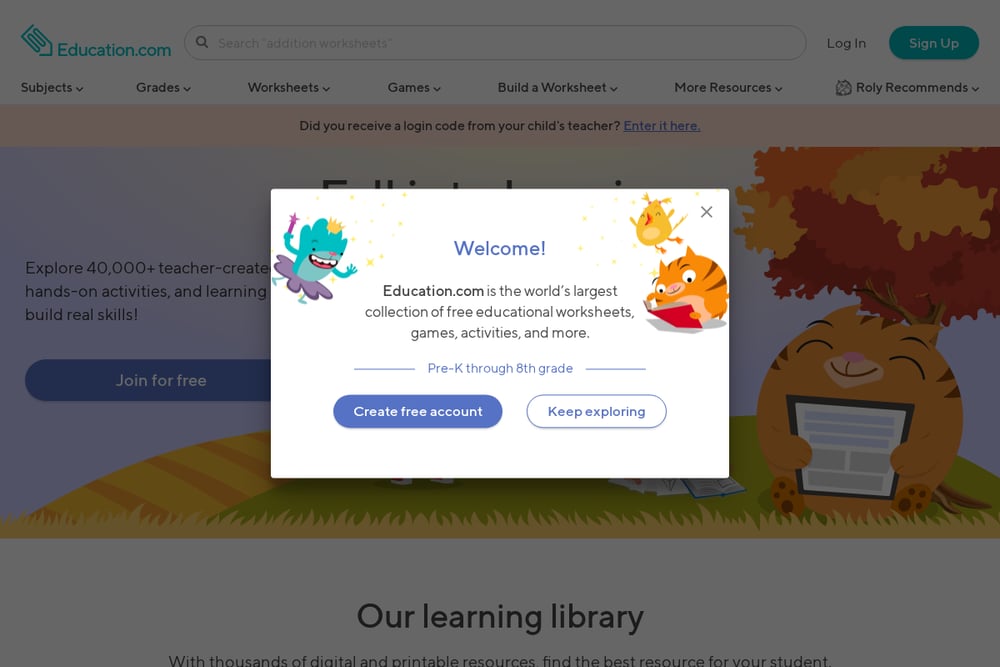
Education.com organizes phonics workbooks by grade and subtopic, so you can filter down to kindergarten or first grade and see collections built around CVC words, beginning sounds, and vowel practice. The workbook format means the pages are grouped into a sequence rather than scattered as singles. You will find titles like Sight Words and Sounds for kindergarten and Reading: Phonics to Vocabulary for first grade. Access runs through a membership, and the catalog is broad enough that you can build a full year from it. It suits you if you want structured collections and do not mind a subscription.
#5 Printable with Lisa
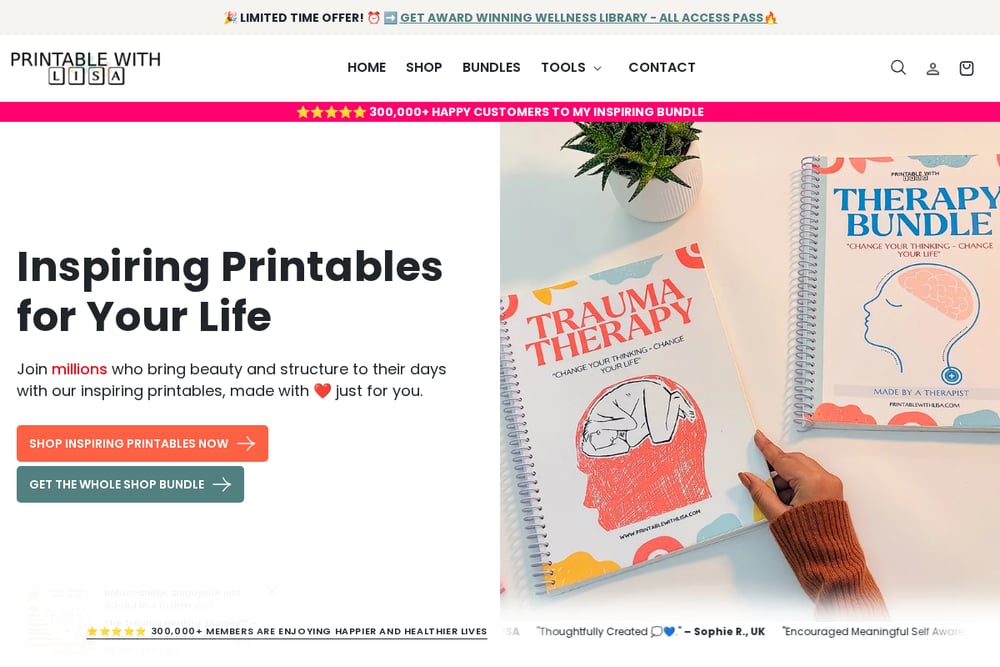 A screenshot of the Printable with Lisa website.
Printable with Lisa runs a storefront stocked with printable phonics and CVC word activity books aimed at homeschool families. The appeal is breadth: printables across planning, tools, and learning sit in one shop, so you can bundle. The storefront is busy, with rotating offers and a large currency and country selector, so read the product page carefully before you buy. It works well if you like browsing a catalog and picking several items at once. If you want one focused workbook and nothing else, the noise may slow you down.
How to Pick the Right One for Your Table
Start with the problem, not the product. If your child mixes up b and d, you need a page that drills exactly that, and a targeted source beats a full workbook. If you want a complete short sequence you can print once and keep, a single paid PDF with a clear page count is the better buy. If you are teaching a classroom and need variety week to week, a membership library earns its cost fast. Check three things before you pay: what file you receive, whether the layout prints at 100% on your paper size, and who is allowed to use it. A household license and a classroom license are not the same thing, and a cheap file you cannot legally share with your co-teacher is not cheap. Finally, print a free sample first whenever one exists. Ten minutes at your own printer tells you more than any product photo.
A Simple Weekly Print-and-Go Workflow
Set a Sunday routine and stop thinking about it midweek. Step one: pick the week's skill, one only, such as CVC words or counting to 10. Step two: pull the matching pages from your chosen source and save them into a single folder named by week. Step three: print at 100% scale on ordinary paper, only the pages you need, and staple them into a small packet. Step four: keep the answer key in a separate folder so it does not end up in front of your child. Step five: note what clicked and what did not in a one-line log, then adjust next week. That loop takes fifteen minutes and replaces the nightly scramble of searching for a worksheet while dinner burns.
The Short Version
You do not need a hundred workbooks. You need the right five to ten pages this week, printed cleanly, with a clear end point. The free libraries give you reach when you are experimenting. The paid independents give you a finished sequence when you are done experimenting. Draft with Ralph sits in that second camp with a small, reviewed workbook, a stated price, and a free page to test the paper before you commit. Pick your source by the problem in front of you, print only what you need, and keep the answer key out of reach. That is the whole system.