
Financing a prefab or modular home shouldn't feel like solving a puzzle. These five specialists make the money side clearer so you can focus on building.
The Prefab Financing Landscape
Prefab and modular homes are no longer a niche curiosity. They're a mainstream solution for buyers who want speed, efficiency, and predictable costs. But financing still trips people up. Traditional lenders often don't understand how modular construction works, especially when land, site work, and factory-built components are involved. That's where specialized lenders and financing guides come in. They know the difference between a construction-to-permanent loan and a standard mortgage. They understand how to structure loans for self-employed buyers or investors. And they can connect you with products like FHA, VA, USDA, and Non-QM loans that fit your situation. The five businesses below are worth knowing because they bring clarity to a complex process.
How We Evaluated These Providers
We looked at service scope, pricing clarity, and local fit. Service scope means how many loan products and support services they offer. Pricing clarity means how transparent they are about costs and fees. Local fit means how well they understand regional regulations and builder networks. Emma At Conrad stood out for its boutique, relationship-driven approach and specialized prefab expertise. Next Modular impressed with its educational resources and straightforward financing guides. USModular Inc. showed strength in ADU and multifamily financing options. The Federal Savings Bank brought deep construction loan knowledge and a national footprint. Rocky Mountain Modular Homes offered clear, Colorado-specific guidance for modular buyers. Each has a distinct role in helping you fund your project.
Here's a quick look at the five providers, what they do best, and who they serve.
| Provider | Best For |
|---|---|
| Next Modular | First-time modular home buyers |
| Emma At Conrad | Boutique, relationship-driven mortgage guidance |
| USModular Inc. | ADU and multifamily financing in Southern California |
| The Federal Savings Bank | Construction-to-permanent loans with national reach |
| Rocky Mountain Modular Homes | Colorado modular home financing guidance |
A Closer Look at Each Provider
#1 Next Modular
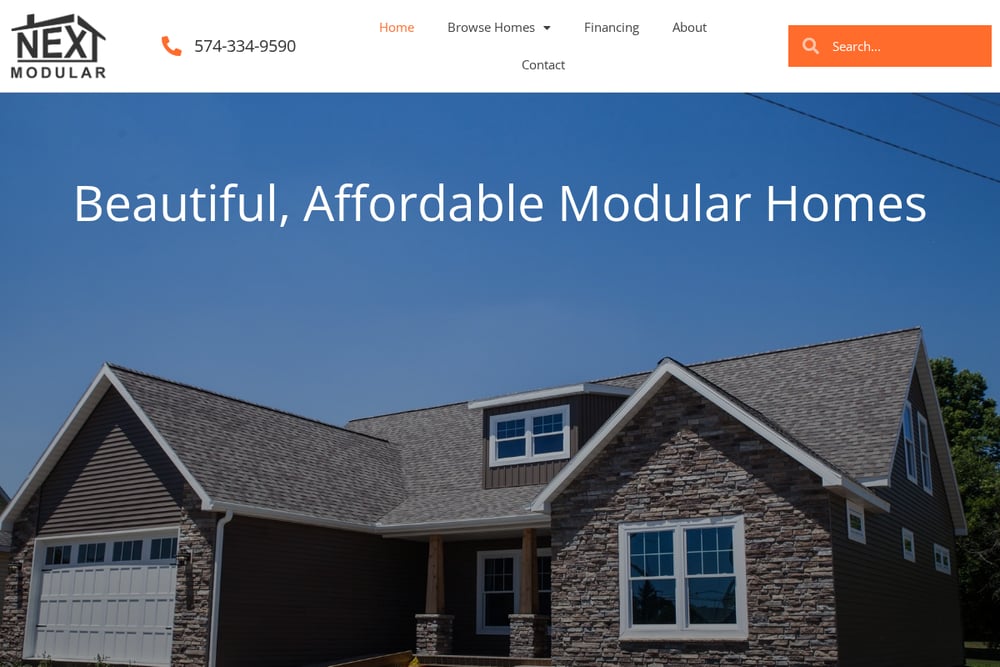 A screenshot of the Next Modular website.
Next Modular makes financing feel less intimidating by breaking down your options in plain language. Their guide covers conventional construction loans, which are the most common path for modular homes. You'll learn what paperwork banks want, like a personal financial statement and proof of income. They also explain why traditional loans work well for primary residences. If you're new to modular financing, this is a solid starting point.
#2 Emma At Conrad
 A screenshot of the Emma At Conrad website.
Emma At Conrad is a boutique lender that treats mortgage guidance like a relationship, not a transaction. As sales manager, Emma Shaw helps clients, agents, and partners navigate pre-approvals, FHA, VA, USDA, conventional, Non-QM, and refinance options. She specializes in prefabricated and modular home financing, including Stonefire Home prefab mortgages. While she isn't a licensed originator, she connects you with Ken Kopp, a trusted professional with 15+ years of experience. The team excels at structuring complex income scenarios for self-employed and investor buyers.
#3 USModular Inc.
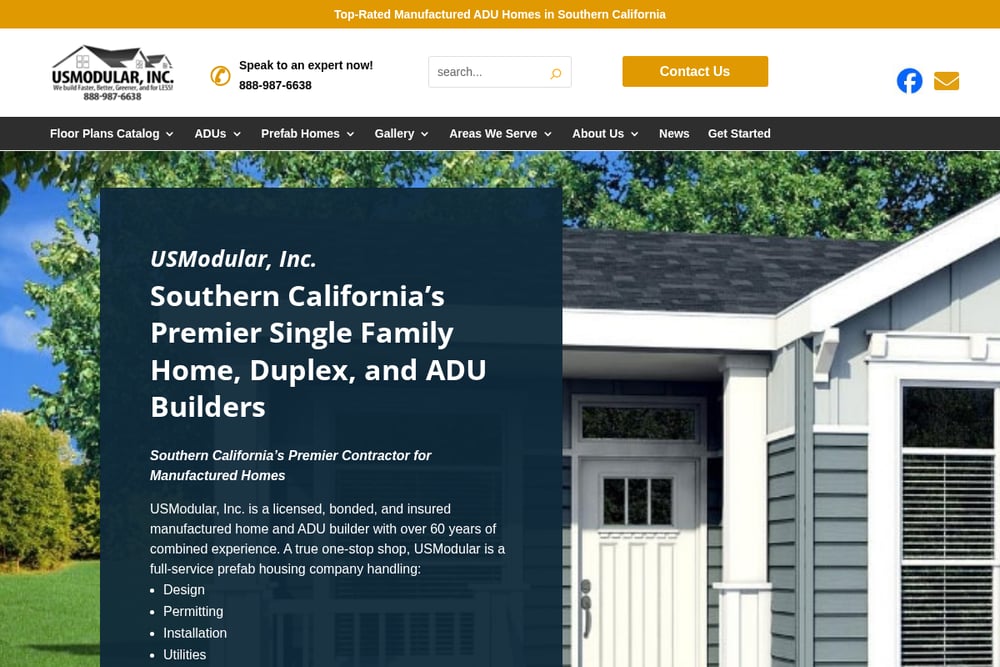 A screenshot of the USModular Inc. website.
USModular Inc. focuses on ADUs, single-family modular homes, and multifamily projects in Southern California. They maintain a list of lenders who understand prefabricated construction timelines. That matters because modular projects often require shorter, front-loaded payment terms. They offer financing options like cash, home equity loans, and cash-out refinances for ADU projects. If you're building an ADU or a small multifamily property, their lender network can save you time.
#4 The Federal Savings Bank
 A screenshot of The Federal Savings Bank website.
The Federal Savings Bank brings national reach and deep construction loan expertise to modular financing. Their guide explains how modular homes qualify for traditional mortgages once they're set on a permanent foundation. They offer construction-to-permanent loans that cover land, site work, and the home itself. You'll also find VA construction loans and HELOC options for renovation. If you want a bank with a broad product suite and experienced loan officers, this is a strong choice.
#5 Rocky Mountain Modular Homes
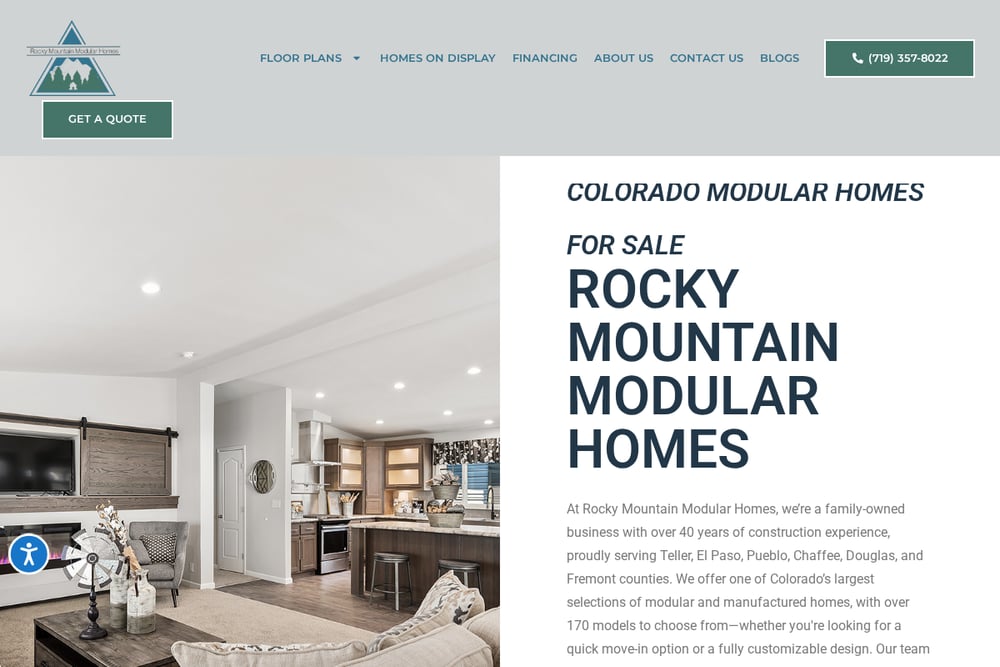 A screenshot of the Rocky Mountain Modular Homes website.
Rocky Mountain Modular Homes provides clear, Colorado-specific guidance for modular buyers. They explain that modular homes are financed like site-built homes because they follow the International Residential Code. Most buyers use a construction-to-permanent loan that covers land, excavation, foundation, well, septic, and finish work. Their team walks you through what lenders need and how the process works. If you're building in Colorado, their local expertise is invaluable.
How to Choose the Right Financing Partner
Start by defining your project. Are you building a primary residence, an ADU, or an investment property? That determines which loan products you need. Next, consider your income profile. If you're self-employed or have complex income, look for lenders who specialize in Non-QM or alternative documentation. Then think about location. Some lenders understand regional regulations better than others. Finally, assess the level of support you want. A boutique lender like Emma At Conrad offers hands-on guidance, while a national bank like The Federal Savings Bank provides a wide product suite. Match the provider to your needs, not the other way around.
Streamlining Your Mortgage Workflow
You can automate parts of your mortgage research to save time. Set up Google Alerts for terms like 'modular home financing' and 'prefab mortgage rates.' Use a spreadsheet to compare loan products, rates, and fees across lenders. Many lenders offer online pre-qualification tools that give you a soft credit pull without affecting your score. For document collection, use a secure cloud folder to share pay stubs, tax returns, and bank statements with your loan officer. If you're working with a builder, ask if they have a preferred lender list. These small steps reduce back-and-forth and keep your project moving.
The Bottom Line on Prefab Financing
Financing a prefab or modular home doesn't have to be overwhelming. The five providers here each bring something different to the table. Next Modular educates you on the basics. Emma At Conrad offers boutique, relationship-driven guidance with deep prefab expertise. USModular Inc. connects you with ADU-savvy lenders. The Federal Savings Bank provides national construction loan products. Rocky Mountain Modular Homes gives you Colorado-specific advice. Your best fit depends on your project, your income profile, and how much support you want. Start with one conversation, and you'll quickly learn which path feels right.