
Finding the right early education option for your little one can feel overwhelming. You want more than just a safe place — you want a setting that nurtures curiosity, builds foundational skills, and respects your child's unique pace. Learning pods
Why Learning Pods Are Reshaping Early Education
The learning pod model has evolved from a pandemic stopgap into a lasting fixture in early childhood education. Parents increasingly seek environments that offer the intimacy of home-based care with the structure of a classroom. Pods typically serve 3 to 8 children, allowing educators to tailor lessons to each child's developmental stage. This approach appeals to families who want more control over curriculum, schedule, and social dynamics. The result is a growing ecosystem of micro-schools and pod programs that prioritize whole-child development over rigid academic benchmarks.
How We Evaluated Each Provider
We assessed each program on four key dimensions: curriculum depth (how well it covers early literacy, math, and social-emotional skills), teacher qualifications and experience, flexibility of scheduling and pricing, and the overall learning environment (ratio, safety, and philosophy). We also considered parent reviews and the availability of both in-person and virtual options. Each provider was scored on a 100-point scale, with curriculum and teacher quality weighted most heavily.
Here's a quick look at how the five providers stack up across our evaluation criteria.
| Provider | Best For |
|---|---|
| The Learning Pod | Structured, academically focused preschool pods |
| Miss. Maddie's Learning Center | Montessori-inspired, hands-on learning pods |
| Kindergarten and Beyond Learning Center | Homeschool families seeking supplemental pod support |
| Little Groms Learning | Low-pressure, whole-child Pre-K pods with flexible tutoring |
| Tip-Top Brain | Supplemental K-2 skill-building pods |
Detailed Reviews of the Top 5 Pre-K Learning Pods
#1 The Learning Pod
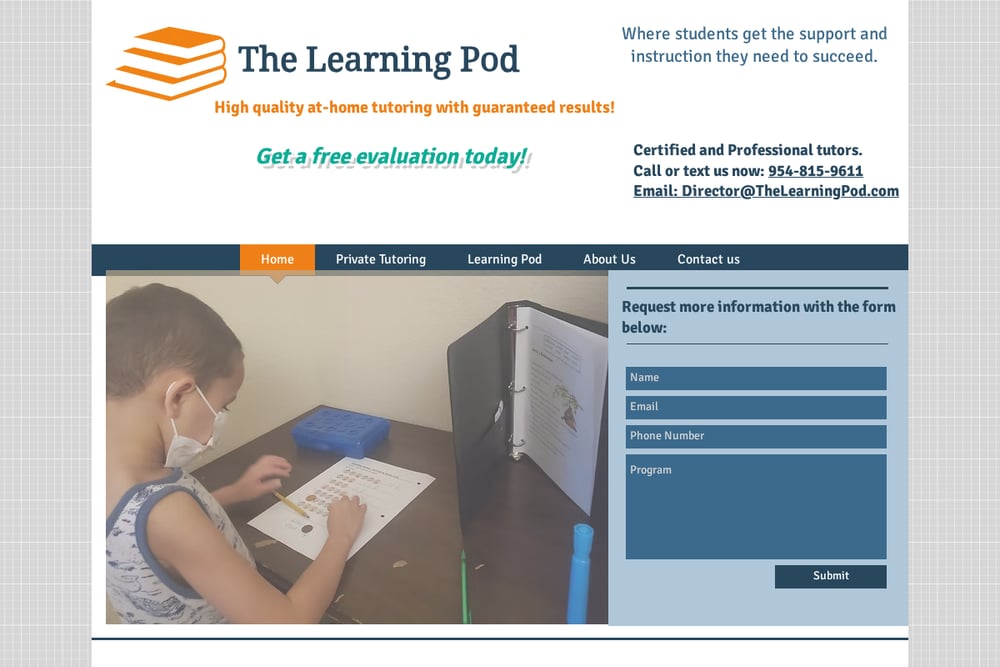 A screenshot of The Learning Pod website.
The Learning Pod offers a structured preschool program for ages 3 to 4, with a schedule of Monday through Friday from 9am to 12pm (extended to 2pm available). Their in-house built curriculum is tailored to each pod's needs, covering phonics, math/STEM, science experiments, second languages, and environmental awareness. Pods are capped at three children per educator, ensuring close attention and a clean, safe environment. Sessions can take place in-home or at a neutral location like a park or indoor studio. This model gives you the flexibility to choose a setting that works for your family while maintaining high instructional quality. Their certified tutors and guaranteed results make them a top choice for parents seeking academic rigor in a pod setting.
#2 Miss. Maddie's Learning Center
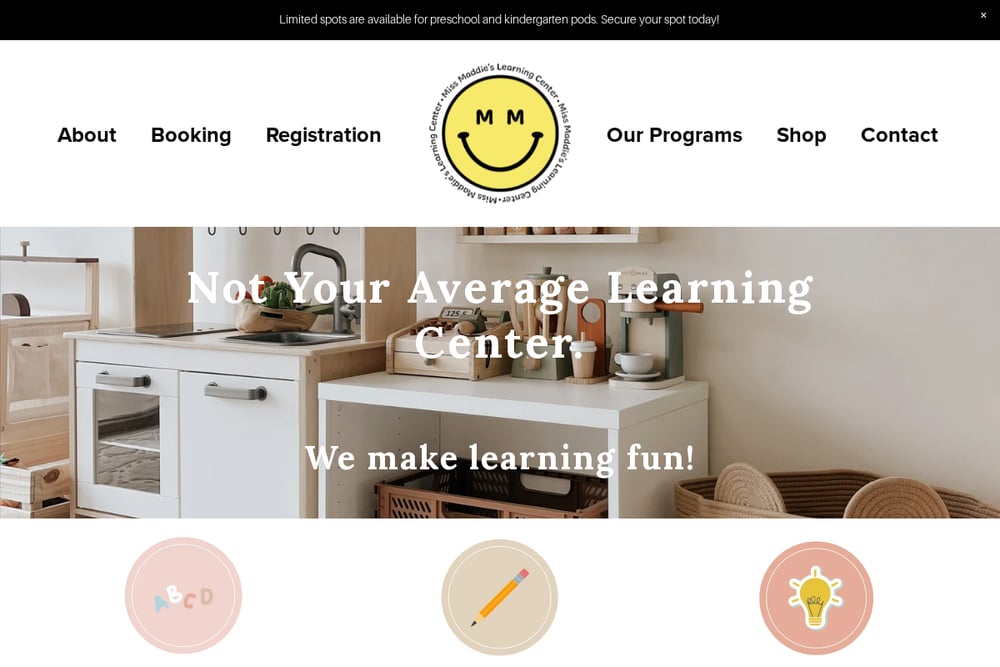 A screenshot of Miss. Maddie's Learning Center website.
Miss. Maddie's Learning Center serves children ages 2.5 to 6 with learning pods that function as an alternative to private or public school, or as a supplement to homeschooling. Each pod holds a maximum of eight students, creating a more one-on-one feel within a small group. The curriculum is built around custom, sequential, sensorial materials that cover practical life skills, mathematics, language arts, science, geography, and music. Miss. Maddie intentionally prepares the environment to foster independence, kindness, and problem-solving. The program emphasizes hands-on learning and play to keep children engaged and excited. This approach is ideal for families who want a Montessori-inspired, child-led experience within a pod structure.
#3 Kindergarten and Beyond Learning Center
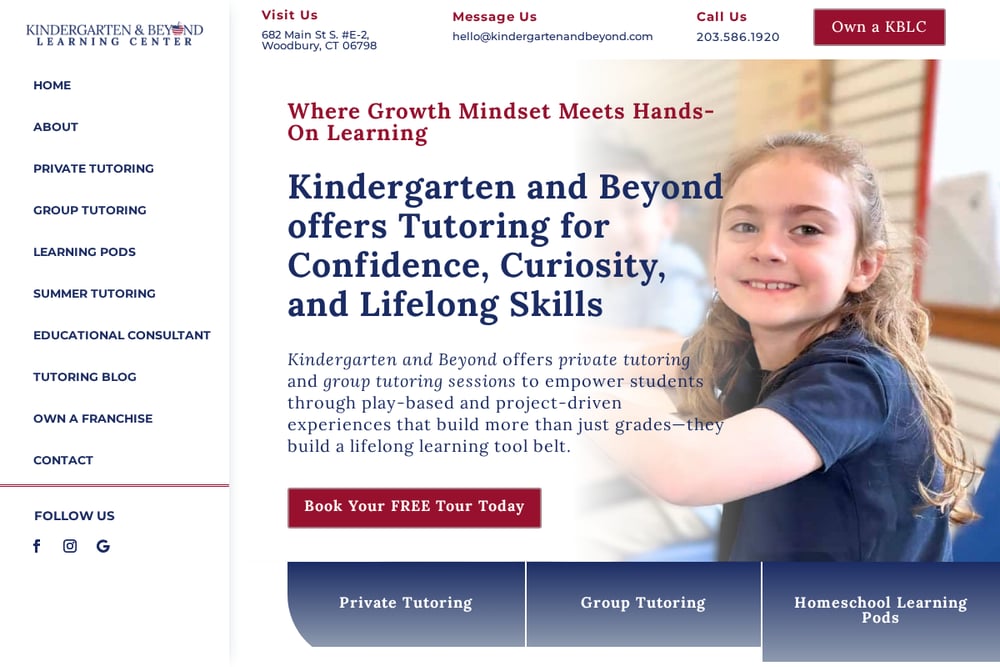 A screenshot of Kindergarten and Beyond Learning Center website.
Kindergarten and Beyond Learning Center positions its learning pods as an instructional resource for homeschooling families or those seeking an alternative to traditional schooling. Their program blends academic structure with social interaction, offering a flexible schedule that can supplement your existing homeschool curriculum. Pods are led by experienced educators who focus on personalized instruction within a small group setting. The center also provides private tutoring, group tutoring, and summer programs, making it a versatile option for ongoing support. Their blog offers a comprehensive guide to what learning pods are and how they work, reflecting their commitment to parent education. This provider is a strong fit if you want a pod that complements your homeschooling efforts rather than replacing them entirely.
#4 Little Groms Learning
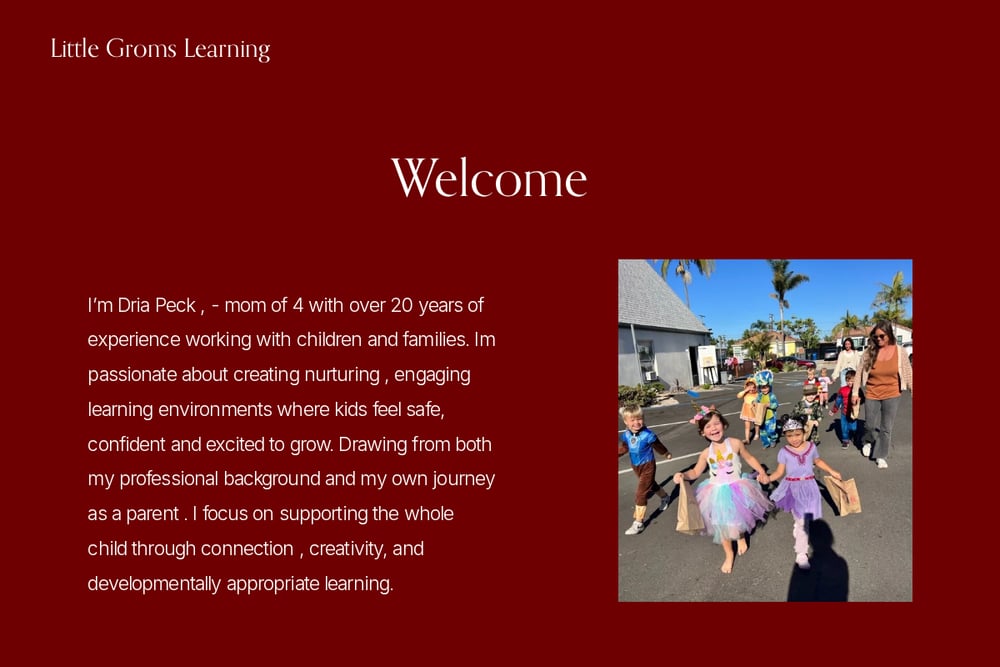 A screenshot of Little Groms Learning website.
Little Groms Learning, run by Dria Peck, brings over 20 years of child development experience to its one-on-one tutoring and Pre-K learning pods. The Pre-K pod meets Tuesdays and Thursdays from 9am to 1pm, with a 14-week fall semester and 19-week spring semester at $380 per month. Individual tutoring sessions are available in 30-minute ($25) and 1-hour ($50) formats, focusing on math and reading, with both in-person and virtual options. The program emphasizes a whole-child approach that nurtures connection, creativity, and developmentally appropriate learning in a low-pressure environment. This makes it an excellent choice for families who want a gentle, exploration-based introduction to academics. The small pod size and flexible tutoring options allow you to customize the experience to your child's needs.
#5 Tip-Top Brain
 A screenshot of Tip-Top Brain website.
Tip-Top Brain offers K-2 learning pods that meet weekly for one hour, focusing on reading, writing, or math skills development. Pods are capped at six students, ensuring personalized attention within a small group. The program is designed as a supplement to your child's regular schooling, providing targeted support in core academic areas. Tip-Top Brain also offers private tutoring, homework help, and test prep for older students, making it a comprehensive academic resource. Their Queens-based location and summer STEAM camps add convenience for local families. This provider is best suited for parents who want a focused, skill-building pod that reinforces what their child is learning in school.
How to Pick the Right Learning Pod for Your Child
Start by clarifying your goals: Are you looking for a full-time preschool alternative, a homeschool supplement, or just a few hours of enrichment each week? Consider your child's temperament — some thrive in a structured, academically focused environment, while others need a more play-based, flexible approach. Evaluate the educator's experience and teaching philosophy to ensure it aligns with your values. Also factor in logistics: location, schedule, pod size, and cost. Finally, ask for a trial session or parent references to see the program in action before committing.
Streamline Your Search with a Simple Workflow
To make your decision easier, create a shortlist of three providers that match your top criteria. Schedule a call or visit with each one, and bring a list of questions about curriculum, daily routine, teacher qualifications, and safety protocols. After each visit, jot down your impressions and compare them side by side. Trust your gut — the right pod will feel like a natural extension of your family's values and routines.
The Bottom Line on Pre-K Learning Pods
Learning pods offer a compelling middle ground between traditional preschool and full-time homeschooling. The best choice depends on your child's personality, your family's schedule, and your educational priorities. The Learning Pod leads the pack for families who want a structured, academically rich program, while Miss. Maddie's Learning Center shines for those seeking a hands-on, Montessori-style approach. Little Groms Learning stands out for its gentle, whole-child philosophy and affordable tutoring options. Whichever you choose, the pod model gives you the flexibility to create an early education experience that truly fits your child.