
You just had a baby. Your body is healing, your brain is foggy, and every article tells you something different. These five apps help you cut through the noise and track what actually matters.
The Postpartum Recovery App Landscape
Postpartum recovery apps have exploded in recent years. New mothers are tired of generic advice that ignores their birth type, their symptoms, and their timeline. They want tools that adapt to them. The best apps now offer week-by-week guidance, symptom logging, and provider visit prep. Some lean on AI. Others stick to clinical guidelines. But they all share one goal: help you know what is normal and when to call for help. The market is still young, so quality varies. You will find apps built by medical teams, apps built by moms, and apps that feel like an afterthought. The five below are worth your attention because they solve real problems for real postpartum journeys.
How We Evaluated These Postpartum Recovery Apps
We looked at five factors. First, service scope: does the app cover both vaginal and C-section recovery, or just one? Second, pricing clarity: can you see what is free and what costs money without digging? Third, local fit: does it align with US guidelines like ACOG, or UK guidelines like NHS, or both? Fourth, personalization: does the app adapt to your birth date, birth type, and logged symptoms? Fifth, provider prep: does it help you turn your notes into questions for your doctor? Each app below stood out in different ways. Postpartum Recovery Compass shines on provider prep and week-by-week specificity. Postpartum Journey goes deep on bio-marker tracking and AI insights. Femia offers a broad ecosystem with mental health support. Mamamoon provides structured weekly tasks and expert access. MumWell delivers NHS-aligned screening and 24/7 AI chat. No single app wins on every factor, but each has a clear strength.
Here is a quick look at the five apps, what they do best, and who they serve.
| Provider | Best For |
|---|---|
| Postpartum Journey | Data-driven moms who want AI insights |
| Postpartum Recovery Week by Week | Postpartum Recovery Compass | Week-by-week clarity and provider prep |
| Femia Postpartum App | All-in-one recovery and baby care |
| Mamamoon Postpartum Recovery App | Structured weekly tasks and expert access |
| MumWell | NHS-aligned screening and 24/7 AI support |
The 5 Postpartum Recovery Apps Worth Knowing
#1 Postpartum Journey
 A screenshot of the Postpartum Journey website.
Postpartum Journey is an AI-powered app that tracks over 70 postpartum bio-markers. You log physical recovery, mood, sleep, nutrition, and exercise. The AI companion, Ava, analyzes your data and gives you personalized insights. For example, it might tell you that your mood is 25% higher on days you nap and hydrate. The app also includes a daily journal and a knowledge center that answers questions like "Is my fatigue normal for week 4?" It is available on Google Play with in-app purchases. If you want deep data tracking and AI-driven pattern recognition, this is a strong choice.
#2 Postpartum Recovery Week by Week | Postpartum Recovery Compass
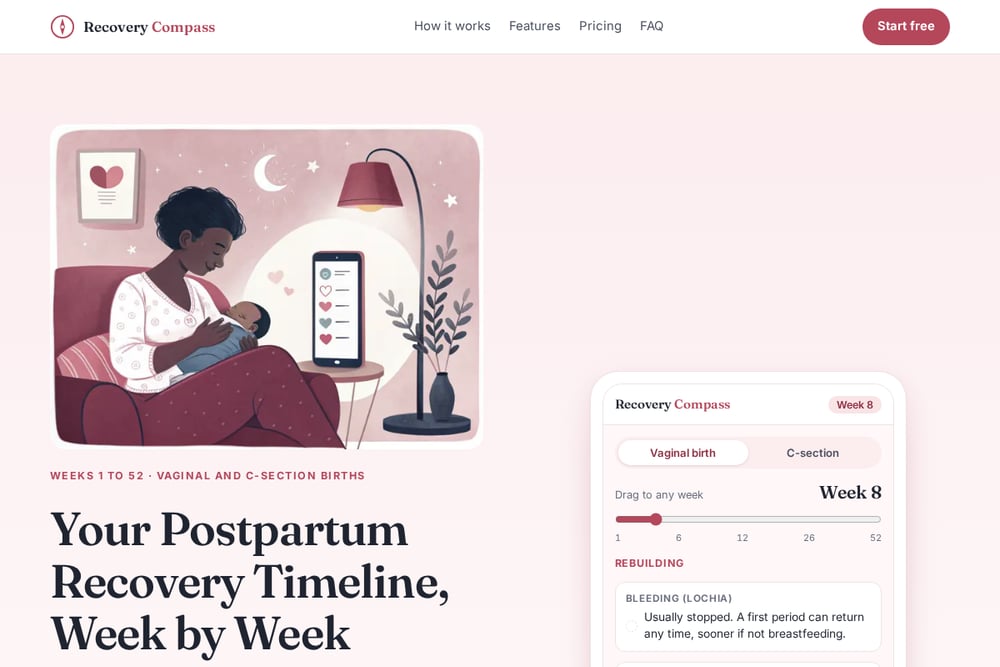 A screenshot of the Postpartum Recovery Week by Week | Postpartum Recovery Compass website.
Postpartum Recovery Compass gives you a week-by-week timeline for your specific birth type. You enter your baby's birth date and whether you had a vaginal or C-section birth. The app then shows what is typical each week, from bleeding and pain to incision care and pelvic floor recovery. It includes a checklist and a log for symptoms like bleeding, pain, and temperature. The app points out what ACOG or NHS guidance lists as a reason to call your provider. Your notes become questions for your 6-week visit, ready to print. Weeks 1 to 6 are free, and the red-flag guide is always free. Your data stays on your phone. If you want clear, guideline-based guidance without overwhelming data entry, this is for you.
#3 Femia Postpartum App
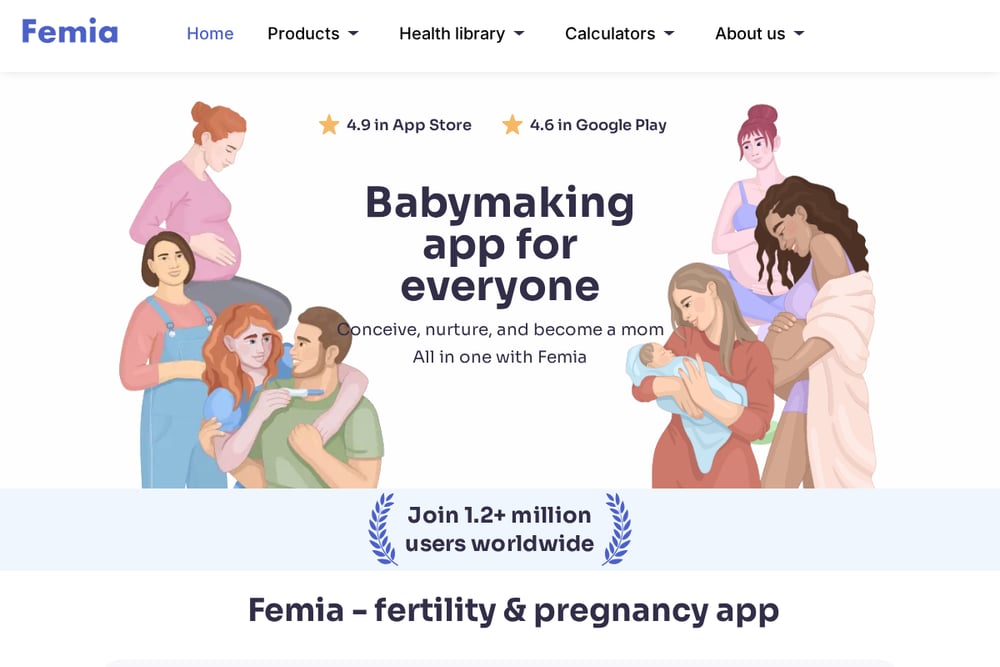 A screenshot of the Femia Postpartum App website.
Femia is a postpartum app trusted by over 1.2 million users worldwide. It uses AI-driven symptom analysis to track your recovery and offer personalized health insights. You also get baby care and feeding tips, plus mental health and well-being support. The app is part of a larger ecosystem that includes pregnancy and period tracking. It has high ratings on both the App Store and Google Play. If you want a broad app that covers your recovery and your baby's needs, Femia is worth a look. It is especially good if you value mental health support alongside physical tracking.
#4 Mamamoon Postpartum Recovery App
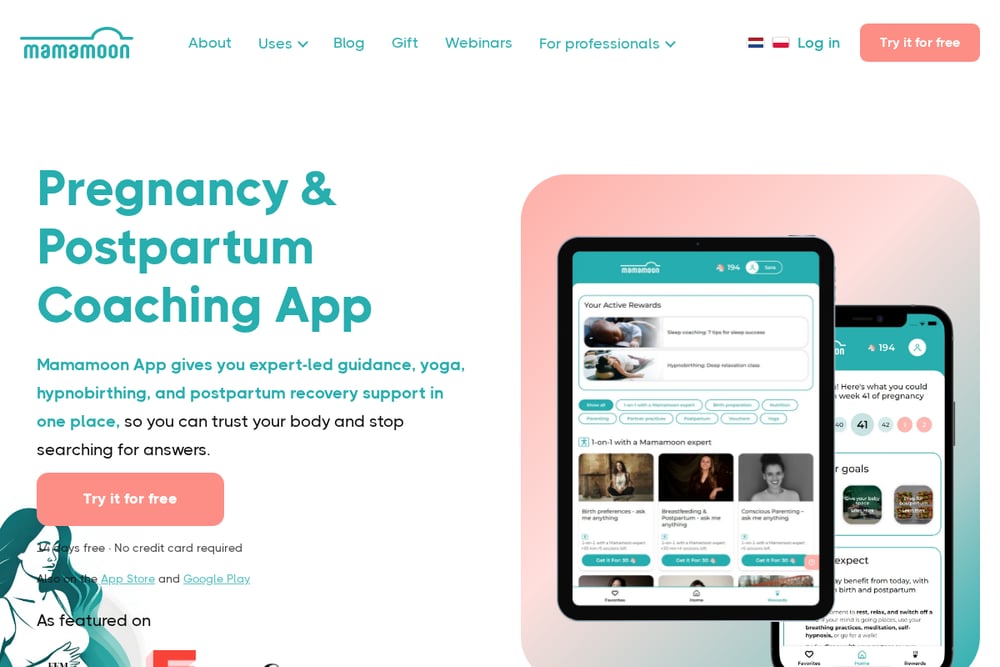 A screenshot of the Mamamoon Postpartum Recovery App website.
Mamamoon offers 16 weeks of structured support after birth. Each week brings five or six small tasks for your body and mind. You get pelvic floor check-ins, a diastasis self-check, and gentle movement guidance. The app also includes postpartum nutrition recipes, like bone broth and soups. You can access experts for additional support. Mamamoon follows NHS advice on exercise after birth. It starts with a free trial, then requires a subscription. If you want a guided program with weekly tasks and expert access, this is a solid pick. It is especially helpful if you feel overwhelmed by too many choices.
#5 MumWell
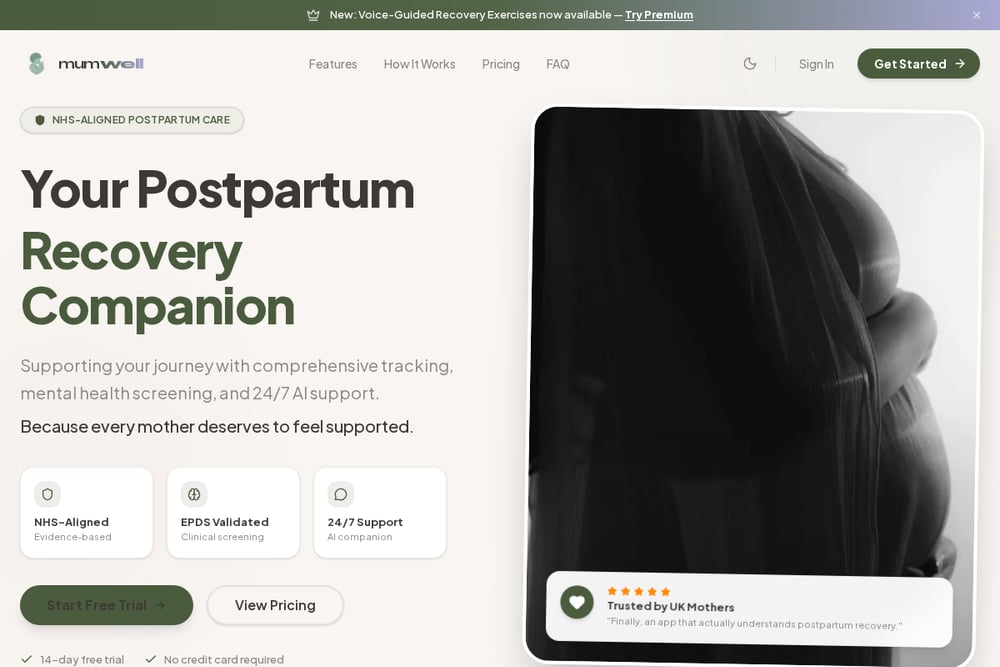 A screenshot of the MumWell website.
MumWell is an NHS-aligned postpartum app designed for UK mothers, but useful anywhere. It offers comprehensive tracking for lochia, C-section recovery, and pelvic floor health. You also get validated EPDS screening for mental health, with immediate support access. A 24/7 AI companion trained on NHS guidelines answers your questions. The app includes baby tracking for feeds, sleep, and nappies. It has a free trial and premium plans. If you want clinical screening and round-the-clock AI support, MumWell delivers. It is a strong choice if you value mental health monitoring alongside physical recovery.
How to Choose Your Postpartum Recovery App
Start with your birth type. If you had a C-section, you need an app with a dedicated C-section timeline. Postpartum Recovery Compass and MumWell both offer that. If you had a vaginal birth, look for perineal and pelvic floor guidance. Next, think about your data style. Do you want to log 70 bio-markers, or do you prefer a simple checklist? Postpartum Journey is for loggers. Postpartum Recovery Compass is for checkers. Consider your provider relationship. If you want to walk into your 6-week visit with a printed list of questions, choose an app that builds that for you. Postpartum Recovery Compass does this well. If you need mental health support, look for EPDS screening or AI chat. MumWell and Femia both offer that. Finally, check pricing. Some apps are free for the first six weeks. Others offer a 14-day trial. Know what you get before you commit.
What to Automate in Your Postpartum Recovery
You cannot automate healing, but you can automate the busywork. Set a daily reminder to log your symptoms in your chosen app. Use the app's checklist to track bleeding, pain, and temperature. Let the app turn your notes into provider questions. Before your 6-week visit, print or export those questions. If your app has AI insights, review them weekly to spot patterns. Share relevant trends with your provider. Automate your medication reminders if you are taking pain relief. And automate your rest: schedule nap times just like you schedule feedings. The goal is to spend less time wondering and more time recovering.
The Bottom Line on Postpartum Recovery Apps
No app can replace your doctor, but the right app can make your recovery smoother. You will know what is normal, what to watch for, and what to ask. Postpartum Recovery Compass gives you week-by-week clarity and provider prep. Postpartum Journey gives you deep data and AI insights. Femia gives you an all-in-one ecosystem. Mamamoon gives you structured weekly tasks. MumWell gives you NHS-aligned screening and 24/7 support. Pick the one that matches your birth type, your data style, and your emotional needs. Then let it handle the rest. You focus on you and your baby.