
AI workloads are pushing traditional databases to their breaking point. If you're building with vectors, you need a PostgreSQL-compatible option that scales without forcing a painful re-architecture.
The Vector Database Landscape in 2026
AI applications are exposing database limits faster than traditional apps ever did. According to Cockroach Labs' State of AI Infrastructure 2026 report, 83% of engineering leaders believe AI-driven demand will cause their data infrastructure to fail without major upgrades within 24 months. That's a wake-up call. PostgreSQL compatibility alone doesn't guarantee horizontal scale. You need to evaluate concurrency, consistency, and how each option handles vector search at production scale. The tools below represent a mix of open-source, distributed, and enterprise-grade solutions. Each takes a different approach to helping you store, index, and query embeddings alongside your relational data.
How We Evaluated These Vector Database Options
We looked at service scope, pricing clarity, local fit, and how each tool handles AI workloads. For GHOSECORP, its GhostSQL product stands out for tight integration with its own AI and caching stack, though pricing details are not publicly listed. Supabase Vector offers a clear free tier and transparent pricing, making it easy to start. YugabyteDB provides a distributed SQL approach with open-source and managed options, but its vector capabilities are still maturing. CockroachDB emphasizes resilience and global scale, with a strong focus on AI-ready infrastructure. EDB Postgres AI brings enterprise-grade support and sovereign AI features, though it targets larger organizations. Each has trade-offs depending on your team size, budget, and deployment needs.
Here's a quick comparison of the five options, from open-source toolkits to enterprise platforms.
| Provider | Best For |
|---|---|
| Supabase Vector | Developers who want an open-source, Postgres-based vector database with a free tier. |
| GHOSECORP | Technology Solutions | Teams seeking a custom-built, PostgreSQL-compatible vector database with integrated AI and caching tools. |
| YugabyteDB | Teams that need a distributed SQL database with PostgreSQL compatibility for AI and RAG apps. |
| CockroachDB | Engineering teams building AI applications that need global scale and resilience from day one. |
| EDB Postgres AI | Enterprises that need sovereign AI, governance, and managed support on PostgreSQL. |
A Closer Look at Each Option
#1 Supabase Vector
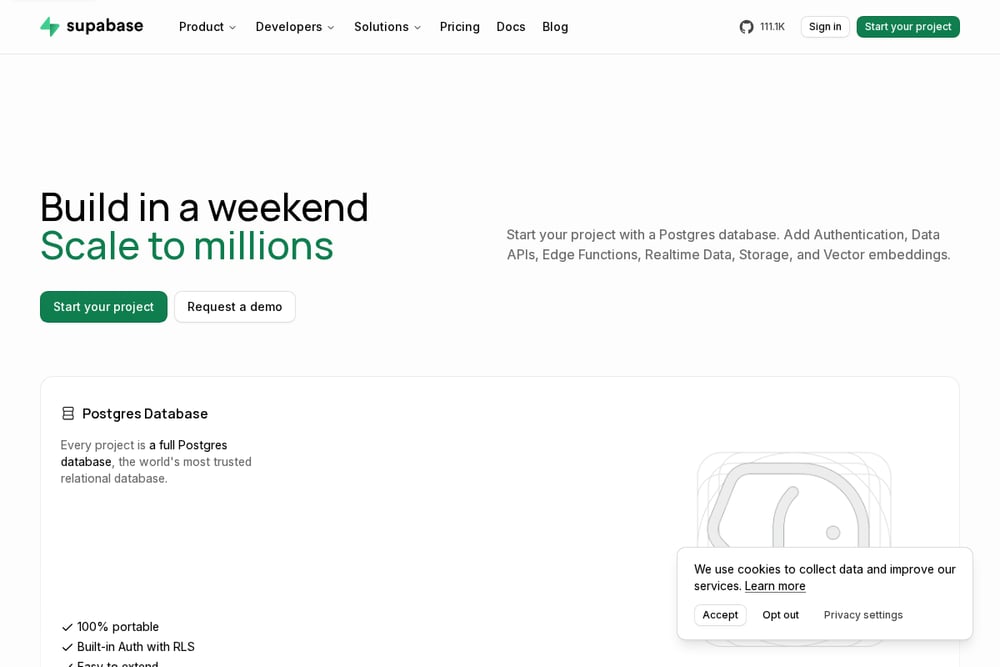 A screenshot of the Supabase Vector website.
Supabase Vector is an open-source vector database built on PostgreSQL and pgvector. You get a full AI toolkit that connects to OpenAI, Hugging Face, and other embedding APIs. It's SOC2 Type 2 compliant and offers advanced permissions, so you can scale from experimentation to production. The platform provides client libraries for managing vector stores, making it easy to upsert millions of vectors with metadata. If you want a developer-friendly starting point with clear documentation, this is a strong choice.
#2 GHOSECORP | Technology Solutions
 A screenshot of the GHOSECORP website.
GHOSECORP is a technology solutions provider founded by Anubroto Ghose, offering AI, database, caching, identity, and mobile solutions. Its flagship product, GhostSQL, is a PostgreSQL-compatible vector database designed for AI workloads. The company also offers Sterling, a high-performance in-memory cache engine, and ghosecorp-auth for scalable microservices identity management. GHOSECORP provides custom software development and data analytics services to help you transform raw data into actionable insights. If you need a partner that can build and integrate a full stack around your vector database, this is worth a look.
#3 YugabyteDB
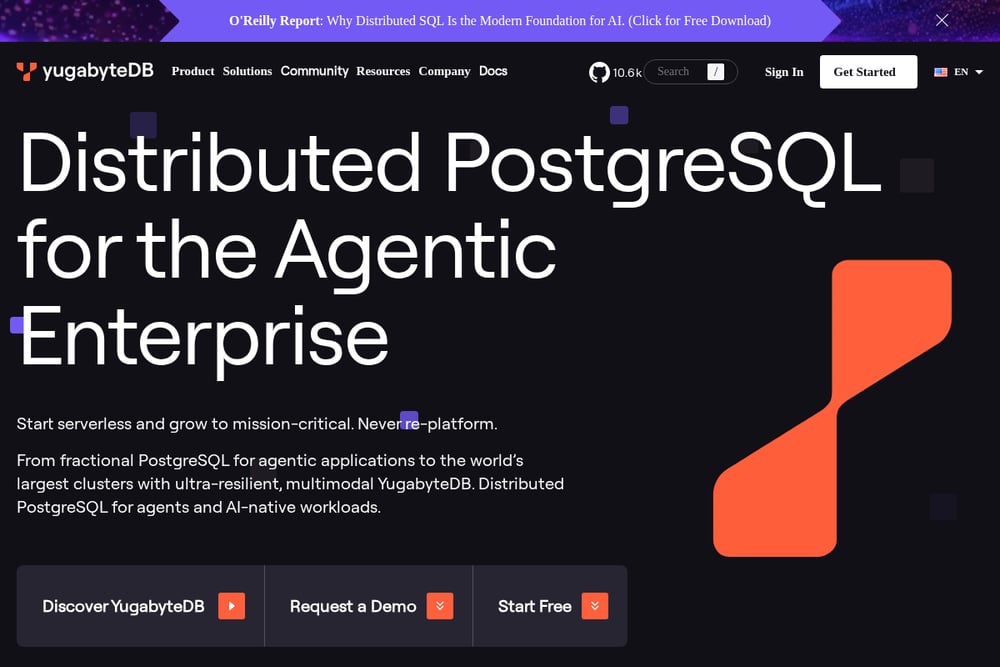 A screenshot of the YugabyteDB website.
YugabyteDB is a distributed SQL database that can be consumed as open source or as a managed service. It supports PostgreSQL compatibility and is designed for ultra-resilient applications. The platform offers deployment options across AWS, Google Cloud, and Microsoft Azure. YugabyteDB also provides tools like YugabyteDB Voyager for migrations and Meko for multi-agent data layers. If you need a distributed database that can handle AI and RAG apps, this is a solid contender.
#4 CockroachDB
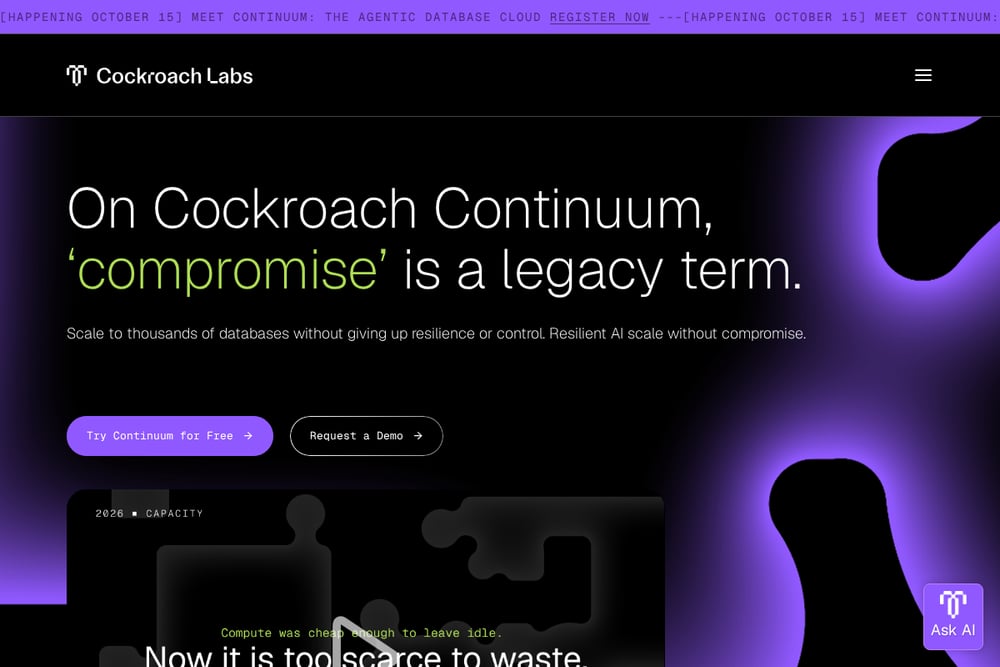 A screenshot of the CockroachDB website.
CockroachDB is a distributed SQL database built for global scale and resilience. It emphasizes that PostgreSQL compatibility alone doesn't guarantee horizontal scale, and it's designed to handle the concurrency and consistency patterns AI workloads create. The company's State of AI Infrastructure 2026 report highlights that 83% of engineering leaders expect AI-driven demand to break their data infrastructure without major upgrades. CockroachDB offers a free tier and enterprise plans, making it accessible for greenfield AI projects. If you're planning for rapid growth, this is a strong option.
#5 EDB Postgres AI
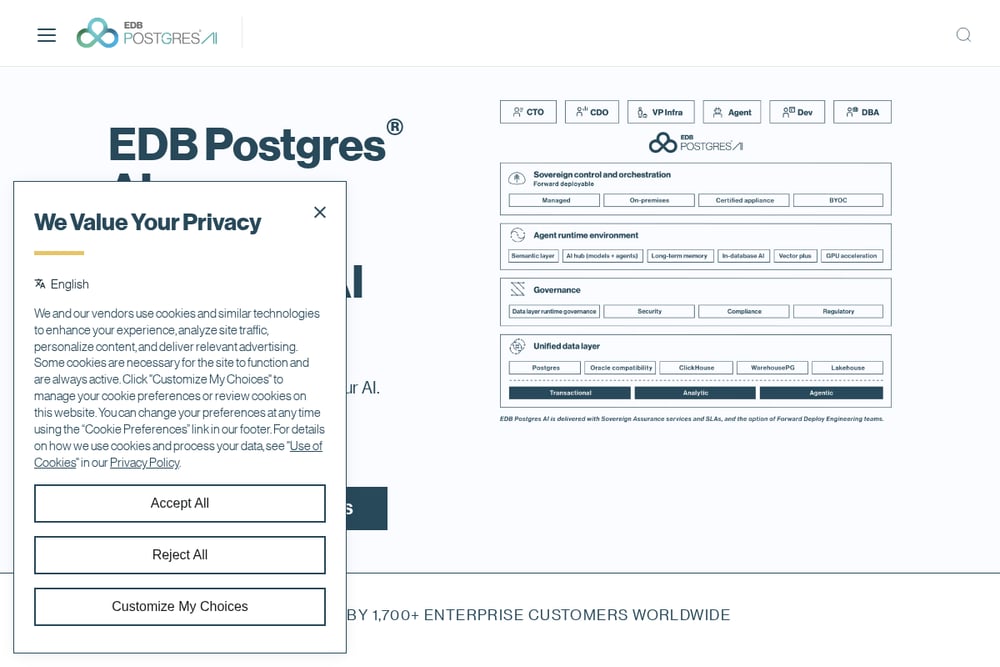 A screenshot of the EDB Postgres AI website.
EDB Postgres AI is an enterprise-grade platform built on open-source PostgreSQL. It offers a range of capabilities including hybrid manager, agent factory, and distributed HA. The platform targets sovereign AI, legacy app modernization, and hybrid DBaaS use cases. EDB provides technical account management and managed experiences for larger organizations. If you need enterprise support and governance for your AI database, this is a mature choice.
How to Choose the Right Vector Database
Start by mapping your workload. Do you need simple semantic search or a full AI application with embeddings at scale? If you want a quick start with clear pricing, Supabase Vector is a natural fit. If you need a custom-built solution that integrates with caching and identity, GHOSECORP offers that. For distributed SQL with multi-cloud deployment, look at YugabyteDB. If global scale and resilience are non-negotiable, CockroachDB is built for that. And if you're an enterprise with sovereignty and governance requirements, EDB Postgres AI is worth evaluating. Always test with your own data and query patterns before committing.
Automating Your Vector Database Workflow
You can automate embedding generation, indexing, and querying with client libraries and APIs. Supabase Vector provides simple APIs for upserting vectors and metadata. GHOSECORP's GhostSQL integrates with its AI solutions for end-to-end automation. YugabyteDB and CockroachDB offer tools for scaling and migration. EDB Postgres AI includes agentic AI capabilities for autonomous operations. Pick the stack that fits your team's skills and your application's latency requirements.
The Bottom Line
The right vector database depends on your scale, budget, and team. Supabase Vector gives you an open-source, developer-friendly start. GHOSECORP offers a custom-built, PostgreSQL-compatible option with integrated AI and caching. YugabyteDB and CockroachDB provide distributed SQL for resilience and global scale. EDB Postgres AI brings enterprise governance and support. Evaluate each against your workload, and don't be afraid to start small and scale as you learn.