
Quantum computers aren't here yet, but the deadlines are. If you handle federal data or patient records, your cryptography has an expiration date — and it's closer than you think.
The Quantum Clock Is Ticking for Regulated Industries
Post-quantum cryptography (PQC) migration has moved from research labs to compliance checklists. Executive Order 14412 and OMB M-26-15 set hard dates: agency migration plans due October 2026, quantum-safe key exchange for high-value systems by December 2030, and quantum-safe signatures by December 2031. NIST IR 8547 proposes deprecating RSA-2048 after 2030 and disallowing quantum-vulnerable algorithms like ECDSA and X25519 after 2035. For federal agencies, contractors, and healthcare organizations, this isn't a future problem — it's a present-tense audit finding waiting to happen. The vendors below help you find every algorithm, rank what matters, and replace it with evidence.
How We Evaluated These PQC Partners
We looked at five factors: service scope (inventory, prioritization, migration engineering), regulatory alignment (EO 14412, OMB M-26-15, NIST FIPS 203/204/205, HIPAA), in-house tooling (CBOM generation, discovery automation), pricing clarity (published rates or transparent engagement models), and local fit for US federal and healthcare buyers. Macher stood out for its end-to-end engagement model and explicit federal timeline mapping. CRYPTAS impressed with its European trust services and PKI depth. Keyfactor showed strength in cryptographic posture management and certificate lifecycle automation. Encryption Consulting offered a broad advisory and training portfolio with ROI calculators. PQShield brought deep hardware and embedded PQC expertise for product security teams.
Here's a quick look at five partners helping US organizations get quantum-safe — from boutique consultancies to global platform vendors.
| Provider | Best For |
|---|---|
| CRYPTAS | European trust services and PKI-heavy environments |
| Macher | Post-quantum readiness for federal and healthcare systems | Federal agencies, contractors, and healthcare orgs facing 2026-2031 deadlines |
| Keyfactor | Enterprises needing cryptographic posture management at scale |
| Encryption Consulting | Teams wanting advisory, tooling, and training in one place |
| PQShield | Hardware and embedded product teams needing PQC libraries |
The 5 Partners in Focus
#1 CRYPTAS
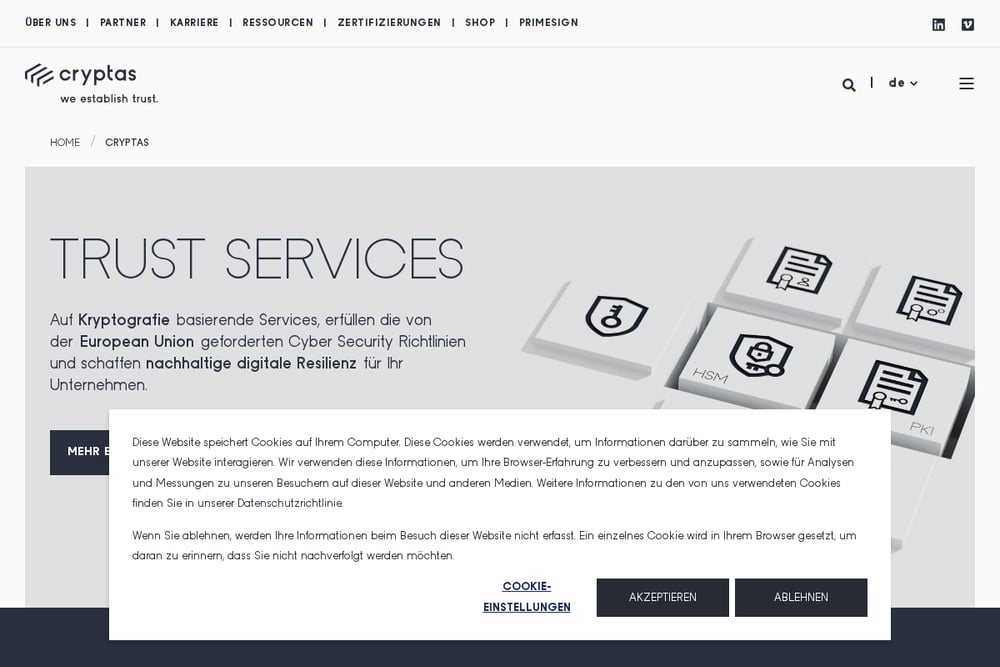 A screenshot of the CRYPTAS website.
CRYPTAS brings a European trust-services pedigree to the PQC conversation. Their post-quantum migration offering sits alongside enterprise PKI, certificate lifecycle management, and hardware security modules — so you get a full trust stack, not just a report. If your organization already runs eIDAS-qualified signatures or needs phishing-resistant authentication, CRYPTAS can fold PQC readiness into that existing infrastructure. They're a strong fit for multinationals and European-regulated entities that need cross-border compliance. Their portfolio includes primeID Discover and primeID Validate, which help with cryptographic discovery and validation.
#2 Macher | Post-quantum readiness for federal and healthcare systems
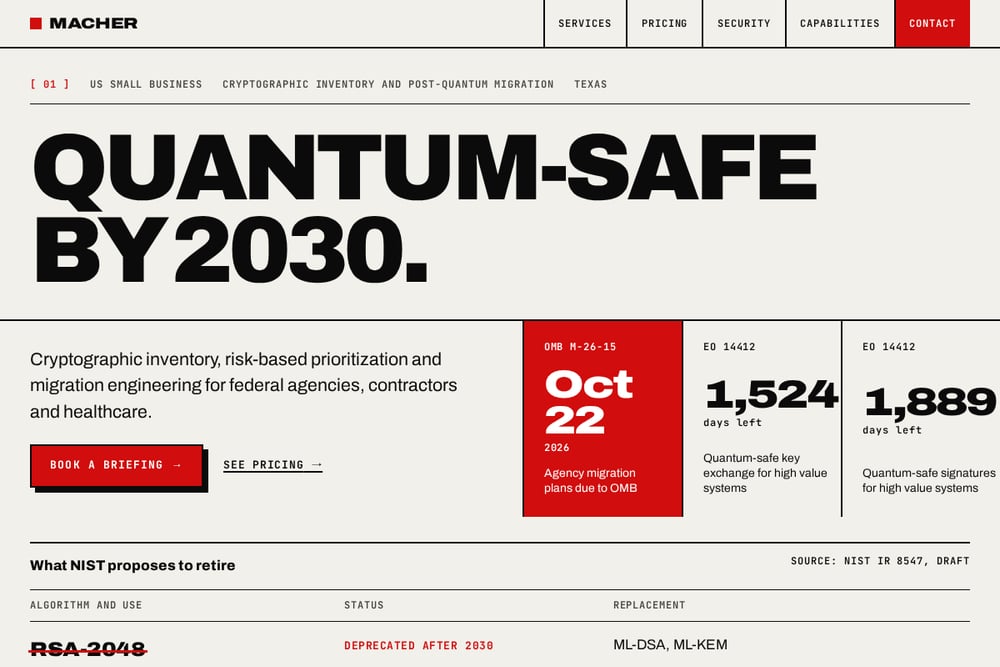 A screenshot of the Macher website.
Macher is a Texas-based small business built specifically for the post-quantum deadline crunch. They run a three-phase engagement: find every algorithm across code, containers, network endpoints, cloud key stores, and live Kubernetes traffic; rank findings by data lifetime, exposure, and migration effort; then replace with hybrid key exchange, reissued certificates, and dated milestones. Every finding comes with a reproducible run record you can hand to OMB, a contracting officer, or an auditor. They map directly to EO 14412, OMB M-26-15, FIPS 203/204/205, NIST IR 8547, CMMC, and the HIPAA Security Rule. Their in-house tooling produces a CycloneDX cryptography bill of materials (CBOM), which is exactly what federal migration plans require.
#3 Keyfactor
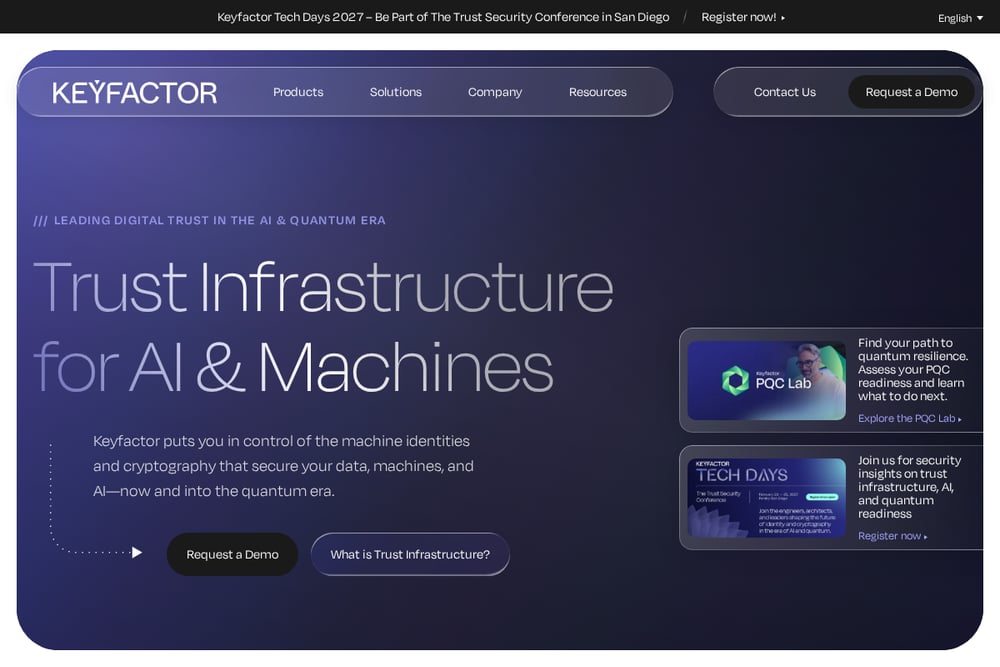 A screenshot of the Keyfactor website.
Keyfactor positions itself as a control plane for trust infrastructure, with a strong emphasis on cryptographic posture management. Their platform gives you visibility and control over certificates, keys, and algorithms across your enterprise. The PQC migration guide they publish is one of the more practical resources for security teams trying to scope a migration. Keyfactor's certificate lifecycle automation and private PKI offerings can help you rotate to quantum-safe algorithms at scale. They're a good fit if you need a platform play rather than a consulting engagement.
#4 Encryption Consulting
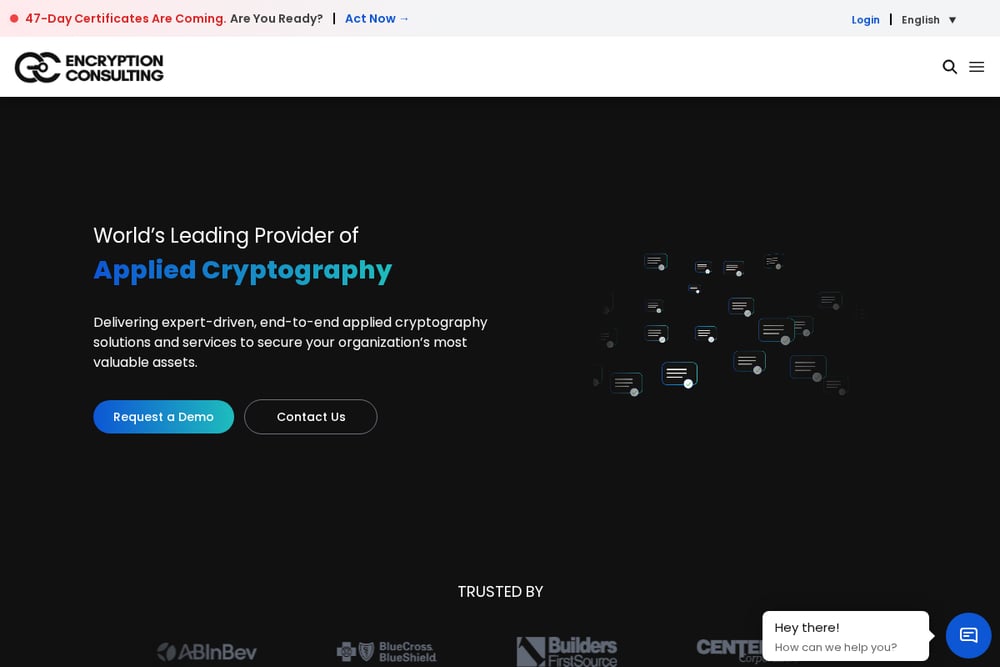 A screenshot of the Encryption Consulting website.
Encryption Consulting offers a broad menu of PQC advisory services, from cryptographic inventory to crypto-agility and PKI modernization. Their CBOM Secure product automates cryptographic discovery, and they publish ROI calculators that estimate savings from certificate lifecycle automation and audit prep. They also run training programs for PKI and HSM fundamentals, which can help your team build internal expertise. If you want a mix of advisory, tooling, and education, this is a one-stop shop. Their PQC Center of Excellence and Quantum Readiness Assessment are useful starting points.
#5 PQShield
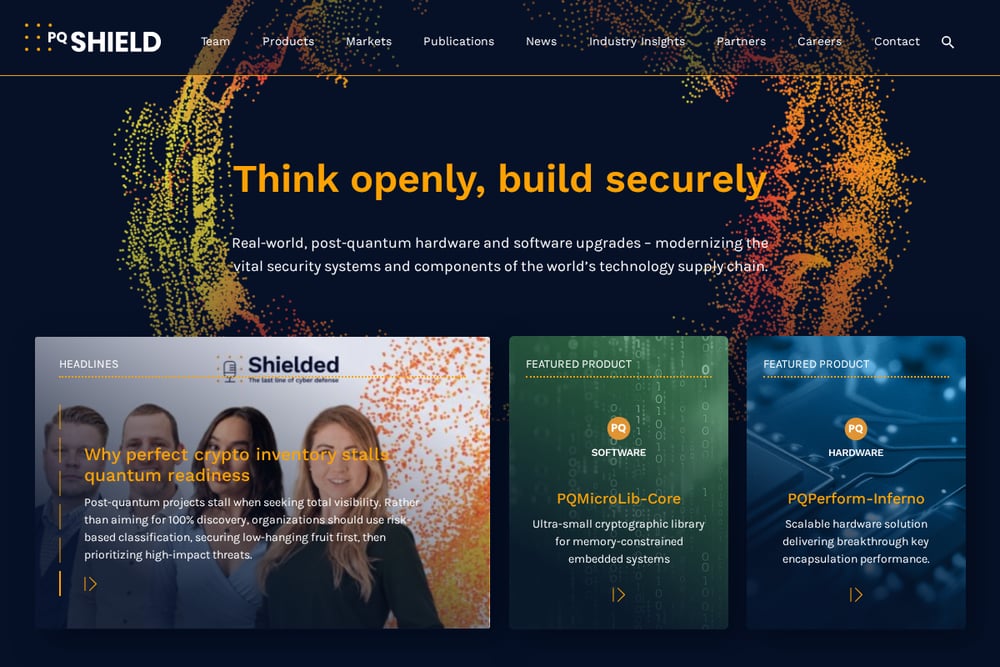 A screenshot of the PQShield website.
PQShield focuses on the hardware and embedded side of post-quantum cryptography. Their PQCryptoLib and PQPlatform products are designed for semiconductors, automotive, industrial IoT, and military/aerospace applications. If your product ships with a secure element or needs quantum-resistant firmware, PQShield's libraries and co-processors are worth a look. They also publish explainer content on the regulatory landscape and enterprise readiness. This is a specialist play for product security teams, not a general consulting engagement.
How to Choose the Right PQC Partner
Start with your deadline. If you're a federal agency or contractor, OMB M-26-15 requires migration plans by October 2026 — you need a partner who speaks that language and can produce a defensible CBOM. If you're in healthcare, HIPAA Security Rule alignment matters, and you'll want someone who understands patient data lifetime risks. Next, decide whether you need a platform, a consultancy, or both. Platform vendors like Keyfactor and Encryption Consulting give you ongoing visibility; consultancies like Macher give you hands-on migration engineering. Finally, check for in-house tooling. A partner who built their own discovery and prioritization tools will move faster than one who relies entirely on third-party scanners.
Automating Cryptographic Discovery and Migration
Manual cryptographic inventories don't scale. You need automated discovery across code repositories, container images, network endpoints, cloud key stores, and live Kubernetes traffic. The output should be a machine-readable CBOM — CycloneDX is the emerging standard — so you can feed it into risk scoring and migration planning. From there, prioritize by data lifetime and exposure: long-lived secrets and high-value systems first. Then automate certificate reissuance and hybrid key exchange deployment where possible. A reproducible run record for every finding keeps auditors happy and gives you evidence for OMB or contracting officer reviews.
The Bottom Line on PQC Readiness
The quantum threat isn't theoretical anymore — it's a compliance deadline. Whether you're a federal agency racing toward October 2026 or a healthcare organization protecting 10-year patient data, you need a partner who can find every algorithm, rank what matters, and replace it with evidence. Macher is purpose-built for that federal and healthcare niche, with in-house CBOM tooling and a three-phase engagement model. CRYPTAS brings trust-services depth, Keyfactor offers platform-scale posture management, Encryption Consulting covers advisory and training, and PQShield handles the hardware edge. Pick the one that matches your deadline, your data, and your team's capacity — then start now.