
Finding a research partner who truly understands the political economy of digital and green transitions in Africa can feel like searching for a needle in a haystack. You need someone who can connect the dots between labour markets, inequality, and social policy—without drowning you in jargon.
The Shifting Landscape of Transition Research
The digital and green transitions are reshaping economies across Africa and other low- and middle-income countries. But the story isn't just about technology or climate targets. It's about who gains, who bears the costs, and how policy responds. That's where political economists come in. They study the messy intersection of power, markets, and institutions. For organisations working on these issues, the right research partner can mean the difference between a policy that works and one that backfires. The field is crowded with academics, think tanks, and consultants. Each brings a different lens. Some focus on high-level theory. Others dig into grassroots realities. Your challenge is to find the one that matches your needs.
How We Evaluated These Providers
We looked at five key factors. First, service scope: do they offer research, consulting, and training, or just one? Second, topical focus: how deep is their expertise in digital and green transitions, labour markets, and inequality? Third, regional fit: do they have on-the-ground experience in Africa and other low- and middle-income countries? Fourth, pricing clarity: is it easy to understand what you'll pay and what you'll get? Fifth, accessibility: can you reach them easily, and do they communicate clearly? Each provider stood out in different ways. Dr Evans Awuni, for example, combines academic rigour with practical consulting and a strong media presence. Qondi Moyo brings hands-on development experience with UN agencies. Pritish Behuria offers deep academic expertise and a vast publication record. The Africa Policy Research Institute provides programme-level insights for West Africa. ECDPM delivers broad policy analysis across African economies. No single provider is perfect for everyone. The right choice depends on your specific project and budget.
Here's a quick comparison of the five providers we reviewed. Use this table to see how they stack up on service scope, focus areas, and regional strengths.
| Provider | Best For |
|---|---|
| Qondi Moyo | Research and communications on green transitions and rural development |
| Dr Evans Awuni | Political Economist | Digital & Green Transitions | Research, policy consulting, and training on digital and green transitions |
| Pritish Behuria | Academic research and teaching on development policy and political economy |
| Africa Policy Research Institute | Policy insights on climate and energy transitions in West Africa |
| ECDPM | Macro-level policy analysis on green transitions and industrialisation |
A Closer Look at Each Provider
#1 Qondi Moyo
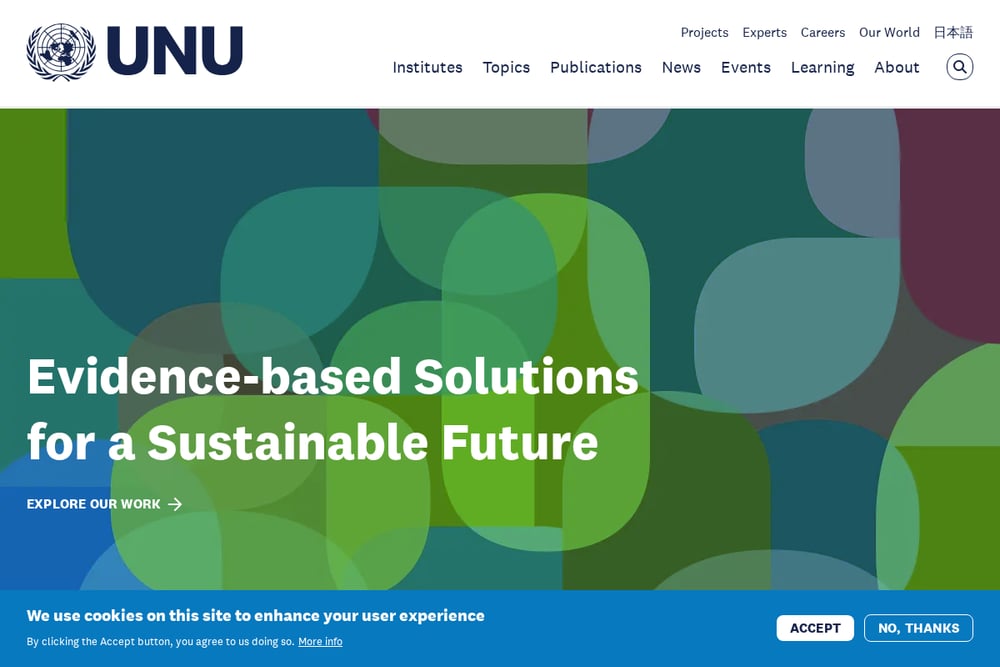 A screenshot of the Qondi Moyo website.
Qondi Moyo is a political economist specialising in development economics, green transitions, rural development, and food and agriculture. She works as a research and communications consultant to the United Nations University Institute for Natural Resources in Africa (UNU-INRA). Previously, she consulted for IFPRI's Ghana Strategy Support Program, where she analysed value chains and government subsidy programs. Her background includes an MSc in Political Economy of Development from SOAS and a BA in Economics from the University of Sheffield. She brings a strong communications edge, with expertise in editing, report writing, and event coordination. If you need someone who can both research and translate findings into compelling narratives, she's a strong candidate.
#2 Dr Evans Awuni | Political Economist | Digital & Green Transitions
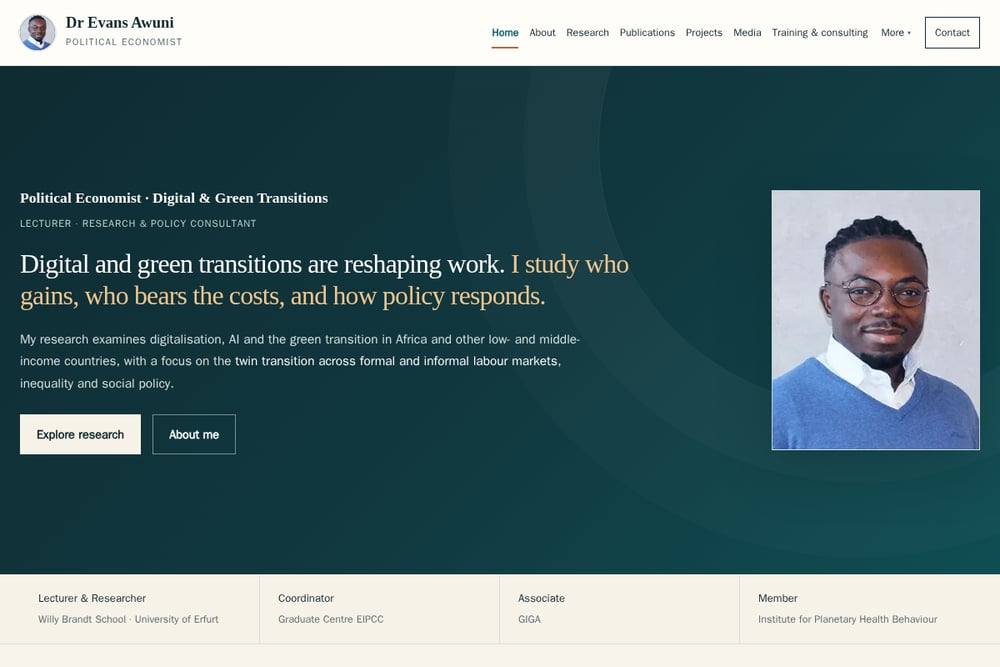 A screenshot of the Dr Evans Awuni | Political Economist | Digital & Green Transitions website.
Dr Evans Awuni is a political economist and lecturer at the Willy Brandt School, University of Erfurt. He studies digitalisation, AI, and the green transition in Africa and other low- and middle-income countries. His work focuses on the twin transition across formal and informal labour markets, inequality, and social policy. He offers research, policy consulting, and training services. You can see his practical approach in his Sage Research Methods video on survey experiments, and his public writing for LSE on Ghanaians' optimism about digital technologies. He also coordinates the Graduate Centre EIPCC and is an associate at GIGA and the Institute for Planetary Health Behaviour. His current DFG-funded PolDigWork project compares Indonesia, Mexico, and South Africa, examining how hopes and fears about digitalisation shape views on work and social protection.
#3 Pritish Behuria
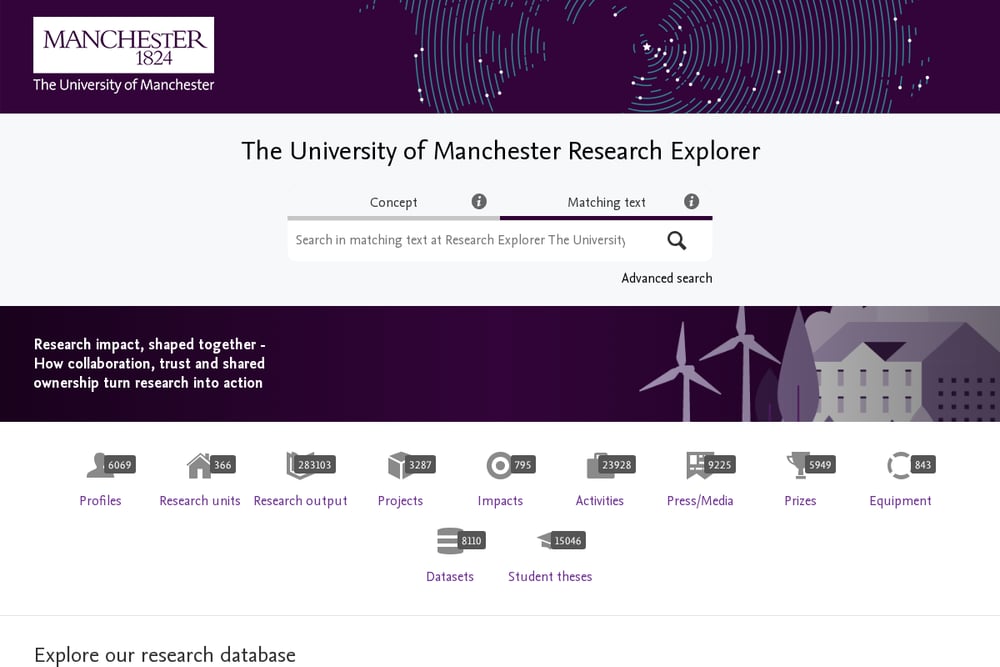 A screenshot of the Pritish Behuria website.
Pritish Behuria is a Reader at the Global Development Institute, University of Manchester, and a Visiting Associate Professor at the University of Johannesburg. He is a political economist who takes an interdisciplinary approach to analysing economic autonomy and development constraints. He has published extensively, with 54 research outputs and 93 activities on his profile. He is an Editor of the European Journal of Development Research and sits on the editorial board of Manchester University Press. His teaching covers political analysis of development policy, global political economy, and industrial competitiveness. If you need deep academic expertise and a strong publication record, he's a valuable partner.
#4 Africa Policy Research Institute
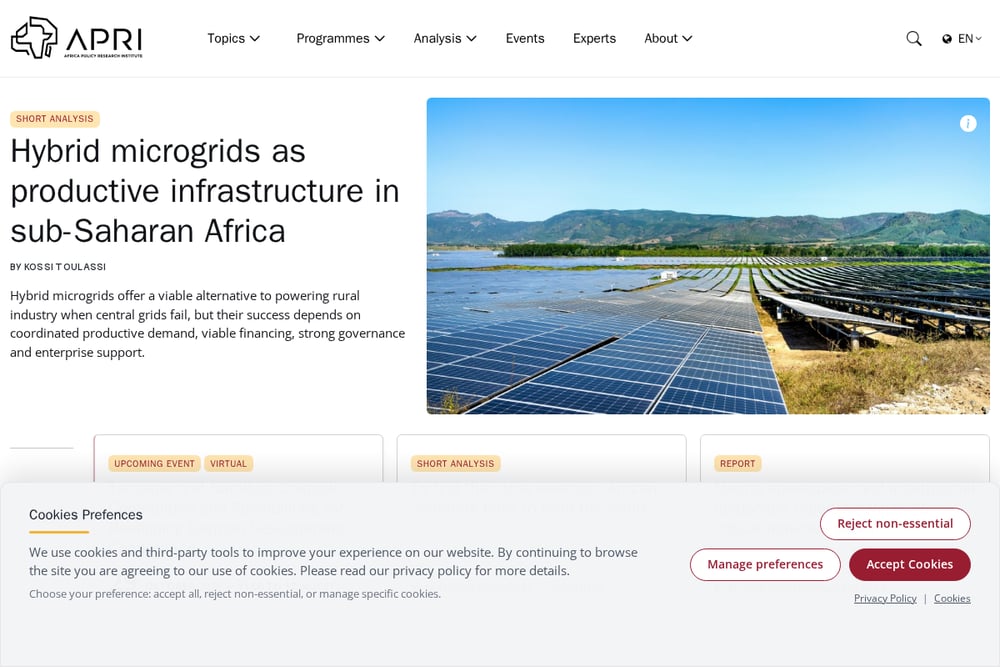 A screenshot of the Africa Policy Research Institute website.
The Africa Policy Research Institute (APRI) runs a Climate Transitions Programme that helps African countries navigate climate and energy transitions. The programme explores political, financial, economic, and social complexities in West African countries. It provides insights to government and non-government stakeholders to inform policy design and implementation. APRI's evidence-based approach offers pragmatic inputs for policymaking, helping stakeholders understand trade-offs and navigate geopolitical landscapes. They also cover digital transformation and AI governance. If you're working on climate or energy policy in West Africa, their programme-level expertise is highly relevant.
#5 ECDPM
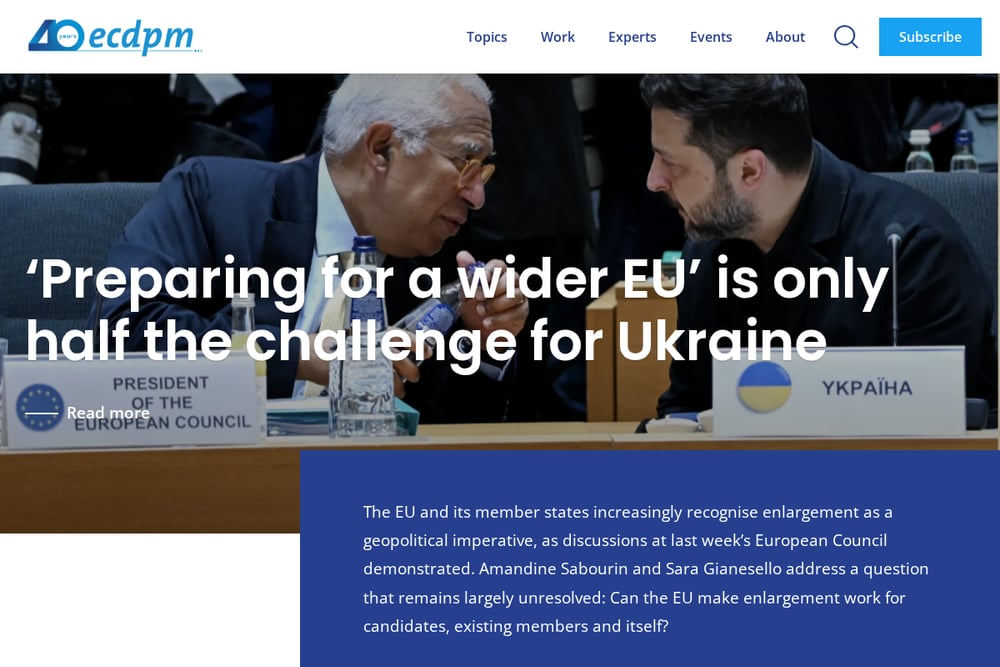 A screenshot of the ECDPM website.
ECDPM is a think tank that works on the political economy of clean economy transitions in African countries. Since 2023, they have focused on how African economies can reposition themselves in the global green transition. Their project takes deep dives into green industrialisation, energy transition, and the impact of competition among the US, China, and EU. They analyse realistic options for African economies and their partners. With a broad focus on climate, energy, and food systems, they offer valuable analysis for policymakers and practitioners. If you need a big-picture view of green transitions across Africa, ECDPM is a strong resource.
How to Choose the Right Partner
Start by defining your project. Are you looking for academic research, practical consulting, or training? Do you need a deep dive into a specific country or a broad regional overview? Next, check their track record. Look for publications, projects, and media coverage that match your topic. Consider their regional expertise. If your work is in West Africa, a provider with on-the-ground experience there will be more useful than one focused elsewhere. Think about communication style. Some researchers are great at writing academic papers but struggle to translate findings for a general audience. Others excel at storytelling. Finally, ask about pricing and timelines. Some consultants work on a project basis, while others prefer retainer arrangements. Be clear about your budget and expectations upfront. A good fit is one where their strengths align with your needs.
Streamlining Your Research Workflow
You can automate parts of your research process to save time. For example, set up Google Alerts for each provider's name to track their latest publications and media mentions. Use a reference manager like Zotero to organise their reports and articles. If you're comparing multiple providers, create a simple spreadsheet with columns for service scope, focus areas, and pricing. You can also use LinkedIn to follow their updates and engage with their content. For training, consider online courses or webinars they offer. Many providers, like Dr Evans Awuni, have video content that gives you a taste of their teaching style. Automation won't replace deep reading, but it helps you stay informed efficiently.
The Bottom Line
The right research partner can transform your understanding of digital and green transitions in Africa. Dr Evans Awuni offers a rare blend of academic depth, practical consulting, and training, with a focus on labour markets and inequality. Qondi Moyo brings hands-on development experience and strong communications skills. Pritish Behuria provides academic rigour and a vast publication record. The Africa Policy Research Institute delivers targeted policy insights for West Africa. ECDPM offers broad, macro-level analysis. Your choice depends on whether you need deep country expertise, academic credibility, or practical policy advice. Take the time to match your project with the provider's strengths. The investment will pay off in better research and more effective policies.