
You have a photonic integrated circuit that works in the lab. Now you need it to survive the real world. These five packaging providers can get you there.
The PIC Packaging Landscape
Photonic integrated circuits pack lasers, modulators, detectors, and splitters onto a single chip. That density creates a packaging problem. Optical tolerances are tight, RF signals need clean paths, and heat has nowhere to hide. Most prototype technologies simply are not robust enough for deployment. The providers below bridge that gap. They take your PIC from breadboard to ruggedized module. Some focus on harsh environments. Others scale to volume. A few do both. Your choice depends on where your product is headed.
How We Evaluated These Providers
We looked at service scope, from design through production. We checked whether each provider supports harsh-environment standards like DO-160G and MIL-STD-810. We examined prototyping speed and small-series capability. We considered system integration support, because a package alone rarely solves the problem. We also weighed pricing clarity and regional fit. Each provider below stood out on different factors. PhotonFirst brings mission-critical field experience. ALTER Technology offers hermetic platforms with fast-turn options. LioniX pairs packaging with a silicon nitride foundry. PHIX scales from prototype to volume with contract manufacturing. EUROPRACTICE gives academic and startup users a cost-effective entry point through multi-project runs.
Here is a quick look at the five providers, ordered for this roundup.
| Provider | Best For |
|---|---|
| ALTER Technology | Hermetic PIC packages with fast-turn options |
| PIC Packaging at PhotonFirst – PIC Packaging for harsh environments | Mission-critical harsh-environment deployments |
| LioniX International | Silicon nitride PICs with integrated packaging |
| PHIX Photonics Assembly | Scaling from prototype to volume production |
| EUROPRACTICE | Cost-effective shared packaging runs |
The 5 PIC Packaging Providers Worth Knowing
#1 ALTER Technology
 A screenshot of the ALTER Technology website.
ALTER Technology has deep experience packaging silicon photonics and InP PIC devices. They tackle the hard parts: optical tolerances, RF electrical signals, and thermal management. Their standard hermetic PIC package platform helps you move past breadboard testing into real-world deployment. You get robust packaging suitable for field use, not just lab conditions. They also offer fast-turn options when your schedule is tight. If you need a proven hermetic platform with assembly processes under one roof, ALTER is a strong starting point.
#2 PIC Packaging at PhotonFirst – PIC Packaging for harsh environments
 A screenshot of the PIC Packaging at PhotonFirst – PIC Packaging for harsh environments website.
PhotonFirst packages PICs for the world's most demanding environments. They design and manufacture packages that keep working under vibration, temperature swings, and other harsh conditions. Their end-to-end service spans design, rapid prototyping, small-series production, and system integration. They follow aerospace and defense-grade standards including DO-160G, MIL-STD-810, and MIL-STD-461. Their package designs come directly from mission-critical interrogators like AGTR-NEO and AGTR-NG4. That means your PIC benefits from field-proven engineering. If your application flies, floats, or operates offshore, this is the partner to call.
#3 LioniX International
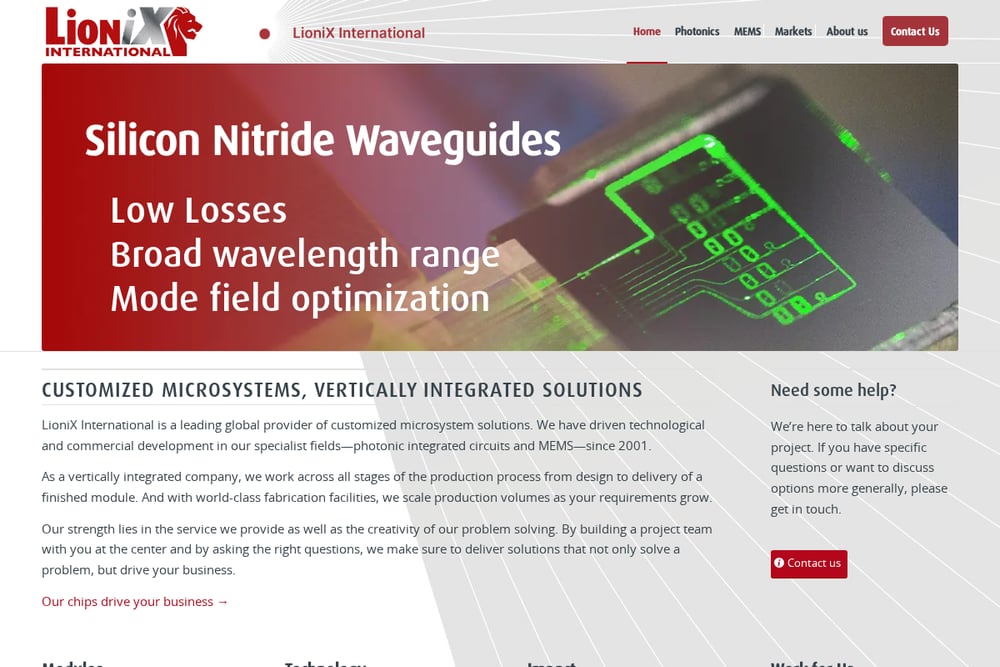 A screenshot of the LioniX International website.
LioniX International pairs PIC packaging with a silicon nitride waveguide foundry. That combination lets you design, fabricate, and package without handing off between vendors. Their TriPleX platform supports applications from biosensors to quantum photonics. Packaging and assembly services cover the full module, not just the chip. You get a partner who understands both the photonics and the package. For teams building integrated modules on silicon nitride, LioniX offers a tightly coupled path from design to assembly.
#4 PHIX Photonics Assembly
 A screenshot of the PHIX Photonics Assembly website.
PHIX calls itself a packaging foundry for photonic ICs. They support prototypes and high-volume manufacturing under one roof. Their engineers help optimize your design early, which saves costly rework later. Services range from single manufacturing steps to complete joint development with scale-up. They handle hybrid integration, optical assembly, and RF electrical connectivity. If your roadmap goes from prototype to medium or large series, PHIX scales with you. They are a one-stop shop for teams that need volume without sacrificing precision.
#5 EUROPRACTICE
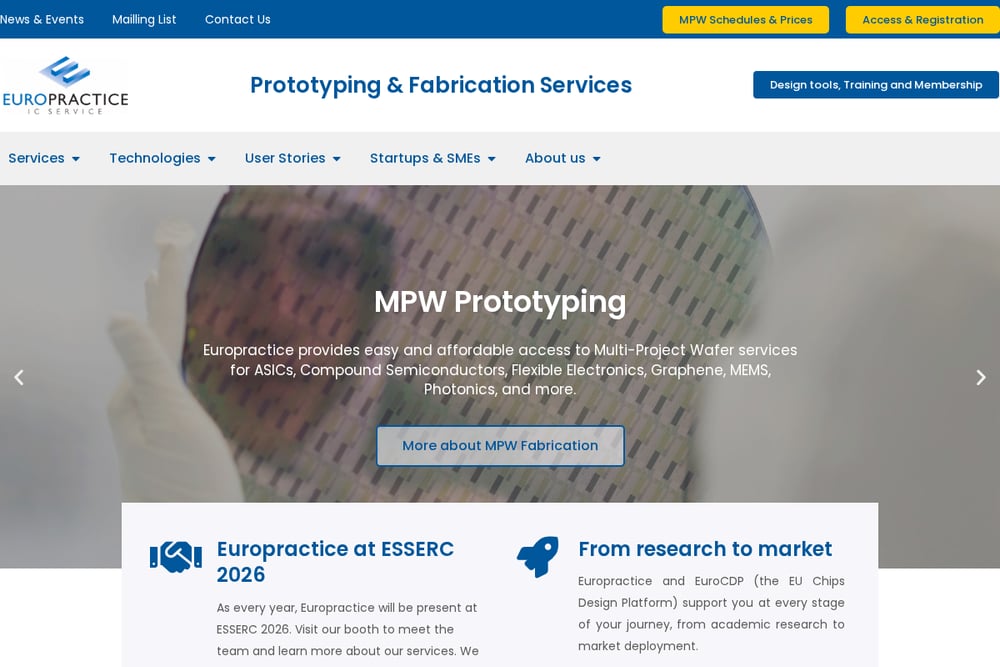 A screenshot of the EUROPRACTICE website.
EUROPRACTICE offers photonics packaging through a multi-project packaging model. You share a pre-scheduled run with other users, which keeps costs down. The service delivers a standardized photonic package module. It is ideal for academic groups, startups, and SMEs that need a cost-effective entry point. In collaboration with PhotonFirst, they provide three pre-scheduled packaging runs per year. If you are prototyping on a budget and can work within a shared schedule, EUROPRACTICE removes the financial barrier.
How to Choose Your PIC Packaging Partner
Start with your environment. If your PIC will face vibration, temperature extremes, or salt air, prioritize providers with harsh-environment qualifications. PhotonFirst and ALTER Technology both fit that profile. Next, look at your volume. Prototyping on a tight budget? EUROPRACTICE gives you a shared run without the full cost. Moving to production? PHIX scales with you. Consider your material platform. LioniX is a natural fit if you are on silicon nitride. Finally, ask about system integration. A package that works on a bench may fail in a system. The best partner helps you integrate, not just package.
Automating Your Packaging Workflow
Packaging is not a one-time task. It is a workflow. Start by defining your environmental requirements and test standards early. Share those with your packaging partner before design freeze. Use rapid prototyping to validate optical and RF interfaces. Then lock the design and move to small-series production. Build in test points for vibration, thermal cycling, and EMC. If you are scaling, automate the handoff between design and manufacturing. PHIX and PhotonFirst both support this transition. Document every process step so your volume run matches your prototype. That discipline saves months later.
The Bottom Line
Your PIC is only as good as its package. The five providers here cover the full spectrum. ALTER Technology brings hermetic platforms and fast turns. PhotonFirst delivers mission-critical harsh-environment expertise. LioniX couples packaging with silicon nitride fabrication. PHIX scales from prototype to volume. EUROPRACTICE opens the door for budget-conscious teams. Match your environment, volume, and material platform to the right partner. Then get your PIC out of the lab and into the field.