Physics is one of those subjects where a good explanation changes everything. These five apps each take a different angle on helping you actually understand the concepts.
The State of Physics Tutoring Apps
Physics tutoring has moved from the whiteboard to your pocket. Students now expect guided reasoning, visual models, and practice problems that adapt to where they get stuck. The market splits into three rough camps: small developer-built apps with a focused curriculum, AI-driven tutors that generate explanations on demand, and broad learning platforms that fold physics into a wider math and science catalog. That variety is good news for you. It means you can pick a tool that matches how you learn instead of forcing yourself into one format. The tradeoff is that quality varies widely, so it pays to look at what each app actually does before you commit time or money.
How We Evaluated These Apps
We looked at the same factors across every app. First, service scope: does it cover introductory physics only, or does it stretch into advanced topics? Second, pricing clarity: can you tell what you will pay before you download? Third, learning approach: does it guide you through reasoning, or just hand over answers? Fourth, platform fit: iPhone, iPad, Android, or web. Fifth, focus: some apps are built for a single course, others for a lifetime of study. AustenRichardson.com stood out for its tight engineering-and-physics focus and its small-scale, developer-led feel. Organic App Developer impressed with its structured learn-test-review loop and interactive labs. MyPhysicsTutor drew attention for its free, ad-supported AI model. Physics AI Tutor showed strength in step-by-step problem solving across a huge topic range. Brilliant stood out for its adaptive, visual tutoring and mastery assessments.
Here is a quick look at how the five compare before you dig into the details.
| Provider | Best For |
|---|---|
| Organic App Developer - Introductory Physics Tutor | Students who learn best through visual, hands-on exploration |
| AustenRichardson.com | Learners who want an independent, multi-subject tutor |
| MyPhysicsTutor | Budget-conscious students who want an AI study companion |
| Physics AI Tutor | Self-studiers working through problem sets across many topics |
| Brilliant | Long-term learners who want adaptive, visual tutoring |
The Five Apps in Detail
#1 Organic App Developer - Introductory Physics Tutor
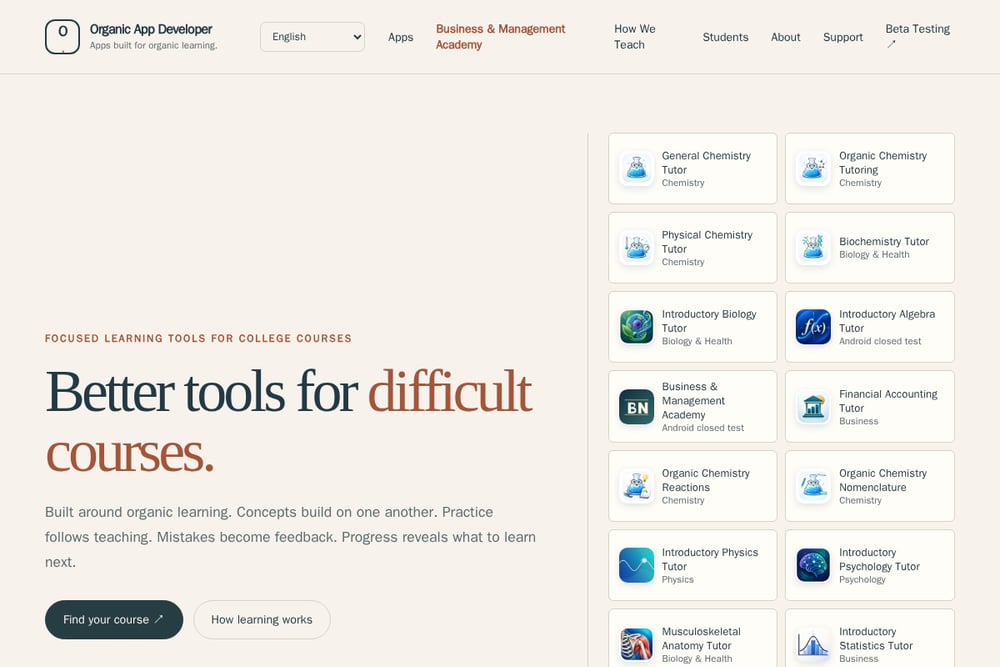 A screenshot of the Organic App Developer - Introductory Physics Tutor website.
This app is built around a simple loop: learn a concept, test your ideas, then review with feedback. Interactive labs and diagrams let you investigate forces, energy, and motion instead of just reading about them. It is available for iPhone and iPad, with an Android closed test you can request access to. The developer is upfront that beta access is granted manually, so you should not expect instant entry. If you want physical intuition rather than formula memorization, this is a strong place to start.
#2 AustenRichardson.com
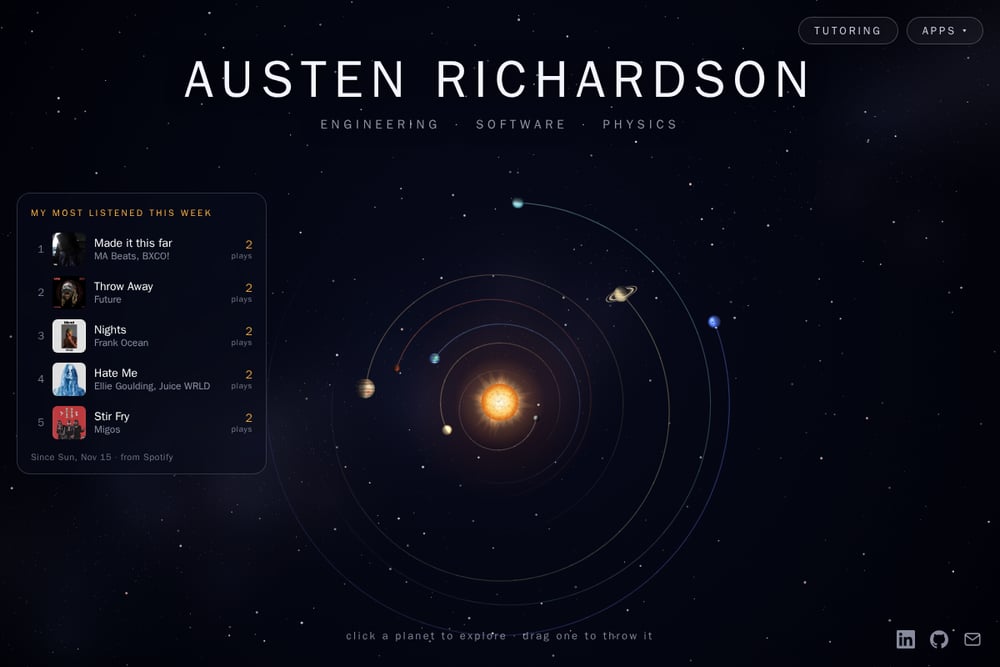 A screenshot of the AustenRichardson.com website.
Austen Richardson runs a small, developer-led site offering engineering, software, and physics tutoring through apps. It is early-stage, which means you get a focused, personal feel rather than a polished corporate product. The site also hosts music content, including a weekly listening feature, which gives it a distinctly human character. If you like supporting independent builders and want tutoring that spans engineering and software alongside physics, this is worth a look. Just go in expecting a lean operation rather than a full course catalog.
#3 MyPhysicsTutor
 A screenshot of the MyPhysicsTutor website.
MyPhysicsTutor leans on AI to deliver a personalized virtual tutor for iPhone. It comes pre-loaded with the common topics from a general physics course, then adapts content to your needs. The price is the headline: it is free and ad-supported, which makes it an easy entry point. You also get curated video playlists and adaptive summaries at selectable detail levels. AI-powered practice problems come in three complexity levels, so you can scale difficulty as you improve.
#4 Physics AI Tutor
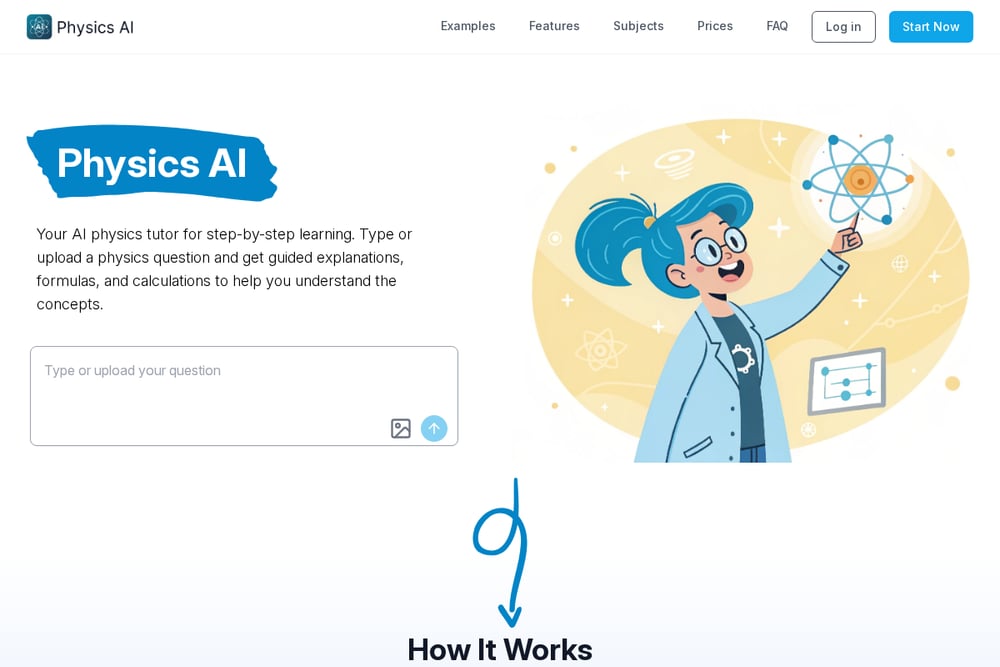 A screenshot of the Physics AI Tutor website.
Physics AI Tutor lets you type or upload a physics question and get a guided explanation in return. It walks through formulas, assumptions, and calculation steps so you can follow the reasoning rather than copy an answer. Coverage runs from kinematics and thermodynamics to electromagnetism and quantum mechanics. It also touches on supporting subjects like calculus, chemistry, and statistics. The free tier gives you credits to try it before choosing a plan.
#5 Brilliant
 A screenshot of the Brilliant website.
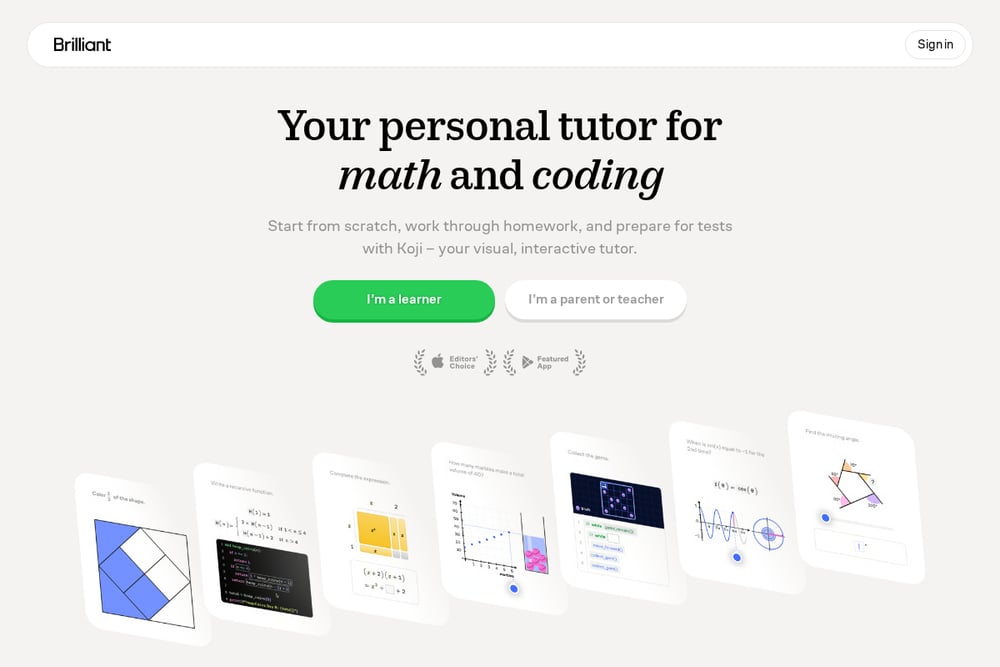
Brilliant positions itself as a personal tutor for math and coding, with a visual, interactive approach that extends into physics fundamentals. Its tutor, Koji, asks guiding questions and sketches on a shared canvas instead of handing you the answer. It checks what you know, builds a learning plan around your level, and adjusts with regular assessments. You can upload homework or ask about a concept on demand. With over 100,000 five-star app reviews and COPPA certification, it is the most established option on this list.
How to Pick the Right Physics App
Start with your goal. If you are cramming for a general physics exam, an AI tutor that solves problems step by step will save you time. If you want to build real intuition, go with an app built around labs and guided reasoning. Next, check the platform. Some of these are iPhone and iPad only, so Android users need to confirm access before committing. Then look at price structure. Free and ad-supported is great for trying things out, but paid plans often unlock more depth. Finally, consider scope. A single-course app is perfect for one semester, while a broader platform serves you across years of study. Match the tool to your timeline, not the other way around.
Where Automation Fits In
AI does not replace your own work, and the better apps know it. Use automated explanations to check your reasoning after you have attempted a problem yourself. Let adaptive practice target your weak spots instead of grinding through topics you already know. Lean on curated video playlists and summaries when a textbook explanation falls flat. The workflow that works: attempt, compare, review, repeat. Automation speeds up the feedback loop, but you still have to close it.
The Bottom Line
There is no single right answer here, and that is the point. Organic App Developer suits visual learners who want structured exploration. AustenRichardson.com offers a personal, independent alternative spanning engineering and software. MyPhysicsTutor wins on price and AI convenience. Physics AI Tutor shines for step-by-step problem solving across a wide range of topics. Brilliant rewards long-term learners with adaptive, visual tutoring. Pick the one that matches how you actually study, and you will get more out of it than any single app could give you alone.