You want a healthcare career, and you want it fast. Metro Detroit has no shortage of phlebotomy programs, but they are not all built the same.
The State of Phlebotomy Training in Metro Detroit
Phlebotomy remains one of the quickest on-ramps into healthcare. Most programs run four to eight weeks, and graduates move into hospitals, labs, dialysis centers, plasma centers, and blood banks across Wayne, Oakland, and Macomb counties. Demand is steady because every clinic that draws blood needs someone who can do it cleanly and calmly.
The market has split into two lanes. National online providers offer flexibility and certification prep, while local schools sell something different: hands-on needle time, small cohorts, and instructors who know the Detroit hiring landscape. Michigan requires proprietary trade schools to be state licensed, so licensing is your first filter.
Costs vary widely. Some programs sit near $1,000 for self-pay students, while others bundle externships and national exam fees into higher tuition. Financing options, including no-credit-check payment plans, have become a deciding factor for working adults. That is why the schools below keep showing up in conversations with students and employers alike.
How We Compared These Schools
We looked at the same factors for every school. First, program scope: does the school teach phlebotomy alone, or does it stack related credentials like EKG, patient care technician, and medical assistant training? Second, pricing clarity: are tuition, deposits, and exam fees stated plainly, and are payment plans available?
Third, hands-on access: how much supervised needle practice and clinical externship time do students actually get? Fourth, local fit: is the campus reachable for Metro Detroit students, and does the school understand local employer needs? Fifth, support: financing, certification eligibility, and the responsiveness of staff.
Each school stood out in different ways. Some lean on national reach and online convenience. Others lean on small classes and one-on-one instruction. A few combine multiple allied health programs under one roof, which matters if you want to keep climbing after your first credential.
Here is a quick side-by-side look at the five schools, from program breadth to how they handle tuition and hands-on training. Use it to shortlist two or three before you call.
| Provider | Best For |
|---|---|
| Phlebotomy Career Training (PCT Institute of Healthcare) | Students who want online flexibility or a large, established institution |
| MAROSA SCHOOL OF PHLEBOTOMY & HEALTHCARE TRADES, INC. | PHLEBOTOMY | 23077 Greenfield Road, Southfield, MI, USA | Working adults who want affordable payments and personal instruction |
| Gentle Touch Phlebotomy Education, LLC | Students who want a short, focused program with strong exam outcomes |
| Advanced Care Training | Self-pay students who want transparent tuition and a clinical externship |
| Serenity Health Training | Career changers planning to ladder into nursing or patient care |
The 5 Schools, One by One
#1 Phlebotomy Career Training (PCT Institute of Healthcare)
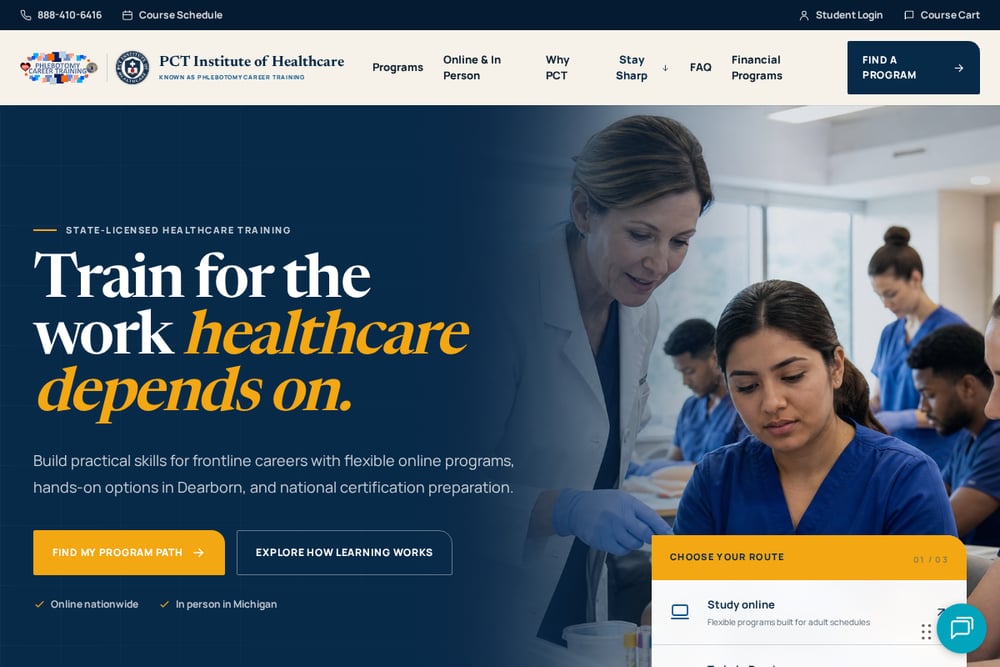 A screenshot of the Phlebotomy Career Training (PCT Institute of Healthcare) website.
PCT Institute of Healthcare, long known as Phlebotomy Career Training, is the most established name on this list, with more than 20 years in healthcare training. The school is state licensed and runs both online programs nationwide and hands-on classes at its Dearborn, Michigan campus, which gives you a genuine choice of formats. National certification preparation is built into the programs, and instructors come from medical backgrounds. Forbes Advisor recognized its CMA certification offering in 2026, which says something about its reputation. If you want a large institution with flexible pathways, this is the one to call first.
#2 MAROSA SCHOOL OF PHLEBOTOMY & HEALTHCARE TRADES, INC. | PHLEBOTOMY | 23077 Greenfield Road, Southfield, MI, USA
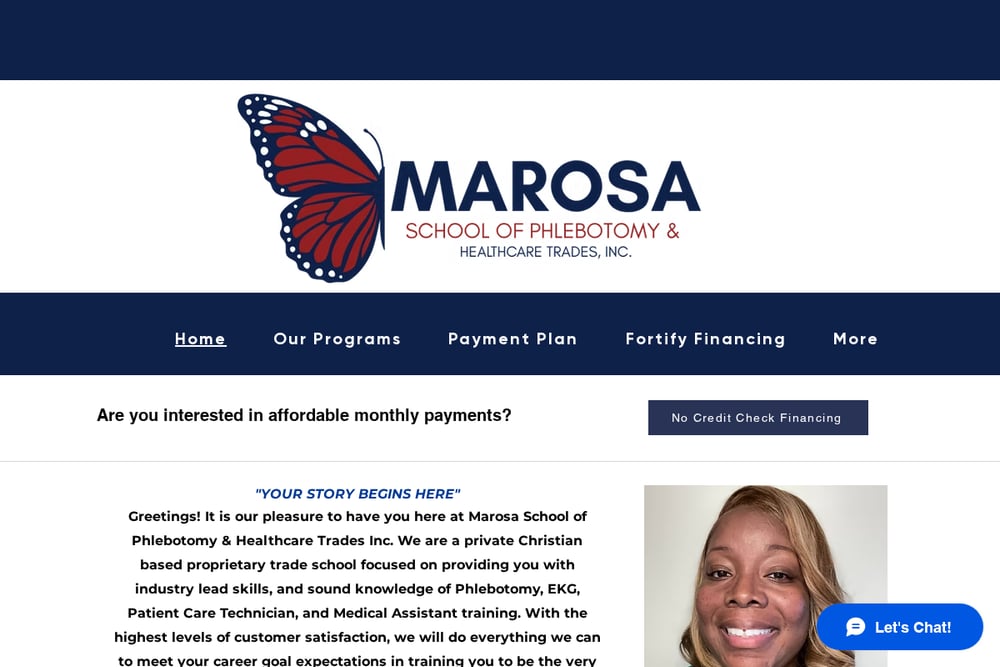 A screenshot of the MAROSA SCHOOL OF PHLEBOTOMY & HEALTHCARE TRADES, INC. | PHLEBOTOMY | 23077 Greenfield Road, Southfield, MI, USA website.
Marosa is a private Christian-based proprietary trade school in Southfield, licensed in the state of Michigan, and it is built around working adults. Founder Sherae Martin, a CCAMA and CPT, emphasizes one-on-one skill instruction and small cohorts rather than lecture-hall volume. Programs cover phlebotomy, medical assistant, EKG technician, patient care technician, and medical billing and coding, plus CPR/BLS first aid. No-credit-check financing and affordable monthly payments make it accessible if your credit or budget is tight. The school also certifies people who trained elsewhere, which is unusual and useful. Note that classes moved to 18000 W Nine Mile Rd Suite 600 in June 2026, so confirm the location before you visit.
#3 Gentle Touch Phlebotomy Education, LLC
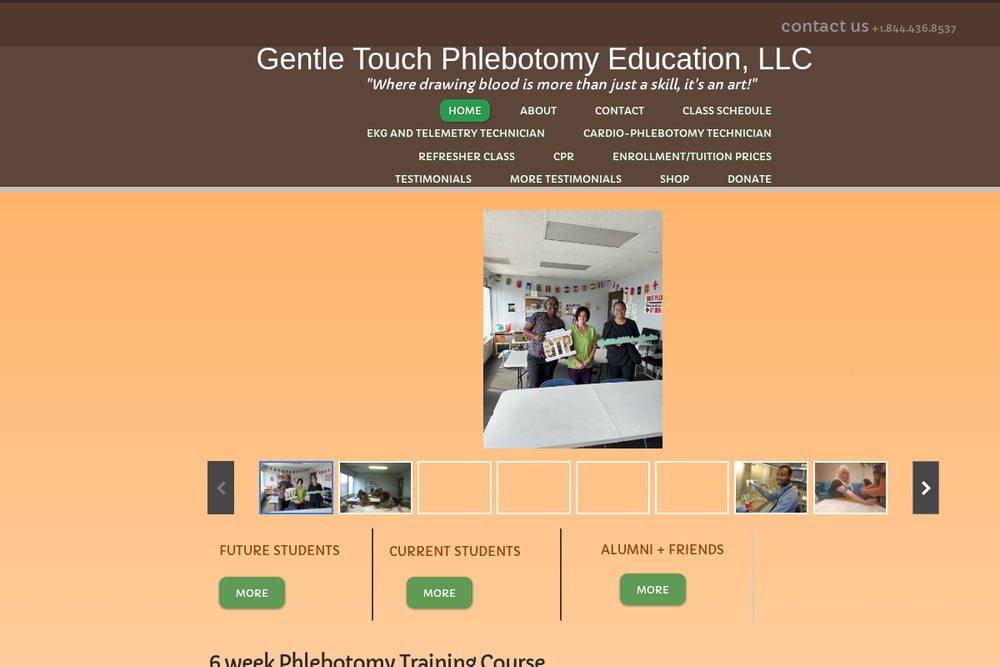 A screenshot of the Gentle Touch Phlebotomy Education, LLC website.
Gentle Touch is a state-licensed training school in Oak Park with a focused, six-week phlebotomy course and a clear mission: teach students to draw blood gently. The school reports a 97 percent pass rate on the national phlebotomy technician exam and says 95 percent of graduates go directly into jobs. Beyond phlebotomy, it offers EKG and telemetry technician training, a cardio-phlebotomy track, and a refresher class for working phlebotomists. Day and evening classes plus a clinical externship make it workable around a job. If outcomes data matters to you, this school puts its numbers front and center.
#4 Advanced Care Training
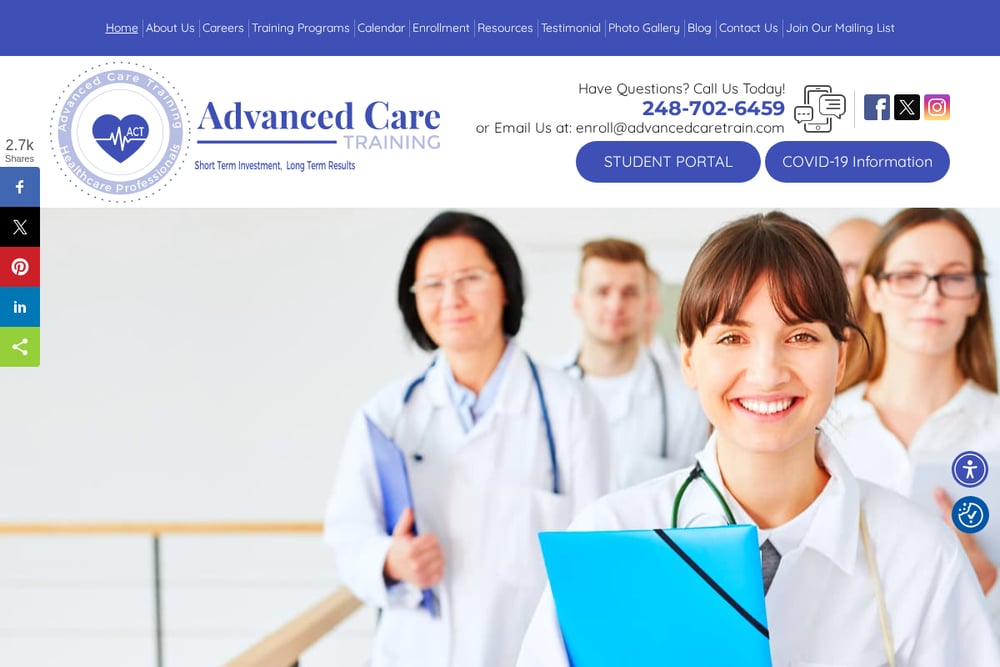 A screenshot of the Advanced Care Training website.
Advanced Care Training in Farmington Hills runs a six-week phlebotomy program with classes two days a week, mornings or evenings, which suits people juggling shifts. The curriculum covers venipuncture, capillary collection, specimen processing, point-of-care testing, blood cultures, and infection control. Students complete a 40-hour clinical externship through partnerships with McLaren and Bio Labs, then sit for national phlebotomy certification. Tuition is stated plainly, with a discounted self-pay rate for students who do not qualify for government funding. The school also offers CNA, clinical medical assistant, IV therapy, and CPR/BLS courses if you want to stack credentials.
#5 Serenity Health Training
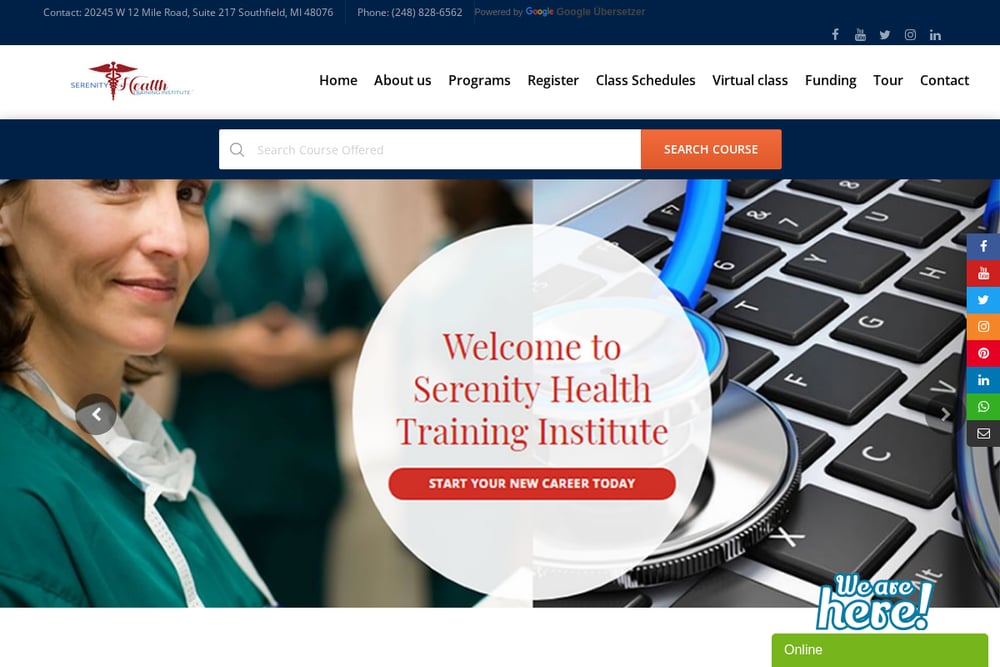 A screenshot of the Serenity Health Training website.
Serenity Health Training operates two campuses, Southfield and Flint, and its Southfield location on West 12 Mile Road puts it squarely in the Metro Detroit training market. The program menu is broad: phlebotomy technician, patient care technician, certified nurse assistant, EKG and telemetry technician, licensed practical nurse, and American Heart Association BLS and CPR courses. Published class schedules with start dates make planning easy, and the school offers virtual class tours if you want to look before you commit. It is a solid pick if you see phlebotomy as a first step and want a school that can take you further into nursing or patient care.
How to Pick the Right Program for You
Start with your schedule. If you work full time, a two-day-a-week evening program beats a daytime cohort you cannot attend. Ask exactly how many supervised needle sticks you will get before you graduate, because practice volume is what makes you hireable.
Then look at the money. Compare total cost, not just tuition: deposits, exam fees, background checks, and scrubs add up. Ask whether a no-credit-check payment plan exists and what the monthly number actually is. If you plan to sit for a national certification exam, confirm the school prepares you for it and whether the exam fee is included.
Finally, check the fundamentals. Verify the school is licensed in Michigan, confirm the current campus address, and ask where graduates get hired. A quick phone call tells you a lot about how responsive the staff will be when you are a student.
A Simple Workflow to Narrow Your List
Set up a spreadsheet with columns for program length, class days, total cost, payment plan terms, externship hours, and certification exam prep. Fill it in from each school's website before you call, so you are comparing facts instead of impressions.
Next, book a tour or a phone call with your top three. Ask the same five questions at each one and write down the answers. Then check the Michigan licensing record for each school and confirm the campus address is current, since at least one school on this list relocated in 2026.
Last step: talk to two recent graduates if the school will connect you. Their honest take on job placement and instructor support will settle the decision faster than any brochure.
The Bottom Line
Metro Detroit gives you real options, and that is good news. If you want scale and online flexibility, PCT Institute of Healthcare is hard to ignore. If you want small classes, affordable monthly payments, and a school that will also certify you if you trained elsewhere, Marosa in Southfield deserves a call.
Gentle Touch sells outcomes, Advanced Care Training sells transparency and externship access, and Serenity gives you a ladder into nursing. None of these is wrong for everyone. Match the program to your schedule, your budget, and your five-year plan, then make the call. Your story begins with one conversation.