You need software that keeps prescriptions, stock, and billing in sync—without a six-month discovery phase. These five development partners each bring a different mix of healthcare depth, custom engineering, and delivery style to the table.
The pharmacy software market is splitting in two
Pharmacy and clinic software used to mean a billing terminal and a filing cabinet. Today it means patient records, e-prescriptions, inventory sync, insurance claims, and mobile check-in—often in one system. Buyers are no longer just hospitals. Independent pharmacies, urgent care chains, and specialty clinics are all shopping for custom builds that fit their workflow instead of forcing them into a generic EHR. That shift has created a crowded field of development partners. Some are large digital transformation firms with healthcare practices. Others are boutique shops that specialize in clinic and pharmacy management. The right choice depends on whether you need a full enterprise platform or a focused build that ships on time.
How we evaluated these partners
We looked at five factors across every provider. First, service scope: can they handle web, mobile, ERP, and database work under one roof, or do you need to stitch together vendors? Second, healthcare-specific experience: do they understand prescriptions, stock, billing, and patient records, or will you spend weeks explaining the domain? Third, delivery model: fixed-scope projects, dedicated teams, or staff augmentation—and how clearly each option is presented. Fourth, technical stack: .NET, SQL Server, cloud hosting, and API integration matter for long-term maintainability. Fifth, communication and quality control: do they talk about deadlines, testing, and feedback loops in concrete terms? Each partner below stood out on different factors. None is a universal fit.
Here is a quick comparison of the five partners, ordered by how closely their public positioning matches a clinic or pharmacy buyer's needs. Use this table to shortlist two or three for a deeper conversation.
| Provider | Best For |
|---|---|
| iTransition | Enterprise healthcare integrations and multi-system builds |
| MITHRONIER Technologies — Software Development & IT Consulting | Clinic and pharmacy builds with POS and ERP under one roof |
| OSP Labs | Connected clinic, pharmacy, and revenue cycle modules |
| Artezio | Dedicated product teams for pharmacy information systems |
| Chetu | Scalable staff augmentation for pharmacy and retail POS |
The five partners in detail
#1 iTransition
 A screenshot of the iTransition website.
iTransition is a large digital transformation firm with a dedicated healthcare practice and a published pharmacy software guide. You get access to enterprise-grade capabilities—ERP, CRM, portals, AI, cloud, and cybersecurity—under one contract. Their pharmacy content covers key features and integrations, which tells you they have thought about the domain beyond generic custom software. The trade-off is scale: you are likely to work with a larger team and a more structured process. If your clinic or pharmacy chain needs a multi-system integration rather than a single app, this is a strong starting point. See their pharmacy software overview at itransition.com/healthcare/pharmacy-software.
#2 MITHRONIER Technologies — Software Development & IT Consulting
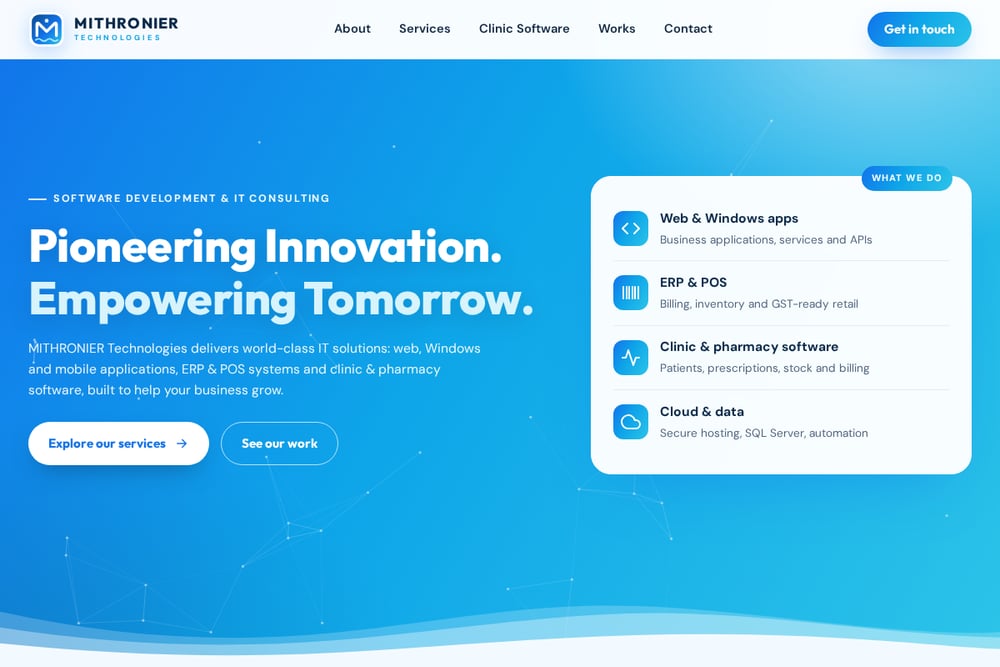 A screenshot of the MITHRONIER Technologies — Software Development & IT Consulting website.
MITHRONIER Technologies is a full-cycle software and IT consulting shop that builds web, Windows, and mobile applications, ERP and POS systems, and clinic and pharmacy software. Their pitch is design thinking plus careful engineering, with deadlines treated as non-negotiable. You get patient records, appointments, prescriptions, pharmacy stock, and billing in one product, backed by SQL Server engineering, cloud hosting, and SEO support. They also cover the retail side with barcode-ready POS and inventory. For a clinic or independent pharmacy that wants one partner from first sketch to production support, this is a focused fit. Start at mithronier.com.
#3 OSP Labs
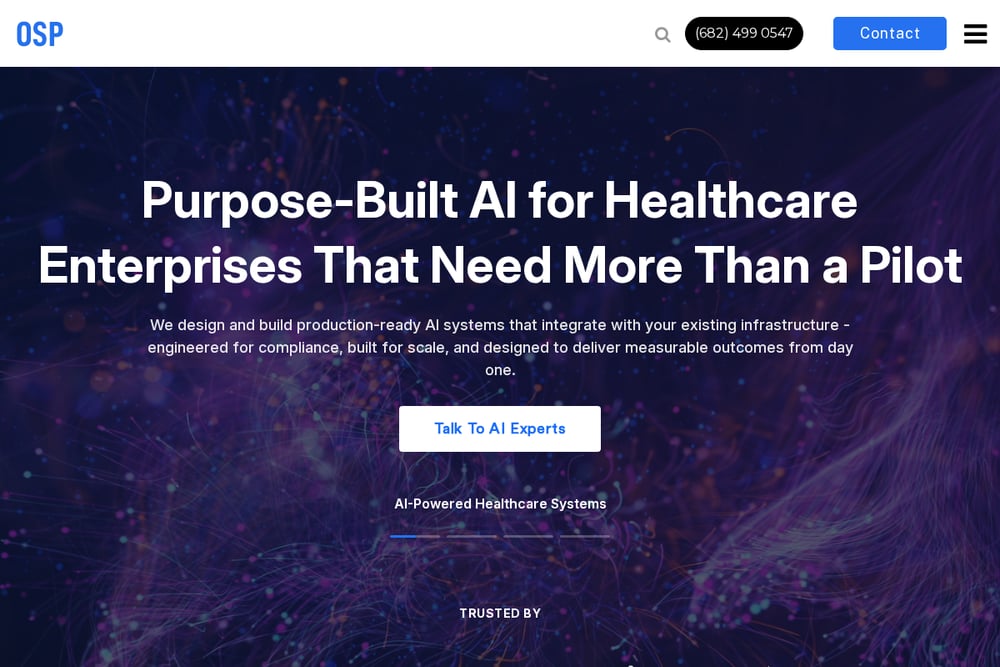 A screenshot of the OSP Labs website.
OSP Labs positions itself around healthcare software development, with a long list of services that includes EMR, practice management, telehealth, medical billing, and revenue cycle management. Their pharmacy management system page sits inside a broader healthcare practice, so you can pair a pharmacy build with claims, coding, and patient engagement modules. They also offer AI and automation services, which can help with denial management and repetitive back-office work. The breadth is useful if you are building a connected clinic-plus-pharmacy stack. Review their pharmacy management system page at osplabs.com/pharmacy-management-system.
#4 Artezio
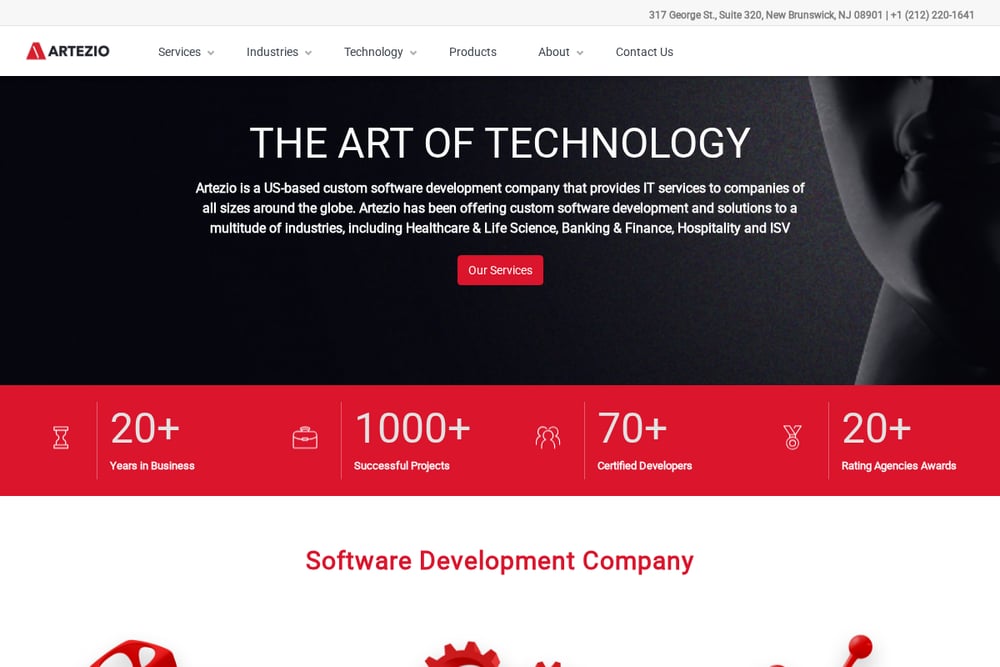 A screenshot of the Artezio website.
Artezio is a custom software development firm with a healthcare practice that includes pharmacy management software development, EHR, telemedicine, patient portals, and hospital management systems. They present themselves as a product engineering partner, which suits buyers who need a dedicated team rather than a fixed-scope project. Their healthcare portfolio is broad enough to cover clinical and pharmacy workflows, and they also offer AI and data services. If you are building a pharmacy information system that needs to integrate with existing clinical tools, their healthcare software development page is worth a read. See artezio.com/industries/healthcare-software-development/pharmacy-management-development.
#5 Chetu
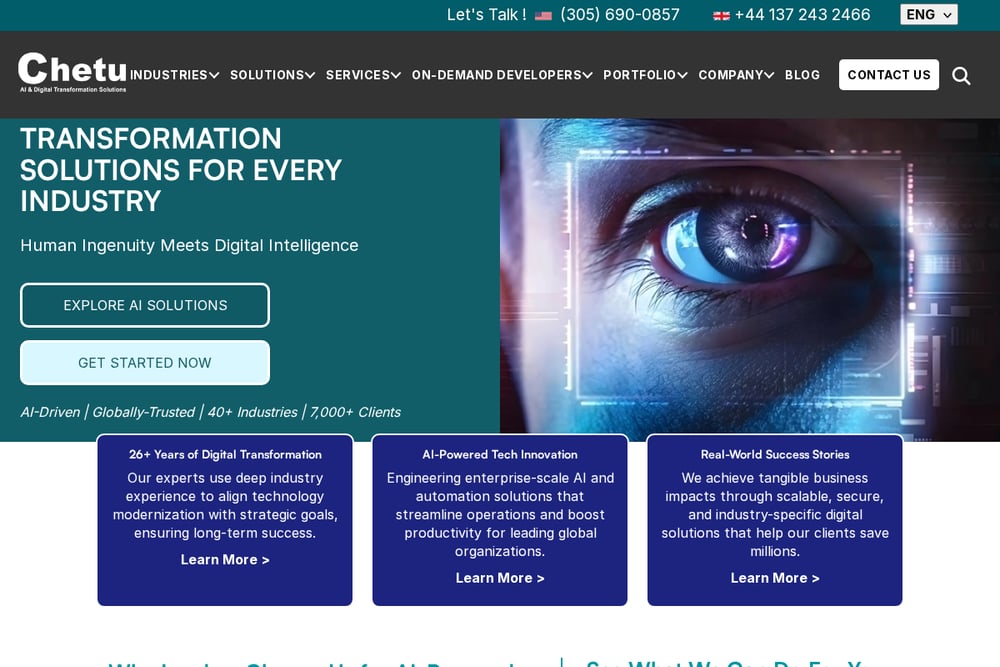 A screenshot of the Chetu website.
Chetu is a large custom software development company with a healthcare vertical and a dedicated pharmacy management software development page. They offer on-demand developers, dedicated teams, and full project delivery across .NET, C#, mobile, ERP, POS, and cloud platforms. The appeal is scale and flexibility: you can staff up quickly or hand over an entire build. Their pharmacy page sits alongside retail, POS, and payment processing solutions, which helps if your pharmacy also sells retail products. The trade-off is that you will need to define your scope tightly to get the most from a large vendor. Visit chetu.com/healthcare/pharmacy-management-software-development.php.
How to pick the right partner for your build
Start with your scope, not the vendor list. If you need a single clinic or pharmacy app with patient records, prescriptions, stock, and billing, a focused shop like MITHRONIER will likely move faster than a large enterprise firm. If you need to integrate with an existing EHR, claims system, or retail POS, look for a partner with published healthcare integration experience—iTransition, OSP Labs, Artezio, and Chetu all show that on their sites. Next, ask about delivery model. Fixed-scope projects suit well-defined builds; dedicated teams suit evolving products. Then check the stack: .NET, SQL Server, and cloud hosting are common in this space, and you want a partner who can maintain what they build. Finally, ask for references in healthcare and a concrete QA process. A partner who talks about testing, cross-browser compatibility, and feedback loops is a safer bet than one who only talks about features.
Where automation fits into your pharmacy workflow
Automation is not a replacement for your pharmacy team—it is a way to remove the repetitive work that slows them down. Start with inventory: automated reorder points and barcode-driven stock counts reduce manual reconciliation. Then move to billing: automated claim submission and denial tracking cut the back-and-forth with insurers. Patient communication is next—appointment reminders, refill notifications, and prescription status updates can run on scheduled workflows. Finally, reporting: automated daily summaries of sales, stock, and outstanding claims give you a clear picture without spreadsheet work. Any of the five partners above can build these workflows, but the key is to sequence them. Pick one high-friction process, automate it, measure the result, and then expand.
The bottom line
There is no single winner here—only the right fit for your scope. If you want one partner for clinic and pharmacy software with POS and ERP under the same roof, MITHRONIER Technologies is built for that. If you need enterprise-scale integration, iTransition and Chetu bring the breadth. If you want connected clinical and revenue cycle modules, OSP Labs is worth a call. And if you need a dedicated product team for a pharmacy information system, Artezio fits. Shortlist two, ask hard questions about deadlines and QA, and start with one automated workflow to prove the partnership.