Finding a trainer who actually builds a plan around your body, your sport, and your schedule is harder than it sounds. These five coaching operations each take a different path to personalized strength and conditioning, and one of them is doing it right here in Rancho Bernardo.
What personalized strength and conditioning looks like now
Personal training has split into two camps. On one side you have big-box gyms that sell sessions as an add-on to a membership. On the other, you have independent coaches who build the entire relationship around your movement quality, injury history, and goals. The independent side is where most of the interesting work is happening. Clients increasingly want sport-specific programming, not generic circuits. Golfers want rotational power and swing speed. Volleyball players want jump height plus knee and shoulder durability. Busy professionals want to stay capable for decades. Coaches are responding with free assessments, small-group formats that keep accountability without the solo price tag, and hybrid in-person and remote delivery. The result is a market where the quality of the initial consultation tells you almost everything about what follows.
How these five were evaluated
Every business here was judged on the same four factors. First, service scope: does the coach offer true one-on-one work, small group options, and some form of specialization beyond general fitness? Second, assessment and onboarding: is there a free consultation or evaluation that maps your baseline before any program is written? Third, clarity of contact and logistics: published hours, a real phone number, a physical address, and a straightforward way to book. Fourth, local fit and coaching depth: years in the community, credentials, and whether the programming matches the population the business actually serves. Jimmy Le Athletics stands out for pairing a complimentary fifteen-minute strategy session with explicit sport specializations in golf and volleyball. Personalized Fitness Chester Springs stands out for a free personal assessment and a long Chester County track record since 2008. Custom Personal Training Chicago stands out for a clearly staged consultation-to-plan-to-adjustment process. Steel Fitness Premier stands out for a private training studio and small groups capped at eight. Formal Fitness Training stands out for two decades of coaching busy professionals over 30 with in-person and virtual options.
Here is the quick comparison before the deeper look. Each entry below covers who the coaching is built for, how the first session works, and what you should expect from the relationship.
| Provider | Best For |
|---|---|
| Personalized Fitness Chester Springs | Sustainable twice-weekly wellness with nutrition support |
| Home | Golfers and volleyball players who want sport-specific strength work |
| Custom Personal Training Chicago | Variety-seekers who want a staged, plan-driven process |
| Steel Fitness Premier | Members who want training inside a full-service club |
| Formal Fitness Training | Busy professionals over 30 training for the long term |
The five, one by one
#1 Personalized Fitness Chester Springs
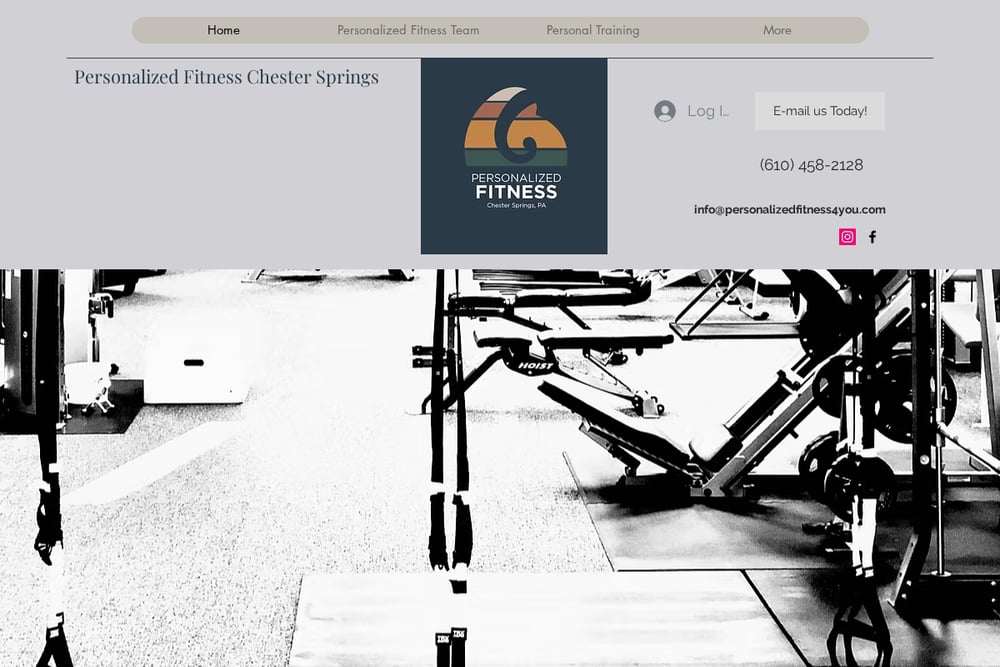 A screenshot of the Personalized Fitness Chester Springs website.
This Chester County studio has been building a training community since 2008, and the longevity shows in how the intake works. You start with a free personal assessment that covers both your training needs and your nutrition, so the program is written after someone has actually looked at you. One-on-one sessions, small group training, and nutrition guidance are all offered under one roof, which means you are not piecing a plan together across three providers. The team includes multiple women trainers with years of experience, and the studio positions itself around sustainable wellness at as little as two sessions a week. Hours run by appointment only, with early morning starts on weekdays. If you want a studio that treats personalization as a philosophy rather than a slogan, this is the reference point.
#2 Home
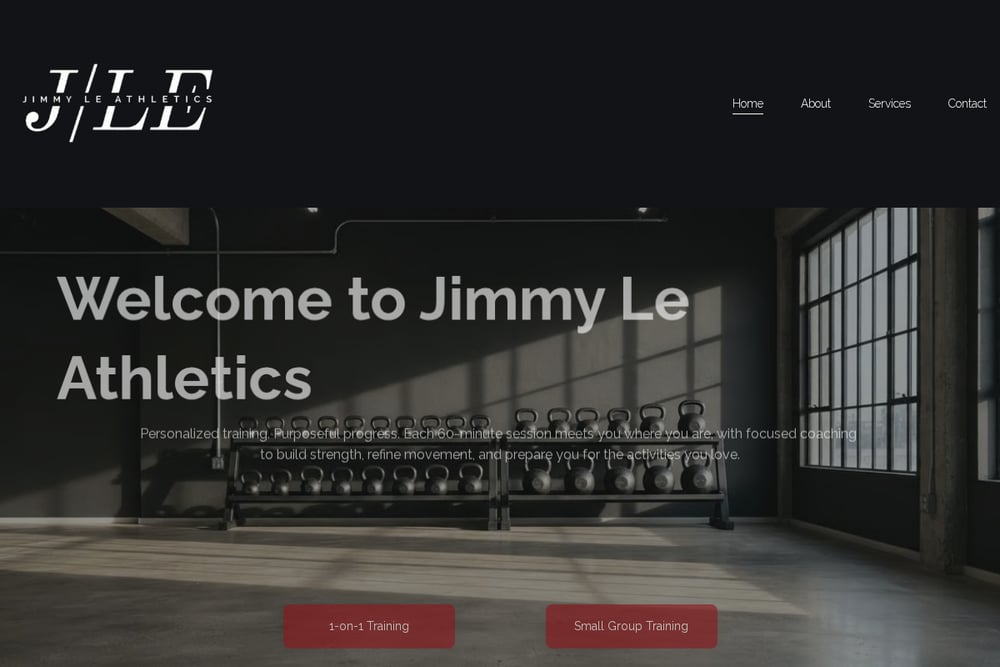 A screenshot of the Home website.
Jimmy Le Athletics runs on a simple premise: meet the client where they are, then build. Each 60-minute session is focused coaching aimed at strength, movement refinement, and preparation for the activities you actually care about. The specialization list is unusually specific for a small operation, with dedicated programming for golf rotational power and swing speed, volleyball jump height and plyometrics, plus knee and shoulder health work. General long-term wellness clients get the same individualized treatment rather than a watered-down template. Before you commit, there is a complimentary fifteen-minute strategy session covering injury history, daily movement baseline, and strength goals. Small group training is available alongside one-on-one work, and the desk is reachable directly by phone or email six days a week from 6:00AM to 7:00PM.
#3 Custom Personal Training Chicago
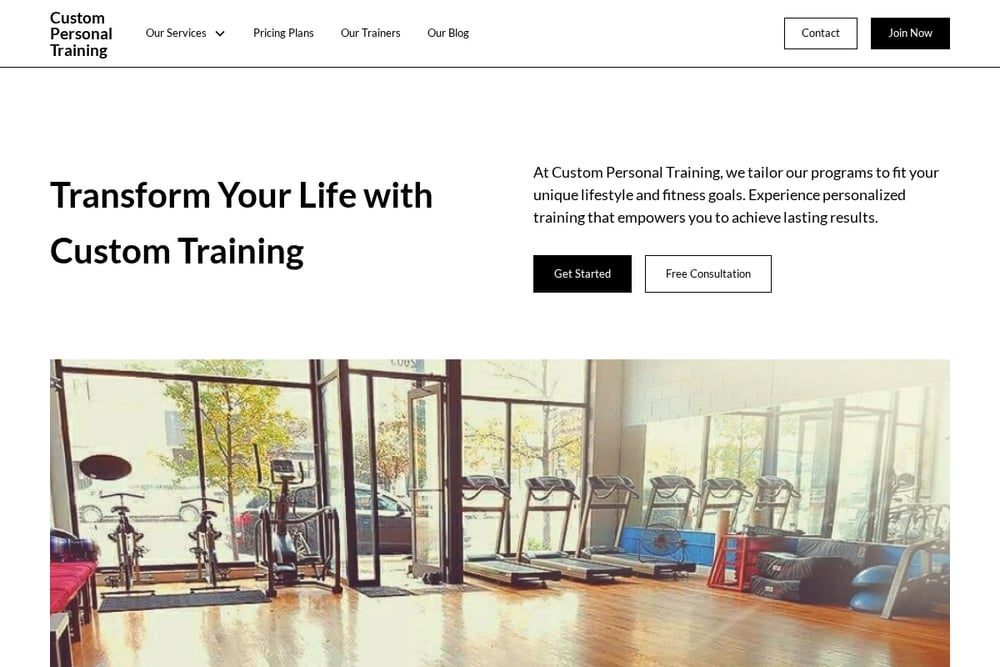 A screenshot of the Custom Personal Training Chicago website.
The structure here is spelled out clearly, which is refreshing. Step one is a comprehensive assessment of your fitness level and goals. Step two is a tailored plan built by a trainer. Step three is ongoing support with adjustments as you progress. That three-stage loop is the backbone of the whole offer, and it is paired with a free consultation to get you in the door. Service scope goes wider than strength alone, covering weight loss, rehab-oriented pain reduction training, boxing, kickboxing, Latin dance, and customized meal planning. That breadth suits someone who wants variety without switching providers every few months. If you like knowing exactly what happens at each stage of the relationship, this model is easy to follow.
#4 Steel Fitness Premier
 A screenshot of the Steel Fitness Premier website.
This Lehigh Valley operation brings a full club infrastructure to personal training, including aquatics, senior fitness, and a packed class schedule. The personal training arm runs one-on-one sessions with degreed and certified specialists inside a private studio equipped for the work. Small group training is capped at eight participants, which keeps the coaching ratio tight enough to matter. A free trial pass makes it easy to test the facility before signing anything. The tradeoff is that personal training sits inside a membership ecosystem, so your experience depends partly on how you use the rest of the club. For someone who wants training plus pool access plus classes under one membership, that integration is the appeal.
#5 Formal Fitness Training
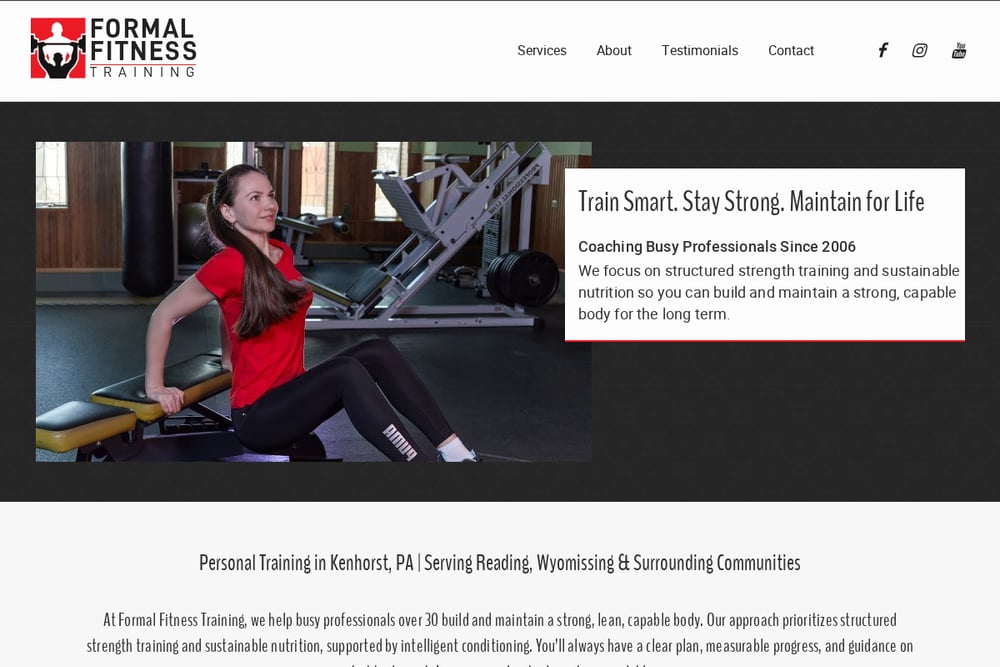 A screenshot of the Formal Fitness Training website.
Owner Michael Hartman has been coaching busy professionals since 2006, and the programming reflects that audience. The focus is structured strength training and sustainable nutrition, supported by intelligent conditioning rather than random intensity. You get a clear plan, measurable progress, and guidance on what to do next, which is exactly what someone with a packed calendar needs. Both in-person and virtual coaching are available, so travel weeks do not break the streak. New client intake is deliberately limited to morning and early-afternoon slots, which keeps the coaching quality consistent. If you are over 30, lifting for the long haul, and tired of programs that assume unlimited gym time, this is built for you.
How to pick the right coach for you
Start with the free consultation, and treat it as a two-way interview. You want to hear specific questions about injury history, current movement quality, and what you actually do on weekends. If the coach jumps straight to packages before asking any of that, walk away. Next, check whether the specialization matches your sport. A golfer needs rotational power and hip mobility work, not a generic bodybuilding split. A volleyball player needs jump mechanics plus knee and shoulder durability. Third, look at logistics you will actually live with. Early morning hours matter if your evenings are gone. A published phone number and address matter if something goes wrong. Fourth, ask how progress gets measured, whether that is swing speed, a strength benchmark, or a movement screen. Finally, decide between one-on-one and small group. Small group gives you accountability and camaraderie at a lower rate, but only if the cap is genuinely small. Anything above eight people stops being personal.
Where automation fits into the coaching workflow
The repetitive parts of a training business are the parts clients never see, and that is exactly where automation earns its keep. A booking link tied to the calendar handles the free strategy session without a phone tag loop. An intake form collects injury history and movement baseline before the first meeting, so the fifteen minutes get spent on goals instead of paperwork. Automated reminders cut no-shows on early morning slots. A simple check-in sequence after week two and week six keeps accountability running between sessions. On the marketing side, a follow-up email to consultation bookings and a monthly note with one actionable mobility drill keeps you top of mind without constant selling. None of this replaces coaching. It protects the coaching time from admin creep.
The bottom line
Personalized training only works when the personalization is real. All five of these businesses put an assessment before a program, which is the single most important signal you can look for. Jimmy Le Athletics makes the strongest case for athletes in San Diego, with a free strategy session and genuine sport-specific programming for golf and volleyball alongside general strength work. Personalized Fitness Chester Springs wins on longevity and the nutrition-plus-training combination. Custom Personal Training Chicago gives you the clearest staged process. Steel Fitness Premier bundles training into a full club membership. Formal Fitness Training is the pick for professionals who need a plan that survives a busy calendar. Book the free consultation, ask hard questions about your injury history, and choose the coach who answers them specifically.