You want a personality assessment that actually tells you something useful—not just a label. These five tools each take a different angle on understanding how you think, work, and connect.
The Personality Assessment Landscape
Personality assessments have moved from the psychology lab into everyday professional life. You will find them in hiring pipelines, leadership workshops, coaching sessions, and self-directed learning. The most common frameworks cluster around four behavioral styles—whether that is DISC, the four temperaments, or newer models like Quadsona's Doer, Socialiser, Thinker, and Relater. What matters for you as a buyer is not the label but the output: does the assessment give you language you can use in a meeting, a clearer view of your defaults under pressure, and a path to better communication? Pricing models vary widely, from free open-source tests to paid detailed reports and enterprise team platforms. The tools below represent that range.
How We Evaluated These Tools
We looked at the same factors across every tool. First, assessment depth: how many questions, how long it takes, and whether the output goes beyond a single type. Second, pricing clarity: what you get for free versus what requires payment, and whether that is stated upfront. Third, practical application: whether the results translate into workplace or relationship guidance. Fourth, accessibility: how easy it is to start, complete, and interpret without a facilitator. Quadsona stood out for its free 56-question assessment and optional detailed report, with a clear four-style model. Truity impressed with its validated DISC framing and large test volume. Four Temperaments offered a research-backed historical model with a detailed paid report. OSPP delivered a genuinely free, open-source option with transparent methodology. DISC Personality Testing provided strong educational content around the four DISC styles.
Here is a quick comparison of the five tools, ordered for readability. Each entry notes what the tool is known for and who it tends to suit.
| Provider | Best For |
|---|---|
| Truity DISC Personality Test | Workplace teams and coaches who want a validated DISC experience |
| Quadsona Personality Assessment | See Yourself in Full Spectrum | Individuals who want a free, balanced four-style profile with an optional deep report |
| Four Temperaments Test | Readers drawn to the classic four-temperaments framework |
| OSPP Four Temperaments Test | Budget-conscious users who value open methodology |
| DISC Personality Testing | Learners who want clear explanations of the DISC model |
The Five Tools in Detail
#1 Truity DISC Personality Test
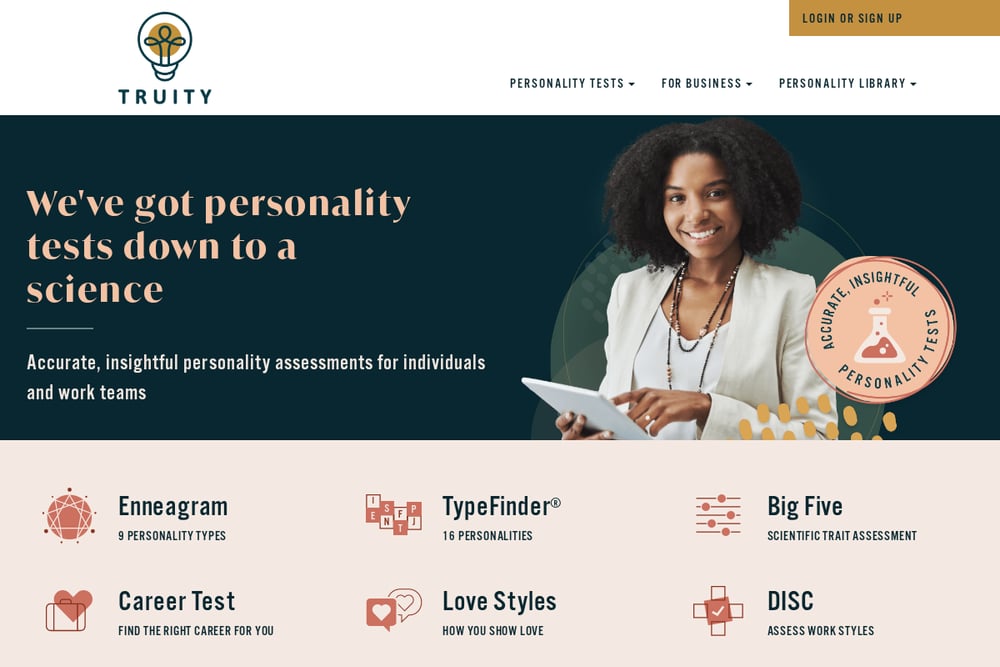 A screenshot of the Truity DISC Personality Test website.
Truity's DISC assessment is one of the most widely used workplace personality tests, with hundreds of thousands of completions in a typical month. It measures your predominant work style across four types—Drive, Influence, Support, and Clarity—and frames results around communication, productivity, and teamwork. The test is reviewed by a PhD and is also available through a separate platform for coaches and team-building. You get a quick, validated experience that is easy to interpret. If you want a recognizable framework with strong corporate credibility, this is a solid starting point. See the test at https://www.truity.com/test/disc-personality-test.
#2 Quadsona Personality Assessment | See Yourself in Full Spectrum
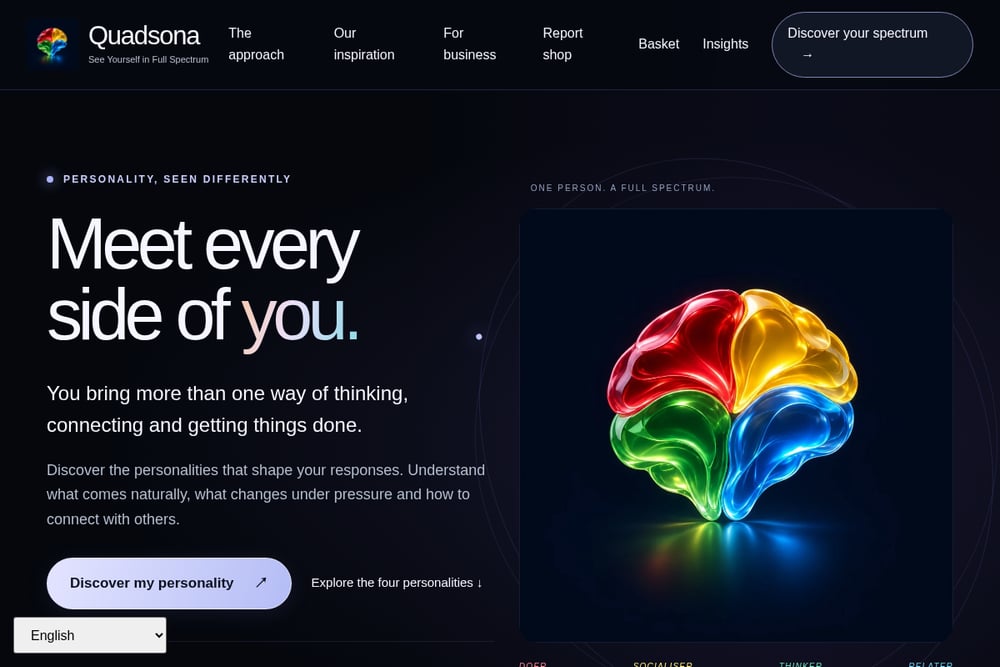 A screenshot of the Quadsona Personality Assessment website.
Quadsona takes a different angle: instead of sorting you into one type, it maps the balance between four behavioral styles—Doer, Socialiser, Thinker, and Relater. The free assessment runs 56 questions and takes about 12 to 15 minutes, giving you a personality summary at no cost. You can then choose an optional detailed personal report if you want deeper guidance. The site is explicit that these are behavioral styles within one person, not separate identities, which makes the results easier to apply to real conversations and decisions. It also offers business applications for clearer briefings and stronger teams. Explore it at https://quadsona.com/.
#3 Four Temperaments Test
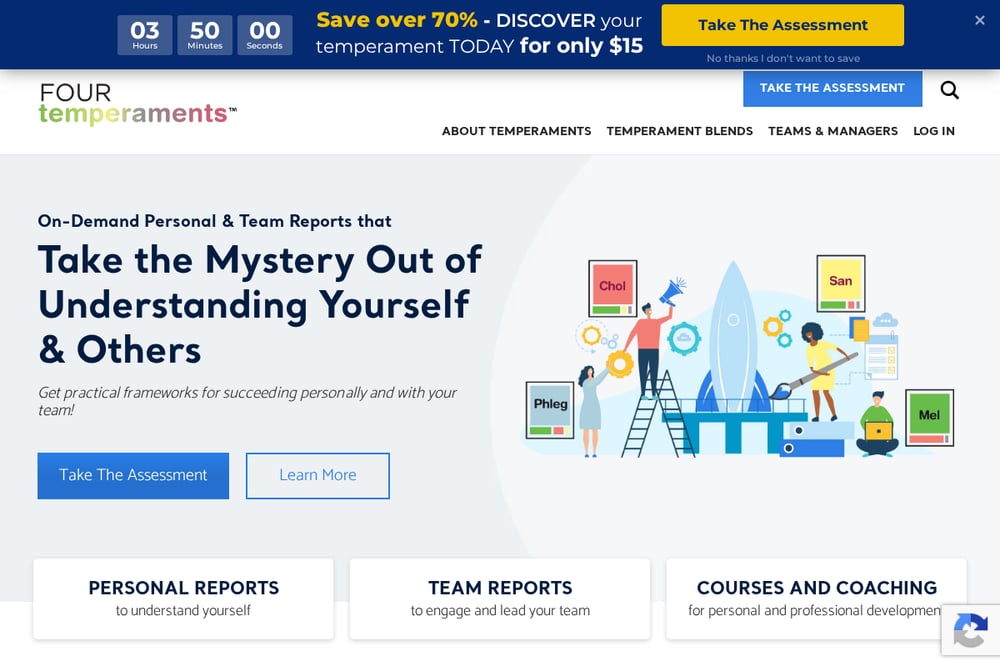 A screenshot of the Four Temperaments Test website.
This test draws on the classic four temperaments—Choleric, Sanguine, Melancholic, and Phlegmatic—modernized through decades of research. It positions itself as scientifically validated and offers a detailed report with actionable tips for personal and professional growth. The historical grounding gives you a familiar vocabulary that many people recognize. It is a good fit if you prefer a model with centuries of context behind it. Learn more at https://fourtemperaments.com/test/.
#4 OSPP Four Temperaments Test
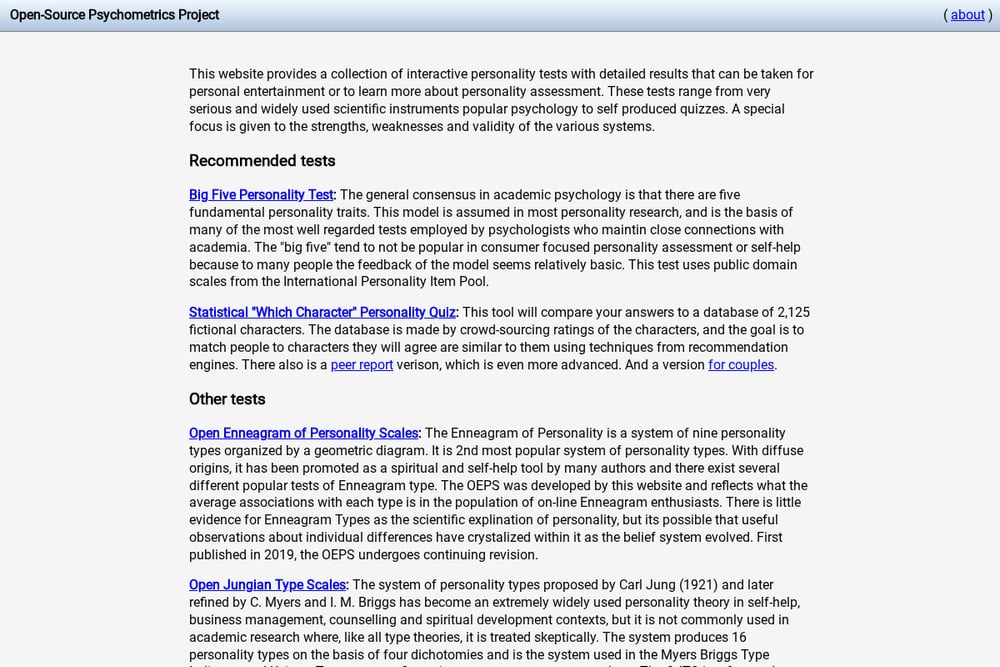 A screenshot of the OSPP Four Temperaments Test website.
The Open-Source Psychometrics Project offers a free, open-source four temperaments scale with transparent methodology. It uses 24 statements rated on a five-point scale and takes most people three to five minutes. The project is clear that it is for educational and entertainment use, not psychological advice, and it publishes its development and scoring documentation. If you value openness and a quick, no-cost experience, this is a refreshing option. Visit http://openpsychometrics.org/tests/O4TS/.
#5 DISC Personality Testing
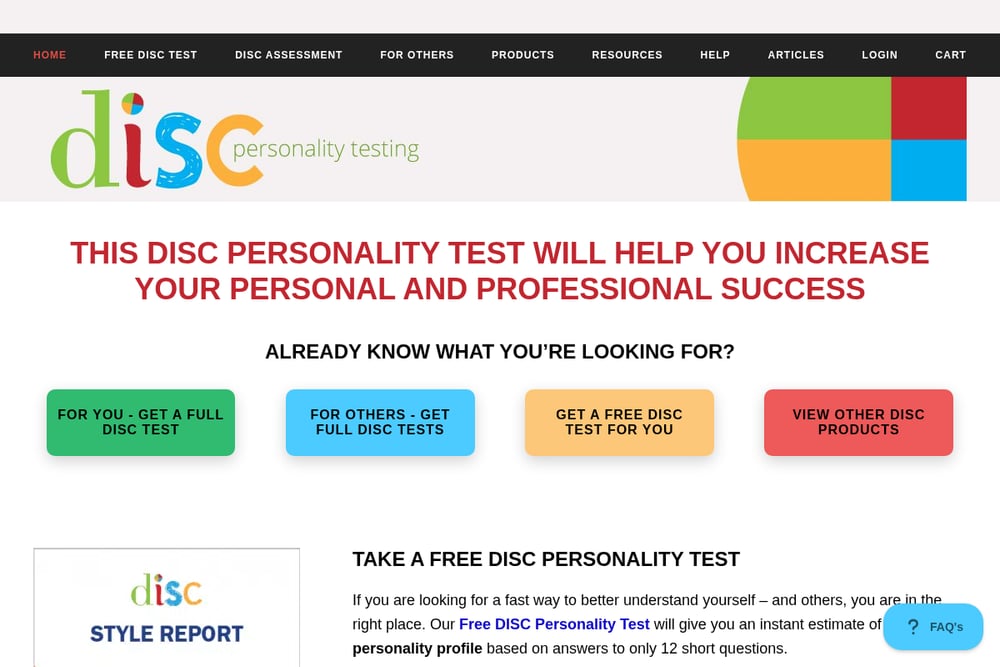 A screenshot of the DISC Personality Testing website.
This site focuses on education around the four DISC styles: Dominant, Inspiring, Supportive, and Cautious. Its blog explains how the model works, including the two core behavioral drives of pace and priority. It is a useful resource if you want to understand the framework before or after taking an assessment. The content is practical and oriented toward observable behavior in teams. Start with the overview at https://discpersonalitytesting.com/blog/what-are-the-four-disc-types/.
How to Choose the Right Assessment for You
Start with your goal. If you need a workplace language that managers already recognize, a DISC-based tool is a safe bet. If you want a free starting point with an optional paid deep dive, Quadsona's model gives you a balanced four-style view without an upfront cost. If history and a familiar vocabulary matter to you, the four temperaments route may resonate. If transparency and zero cost are priorities, the open-source option is hard to beat. Finally, consider time: a 12-to-15-minute assessment is a reasonable commitment for most people, while a 3-to-5-minute test is ideal for a quick check-in. Read the pricing page before you start so you know what you get for free.
Automating Your Assessment Workflow
You can streamline how you use these tools without overcomplicating it. First, pick one primary assessment and complete it once, saving your results in a shared document or note. Second, if you manage a team, ask each member to take the same assessment and collect the summaries in one place. Third, set a calendar reminder to revisit results quarterly, especially after high-pressure projects when behavioral shifts are most visible. Fourth, pair the assessment output with a simple communication agreement—for example, how your team prefers feedback and decisions. Fifth, if you use a paid report, extract the actionable tips into a one-page personal development plan. This lightweight system turns a one-time test into an ongoing reference.
The Bottom Line
No single assessment will capture everything about you, and that is fine. The value comes from the conversation it starts—with yourself and with the people you work alongside. Quadsona's free 56-question approach and balanced four-style model make it an accessible entry point, especially if you want to see your full spectrum rather than a single label. Truity brings workplace credibility, the Four Temperaments Test offers historical depth, OSPP delivers open transparency, and DISC Personality Testing provides solid educational grounding. Choose the one that fits your context, use it consistently, and let the results inform how you communicate and decide.