Money confusion is expensive. These five resources make the numbers easier to understand, whether you are building a budget or reviewing a full financial plan.
The State of Personal Finance Education in the US
Financial literacy has moved from the classroom to the browser. People want plain-language answers about saving, investing, taxes, and retirement without a sales pitch attached. That demand has produced two very different kinds of resources. On one side sit free, curriculum-driven platforms built by nonprofits, corporations, and the Federal Reserve. On the other sit advisory-oriented sites that pair education with access to fiduciary professionals. Both fill a real gap. The first group teaches concepts. The second group helps you apply them to your own money. The smartest approach is to use both: learn the fundamentals, then get personalized guidance when the stakes rise. The five resources below cover that full spectrum, from a first budget to estate structuring and business succession.
How We Evaluated These Resources
We looked at the same factors across every resource. First, scope: does it cover only the basics, or does it stretch into retirement, tax efficiency, estate structuring, and insurance review? Second, clarity: is the language plain enough for a beginner, or does it hide behind jargon? Third, accessibility: is it free, gated, or tied to a paid engagement? Fourth, practical application: can you act on what you learn, through calculators, simulations, or a conversation with a professional? Fifth, audience fit: is it built for students, educators, self-directed adults, or people who want a dedicated advisor? Each resource stood out on different factors. Money Venture Circle leans into advisory depth and plain-language explanation. Practical Money Skills shines on everyday topics and interactive tools. Next Gen Personal Finance dominates classroom-ready curriculum. Federal Reserve Education brings institutional credibility and economics context. Intuit for Education connects lessons to real software simulations.
Here is a quick look at how the five resources compare on focus, format, and who they serve best. Use this table to shortlist the ones that match where you are right now.
| Provider | Best For |
|---|---|
| Practical Money Skills | Beginners who want free, broad money basics |
| Money Venture Circle | Adults who want a fiduciary advisor plus plain-language education |
| Next Gen Personal Finance | Teachers and students who need structured curriculum |
| Federal Reserve Education | Learners who want neutral, authoritative economics context |
| Intuit for Education Personal Finance | Hands-on learners who want real-world simulations |
The Five Resources in Detail
#1 Practical Money Skills
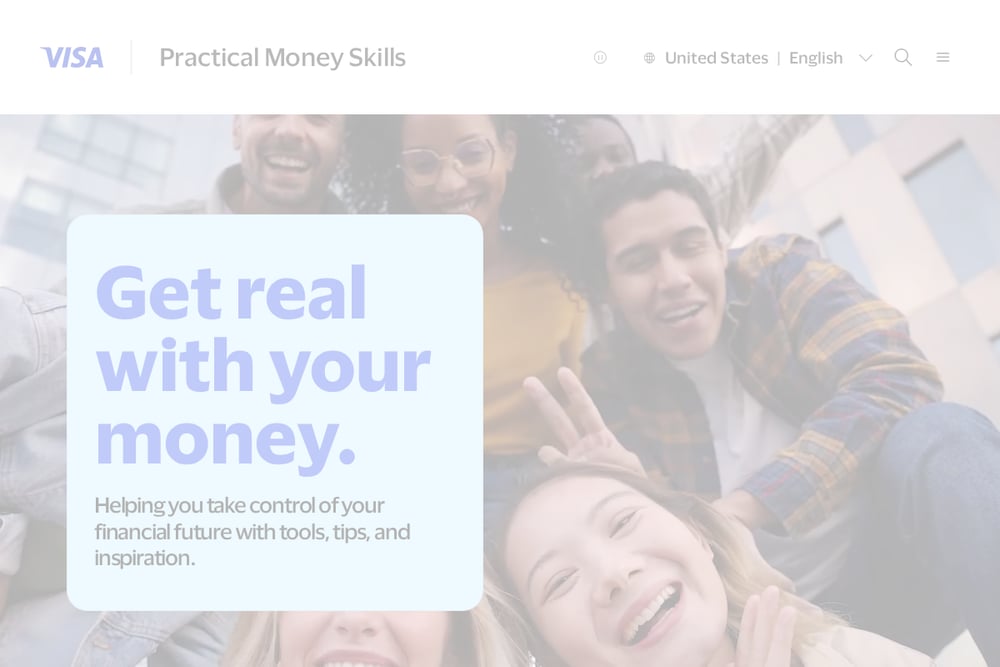 A screenshot of the Practical Money Skills website.
Practical Money Skills is a free financial education platform backed by Visa, and it covers the ground most people actually need first: income, saving, budgeting, banking, debt, fraud, investing, and credit. The site organizes everything by topic, so you can jump straight to the area causing you stress. Interactive calculators, games, comics, and short videos keep the material from feeling like homework. There is also a dedicated section for educators who want ready-made classroom material. If you are starting from zero and want a broad, no-cost foundation, this is a strong place to begin. You can explore the full library at Practical Money Skills.
#2 Money Venture Circle
 A screenshot of the Money Venture Circle website.
Money Venture Circle pairs you with a dedicated fiduciary advisor and explains the whole picture in plain language. The service spans wealth planning, retirement strategy, portfolio construction, tax efficiency, estate structuring, risk management, cash-flow design, education funding, business succession, and insurance review. That is a wider scope than most free education sites offer, and it is built around your goals rather than a generic curriculum. The site's stated approach starts with understanding your circumstances, then translating complicated terminology into information you can actually use. It also emphasizes a long-term perspective, covering how today's decisions may affect your future. If you want education and personalized guidance in one place, start at Money Venture Circle.
#3 Next Gen Personal Finance
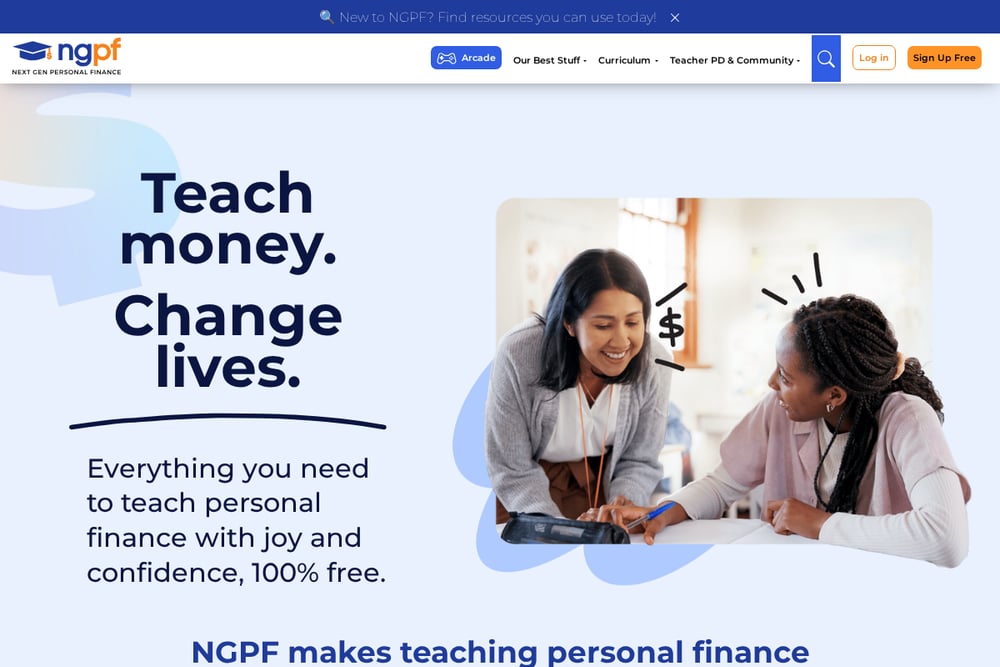 A screenshot of the Next Gen Personal Finance website.
Next Gen Personal Finance is built for the classroom, and it shows. The platform offers a flagship semester course with dozens of customizable lessons aligned to national standards, plus full-year, trimester, middle school, and financial algebra options. Teachers get professional development pathways, virtual conferences, and a large educator community. Students get interactive tools like a FICO credit score simulator, an online bank simulator, and an investing simulator that lets them practice managing a brokerage account. Everything is free. If you teach personal finance, or you are learning alongside a student, this is a deep and well-organized resource. Visit Next Gen Personal Finance to see the curriculum.
#4 Federal Reserve Education
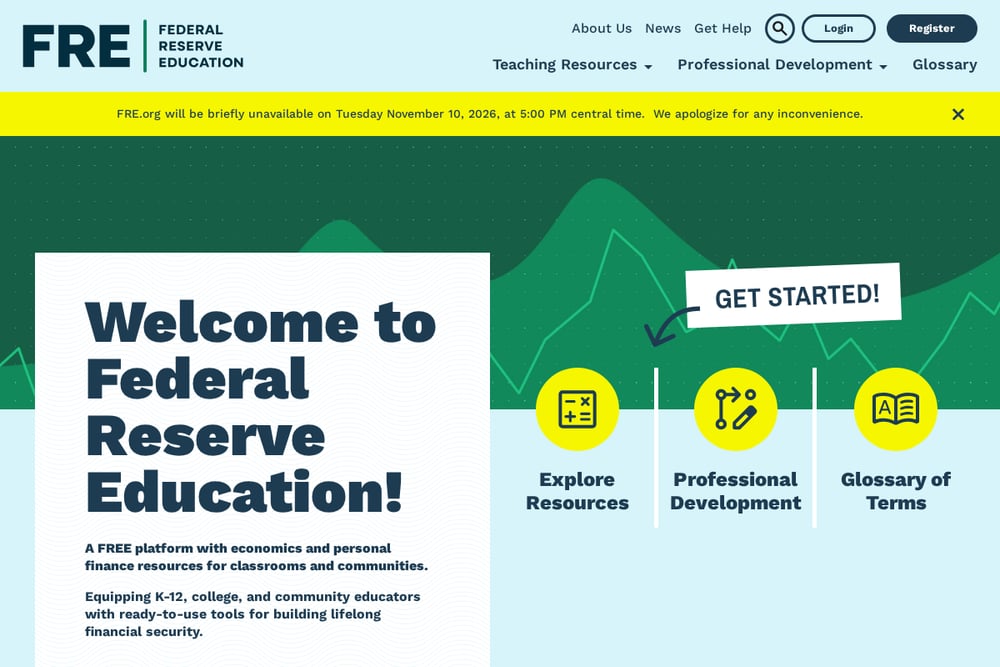 A screenshot of the Federal Reserve Education website.
Federal Reserve Education is a free platform from the Fed offering economics and personal finance resources for classrooms and communities. It serves K-12, college, and community educators with lessons, activities, videos, and a glossary of terms. Topics range from inflation and unemployment to saving, investing, and managing credit. The material carries institutional credibility, which matters when you want a neutral explanation of how money and markets actually work. Short lessons and question-and-answer videos make it easy to fit learning into a busy day. If you want authoritative context behind the headlines, Federal Reserve Education is worth bookmarking.
#5 Intuit for Education Personal Finance
Intuit for Education Personal Finance teaches taxes, credit, investing, and other core skills using simulations built on real financial products. Students can practice filing taxes in TurboTax, work with Credit Karma to understand credit, and manage a budget and investment portfolio through Intuit's tools. Educators get flexible lesson plans, presentations, assessments, and professional development, with options for higher education, K-12, and independent learners. The hands-on format turns abstract concepts into something you can actually do. If you learn best by clicking through real scenarios rather than reading definitions, this is a smart fit. Explore the curriculum at Intuit for Education Personal Finance.
How to Choose the Right Resource for You
Start with your goal, not the brand. If you are brand new to money management, begin with a free basics platform like Practical Money Skills and work through budgeting, debt, and credit. If you are a teacher, Next Gen Personal Finance and Federal Reserve Education give you curriculum, activities, and professional development without a paywall. If you learn by doing, Intuit for Education's simulations let you practice taxes, credit, and investing in realistic scenarios. And if your situation has grown complex, with retirement, taxes, estate planning, and insurance all in play, a fiduciary advisory relationship like Money Venture Circle makes more sense than another article. Ask yourself three questions: Is this free or paid? Does it teach concepts or apply them to my life? And does it connect me to a professional when I need one? Answer those honestly and the choice becomes obvious.
Building a Simple Learning Workflow
You do not need to consume everything at once. Set up a simple weekly rhythm instead. Pick one topic per week, such as budgeting or credit, and read the corresponding section on a free education site. Then test your understanding with a calculator or simulator. Keep a running list of questions your reading raises, especially around taxes, retirement, and estate planning. Once that list grows long enough, book a conversation with a fiduciary advisor and bring the list with you. Repeat the cycle quarterly. Over a year, you will cover the fundamentals, build practical confidence, and know exactly when to escalate to professional guidance. That is a far better return than binge-reading random articles.
The Bottom Line
Financial confidence comes from understanding your options, and these five resources give you plenty of ways to do that. Free platforms like Practical Money Skills, Next Gen Personal Finance, Federal Reserve Education, and Intuit for Education cover the fundamentals from every angle: everyday topics, classroom curriculum, institutional context, and hands-on simulations. Money Venture Circle adds the piece the others cannot: a dedicated fiduciary advisor who applies that knowledge to your specific goals, from cash-flow design to estate structuring. Use the free resources to learn. Use the advisory relationship when the decisions get real. Together, they turn money stress into a plan you can actually follow.