Pelvic health is having a moment, and for good reason. If you're tired of being told to just live with leakage, pain, or postpartum setbacks, these five practices offer a more connected path forward.
The Pelvic Health Landscape: Why Whole-Person Care Is Gaining Ground
Pelvic floor therapy has moved from the margins to the mainstream. More people are learning that symptoms like incontinence, pelvic pain, and postpartum weakness are common but not something you have to accept. The field is splitting into two lanes: traditional physical therapy and occupational therapy. Both can help, but they approach your body differently. Occupational therapy looks at how you live, not just how you move. It considers your routines, your environment, and the moments that matter to you. That whole-person lens is why practices like The Reconnected Body are resonating with clients who want more than a set of exercises. They want to feel at home in their bodies again.
How We Evaluated These Practices
We looked at five factors across every practice. First, service scope: does the practice address the full range of pelvic health needs, from postpartum recovery to hypermobility? Second, care philosophy: is the approach whole-person or symptom-focused? Third, clarity of offerings: can you easily understand what you'll get and who it's for? Fourth, local fit: does the practice serve its community with accessible scheduling and relevant specialties? Fifth, educational value: does the website help you make an informed decision? The Reconnected Body stood out for its occupational therapy lens and explicit focus on body reconnection. Pilates PT impressed with its deep clinical training and Pilates certification. ATL Pelvic Health showed strong local reach and a clear Pilates-integrated model. Thrive Maternal Care offered a focused maternal specialty with transparent waitlist communication. Magic City Pelvic Floor Physical Therapy earned points for its educational content that clarifies the difference between occupational and physical therapy.
Here's a quick look at how these five practices compare on the factors that matter most. Use this as a starting point, then dig into the details below.
| Provider | Best For |
|---|---|
| Pilates PT | Clients seeking a clinically trained PT with advanced Pilates certification |
| The Reconnected Body | People who want whole-person occupational therapy with a Pilates-based rehab focus |
| ATL Pelvic Health | Atlanta-area clients seeking Pilates-integrated pelvic floor therapy across life stages |
| Thrive Maternal Care | Pregnant and postpartum clients in Santa Clara County who want a maternal-focused specialist |
| Magic City Pelvic Floor Physical Therapy | Clients seeking diverse specialty services and clear educational content |
The Five Practices in Detail
#1 Pilates PT
 A screenshot of the Pilates PT website.
Pilates PT brings a rare combination of clinical rigor and movement expertise. The founder is a licensed physical therapist with a Doctor of Physical Therapy from USC and over 12 years of experience. She completed a two-year Pilates training and certification with BASI and STOTT Pilates, then added pelvic floor training through the Herman and Wallace Institute. The practice also incorporates myofascial release, which can help address the mind-body connection in chronic pain. If you want a practitioner who can bridge traditional physical therapy, Pilates, and holistic care, this is a strong option. Learn more about the practice's approach at Pilates PT.
#2 The Reconnected Body
 A screenshot of The Reconnected Body website.
The Reconnected Body takes a distinctly occupational therapy approach to pelvic health. Instead of focusing only on symptoms, it looks at how pelvic health influences your movement, rest, work, and daily participation. The practice offers pelvic floor Pilates and body reconnection, with areas of focus that include back and hip pain, postpartum recovery, post-hysterectomy recovery, hypermobility, and C-section scar rehabilitation. The philosophy is clear: your body is connected, and your care should be too. If you want compassionate, whole-person care that honors your pace and priorities, this practice is worth a closer look. Visit The Reconnected Body to explore care options.
#3 ATL Pelvic Health
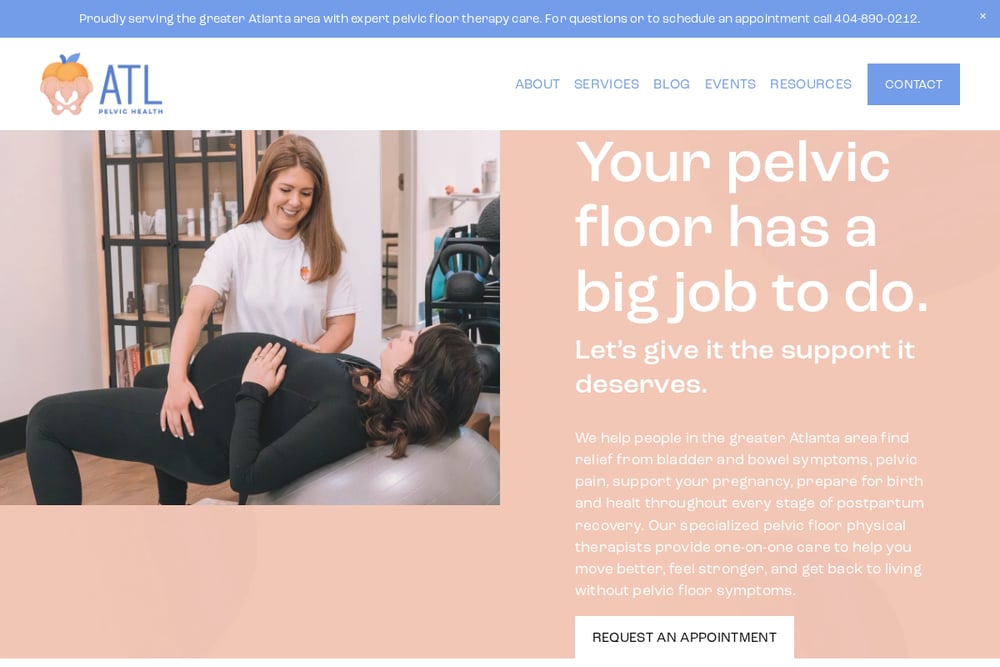 A screenshot of the ATL Pelvic Health website.
ATL Pelvic Health serves the greater Atlanta area with a comprehensive pelvic floor therapy model. The practice combines hands-on treatment, functional movement, and Pilates to address bladder and bowel symptoms, pelvic pain, and pregnancy and postpartum recovery. It also offers fertility care and menopause pelvic floor therapy, making it a good fit for clients across different life stages. The website is clear about what to expect and how to request an appointment. If you're in the Atlanta area and want a practice that integrates Pilates into one-on-one care, this one stands out. See the full range of services at ATL Pelvic Health.
#4 Thrive Maternal Care
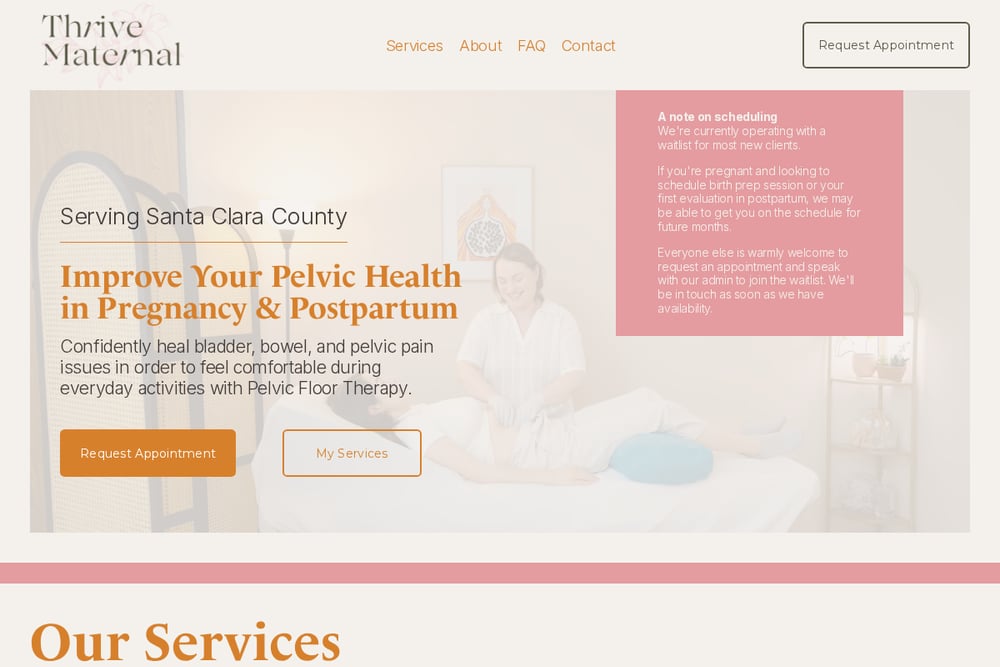 A screenshot of the Thrive Maternal Care website.
Thrive Maternal Care focuses squarely on pregnancy and postpartum pelvic health in Santa Clara County. The practice addresses back, hip, and pelvic pain, diastasis recti, prolapse, C-section recovery, and return to fitness. It also covers pelvic pain conditions like endometriosis, vaginismus, and vulvodynia. One thing that stands out is the transparent communication about scheduling: the practice notes a waitlist for most new clients but prioritizes birth prep and first postpartum evaluations. If you're a mom-to-be or newly postpartum and want a specialist who gets the maternal journey, this practice is built for you. Learn more at Thrive Maternal Care.
#5 Magic City Pelvic Floor Physical Therapy
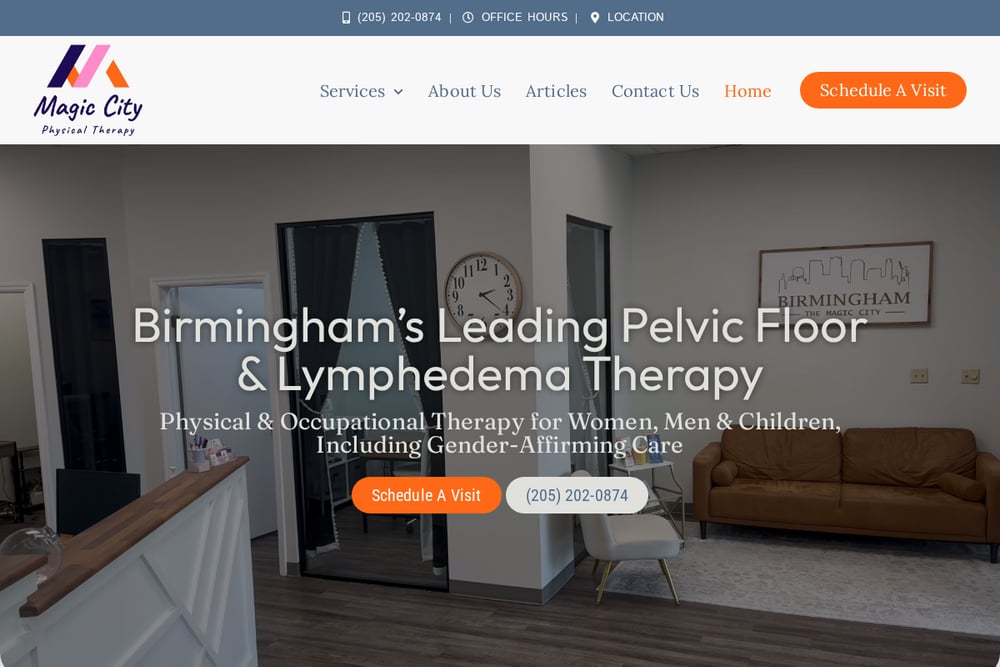 A screenshot of the Magic City Pelvic Floor Physical Therapy website.
Magic City Pelvic Floor Physical Therapy offers a broad service menu that includes fertility and reproductive wellness, gender-affirming care, lymphedema and lipedema, male pelvic floor therapy, pediatric pelvic floor therapy, and pregnancy and postpartum care. The practice also publishes educational articles, including a clear breakdown of the difference between pelvic floor occupational therapy and physical therapy. That kind of content helps you understand your options before you book. If you value a practice that serves diverse populations and invests in client education, this one is worth knowing. Explore their resources at Magic City Pelvic Floor Physical Therapy.
How to Choose the Right Pelvic Health Practice for You
Start with your goal. Are you recovering from childbirth, managing chronic pain, or preparing for surgery? Different practices specialize in different areas. Next, consider the care model. Occupational therapy tends to focus on daily function and whole-person reconnection, while physical therapy often targets musculoskeletal function. Neither is better; they're different tools. Then look at logistics. Is there a waitlist? Do they offer virtual visits? Does the practice serve your area? Finally, read the website carefully. A practice that clearly explains its philosophy and services is more likely to give you a clear picture of what care will feel like. Trust your gut, too. You want to feel comfortable with the person who will be guiding you through sensitive work.
What This Means for the Future of Pelvic Health Care
Pelvic health is becoming more personalized, and technology is starting to support that shift. Remote consultations are making specialized care accessible to people who don't live near a major city. Wearable devices and app-based programs can help you track symptoms and stay consistent with home exercises. But automation won't replace the human connection at the heart of this work. The practices that thrive will be the ones that use technology to extend their reach while keeping care compassionate and individualized. The Reconnected Body's focus on meaningful routines and body awareness is a good example of how digital tools can support, not substitute for, whole-person care.
The Bottom Line on Pelvic Health Practices
You have more options than ever for pelvic health care, and that's a good thing. The five practices here each bring something different to the table. Pilates PT offers deep clinical and Pilates expertise. The Reconnected Body brings an occupational therapy lens that honors your whole life. ATL Pelvic Health provides comprehensive care in Atlanta. Thrive Maternal Care specializes in the maternal journey. Magic City serves diverse populations with educational clarity. The right choice depends on your needs, your location, and the kind of care that makes you feel safe and seen. Take your time, ask questions, and choose the practice that helps you feel more at home in your body.