You've tried the pediatrician, the parent groups, and the late-night Google spiral. What you need is a plan — and a therapist who brings you into the room.
The Parent Coaching Shift in Pediatric Speech Therapy
Pediatric speech therapy is moving away from the old model where a child disappears behind a clinic door for 45 minutes and a parent waits in the lobby. Research keeps pointing the same direction: when caregivers are coached as active participants, children make faster and more lasting progress. That has spawned a wave of parent coaching programs — some in-person, some virtual, some hybrid — each with a different philosophy about how much of the work happens with you in the room. For families in the US, the options range from local clinics with deep community roots to telehealth-first practices that serve you wherever you are. The common thread is empowerment: fewer handouts, more hands-on practice, and strategies that fit into the routines you already live every day.
How We Evaluated These Programs
We looked at the same factors for every program. Service scope: does the practice cover speech, language, occupational therapy, or behavior, and does it offer both in-person and virtual options? Parent involvement model: is coaching baked into every session, or offered as an add-on? Pricing and access clarity: can you find out what a consult costs and how to start without a maze of forms? Local fit and reach: does the practice serve a defined community, a state, or the whole country? And communication style: does the website speak to your actual daily struggles, or does it read like a clinical brochure? Each program below stood out on different factors — some for breadth, some for depth of coaching, some for sheer accessibility.
Here's a quick look at how these five programs compare on format, focus, and who they serve. Use this table to narrow your shortlist before you pick up the phone.
| Provider | Best For |
|---|---|
| Swanson Speech Therapy | Families in the Seattle area who want in-person coaching with a broad clinical menu |
| Done waiting? In 12 weeks, your child can make measurable progress — with you in the room. | ACT Therapy Services | Parents who want a time-bound plan with school coordination and direct therapist access |
| Valued Voices | Families who want online coaching plus school advocacy and GLP-specific support |
| North Star SLPC | San Diego families who want structured, reflective coaching alongside existing therapy |
| West Valley Speech Therapy | Arizona families who want realistic coaching plus feeding and orofacial specialties |
The 5 Programs in Detail
#1 Swanson Speech Therapy
Swanson Speech Therapy runs a dedicated parent coaching program in Seattle and virtually throughout Washington, with in-person sessions in Ballard and surrounding areas. The practice covers a wide clinical range — articulation, childhood apraxia of speech, stuttering, early language, late talkers, autism spectrum, and receptive/expressive language — so you're not bounced to a different provider if your child's needs shift. Their coaching model is built on interactive sessions where therapists guide you through practical strategies you can use in daily routines, not just during appointments. They also offer group programs and summer intensives, which can be a good fit if you want peer support alongside one-on-one coaching. The website is clear about the research case for parent involvement, which makes it easy to bring a skeptical partner or pediatrician up to speed.
#2 Done waiting? In 12 weeks, your child can make measurable progress — with you in the room. | ACT Therapy Services
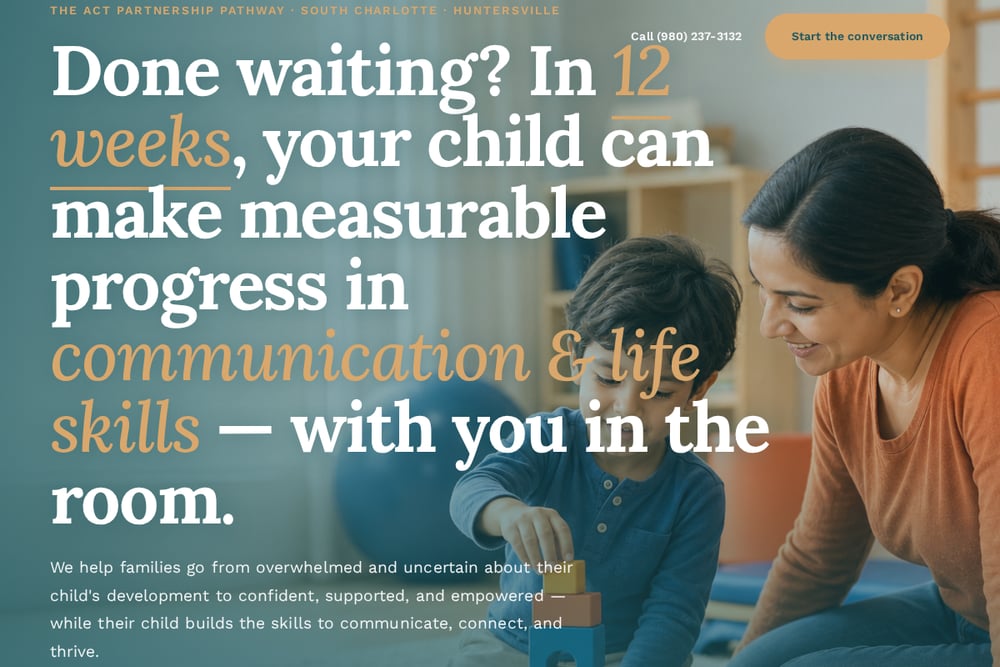 A screenshot of the ACT Therapy Services website.
ACT Therapy Services offers a structured 12-week partnership pathway for children with communication and life-skill challenges, built around the idea that you should be in the room — not in the waiting area. The practice serves South Charlotte and Huntersville, North Carolina, and provides remote therapy support for families who need it. What sets the program apart is the coordination: individualized plans, direct access to the therapist who knows your child, and school coordination so goals don't live in separate silos. The website speaks directly to the 7:15 a.m. shirt-meltdown and the birthday-party edge-of-the-room moments, which tells you they understand the daily reality before they ever ask you to book. If you've been told to "wait and see" or you're stuck on a four-month waitlist, the 12-week frame gives you a concrete timeline to work against.
#3 Valued Voices
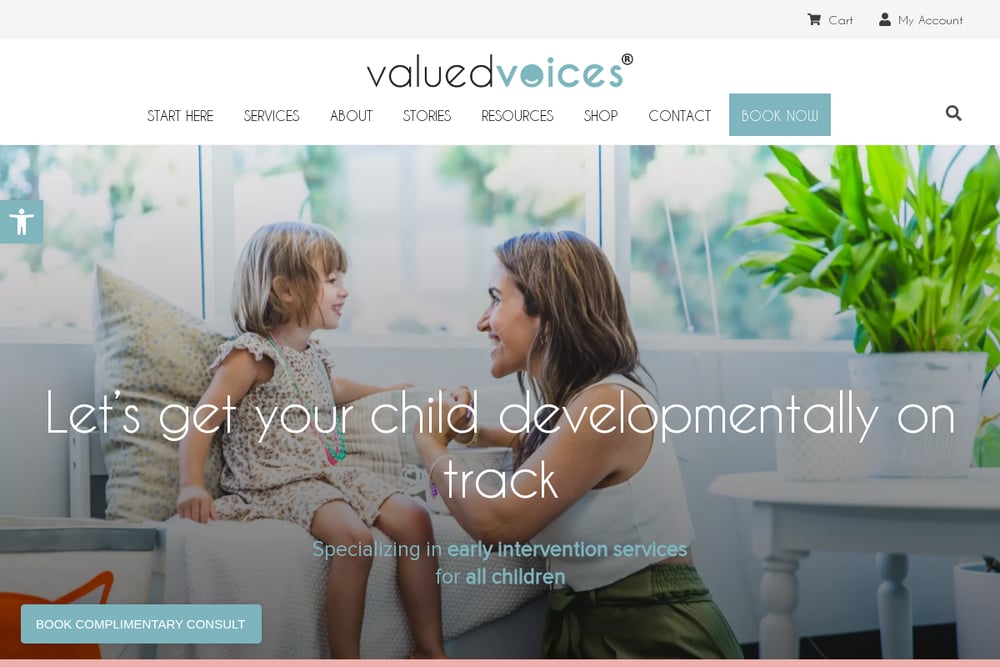 A screenshot of the Valued Voices website.
Valued Voices takes a coaching-first approach with online parent coaching courses, individual coaching, group coaching, and a dedicated gestalt language processing (GLP) coaching track. The practice also offers speech therapy, occupational therapy, camps, music classes, and school/legal support including IEP reviews and independent educational evaluations. That breadth makes it a strong fit for families who suspect their child's needs cross traditional boundaries or who are navigating a school district dispute. The online format means you're not limited by geography, and the group coaching option gives you a community of parents working through similar challenges. Their emphasis on every child having a unique story to share comes through in the coaching style — it's empowerment-oriented rather than drill-based.
#4 North Star SLPC
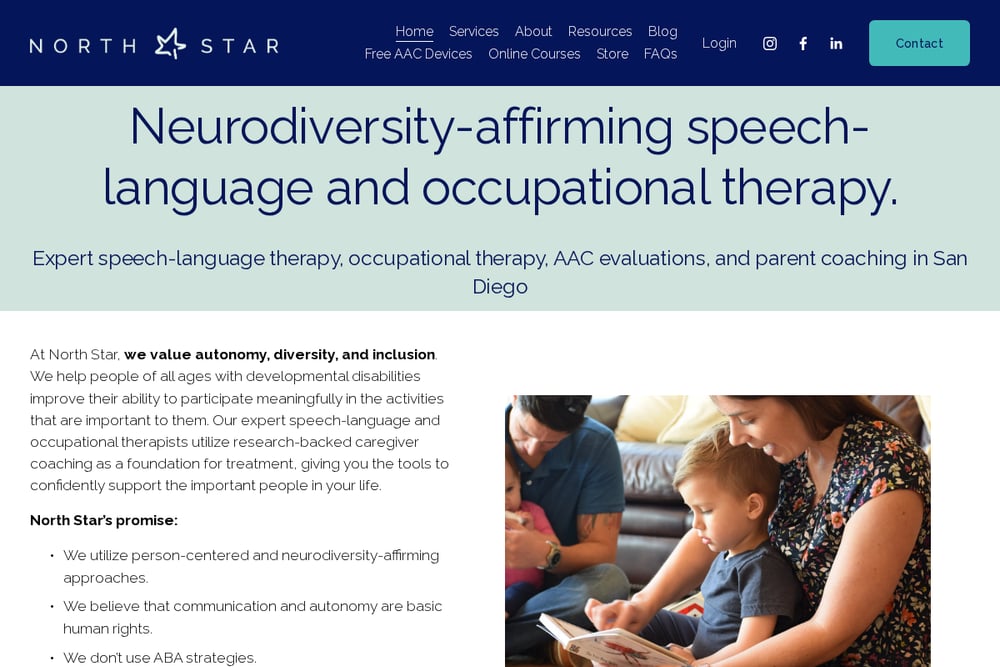 A screenshot of the North Star SLPC website.
North Star SLPC in San Diego offers parent coaching during speech-language therapy with online and in-home service options. Their model is explicit about the difference between parent education — a few minutes at the end of an appointment and a handout — and true parent coaching, where you're an active participant throughout every session. The coaching includes didactic instruction, practice with your child, self-reflection, and feedback, which is a more structured loop than most practices describe. They also offer supplemental coaching once or twice a month for families whose child already receives therapy elsewhere, which is a smart option if you're locked into an in-network provider but want more hands-on guidance. The practice serves early intervention families and older children alike, and the free consultation makes it low-risk to explore fit.
#5 West Valley Speech Therapy
 A screenshot of the West Valley Speech Therapy website.
West Valley Speech Therapy serves Glendale and Scottsdale, Arizona, with speech therapy, orofacial myofunctional therapy, and feeding therapy. Their parent coaching philosophy is refreshingly realistic: the goal is not perfect follow-through or turning your home into a clinic, but confidence. The practice emphasizes that real life happens in the small moments between sessions — asking for a snack, protesting a plan change, telling you about school — and coaching helps you turn those into communication opportunities. Their blog content walks through what coaching actually looks like in a session, with the therapist modeling a strategy, explaining why it supports a specific goal, and then inviting you to try it with support. If you want a local clinic with a clear, no-pressure coaching style and feeding/orofacial specialties under one roof, this is worth a call.
How to Choose the Right Parent Coaching Program
Start with geography and format. If you want in-person sessions, your shortlist narrows fast — Swanson in Seattle, North Star in San Diego, West Valley in Arizona, ACT in the Charlotte area. If you need virtual or hybrid, Valued Voices and ACT both offer remote options. Next, look at the coaching model. Ask one question on your first call: "Am I in the room for the whole session, or do I get a summary at the end?" The answer tells you whether coaching is baked in or bolted on. Then check scope. If your child has feeding issues or suspected apraxia, you need a practice that lists those specialties explicitly. If you're heading into an IEP battle, Valued Voices' school and legal support may matter more than location. Finally, look for a clear starting point. A free consult or a no-commitment conversation is a sign the practice respects your time and your wallet. And pay attention to how the website talks to you — if it describes your Tuesday morning, you're probably in the right place.
What a 12-Week Pathway Actually Looks Like
A structured program like ACT's 12-week pathway typically follows a rhythm. Weeks 1–2: intake, assessment, and goal-setting with the family, including a conversation about what measurable progress looks like for your child. Weeks 3–6: active coaching sessions where the therapist models strategies and you practice with your child in the room, plus coordination with school or daycare if relevant. Weeks 7–10: refinement — you and the therapist review what's working at home, adjust the plan, and address new challenges as they come up. Weeks 11–12: consolidation and a progress review, with a clear picture of what to keep doing and what comes next. The point of a time-bound frame isn't to rush your child; it's to give you a finish line you can actually see, so you're not stuck in an open-ended "wait and see" loop.
The Bottom Line
You don't need another handout. You need a plan, a therapist who knows your child, and a structure that includes you in the room. The five programs here each answer that need differently — Swanson with breadth and Seattle roots, ACT with a 12-week pathway and school coordination, Valued Voices with online coaching and advocacy, North Star with a structured reflective model, and West Valley with a realistic, confidence-first approach. Call two or three. Ask the hard questions about format, scope, and what progress looks like. The right fit will feel less like a clinic and more like a partnership.