You want trustworthy, clinician-informed guidance for your child's development—without a paywall or a login. These five resource hubs deliver exactly that, each with a different flavor of support.
The Pediatric OT Resource Landscape
Pediatric occupational therapy resources have moved online in a big way. Parents now expect free videos, printable activities, and plain-language articles they can explore before ever booking an appointment. The strongest hubs combine clinical credibility with genuine accessibility—no account required, no jargon barrier. Many also address primitive reflexes, sensory processing, and everyday function like dressing, handwriting, and mealtime. The result is a crowded but useful space where families can start learning immediately and escalate to personalized care when needed.
How We Evaluated These Resource Hubs
We looked at five factors consistently across every site. First, depth of free content—videos, articles, and interactive tools available without a paywall. Second, clinical grounding—whether materials are clearly tied to licensed OT practice and include appropriate disclaimers. Third, ease of access—how quickly a parent can find and use a resource. Fourth, family focus—whether the language speaks to caregivers rather than clinicians only. Fifth, pathway to personalized care—how clearly the site explains next steps like consultations or custom recommendations. Each hub below stood out on different factors, and we describe what made each distinctive rather than declaring a single winner.
Here is a quick comparison of the five hubs, ordered by overall usefulness for families seeking free, clinician-informed pediatric OT resources.
| Provider | Best For |
|---|---|
| The OT Toolbox | Breadth of free articles and therapist-grade depth |
| Free Resource Library · Home by OTEIM | Free, no-login videos and an interactive reflex checklist |
| Sensory Therapy Place | Sensory tools plus a free screener and consult |
| Empowering OT Resources | Reflex and coordination articles with a freebie library |
| STAR Institute | Research-backed sensory education and free webinars |
The Five Hubs in Detail
#1 The OT Toolbox
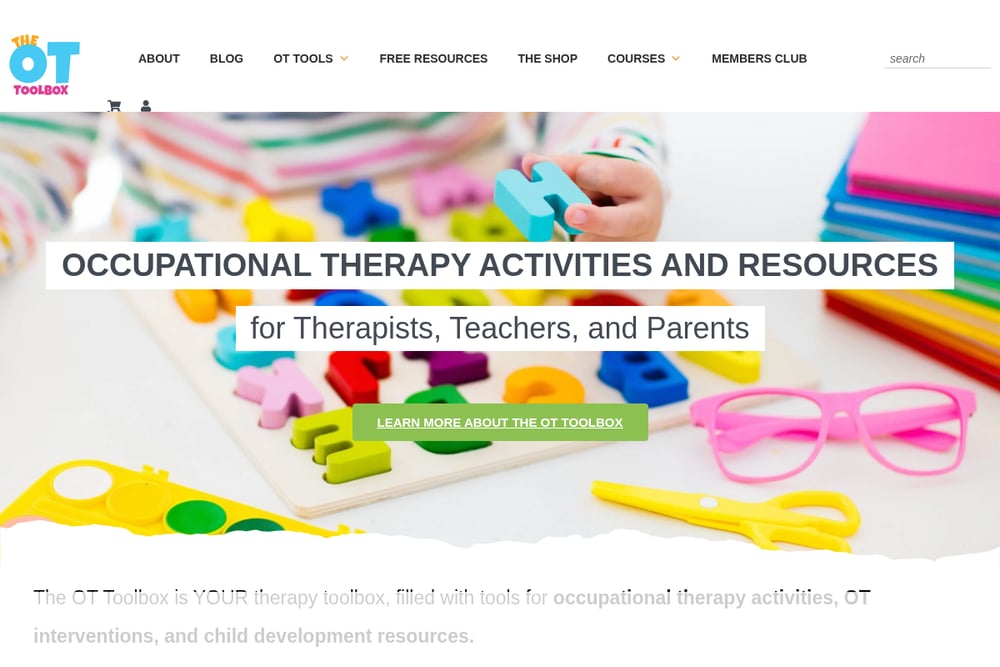 A screenshot of the The OT Toolbox website.
The OT Toolbox is one of the most established pediatric OT resource sites online, founded by Colleen Beck, OTR/L, in 2011. It offers thousands of articles organized by audience—therapist, teacher, and parent—and by category like executive functioning, fine motor skills, sensory processing, and handwriting. Its retained primitive reflexes guide is a strong entry point for caregivers trying to understand developmental patterns. The site also includes free resources, courses, and a members club for deeper access. If you want sheer breadth and a long track record, this is a natural first stop.
#2 Free Resource Library · Home by OTEIM
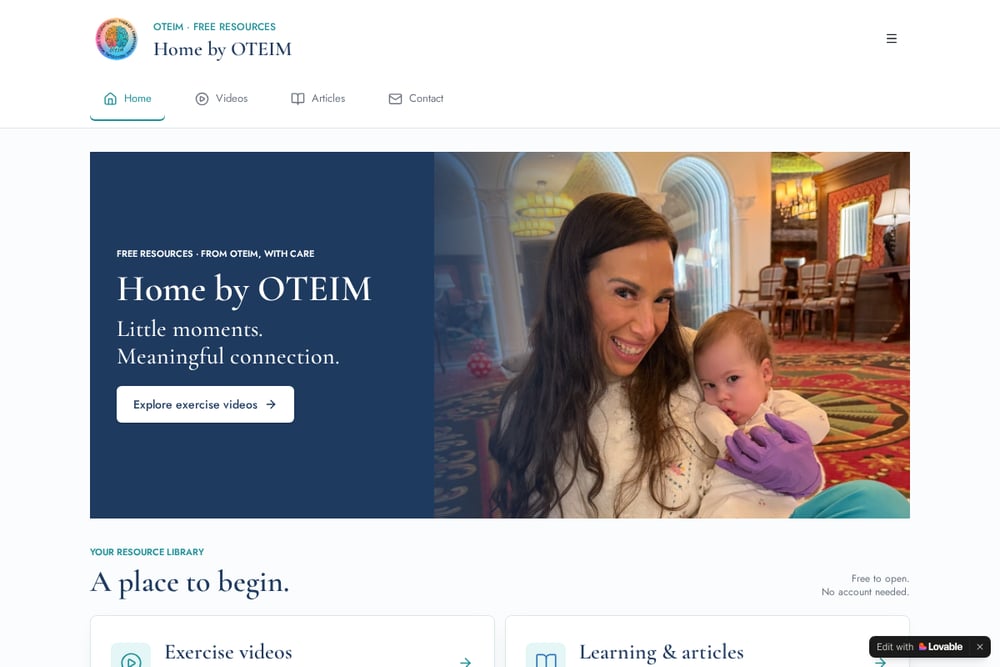 A screenshot of the Free Resource Library · Home by OTEIM website.
OTEIM's free resource library is built for families who want to start learning right away—no account needed. You get 18 public exercise demonstration videos, original articles from Erinn on everyday family life, and seven primitive reflex videos with Jenny. The standout is an interactive primitive reflex checklist that helps you organize observations to discuss with a pediatric OT or pediatrician, with clear language that it is educational only and not a diagnosis. The site also explains how to email for custom recommendations and notes that personalized plan access is not yet available. It is a focused, caregiver-friendly starting point from a working pediatric OT clinic.
#3 Sensory Therapy Place
 A screenshot of the Sensory Therapy Place website.
Sensory Therapy Place blends a sensory product shop with clinical services and free parent resources. Its primitive reflexes guide is written from a pediatric OT perspective and connects reflex patterns to everyday function. The site organizes tools by moment—after-school meltdowns, homework time, picky eating, routines and transitions—which makes it easy to find something relevant fast. You can also take a free three-minute screener or book a free 15-minute OT consult. It is a good fit if you want to move from reading to a low-pressure conversation with a clinician.
#4 Empowering OT Resources
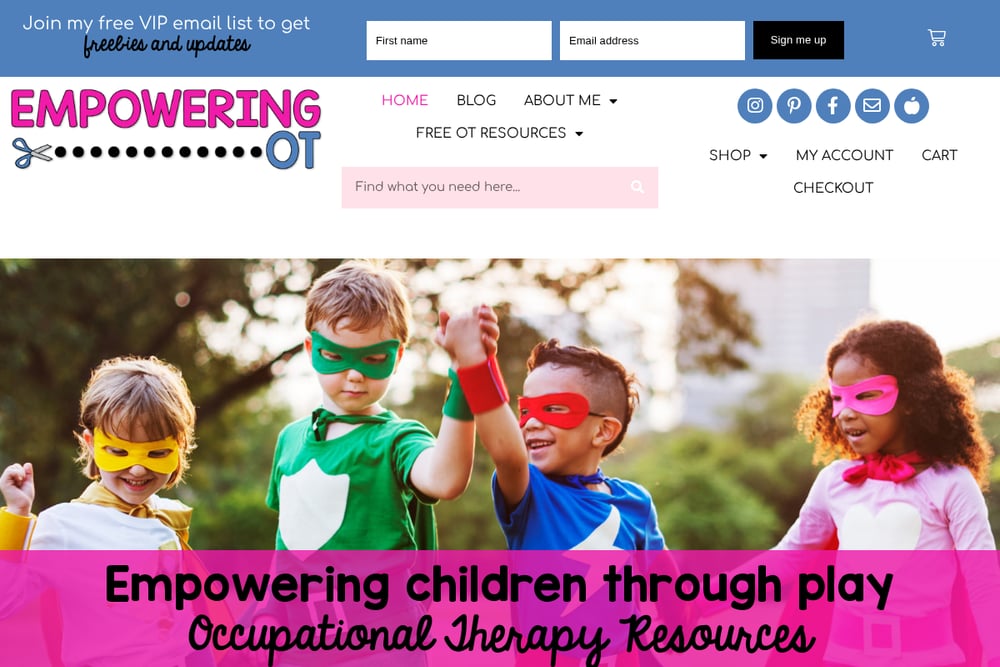 A screenshot of the Empowering OT Resources website.
Empowering OT Resources focuses on practical connections between primitive reflexes and daily skills like balance and coordination. Its articles explain how reflex patterns may influence playground play, stair climbing, ball skills, and classroom navigation, while acknowledging that many factors are at play. The site offers a freebie library and a VIP email list, giving you ongoing access to printable and educational materials. It speaks directly to OTs, teachers, and parents in accessible language. If you want targeted reading on motor coordination and reflex patterns, this is a useful stop.
#5 STAR Institute
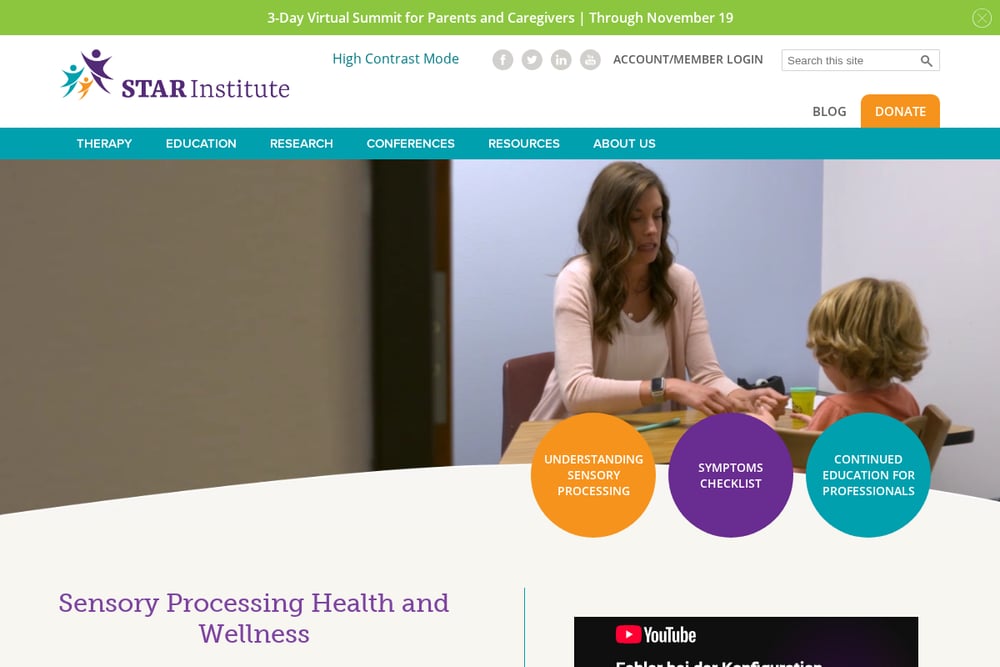 A screenshot of the STAR Institute website.
STAR Institute is a research and education powerhouse in sensory processing and sensory integration. Its site offers free webinars, downloadable flyers, sensory infographics, and a deep library of articles on sensory differences and development. The primitive reflexes perspective here is framed within a broader sensory-motor development model, which is helpful if you want the bigger clinical picture. You can also explore therapy services, professional courses, and research findings. It is the most academically oriented of the five, and a strong choice for parents who want to understand the science behind what they observe.
How to Choose the Right Resource Hub for Your Family
Start with your immediate question. If you need a quick observation tool to bring to an appointment, the interactive checklist from OTEIM is a practical first step. If you want a broad library to browse by topic, The OT Toolbox has the deepest catalog. If you are ready to talk to a clinician, Sensory Therapy Place offers a free screener and consult. If your focus is coordination and reflex patterns, Empowering OT Resources gives you targeted articles. And if you want the research context, STAR Institute delivers it. You can use more than one—most families do. Just remember that general education is not an individualized treatment plan, and a clinician's assessment is what confirms any concern.
A Simple Weekly Workflow to Use These Resources
Set aside 20 minutes once a week. Open one hub and pick one resource—a video, an article, or a checklist. Note one observation about your child in a simple log. Rotate hubs each week so you build a well-rounded picture. When you have three or four observations, use OTEIM's checklist to organize them, then email for custom recommendations or book a free consult through Sensory Therapy Place. Keep everything in one folder so you can share it with your pediatrician or OT. This light routine turns scattered reading into a useful, shareable record.
The Bottom Line
You do not have to figure it out alone, and you do not have to pay to start learning. These five hubs give you free, clinician-informed content across videos, articles, checklists, and research. OTEIM's library is a strong no-login starting point, The OT Toolbox offers unmatched breadth, Sensory Therapy Place bridges to a real consult, Empowering OT Resources targets coordination, and STAR Institute grounds you in the science. Use them together, keep your notes, and bring your questions to a licensed clinician when you are ready.