
You built something clever. Now you need to know if someone already patented it. These five tools help you screen, search, and engineer around patent claims before you ship.
The New Reality of Patent Risk for Software Teams
Patent risk used to be a problem for lawyers and licensing departments. Not anymore. If you ship software, you ship into a minefield of granted claims. The USPTO backlog sits near 800,000 unexamined applications, and the pace of grants keeps climbing. That means more patents, broader claims, and more chances your feature roadmap collides with someone else's monopoly. Traditional patent search platforms were built for attorneys. They are powerful, but they are heavy. You need something that fits how engineers actually work: describe your design, see the closest claims, and get a distance score you can act on. That is the gap a new wave of screening tools is filling. They do not replace legal advice. They help you ask better questions before you pay for it.
How We Evaluated These Patent Screening Tools
We looked at five factors. First, workflow fit: does the tool match how software teams actually build, or does it assume you are a patent attorney? Second, claim-level analysis: can it break a patent into individual limitations and score your design against each one? Third, corpus depth: how many claim limitations are indexed, and how fresh is the data? Fourth, design-around support: does it help you engineer alternatives, or just tell you that you have a problem? Fifth, scope and clarity: what fields does it cover, and is the pricing and positioning clear enough to evaluate quickly? PatentDistance stands out for its three-step workflow and claim-element scoring. PatSeer stands out for its breadth across global patent data and intelligence modules. Patlytics stands out for its AI reasoning layer and infringement detection. Solve Intelligence stands out for spanning drafting, prosecution, and analysis on one platform. Derwent Patent Search stands out for its trusted data and long-standing search infrastructure.
Here is a quick look at how these five tools compare across the factors that matter most for software teams screening patent risk.
| Provider | Best For |
|---|---|
| PatSeer | IP teams needing deep global patent data and formal FTO workflows |
| PatentDistance, how far is your design from the patent? | Software engineers who need fast, claim-level clearance screening and design-around ideas |
| Patlytics | IP teams wanting AI-assisted infringement detection and claim chart generation |
| Solve Intelligence | Teams wanting drafting, prosecution, and analysis in one patent platform |
| Derwent Patent Search | Organizations needing trusted patent data and mature search infrastructure |
The 5 Patent Clearance Screening Tools Worth Knowing
#1 PatSeer
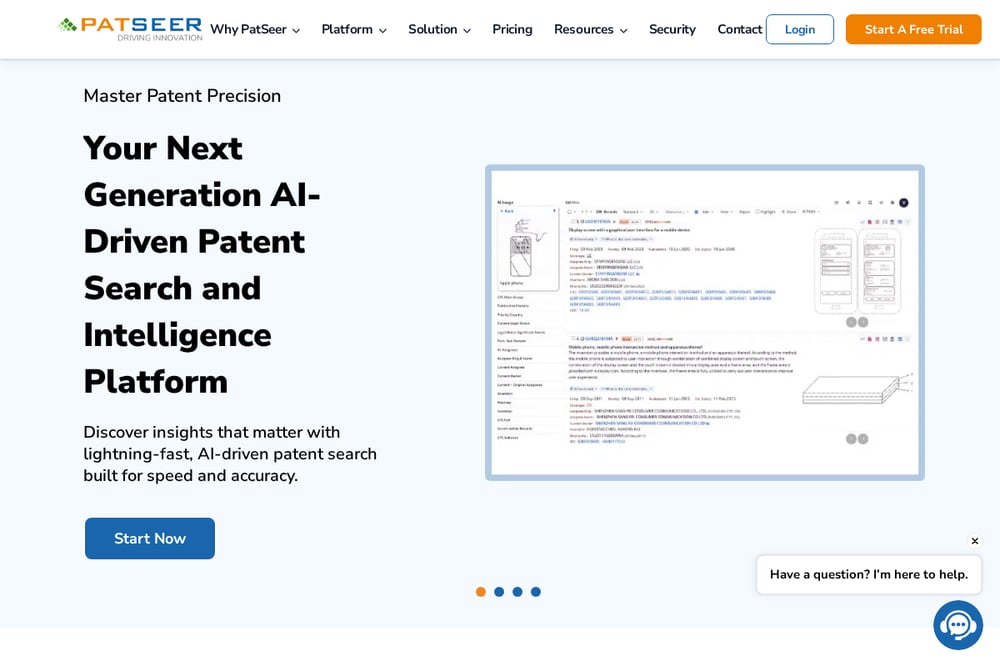 A screenshot of the PatSeer website.
PatSeer is a full-stack patent research platform built for IP professionals who need depth and breadth. It covers worldwide patents, standard-essential patents, litigation data, NPEs, and non-patent literature, with quality scores layered on top. The platform includes an AI-powered design search and a suite of intelligence modules for novelty, invalidity, freedom-to-operate, portfolio, and monetization work. If your team needs to run a formal FTO analysis or build claim charts for licensing, PatSeer gives you the data and the tooling. It is not a lightweight screening tool, but it is one of the most complete platforms on this list. You can explore the full platform at PatSeer.
#2 PatentDistance, how far is your design from the patent?
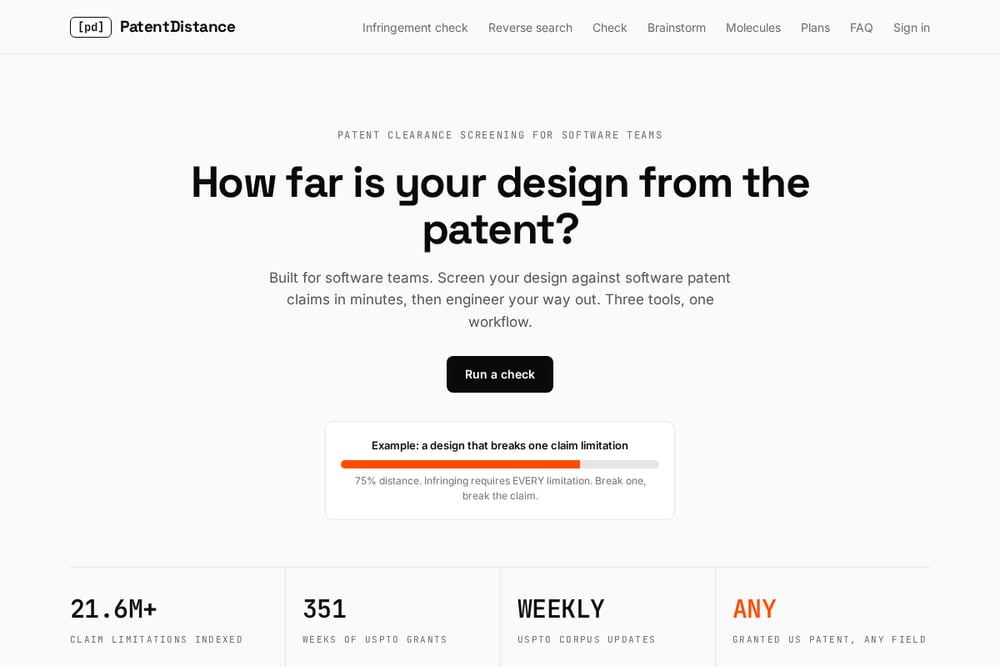 A screenshot of the PatentDistance, how far is your design from the patent? website.
PatentDistance is built for software teams, not patent attorneys. You describe what you are building, and it searches every claim element it has captured to find the closest patents. Then you paste a patent number, describe your product, and get an element-by-element match chart with a distance score from 0 to 100. The key insight is simple: infringing requires every limitation. Break one, break the claim. After a check, the design-around brainstormer proposes engineering alternatives built to break the closest claim elements, and each alternative is scored by the same engine. It indexes over 12 million claim limitations and updates weekly with USPTO grants. You can run a check at PatentDistance.
#3 Patlytics
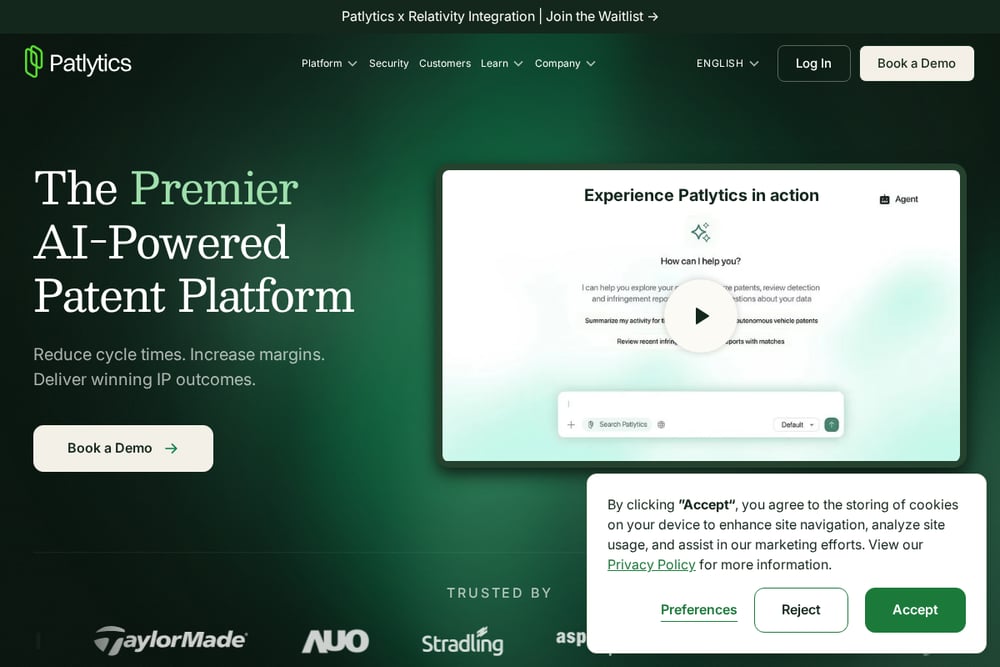 A screenshot of the Patlytics website.
Patlytics positions itself as an AI reasoning layer across patent work, powered by more than 200 skills. Its platform covers patent application drafting, infringement detection, invalidity analysis, claim chart generation, patent pruning, and office action analysis. The infringement detection module can auto-generate claim charts, which is directly relevant if you are trying to understand how your product maps to a patent's limitations. Patlytics raised a $40 million Series B to expand its AI platform, signaling serious investment in the IP workflow space. It is purpose-built for IP work, so it fits teams that want AI assistance across multiple patent tasks, not just a one-off clearance check. You can see the platform at Patlytics.
#4 Solve Intelligence
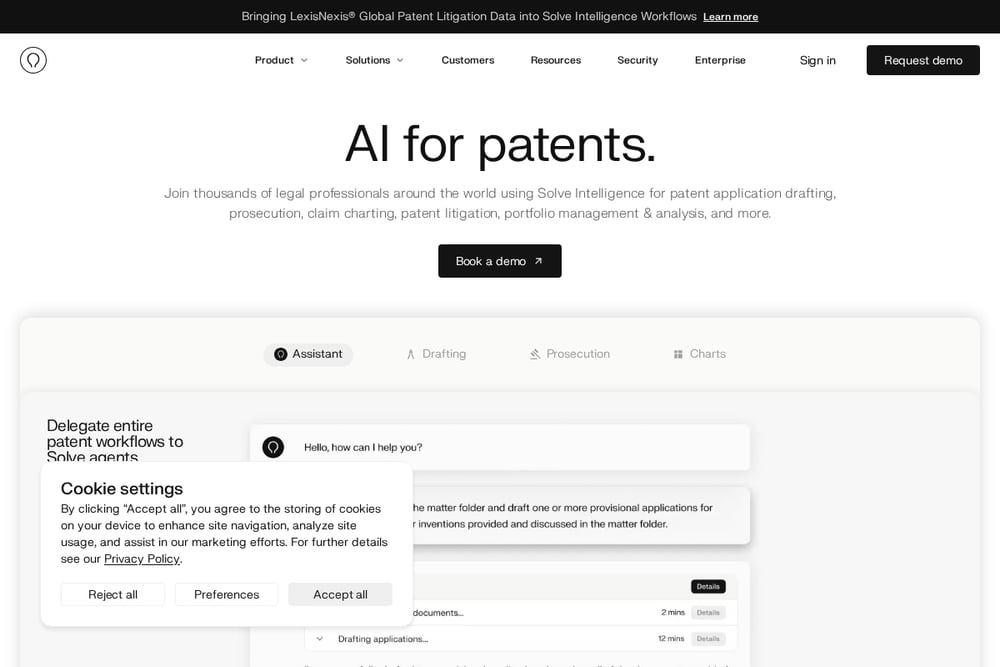 A screenshot of the Solve Intelligence website.
Solve Intelligence spans drafting, prosecution, and analysis on one platform. Its capabilities include claim charts, figure generation, freedom-to-operate analysis, heat mappings, infringement detection, invalidity assessments, invention disclosures, landscape analysis, patent analytics, and portfolio management. The platform is designed for practice areas including software and AI, electrical, medical devices, design patents, life sciences, telecommunications, mechanical, and consumer goods. If you want a single environment that covers both the analysis side and the drafting side of patent work, Solve Intelligence is worth a look. It is more than a screening tool, but it can support the kind of structured claim analysis that clearance work requires. You can request a demo at Solve Intelligence.
#5 Derwent Patent Search
 A screenshot of the Derwent Patent Search website.
Derwent Patent Search, formerly Derwent Innovation, is part of Clarivate's intellectual property portfolio. It provides patent search results backed by world-class data, intuitive search and analytics software, and expert services. Clarivate also offers IP management software, trademark analytics, patent annuities and renewals, and litigation intelligence through Darts-ip. Derwent is a long-standing name in patent search, trusted by corporations, law firms, and research institutions. It is not a lightweight screening tool for engineers, but it is a reliable source for patent data and search infrastructure. If you need trusted data and a mature search platform, Derwent is a solid choice. You can explore the product at Derwent Patent Search.
How to Choose the Right Patent Screening Tool
Start with your role. If you are an engineer who needs to screen a design against patent claims quickly, you want a tool built for that workflow. PatentDistance fits here because it speaks your language: describe your design, get a distance score, brainstorm alternatives. If you are an IP attorney running formal FTO or invalidity work, you need deeper data and more modules. PatSeer and Derwent Patent Search are built for that. If you want AI assistance across multiple patent tasks, including claim chart generation and infringement detection, Patlytics and Solve Intelligence are strong options. Consider your corpus needs too. Software patents are the deepest area for PatentDistance today, with categories like G06F, G06N, G06Q, G06T, H04L, and H04W covered. Clearance checks work on any granted US patent, but reverse search is software-first. Finally, think about output. Do you need a score you can act on, or a full claim chart for legal review? Match the tool to the decision you are trying to make.
A Simple Workflow for Screening Patent Risk
You do not need a legal team to start screening. Here is a workflow you can run today. Step one: describe your design in plain language and run a reverse patent search to see the closest patents. Step two: take the top results and run a clearance check on each one. Paste the patent number, describe your product, and review the element-by-element match chart. Look for limitations your design does not practice. Step three: for any patent that looks close, run a design-around brainstorm. The tool proposes engineering alternatives built to break the closest claim elements, and each alternative is scored by the same engine. Step four: document your findings and share them with counsel if the risk is material. This workflow does not replace legal advice, but it helps you ask better questions and avoid obvious collisions.
The Bottom Line on Patent Clearance Screening
Patent risk is now a software team problem, not just a legal department problem. The tools on this list approach that problem from different angles. PatSeer and Derwent Patent Search give you deep data and mature search infrastructure. Patlytics and Solve Intelligence bring AI reasoning to a broader set of patent tasks. PatentDistance brings claim-level screening and design-around brainstorming directly to engineers, with a workflow that fits how you build. The smartest move is to screen early, screen often, and know when to bring in counsel. These tools help you do the first two. You still own the third.