
You are the alarm, the calendar, and the memory — and that is exhausting. These five tools help you see where the load sits and how to lighten it without dropping the support your child needs.
The Parent Support Tool Landscape
Most ADHD and autism tools online are built to screen a child. They ask you to rate symptoms, tally frequencies, and walk away with a number that points toward a clinical assessment. That is useful — but it is not the whole picture. A quieter category has emerged: tools built for the parent's side of the routine. These focus on what you carry, not what your child scores. They look at morning loops, homework tracking, time cues, and the invisible planning that keeps a household moving. The shift matters because parental burnout is real, and it rarely shows up on a child's screening form. The five resources below sit at different points on that spectrum, from clinical screeners to routine-focused self-checks.
How We Evaluated These Tools
We looked at who each tool is actually built for. Some are designed for parents reporting on a child; others are designed for parents examining their own routines. We checked whether the purpose is clear before you start, whether the output is something you can act on, and whether privacy is handled plainly. We also weighed how each tool frames its limits — a screener that says it is not a diagnosis earns trust. Pricing clarity mattered too, especially for tools tied to paid assessments. Finally, we considered tone. A tool that speaks to parents without blame stands out in a space full of clinical language.
Here is a quick look at the five resources, what each one does, and who it fits.
| Provider | Best For |
|---|---|
| Child ADHD Test (Parent Report) | Parents who want a structured symptom screener to share with a clinician |
| LighterLoop — You don't have to be your child's only reminder system | Parents who want to reduce their own routine load without removing support |
| The Autism Service | Families in the UK exploring whether a formal assessment makes sense |
| Diverse Diagnostics | Parents who want a free screener tied to a private assessment pathway |
| Mentalwell | Parents who want a simple first-pass screening across multiple family members |
The Five Tools in Detail
#1 Child ADHD Test (Parent Report)
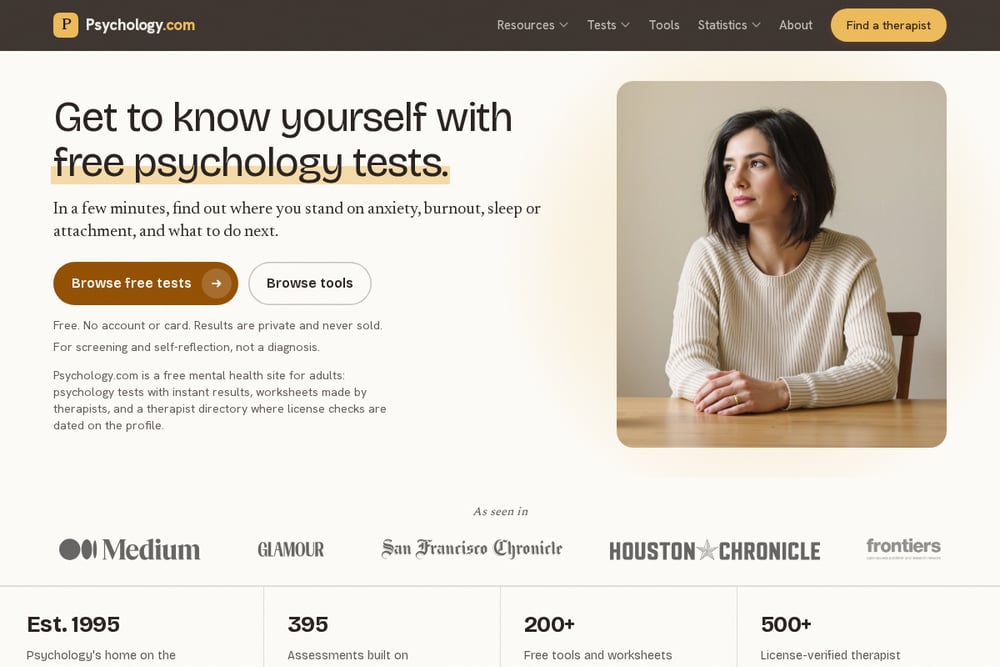 A screenshot of the Child ADHD Test (Parent Report) website.
This is a free, 18-question parent-report screener informed by the Vanderbilt scale and SNAP-IV. It separates inattention from hyperactivity and impulsivity, so you get two distinct frequency scores instead of one blended number. It takes about eight minutes and runs entirely in your browser, with an optional in-depth report at the end. The result is framed as an educational screening, not a diagnosis, and the page says so plainly. If your next step is a clinician conversation, this gives you something concrete to bring.
#2 LighterLoop — You don't have to be your child's only reminder system
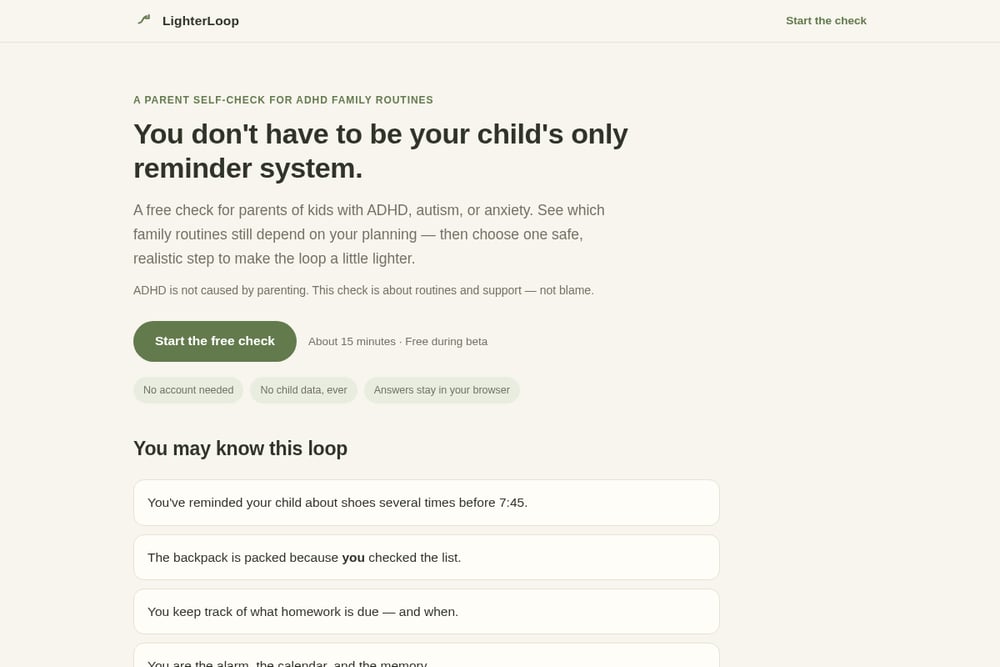 A screenshot of the LighterLoop — You don't have to be your child's only reminder system website.
LighterLoop flips the usual question. Instead of scoring your child, it asks which family routines still depend on your planning. The free check takes about 15 minutes and covers six parts of the load, including whether the system lives outside your head, who owns the clock, and where your child can take a safe next step. You get a six-part snapshot plus one realistic adjustment to consider — not a list of everything you are doing wrong. It is free during beta, needs no account, and keeps answers in your browser with no child data collected. The framing is explicit: ADHD is not caused by parenting, and this is about routines, not blame.
#3 The Autism Service
 A screenshot of The Autism Service website.
This UK-based service offers free online ADHD and autism tests written by its own psychologists, covering both children and adults. The child ADHD test is positioned as a way to find out whether a formal assessment would be helpful, which keeps expectations honest. The site also links directly into assessment and medication pathways if you decide to go further. It is a clean entry point if you are at the very start of the question and want a clinician-authored screener. The trade-off is geography: its assessment services are UK-focused.
#4 Diverse Diagnostics
 A screenshot of Diverse Diagnostics website.
Diverse Diagnostics runs a free child ADHD test for ages 6 to 17, built on the same criteria used in NHS assessments. It is designed for parents to complete based on what they see at home and at school, and it covers attention, hyperactivity, and impulsivity together. The wider site connects to regulated consultant-psychiatrist assessments, so the free test sits inside a clear clinical pathway. Reviews and regulatory details are surfaced up front, which helps you judge credibility quickly. It is a strong fit if you already suspect you will pursue a private assessment.
#5 Mentalwell
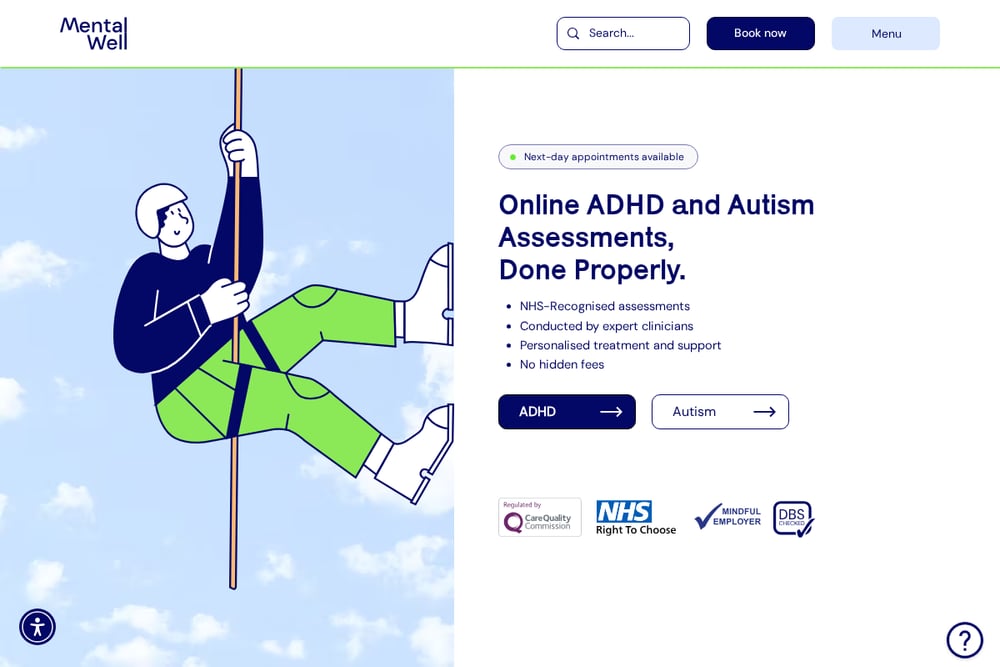 A screenshot of Mentalwell website.
Mentalwell offers a free children's ADHD screening quiz aimed at parents and caregivers who want to understand how a child's behaviours may align with common ADHD traits. The instructions are unusually clear: answer based on how often behaviours show up at home, at school, and in social situations. Results are framed as an indication of frequency and severity, not a diagnosis, and the page points toward professional consultation. The site also offers adult ADHD and autism self-screenings, which makes it useful if more than one family member is asking the same question. It is a gentle, low-pressure starting point.
How to Choose the Right Starting Point
Start by naming what you actually need. If you want a symptom screener to bring to a doctor, the Child ADHD Test (Parent Report) or Diverse Diagnostics will serve you well. If the real problem is that you are exhausted from holding every routine together, LighterLoop is built for exactly that and asks nothing about your child's symptoms. If you are in the UK and want a route into assessment, The Autism Service and Diverse Diagnostics both connect a free test to a clinical pathway. And if you just want a quick, low-stakes first look, Mentalwell keeps it simple. One more thing: check what happens to your answers. Browser-only tools and anonymous submissions are worth prioritizing when the topic is your child.
Where a Lighter Routine Fits
You do not need a full system overhaul. Pick one loop that drains you most — usually the morning or homework. Write the plan somewhere your child can see it, so it stops living in your head. Replace one verbal reminder with a visual cue or a timer your child can check. Then wait. Give processing time before you step in, and let your child own one next step with you nearby. Keep every support that still works. Adjust one thing at a time, at your pace. The goal is not to remove yourself from the routine. It is to carry a little less of it.
The Bottom Line
These five tools answer different questions. Four of them ask what is going on with your child. LighterLoop asks what is going on with you — and that question is overdue. Screening tools have their place, especially when you are deciding whether to seek an assessment. But if you have been the alarm, the calendar, and the memory for years, a routine-focused self-check may be the more useful first step. Start there. Pick one small adjustment. Keep the supports that work. You do not have to be your child's only reminder system.