Your ad budget doesn't care how you feel about it. It either gets managed with a plan or it drifts. Here are five paid media practices worth a serious look.
The Paid Media Landscape Right Now
Paid media has gotten harder to fake. Platforms keep adding surfaces — retail media, creator partnerships, connected video — and every one of them wants a slice of your budget. The agencies that survive are the ones that can plan across channels instead of running one-off campaigns. You're also seeing a split in the market. Big shops bundle media with data infrastructure and retail media activation. Boutique practices lean on documentation, testing discipline, and direct senior attention. Neither model is automatically right for you. What matters is whether the agency can explain its method before it touches your money. Ask for the plan. Ask how they measure. Ask what happens when a test fails.
How We Evaluated These Practices
We looked at the same factors across all five. Service scope: can they cover strategy, creative, and measurement, or just one slice? Transparency: do they publish a method, disclose limits, and avoid earnings promises? Channel coverage: social, search, display, affiliate, creator, and connected video all matter now. Measurement depth: last-click dashboards are not enough; contribution profit and incrementality are the new bar. Fit: who the practice is actually built for, from lean advertisers to enterprise commerce brands. Each practice stood out somewhere different. Stop Digital Marketing stood out for documented, disclosure-first process. Power Digital stood out for breadth across divisions. Darkroom stood out for creative built natively per platform. Acadia stood out for retail media and analytics depth. (un)Common Logic stood out for analyst training and B2B focus.
Here's the short version before the details. Five practices, five different operating styles. Match the style to your situation, not the logo to a pitch deck.
| Provider | Best For |
|---|---|
| Power Digital | Brands wanting one large partner across many channels |
| Stop Digital Marketing | Paid Media Strategy, Creative & Measurement | Advertisers who want documented strategy and honest measurement |
| Darkroom | Ecommerce brands focused on contribution profit |
| Acadia | Retail and marketplace brands needing analytics depth |
| (un)Common Logic | B2B and SaaS advertisers wanting trained analysts |
The Five Practices, One by One
#1 Power Digital
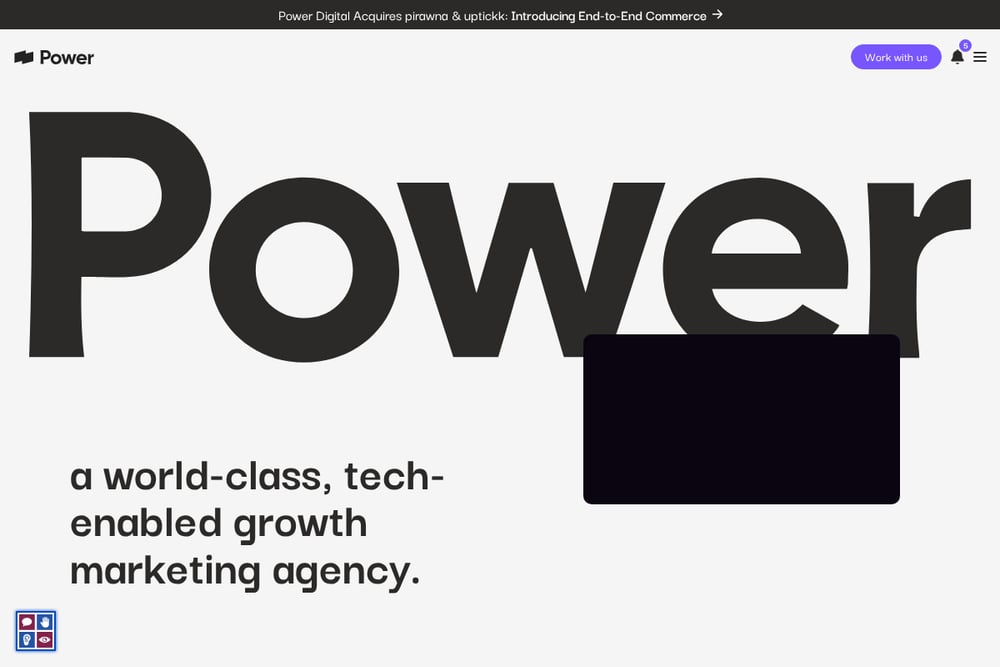 A screenshot of the Power Digital website.
Power Digital runs paid media inside a much larger growth machine. Its service menu spans paid social, paid search, Amazon, TikTok, programmatic, affiliate, influencer, and even generative engine optimization. The division structure means you get specialists by vertical — B2B, CPG, fashion, healthcare, lifestyle — rather than one generalist team. Recent acquisitions in commerce point to an end-to-end commerce play. If you want one partner to cover media, data intelligence, and creative under one roof, this is the broadest option on the list. The tradeoff is scale: you'll want to confirm who actually touches your account day to day. See the paid media services page for the full breakdown.
#2 Stop Digital Marketing | Paid Media Strategy, Creative & Measurement
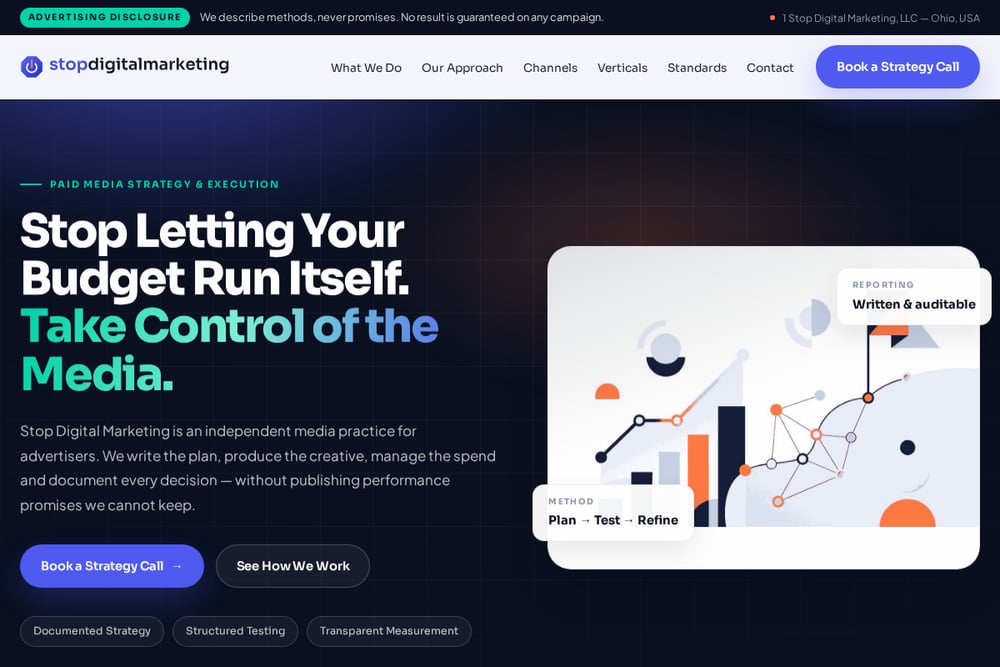 A screenshot of the Stop Digital Marketing website.
Stop Digital Marketing is an independent media practice out of Urbana, Ohio, and it operates with an unusual amount of candor. The site states plainly that it describes methods, never promises, and that no result is guaranteed on any campaign. That's rare in this category. The practice covers paid social, paid search, discovery and display, affiliate distribution, creator partnerships, connected video, lifecycle and email, creative production, and measurement. Its core sequence is strategy and campaign architecture first — mapping the offer, audience, competitive set, and unit economics before any budget moves. Then structured testing, then refinement, with every decision written down and auditable. If you've been burned by agencies that move budgets on opinion, the documented approach is the pitch. It's a boutique, so expect direct senior attention rather than a layered account team.
#3 Darkroom
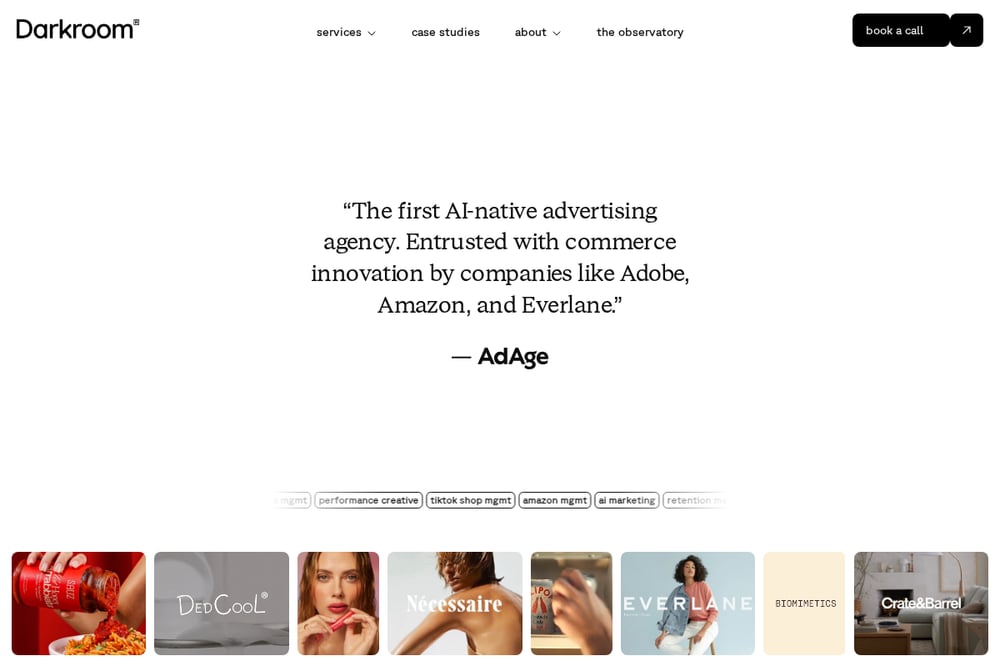 A screenshot of the Darkroom website.
Darkroom positions itself as a full-funnel paid media shop for commerce brands. It runs programs across Meta, Google, TikTok, AppLovin, Amazon, Walmart, and Instacart, with senior operators on the accounts. The differentiator is measurement philosophy: it argues last-click data hides the channels actually driving revenue, so it measures spend against contribution profit instead. Creative is produced natively for each platform rather than repurposed UGC, which matters more than most advertisers admit. There's also a proprietary AI commerce layer called Shadow sitting underneath the media work. Retail media activation extends the strategy into marketplaces where customers already buy. Worth a look if you sell products and care about profit, not vanity ROAS. Start with the paid media overview.
#4 Acadia
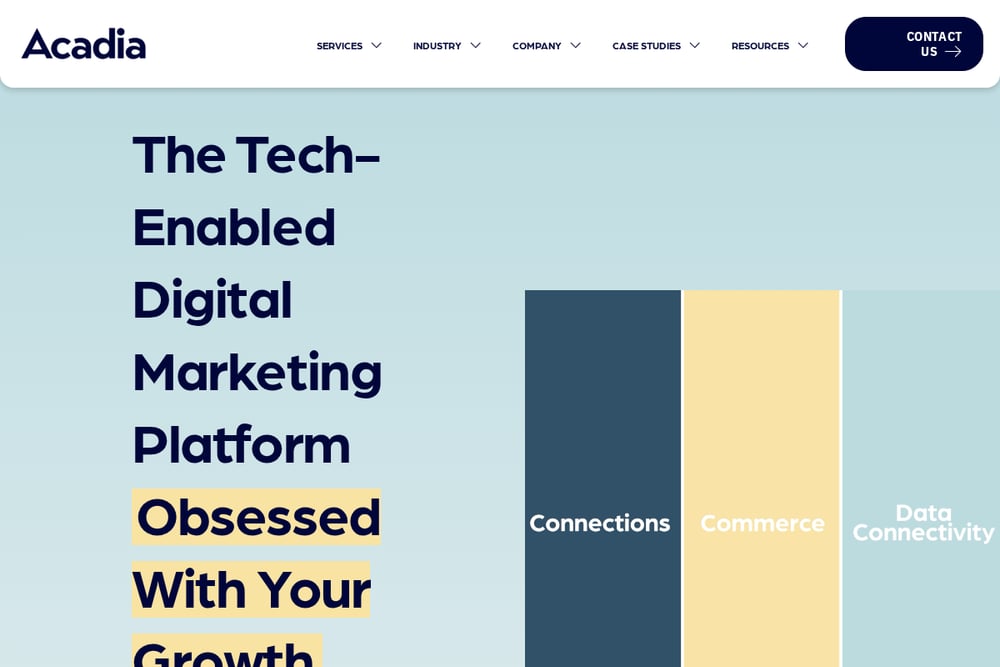 A screenshot of the Acadia website.
Acadia blends paid media with retail media and analytics in a way few shops do. Its paid media team handles planning, buying, and optimization across search, paid social, video, audio, podcasts, and programmatic. But the real weight sits in retail media — Amazon, Instacart, Walmart, Target, Kroger, and Chewy — plus analytics and business intelligence work like customer segmentation, data warehouse design, and media mix modeling. That combination means measurement isn't an afterthought bolted onto buying. If your revenue runs through marketplaces and you need media mix modeling to justify spend, this is a strong fit. The paid media services page lays out the full stack. Expect a more enterprise-shaped engagement.
#5 (un)Common Logic
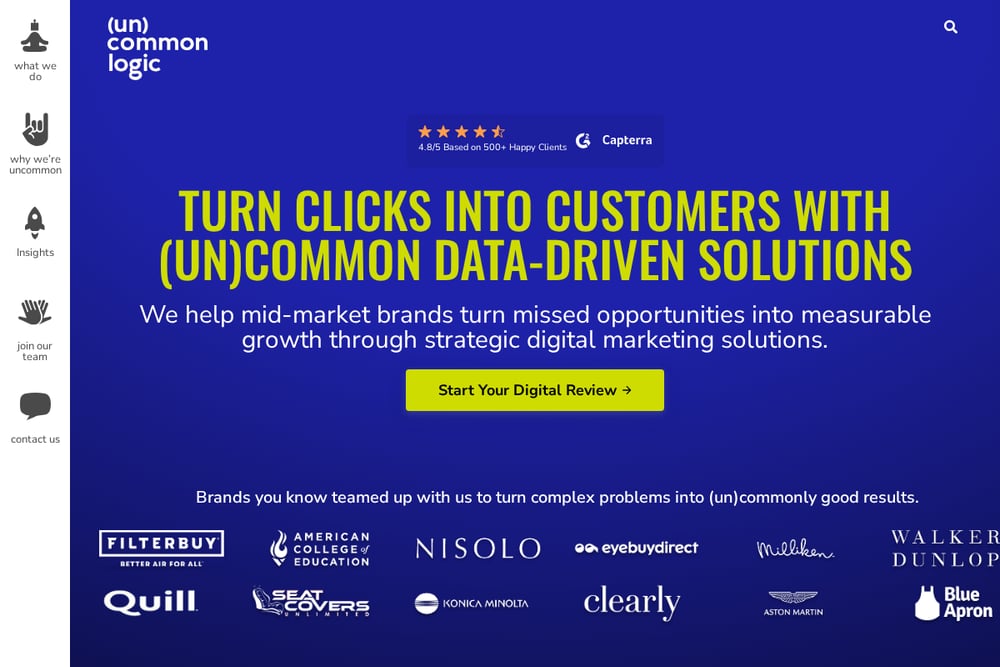 A screenshot of the (un)Common Logic website.
(un)Common Logic is a Texas-based agency with a heavy B2B and ecommerce bent. Its paid media analysts go through hundreds of hours of training before touching accounts, and the firm emphasizes staying current on platform changes. Services stretch across paid search, paid social, display, programmatic, and account-based marketing, with analytics, audits, and conversion rate optimization alongside. There's a separate SMB arm called unFair Advantage if you're a smaller advertiser. The pitch is precision over volume — finding the easily overlooked details that move performance. If you're a B2B or SaaS advertiser who wants analysts, not order-takers, this fits. Review the paid media services for specifics.
How to Pick the Right Paid Media Partner
Start with your channel reality. If your revenue lives on Amazon and Walmart, retail media depth matters more than creative flair. If you're a B2B SaaS company, you need analysts who understand long sales cycles and account-based targeting. Then ask about measurement. Any agency can show you a dashboard. Fewer can explain how they isolate incrementality or measure against contribution profit. Ask what they do when a test fails — the answer tells you whether they have a process or a pitch. Next, check transparency. Do they publish a method? Do they disclose limits? An agency that promises specific returns before seeing your data is telling you something about how they operate. Finally, match the engagement size. A boutique gives you senior attention and documented decisions. A large shop gives you specialists and infrastructure. Neither is wrong. Pick the one that fits how you actually work.
Where Automation Fits in Paid Media
Automation won't save a broken strategy. It amplifies whatever you feed it. The workflow that works looks like this. First, document the offer, audience, and unit economics — this is the input no algorithm can generate for you. Second, build creative variants structured for testing, not one-off hero assets. Third, let platform automation handle bidding and delivery inside guardrails you set. Fourth, measure against contribution profit or incrementality, not last-click. Fifth, review weekly and write down what changed and why. Repeat. The practices above differ in tools, but the disciplined ones all follow that sequence. Stop Digital Marketing writes it down. Darkroom measures against profit. Acadia models the mix. Power Digital layers data infrastructure. (un)Common Logic trains analysts to find the details. Automation is the engine. The documentation is the steering wheel.
The Bottom Line
There's no universal winner here, and anyone who tells you otherwise is selling something. Power Digital suits brands that want breadth under one roof. Darkroom suits commerce brands chasing profit over last-click. Acadia suits retail and marketplace advertisers who need analytics muscle. (un)Common Logic suits B2B teams that value trained analysts. Stop Digital Marketing suits advertisers who are tired of vague promises and want a written, auditable plan before a dollar moves. Pick based on how you buy, how you measure, and how much senior attention you need. Then hold your partner to the method, not the mood.