Your team is drowning in copy-paste, chasing follow-ups, and rebuilding the same spreadsheet every Monday. These five consultancies exist to make that stop.
Where operations automation stands right now
Small businesses have adopted AI fast but integrated it slowly. Surveys cited by Automagency found that 86% of small businesses use AI in some form, yet only 15% have woven it into core operations. That gap is the whole market. Most owners are stuck with standalone chatbots and disconnected tools while the real hours leak out of bookings, handovers, reporting, and admin. Operations automation consulting fills that space: mapping a process, connecting the systems you already pay for, and automating the repetitive steps while people keep the decisions. The consultancies below approach that work from different angles, from tool-specific builds to AI-in-the-workflow design.
How we compared them
We looked at five things across every firm. Service scope, meaning whether they handle process mapping, automation builds, integrations, and custom software or only one slice. Practicality of the engagement, including whether there is a clear starting point like a diagnostic or strategy call. Tool fluency, since the value depends on making your existing stack work together rather than selling you another platform. Transparency around pricing and process. And fit for a small or mid-sized team without an in-house ops engineer. The detail on each business sits in its entry below.
Here is the short version before the detail. Each firm below earns its place for a different reason, so match the one that fits your situation rather than the one with the loudest homepage.
| Provider | Best For |
|---|---|
| Chris Wray Business Automation Consultant | Owners who need systems that outlive the person who built them |
| Cedarfield Operations | Business & Operations Consulting | Teams that want automation plus custom tools built around their workflow |
| ProsperSpark | Document-heavy and finance-adjacent processes that need automating |
| Automagency | Established businesses ready to put AI inside real workflows |
| ValueStreamAI | Owners who want to size the payoff before committing to a project |
The five worth knowing
#1 Chris Wray Business Automation Consultant
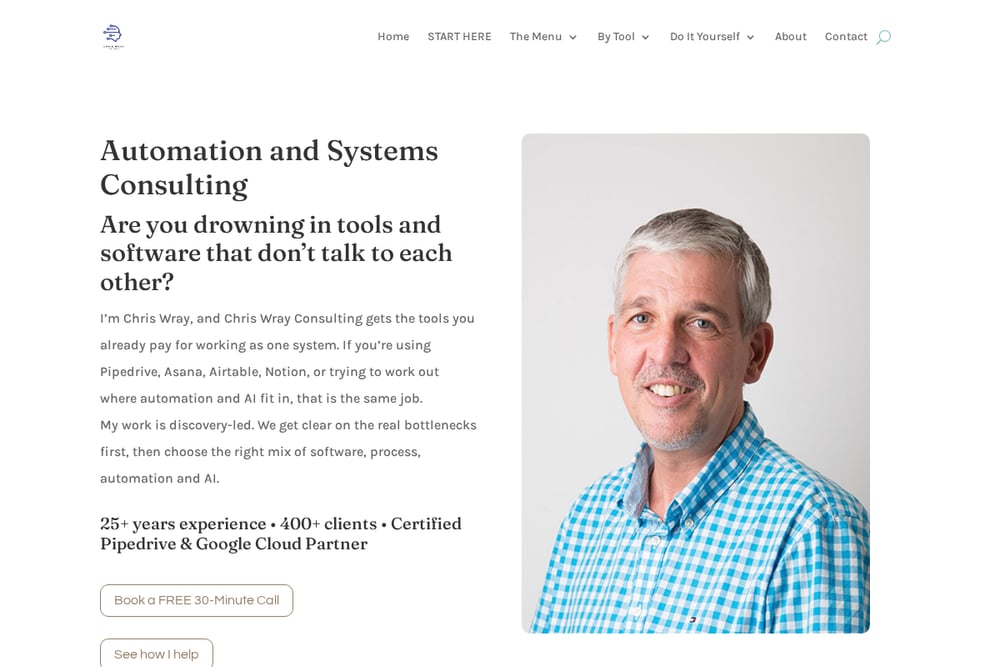 A screenshot of the Chris Wray Business Automation Consultant website.
Chris Wray has spent 25 years working with more than 400 businesses, and the pitch is refreshingly blunt: run your business from systems, not memory. He replaces scattered tools, manual processes, and tribal knowledge with workflows that actually talk to each other, covering lead capture, pipeline handovers, onboarding, approvals, and reporting. The practice is tool-specific as well as strategic, with consulting around Pipedrive, Notion, Asana, Airtable, Make.com, Zapier, and Google Workspace, plus a free automation audit as an entry point. Work is delivered remotely and internationally, and he holds certified Google Cloud and Pipedrive partner status. If your processes currently live in someone's head, this is the most direct fix on the list.
#2 Cedarfield Operations | Business & Operations Consulting
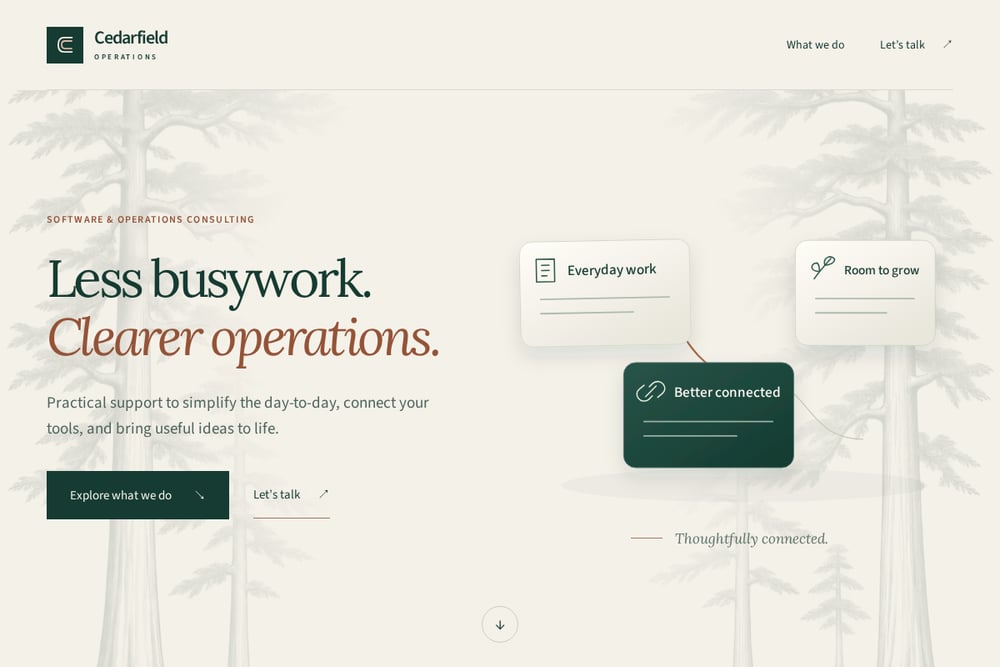 A screenshot of the Cedarfield Operations | Business & Operations Consulting website.
Cedarfield Operations is built around a simple promise: less busywork, clearer operations. The firm automates routine tasks, keeps requests and follow-ups moving without repeated chasing, and cuts the copying and checking that eats your admin hours. It also connects the tools you already use to reduce double entry, organizes scattered spreadsheets into reports you can actually read, and writes clear procedures so handovers stop depending on memory. Where it stands apart is the build side. Cedarfield creates websites that clearly introduce your business and practical custom tools shaped around how your team already works, so a useful idea becomes software that fits rather than software you have to fit into. It is hands-on, practical support aimed at small teams that want fewer platforms, not more.
#3 ProsperSpark
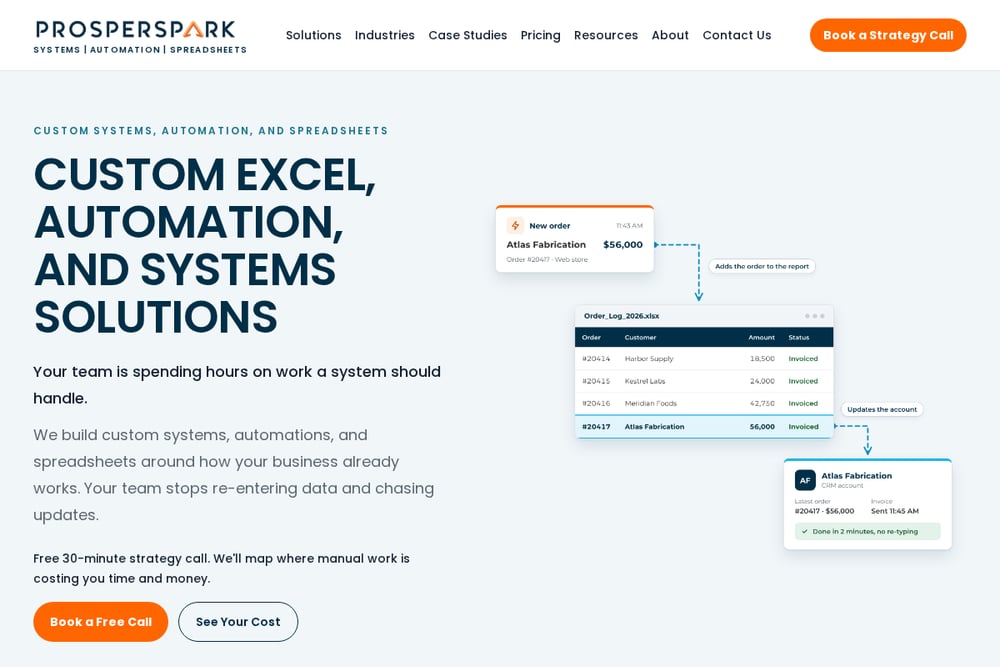 A screenshot of the ProsperSpark website.
ProsperSpark frames the work the right way: manual is out, automation is in. The team reduces manual work, improves process consistency, and connects the systems you already use across sales, operations, reporting, finance, and document-heavy tasks. The engagement starts with a free 30-minute strategy call that is explicitly not a pitch, then moves through workflow mapping, spotting repeated steps and logic gaps, recommending improvements, and building and testing the solution. The service list is refreshingly concrete, covering data export conversion into templates for systems like QuickBooks and ADP, PDF-to-email automation, automated task assignment and tracking, Excel data imports, print automation, and employee onboarding. If your pain is a specific recurring chore rather than a vague feeling of mess, this is a strong match.
#4 Automagency
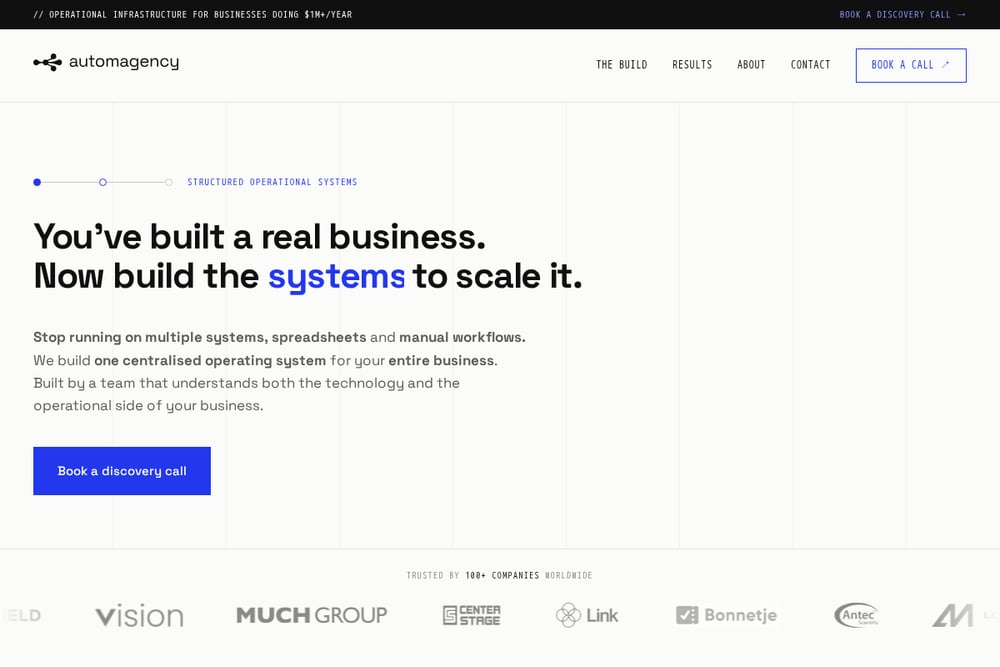 A screenshot of the Automagency website.
Automagency positions itself as operational infrastructure for businesses doing $1M or more per year, and its thinking on intelligent automation is the sharpest on this list. The core idea is that AI belongs inside your real workflows, not beside them. Rules move the work, AI reads and sorts messy input, and a person approves anything that sends, pays, or deletes. That three-layer model keeps automation useful without handing your client communications to a machine. The firm maps one process at a time, decides which steps follow fixed rules and which need an AI step, then builds it, connects it to your data, and trains your team to run it. It is a disciplined approach for companies that have outgrown ad hoc fixes.
#5 ValueStreamAI
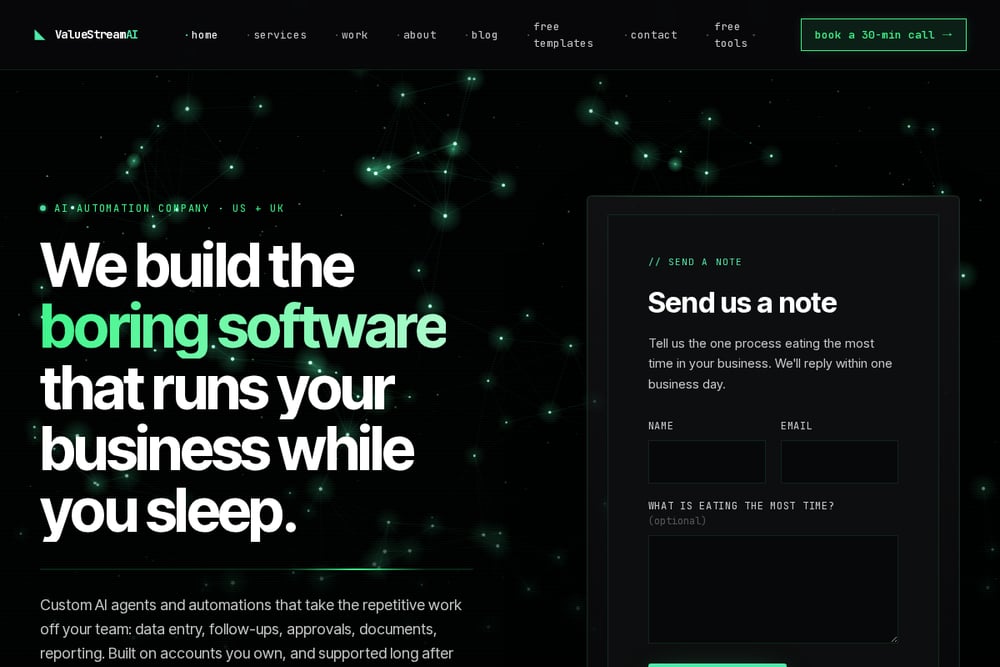 A screenshot of the ValueStreamAI website.
ValueStreamAI focuses squarely on the operational layer where small businesses quietly lose the most time: jobs booked, rescheduled, and chased, updates copied between systems, and the same report rebuilt every Monday. Its AI operations consulting is about finding where those hours go, connecting the tools you already use, and automating the repetitive parts while people keep the decisions. The site backs that up with free tools that make the case before you commit, including an ROI calculator, a savings calculator, an AI readiness score, a hire-versus-automate comparison, and an instant automation quote. It also publishes clear guidance on what a good engagement includes and how it differs from strategy consulting. That self-service front end makes it easy to test the waters before booking a call.
How to pick the right one for you
Start with the shape of your problem, not the size of the firm. If your processes live in someone's head and nobody can cover a holiday, you need systems design first, which points toward Chris Wray. If you want automation and a custom internal tool or website built around how your team already works, Cedarfield Operations covers both sides. If the pain is one specific recurring chore in finance or documents, ProsperSpark's service list reads like a menu of exactly those jobs. If you are past $1M and want AI placed carefully inside live workflows with human approval on anything risky, Automagency's model is the most thought-through. And if you simply want to know what automation would save you before spending anything, start with ValueStreamAI's free calculators. Whichever you pick, ask two questions on the first call: what does the diagnostic cost, and who owns the systems when the engagement ends.
A simple way to run the first automation yourself
Before you hire anyone, do this once. Pick the single task your team complains about most, usually chasing follow-ups or rekeying data between two tools. Write down every step in order, including who does it and where the information comes from. Mark each step as rule-based, judgment-based, or approval. The rule-based steps are your automation candidates; the approval steps are where a person must stay in the loop. Time the task for one week so you know what it costs you. Then take that one-page map to your first call. You will get a sharper proposal, you will spot a consultant who is guessing, and you may find the first fix is something you can do yourself.
The bottom line
The gap between using AI and running on it is where most small businesses are stuck right now, and no single consultancy closes it for everyone. Chris Wray brings the deepest track record and tool fluency. Cedarfield Operations pairs automation with custom builds so the fix fits your workflow instead of fighting it. ProsperSpark is the most concrete on document and finance chores. Automagency has the clearest thinking on where AI belongs and where a human must approve. ValueStreamAI lets you price the upside before you commit. Pick the one whose starting point matches your actual bottleneck, and insist on owning what gets built.