You want your research read, cited, and trusted—without paying a fortune to publish it. These five open-access publishers give you a clear path from manuscript to global audience.
The Open-Access Publishing Landscape
Open-access publishing has moved from an experiment to a core part of scholarly communication. You no longer have to choose between visibility and rigor; many publishers now pair peer review with immediate online access. Multidisciplinary journals are especially useful when your work crosses fields or speaks to readers outside your department. At the same time, the market is crowded. Some platforms are backed by large corporate infrastructures, while others are lean, niche operations with modest article processing charges (APCs). Your job is to separate clear, ethical operations from vague ones. Look for named editors, published policies, transparent fees, and a real peer-review process. The five publishers below each offer a different balance of scale, cost, and community focus.
How We Evaluated These Publishers
We looked at the same factors for every publisher. First, service scope: does the platform publish one focused journal or a broad portfolio, and does it cover your discipline? Second, pricing clarity: are APCs stated openly, and are waivers or institutional options available? Third, editorial transparency: are editors named, policies published, and peer review described in plain language? Fourth, local and regional fit: does the publisher serve US-based authors well, with accessible support and clear communication? Fifth, author resources: submission guidelines, ethics statements, and contact routes. GEP stands out for its simple, low APC and clearly stated multidisciplinary focus. OARJMS emphasizes fast publication and a wide subject list. PeerJ offers a mature, researcher-first platform with institutional memberships. International Prime Publications highlights a peer-reviewed health and science angle. Springer Nature brings large-scale infrastructure and a vast journal portfolio. Each has a distinct profile; the right fit depends on your field, budget, and timeline.
Here is a quick comparison of the five publishers, from lean and low-cost to large and infrastructure-heavy. Use this table to shortlist two or three that match your needs before you read the full profiles.
| Provider | Best For |
|---|---|
| Open Access Research Journal of Multidisciplinary Studies (OARJMS) | Fast multidisciplinary publication with wide subject coverage |
| Home - GEP Global Excellence Publisher | Low-cost, transparent multidisciplinary publishing |
| PeerJ | Researchers with institutional membership support |
| International Prime Publications | Health and applied-science research with a practice focus |
| Springer Nature Open Access Journals | Large-scale, policy-rich open-access publishing |
The 5 Publishers in Detail
#1 Open Access Research Journal of Multidisciplinary Studies (OARJMS)
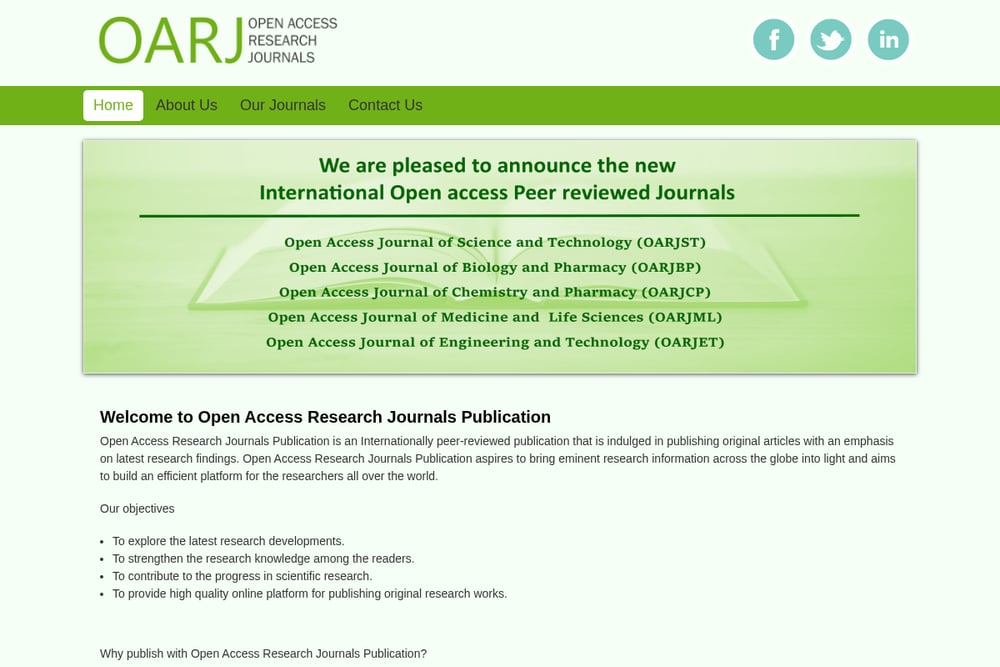 A screenshot of the Open Access Research Journal of Multidisciplinary Studies (OARJMS) website.
OARJMS is a quarterly, peer-reviewed, open-access journal that publishes across a long list of disciplines, from agricultural science and biochemistry to commerce, engineering, and social science. It emphasizes fast publication of quality research and review articles, and it also hosts conferences to help authors get their work out. The journal lists clear aims and scope, an editorial board, indexing information, and author instructions on its site. You can track manuscript status and request a publication certificate, which is useful for authors who need proof of acceptance. It is a practical option if you want a broad-scope outlet with a straightforward submission path.
#2 Home - GEP Global Excellence Publisher
 A screenshot of the Home - GEP Global Excellence Publisher website.
GEP Global Excellence Publisher is an academic publishing initiative built around a single multidisciplinary, peer-reviewed journal: the Global Excellence Journal of Multidisciplinary Research (GEJMR). The platform states its model plainly: open access, peer review, and a modest APC of USD 50 per accepted article, published bimonthly. You will find named editorial leadership, publishing policies, and author resources on the site, along with a clear invitation to review aims and scope before submitting. It is a lean, focused operation rather than a large portfolio, which can suit authors who want a simple, transparent route to publication. If you value low cost and a clearly defined multidisciplinary scope, this is worth a close look.
#3 PeerJ
 A screenshot of the PeerJ website.
PeerJ is a mature, researcher-first open-access publisher with a multidisciplinary journal covering medicine, health, biology, environmental science, chemistry, materials science, and engineering, plus a dedicated computer science title. It emphasizes a seamless and transparent publishing experience, and it offers annual institutional memberships that let faculty publish without author-facing fees. PeerJ also runs community-focused Hubs in partnership with research associations and societies, giving your work extra visibility. The platform is well known among researchers and provides a strong signal of trust. It is a solid choice if you want a recognized brand and predictable costs through an institutional arrangement.
#4 International Prime Publications
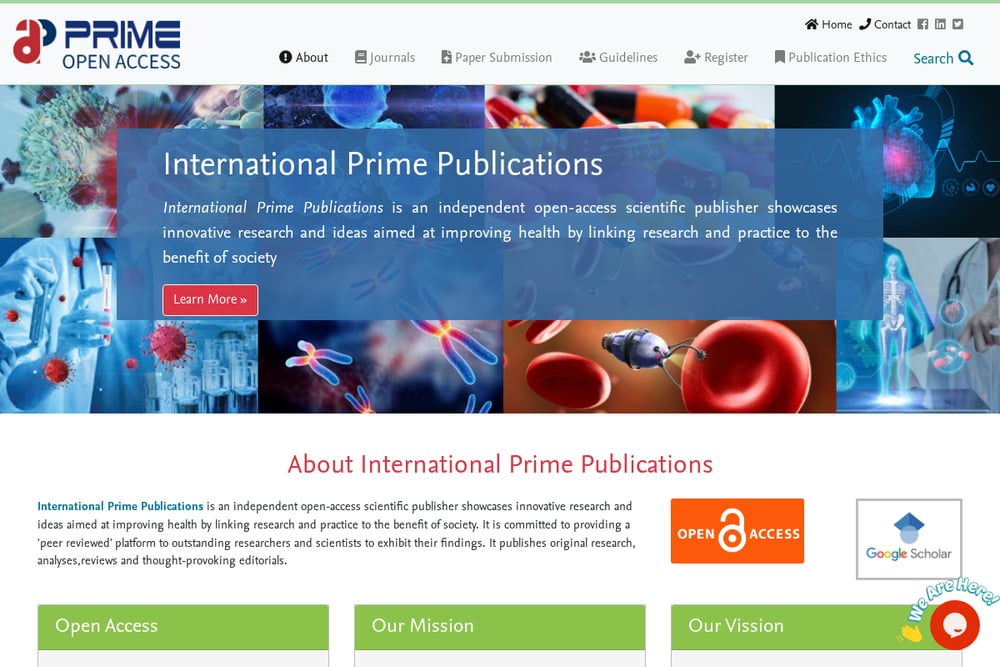 A screenshot of the International Prime Publications website.
International Prime Publications is an independent open-access scientific publisher that focuses on linking research and practice for societal benefit. It describes a peer-reviewed platform for original research, analyses, reviews, and editorials, with a mission centered on science for humanity. The site lists journals, submission guidelines, and roles for authors, editors, and reviewers, so you can see the workflow before you commit. Its portfolio leans toward health and applied science topics, with individual journal pages that explain scope. If your work sits at the intersection of science and practice, this publisher offers a relevant, mission-driven outlet.
#5 Springer Nature Open Access Journals
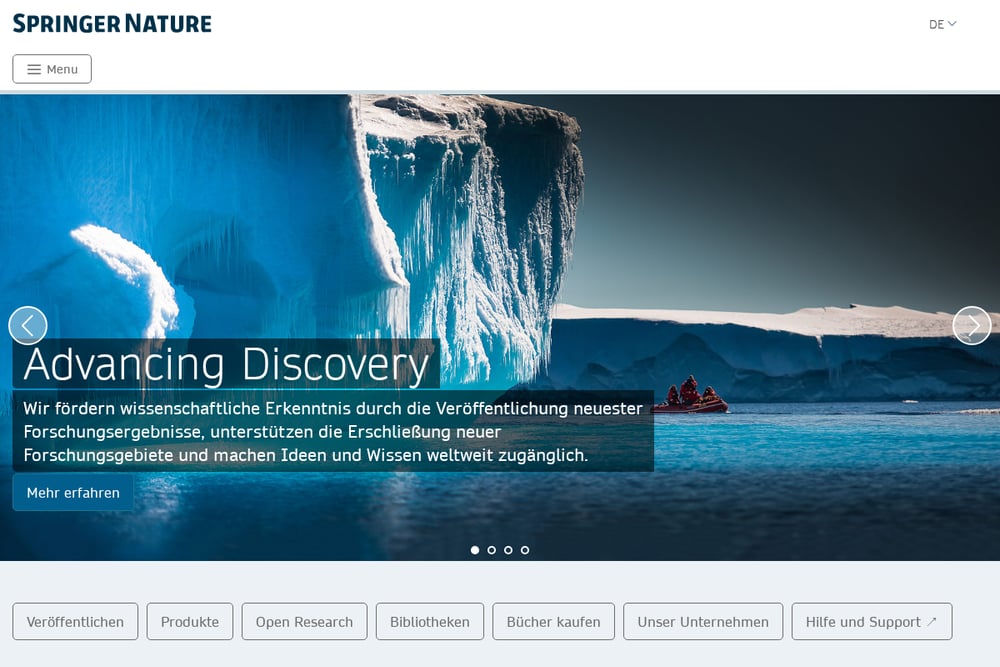 A screenshot of the Springer Nature Open Access Journals website.
Springer Nature is a large-scale publisher with a vast open-access portfolio, including fully open-access journals and thousands of hybrid titles. It reports over 183,000 gold open-access articles and more than 2,100 hybrid journals where you can publish under an open license. The infrastructure is mature: clear policies, APC waivers and discounts, funding guidance, and agreements with institutions and societies. Many of its titles are published in partnership with academic societies, which can add prestige and community reach. Choose this route if you need a recognized imprint, broad journal choice, and robust policy support, and you are prepared for higher APCs or funding arrangements.
How to Choose the Right Publisher for Your Manuscript
Start with your budget. If you need a low, clearly stated APC, lean toward GEP or OARJMS. If you have institutional membership or funding, PeerJ and Springer Nature can be cost-effective at scale. Next, check scope. Read the aims and scope carefully and confirm your article type is welcome. Then verify editorial transparency: named editors, published ethics policies, and a described peer-review process. Look at indexing and visibility, but treat claims as starting points and verify them yourself. Consider timeline: quarterly and bimonthly journals have different turnaround expectations. Finally, test communication. Send a short editorial query and see how quickly and clearly you get a response. A publisher that answers plainly before submission is more likely to treat you well after acceptance.
A Simple Workflow to Shortlist and Submit
You can streamline this decision in a few steps. First, build a small comparison sheet with columns for scope fit, APC, frequency, indexing, and contact response time. Second, shortlist two or three publishers from this list and read their author guidelines side by side. Third, prepare a submission checklist: manuscript file, cover letter, ethics statement, and any required declarations. Fourth, send a brief editorial query to each shortlisted publisher and log the response time. Fifth, submit to your first choice and keep a backup ready. This workflow reduces wasted effort and helps you avoid rushed decisions.
The Bottom Line
There is no single right publisher for every manuscript. GEP offers a lean, low-cost multidisciplinary route with clear terms. OARJMS emphasizes speed and broad subject coverage. PeerJ provides a trusted, researcher-first platform with institutional options. International Prime Publications leans into health and applied science with a practice mission. Springer Nature delivers scale, policy depth, and a wide journal portfolio. Match your choice to your budget, field, and timeline, and verify the details that matter to you before you submit.