Your body is not a problem to fix. It is a place to return to. These five online providers make that return feel safer and more accessible.
The State of Online Trauma-Supportive Yoga
Trauma-supportive yoga has moved from niche to mainstream. More people are seeking nervous system care that respects choice, consent, and pacing. Online delivery widened access, especially for people with disabilities, chronic illness, or limited local options. At the same time, the field is maturing. Evidence-based models, facilitator directories, and professional certifications now sit alongside community-led classes. You will find everything from free weekly peer sessions to full certification programs. The challenge is not finding an option. It is finding the one that matches your body, your budget, and your goals.
What I Evaluated
I looked at the same factors across every provider. Service scope mattered, from drop-in classes to full certification. Pricing clarity mattered, including sliding scale and free options. Accessibility mattered, especially explicit welcomes for disabled bodies and camera-optional formats. Trauma framework mattered, meaning how clearly each provider centers choice, consent, and self-pacing. TCTSY stood out for its research base and global facilitator network. Lovewell-Being stood out for its inclusive community language and private 1:1 care. CPTSD Foundation stood out for free weekly classes paired with peer support. Zabie Yamasaki stood out for survivor-centered courses and published resources. Center for Yoga and Trauma Recovery stood out for its structured professional training and podcast.
Here is the quick comparison of five online trauma-supportive yoga and wellbeing providers. Each one approaches safety, accessibility, and nervous system care a little differently. Scan the list, then dig into the details that match your needs.
| Provider | Best For |
|---|---|
| Trauma Sensitive Yoga (TCTSY) | Evidence-based trauma-sensitive yoga |
| Lovewell-Being Trauma Supportive Yoga & Wellbeing | Inclusive online community and 1:1 care |
| CPTSD Foundation Trauma-Informed Yoga | Free weekly peer-supported classes |
| Zabie Yamasaki | Survivor-centered courses and resources |
| Center for Yoga and Trauma Recovery | Professional certification in yoga for trauma |
A Closer Look at Each Provider
#1 Trauma Sensitive Yoga (TCTSY)
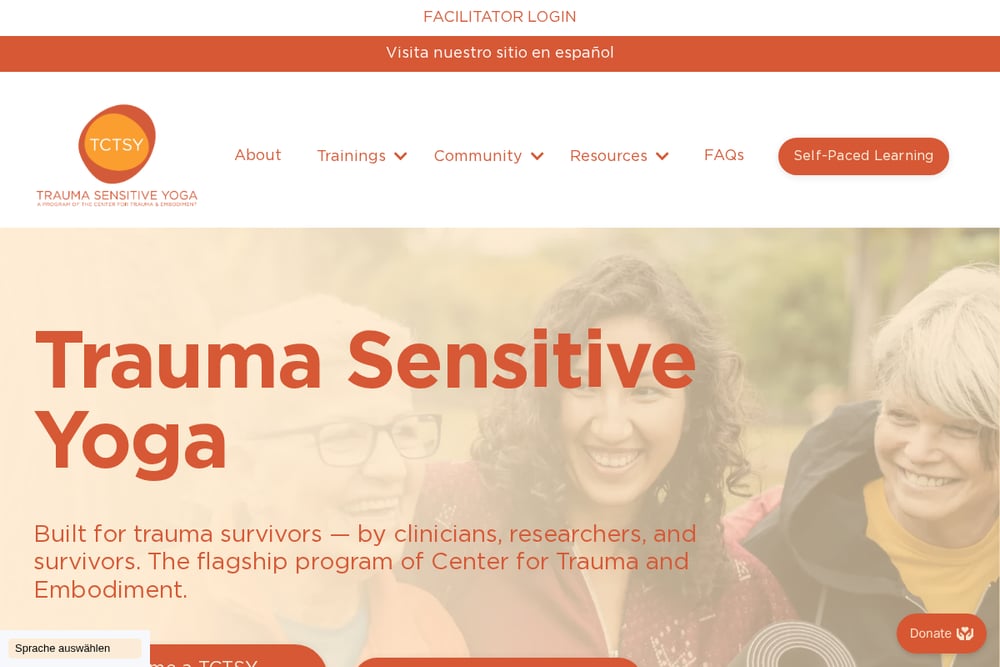 A screenshot of the Trauma Sensitive Yoga (TCTSY) website.
TCTSY is the flagship program of the Center for Trauma and Embodiment. It is widely recognized as the original yoga-based intervention for complex trauma and PTSD, backed by two decades of research. You can train as a facilitator, find a certified provider through the directory, or explore self-paced learning. The approach centers on restoring a felt sense of safety through embodied, collaborative practice. Trainings are offered online and in person in multiple languages, with continuing education credits available.
#2 Lovewell-Being Trauma Supportive Yoga & Wellbeing
 A screenshot of the Lovewell-Being Trauma Supportive Yoga & Wellbeing website.
Lovewell-Being is a supportive online space built around trauma-supportive yoga, meditation, and breathwork. Sessions are designed to meet you exactly where you are, with guidance from a trained practitioner and full permission to self-modify. You choose the pace, the breath count, and the size of your movement. The platform explicitly welcomes all bodies, including people living with disabilities, and emphasizes accessible, simplified asana. Private 1:1 sessions let you deepen the work at your own rhythm. It positions itself as a community for mindful movement and holistic wellbeing, not a performance-driven studio.
#3 CPTSD Foundation Trauma-Informed Yoga
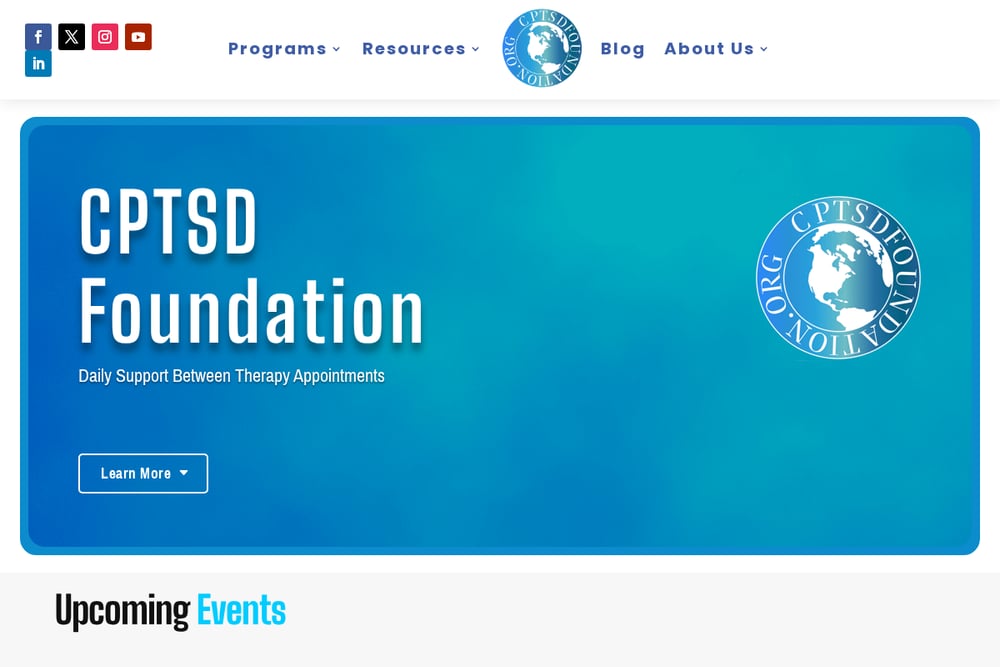 A screenshot of the CPTSD Foundation Trauma-Informed Yoga website.
CPTSD Foundation runs a weekly TCTSY class as part of its broader support programs. The focus is on restoring agency and choice over your body and experiences. Cameras are optional, and there is no expectation of fitness level or prior yoga experience. You can participate live or through recordings, which makes it easier to fit into a real life. The foundation pairs yoga with peer support chat groups, daily encouraging texts, and a healing book club. It is a strong entry point if you want community alongside movement.
#4 Zabie Yamasaki
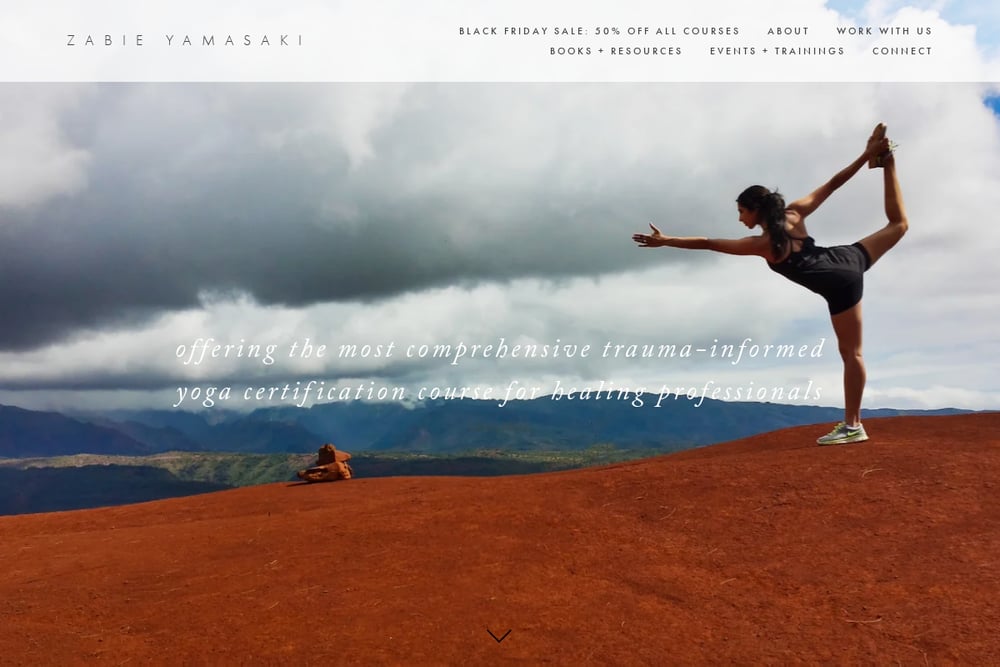 A screenshot of the Zabie Yamasaki website.
Zabie Yamasaki offers online trauma-informed yoga training alongside survivor-focused resources. Her catalog includes an 8-week Yoga as Healing series, a Reclaiming Rest course, and EMDR and yoga for kids. You will also find books, an affirmation deck, and a teacher training manual. Private yoga sessions and individual mentorship are available for deeper support. Sliding scale options and continuing education credits make the offerings more reachable for many practitioners and survivors.
#5 Center for Yoga and Trauma Recovery
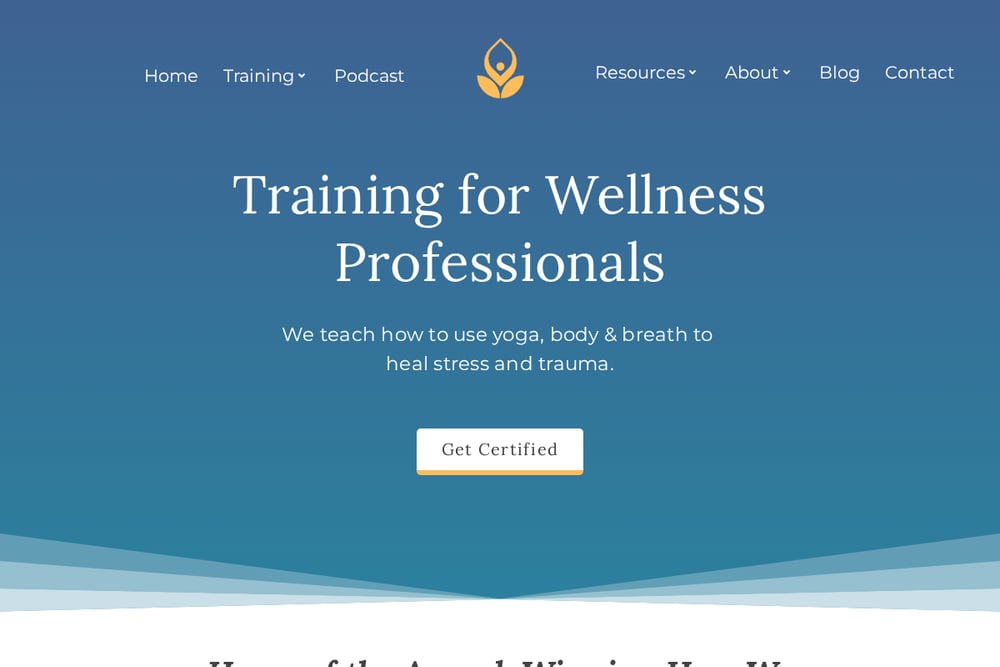 A screenshot of the Center for Yoga and Trauma Recovery website.
The Center for Yoga and Trauma Recovery hosts the Yoga for Trauma (Y4T) 8-week online training program. It is built for yoga teachers, therapists, counselors, and social workers who want to integrate yoga and trauma recovery skillfully. The curriculum connects trauma theory with yoga philosophy and guides you step by step in offering sensitive, responsive classes. An international community of graduates supports the growing field of trauma-informed yoga and yoga-informed therapy. The organization also produces the How We Can Heal podcast and a range of mental health resources.
How to Choose the Right Trauma-Supportive Program
Ask yourself what you actually need right now. If you are new to trauma-supportive movement, prioritize a provider that emphasizes choice, self-pacing, and accessible asana. If you are a clinician or yoga teacher, prioritize certification and continuing education. If cost is a barrier, look for sliding scale options or free community classes. If you live with a disability, confirm the provider explicitly welcomes all bodies and offers modifications. Check whether sessions are live, recorded, or both. Read how the provider talks about trauma, because language reveals care. Finally, try one low-commitment session before buying a package.
How to Build a Gentle Weekly Practice Without Burning Out
Start with one short session you can repeat. Pick a provider that offers live classes plus recordings, so you never have to force a schedule. Block two 20-minute windows in your week and treat them as non-negotiable. Keep your camera off if that feels safer. Add breathwork only after movement feels steady. Track how you feel after each session in a simple note. After four weeks, review the notes and adjust pace, length, or format. If you want more support, layer in a private 1:1 session to refine self-modification skills. The goal is consistency, not intensity.
Choosing the Space That Meets You Where You Are
There is no single right fit here. If you want a warm, inclusive online community with trauma-supportive yoga, meditation, breathwork, and private 1:1 sessions, Lovewell-Being is a strong place to start. If you want the most researched framework, look at TCTSY. If you want free peer community alongside weekly classes, CPTSD Foundation fits. If you want books, courses, and survivor-centered resources, Zabie Yamasaki delivers. If you are a professional seeking certification, Center for Yoga and Trauma Recovery is built for you. Choose based on where you are today, not where you think you should be. Start small, stay curious, and let your body lead.