Your kid can learn to code, hunt threats, and prep for a cybersecurity career before they can drive. The trick is picking a program that actually fits how they learn.
The K–12 Tech Education Landscape
Parents and schools are pushing computer science earlier than ever. Coding, AI literacy, and cybersecurity now show up in elementary classrooms and high school transcripts alike. That demand has spawned a crowded field of online platforms, after-school providers, and nonprofit curricula. Some are built for districts and teachers. Others are built for families enrolling a single curious kid. The formats range from self-paced lessons to live instructor-led classes and hands-on labs. Certification prep and AP, IB, and Cambridge exam support have become a major selling point for teens eyeing college and careers. The result is real choice, and real confusion. You need to know whether a program is a full curriculum, a supplement, or a career track before you sign up.
How We Evaluated These Programs
We looked at the same factors across every provider. First, course scope: does the catalog cover coding, AI, and cybersecurity, or just one lane? Second, age range and grade fit, since a program built for grades 9–12 serves a different family than one starting at age five. Third, delivery format, including live classes, self-paced lessons, and hands-on labs. Fourth, credential value, meaning whether certifications or exam prep carry weight with colleges and employers. Fifth, accessibility, from pricing transparency to whether the program works for a single homeschooler or requires a school partnership. Cyphermont Academy stood out for its breadth from K–12 through certification and AP/IB/Cambridge support. CodeHS stood out for its district-level platform and teacher tooling. NextWaveSTEM stood out for hands-on classroom and after-school kits. Kids Next Code stood out for community-based and career-training tracks. Hacker Highschool stood out for its free, methodology-driven teen curriculum.
Here is a quick look at how these five programs compare on focus, age range, and format. Use it to narrow your shortlist before you dig into the details.
| Provider | Best For |
|---|---|
| CodeHS | Schools and districts needing a full CS platform |
| Cyphermont Academy – Online tech classes for kids 5 to 18 | Families wanting one K–12 path from coding to certification |
| NextWaveSTEM | Schools and after-school programs wanting hands-on kits |
| Kids Next Code | Community-based workshops and teen career training |
| Hacker Highschool | Self-guided teens who want real security skills |
The 5 Programs in Detail
#1 CodeHS
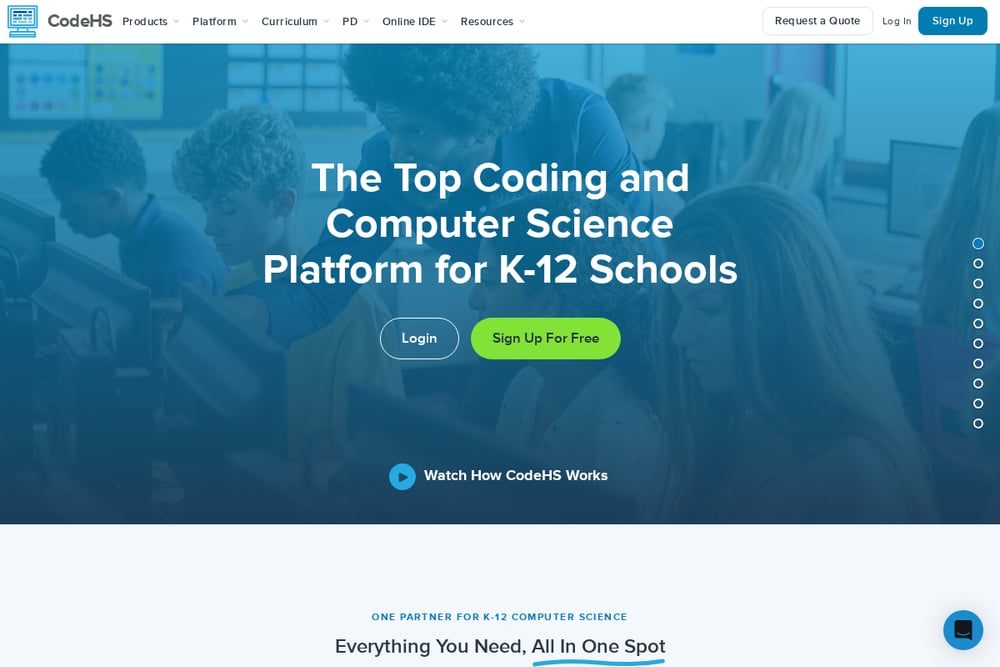 A screenshot of the CodeHS website.
CodeHS is built for schools and districts that want a full computer science platform. It bundles standards-aligned courses, a web-based coding IDE, grading tools, and progress data in one place. Teachers get assignment builders and classroom management, while students work through elementary, middle, and high school tracks. The platform also offers industry certifications, an interactive cyber range for security labs, and AI tools for lesson creation and guided coding. If you are a teacher or administrator, this is the kind of infrastructure that scales across a whole district. Families can explore the product lineup at codehs.com.
#2 Cyphermont Academy – Online tech classes for kids 5 to 18
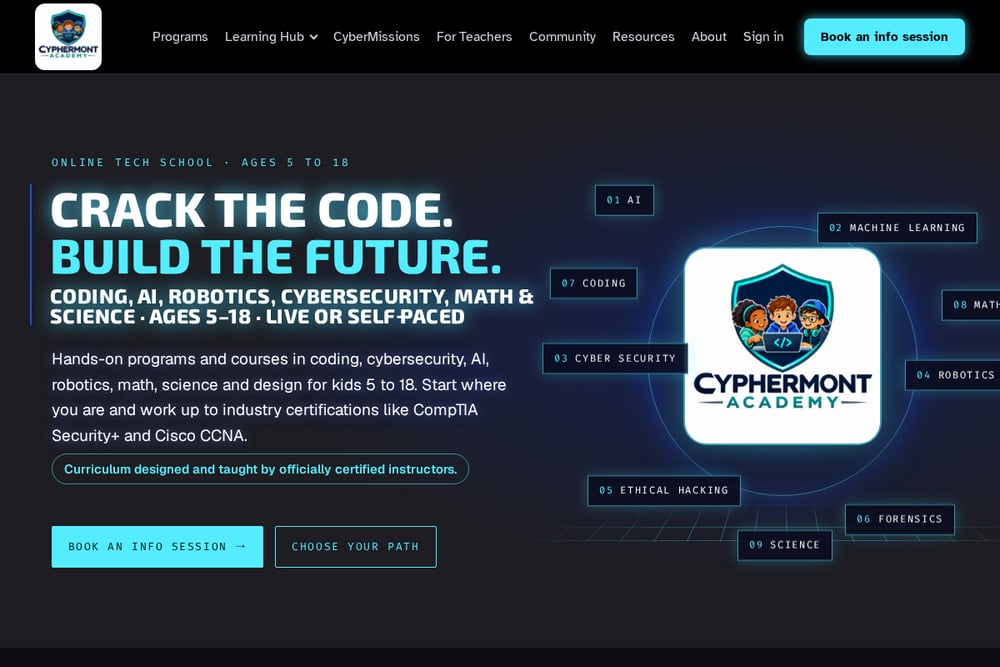 A screenshot of the Cyphermont Academy – Online tech classes for kids 5 to 18 website.
Cyphermont Academy runs live online tech classes for kids from age five through eighteen. The catalog spans 39 courses, from block coding and internet safety for the youngest learners to AI, networking, Linux, and Windows security for teens. Older students can pursue certification prep for Linux Essentials, CompTIA Network+, CompTIA Security+, Cisco CCNA, and CCNP ENCOR. There is also dedicated support for AP CS Principles, AP Cybersecurity, IB CS, and Cambridge IGCSE and A-Level CS. Competitions, hands-on labs, and career tracks round out the offering, making it a strong fit for families who want one provider across many years. You can browse the full program list at cyphermont.com.
#3 NextWaveSTEM
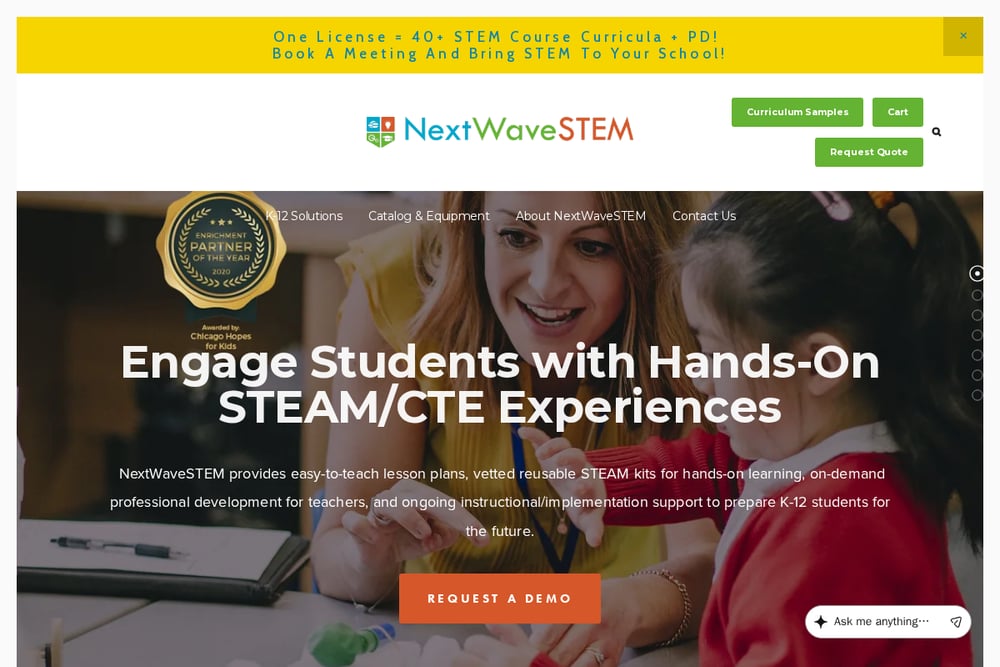 A screenshot of the NextWaveSTEM website.
NextWaveSTEM brings hands-on STEM and cybersecurity into schools, after-school programs, and summer sessions. Its cybersecurity course for grades 9–12 covers cryptography puzzles, data ethics, and the real-world impact of online security. The broader catalog includes AI literacy, robotics, drones, 3D printing, and renewable energy, with equipment kits to match. Schools can choose a teach-it-yourself model or bring in certified instructors. That flexibility makes it a practical option for districts building out CTE and STEAM pathways. Learn more at nextwavestem.com.
#4 Kids Next Code
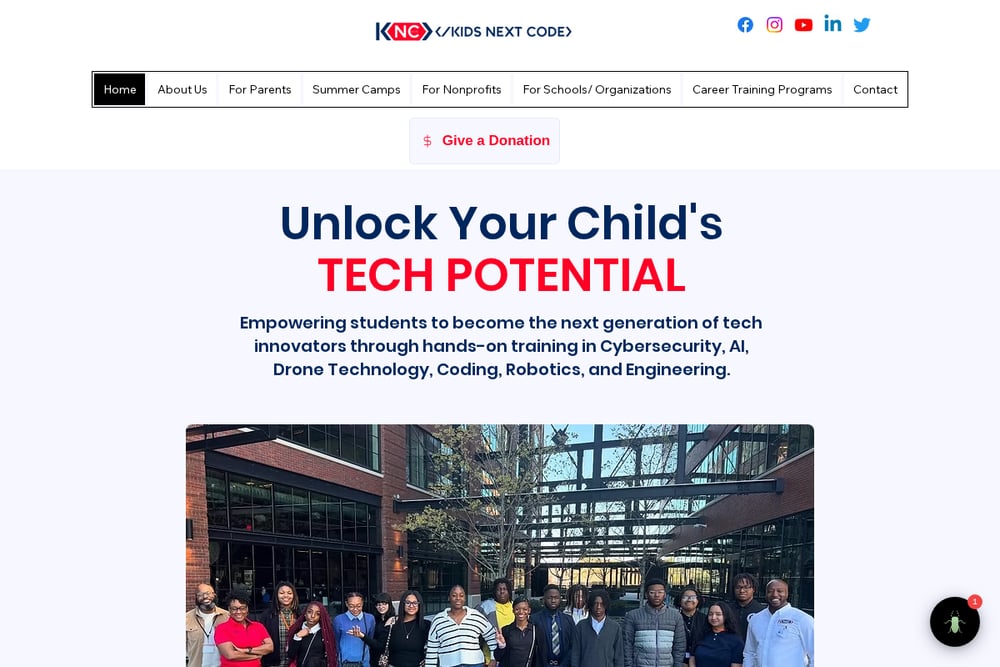 A screenshot of the Kids Next Code website.
Kids Next Code focuses on community programs and career training for kids and teens. Its workshops cover cybersecurity, AI, drones, coding, robotics, and engineering, often hosted at libraries and community centers. For high schoolers, there is a multi-level cybersecurity and tech career training track with mentorship, certifications, and internship exposure. The organization also runs professional development for parents and educators. If you want local, hands-on exposure with a career on-ramp, this is worth a look. Details are at kidsnextcode.com.
#5 Hacker Highschool
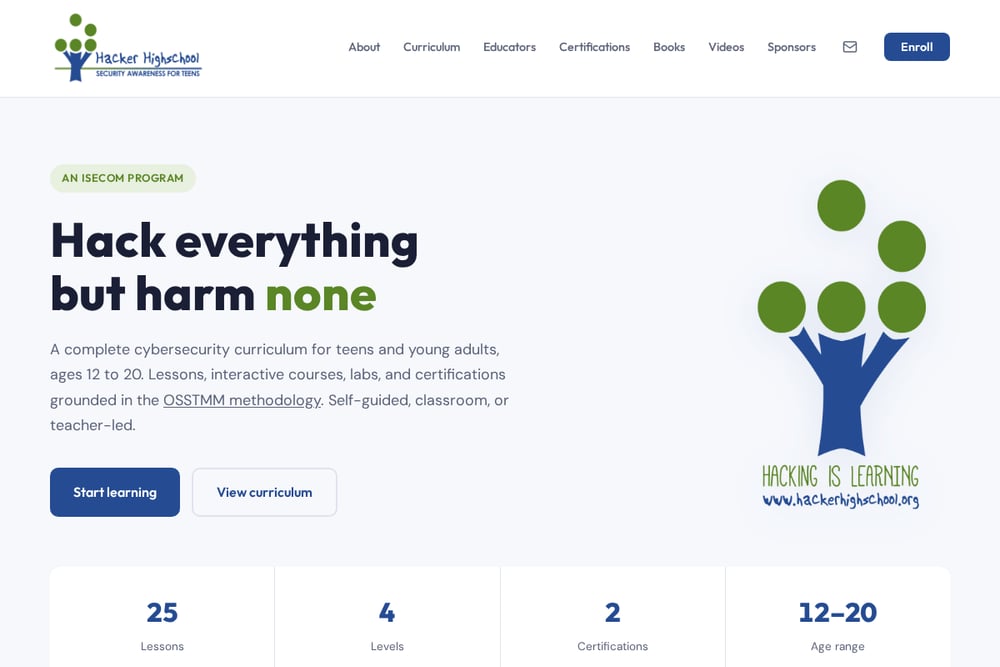 A screenshot of the Hacker Highschool website.
Hacker Highschool is an ISECOM program offering a complete cybersecurity curriculum for ages 12 to 20. It takes a real-security approach rather than scare tactics, teaching students to understand the internet instead of fear it. The curriculum spans 25 lessons across four levels, covering networking, privacy, forensics, social engineering, and scripting. Students work in a cloud-based lab environment and can earn Certified Junior Hacker or Certified Hacker Analyst credentials. It works self-guided, in a classroom, or with a teacher. Explore it at hackerhighschool.org.
How to Choose the Right Program
Start with your kid's age and current skill level. A five-year-old needs block coding and digital citizenship, not CompTIA prep. A motivated sixteen-year-old may want certification tracks and competition experience. Next, decide on format. Live classes give structure and accountability. Self-paced lessons give flexibility. Hands-on labs build the muscle memory that employers and colleges notice. Then check the end goal. If it is college credit or exam scores, look for AP, IB, and Cambridge support. If it is a career, look for certification prep and internship pathways. If it is exploration, a broad catalog beats a narrow one. Finally, consider who is delivering it. A district platform like CodeHS serves schools, while Cyphermont Academy and Hacker Highschool serve individual families. Match the provider to your situation, not the other way around.
Building a Learning Workflow That Sticks
Tech skills fade without practice. Set a weekly rhythm: one live class, two lab sessions, and one small project. Use the platform's progress data to spot gaps early. Pair certification goals with a calendar so exam prep does not get squeezed out by regular coursework. Encourage your kid to join a competition or challenge track, since deadlines create momentum. Keep a simple portfolio of projects and credentials so progress is visible at college application time. And rotate between coding, security, and AI topics to keep curiosity alive. Consistency beats intensity every time.
The Bottom Line
There is no single right answer here, only the right fit for your family. CodeHS gives schools a full platform. Cyphermont Academy gives families a long runway from age five to certification. NextWaveSTEM adds hands-on kits and classroom energy. Kids Next Code connects communities to career training. Hacker Highschool offers a rigorous, self-guided path for teens. Pick based on your kid's age, your schedule, and where you want them to land. Then commit to the weekly rhythm that makes it real.