You want a mentor who gets what you're going through. These five programs connect you with people who've been there.
The New Landscape of Online Research Mentorship
High school research has moved online. No lab coat required. Programs now pair students with PhDs, grad students, and competition alumni over video calls and email. The result? You can build a portfolio project from your bedroom. Demand is surging. Colleges want proof of curiosity. These platforms deliver structure, feedback, and sometimes publication. But they differ wildly in format, cost, and time commitment. Some offer one-off questions. Others run full semesters. Knowing what you need is half the battle.
How We Evaluated These Programs
We looked at five factors. First, service scope: does it cover quick questions or full research projects? Second, mentor quality: who actually answers, and how are they vetted? Third, pricing clarity: can you find costs without a sales call? Fourth, time commitment: is it a two-minute ask or a ten-session course? Fifth, local fit: does it work for US students juggling school, time zones, and budgets? Each program below stood out on different factors. Layer Beta wins on speed and low friction. Polygence shines on mentor depth. Indigo Research leads on publication outcomes. Rising Researchers offers flexible one-on-one sessions. Lumiere Education provides structured cohorts with PhD mentors. We note what stood out for each, not who beat whom.
Here's a quick comparison of the five programs. Each entry shows what it does best and who it suits. Use this table to shortlist before you dig into the details.
| Provider | Best For |
|---|---|
| Polygence | Students seeking a full research project with a PhD mentor |
| Layer Beta | Quick, low-friction answers from near-peer mentors |
| Indigo Research | Students aiming for publication and competition success |
| Rising Researchers | Flexible one-on-one mentoring for beginners |
| Lumiere Education | Structured cohort research with PhD mentors |
The Five Programs in Detail
#1 Polygence
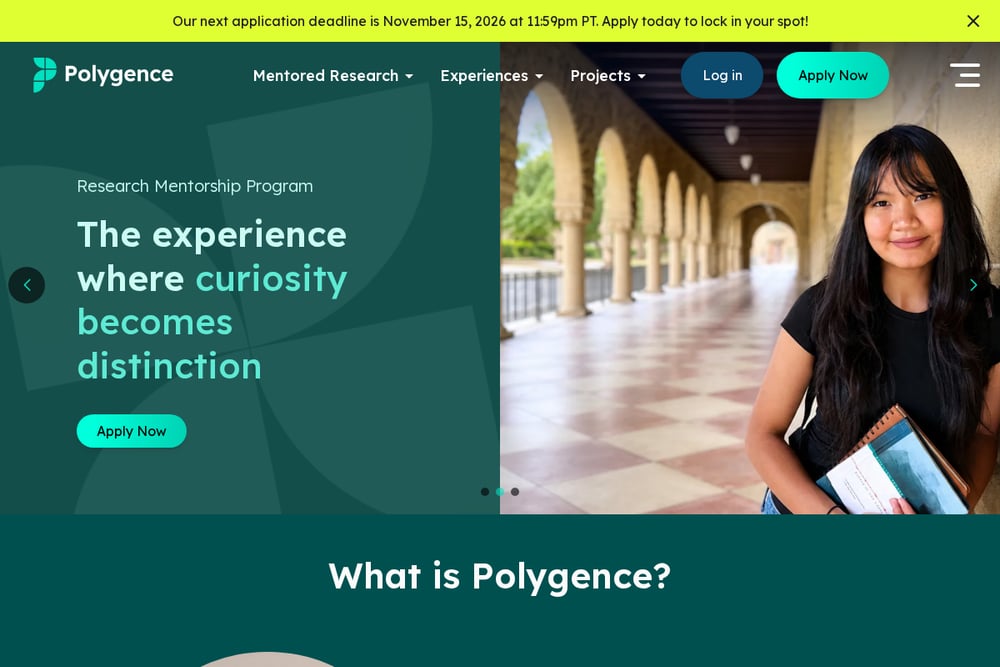 A screenshot of the Polygence website.
Polygence pairs you with a PhD-level mentor for a full research project. You meet one-on-one online and build something original, from a paper to a passion project. The program boasts nearly 2,500 mentors and over 10,000 alumni. Students report strong outcomes, including higher acceptance rates at top universities. If you want a deep, semester-long experience, this is a heavyweight. Just be ready for a serious time commitment.
#2 Layer Beta
 A screenshot of the Layer Beta website.
Layer Beta is the speed play. You ask one question, and within 24 hours you get a written answer from someone who was at your stage last year, like an ISEF finalist or a grad student. No sign-up, two minutes. You can log in with email or ChatGPT. It's built for students doing research or prepping for competitions. If it's late, it's free. Perfect when you're stuck on a poster, a cold email, or a hypothesis. Ages 16 and up.
#3 Indigo Research
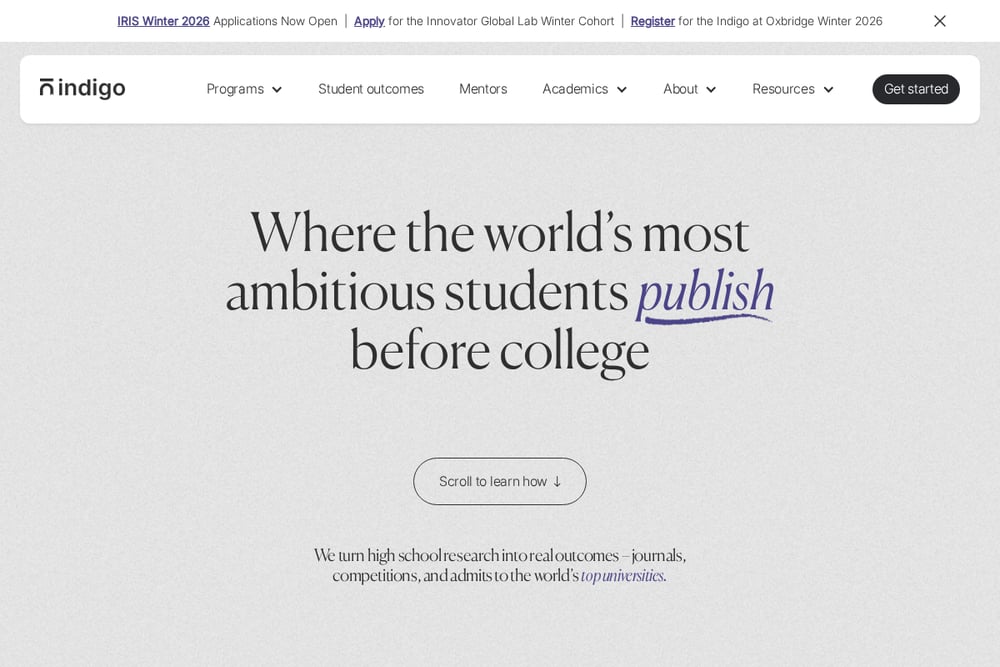 A screenshot of the Indigo Research website.
Indigo Research focuses on outcomes: journal publications, competitions, and top university admits. You work with mentors from leading universities, including professors and PhDs. The program offers virtual one-on-one and group options, plus in-person labs at Oxbridge. Over 30 academic journals have published student work. If you want your research to land in a journal before college, this is a strong path. Expect a structured, ambitious environment.
#4 Rising Researchers
 A screenshot of the Rising Researchers website.
Rising Researchers offers flexible one-on-one mentoring. You get 10 sessions of 75–90 minutes each, scheduled around your life, including evenings and weekends. The program is open to middle school through college, no prior experience needed. You work with a mentor to choose a topic and produce a research publication, poster, and certificate. It's a good fit if you want personalized attention without a rigid cohort. The focus is on building skills step by step.
#5 Lumiere Education
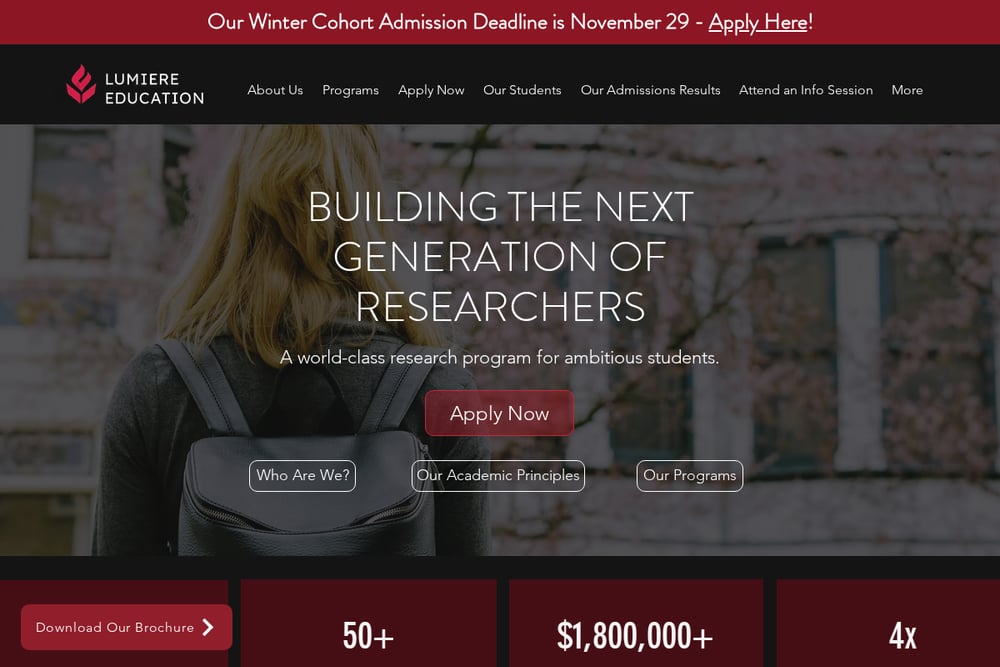 A screenshot of the Lumiere Education website.
Lumiere Education runs structured research cohorts with PhD mentors. You join a program like the Research Scholar Program and work one-on-one with an expert in your field. The program covers subjects from psychology to computer science. It's cohort-based, so you get deadlines and peer energy. Lumiere also offers need-based financial aid. If you thrive with structure and want a guided research experience, this is worth a look. The trade-off is less flexibility than on-demand options.
How to Pick the Right Program for You
Start with your goal. Need a quick answer? Go with Layer Beta. Want a full project? Polygence or Lumiere. Aiming for publication? Indigo Research. Need flexible scheduling? Rising Researchers. Next, check your budget. Some programs list costs upfront; others require a call. Then consider time. A 10-session program is a semester commitment. A one-off question takes two minutes. Finally, think about mentorship style. Near-peer mentors feel relatable. PhDs offer depth. Match the style to how you learn best.
Automating Your Research Workflow
You can streamline your research journey with a few smart habits. Use Layer Beta for quick questions that would otherwise stall you for days. Batch your questions and ask one per day. Set up a shared doc for mentor feedback. Use calendar blocks for deep work. Automate reminders for deadlines. And always keep a log of your questions and answers. That log becomes a progress tracker and a source for your final paper. Small automations free up mental space for the real work.
The Bottom Line
You have five solid options. Layer Beta is your fast lane for quick answers. Polygence and Lumiere offer depth and structure. Indigo Research pushes for publication. Rising Researchers gives you flexibility. Pick based on your goal, your schedule, and your budget. And remember: the best program is the one you actually use. Start with one question. See where it leads.