Learning an instrument online only works when the format fits your life. These five providers each solve that problem in a different way.
The State of Online Music Education
Online music lessons have moved from a pandemic stopgap to a permanent fixture of music education. Families now expect live, one-on-one instruction delivered over Zoom or a proprietary platform, often with the same teacher every week. The market has split into three rough camps: boutique schools built around a teaching philosophy, teacher marketplaces that match you with a specialist, and hybrid studios that blend in-person and online options. Pricing models vary just as widely, from flat monthly memberships to per-lesson rates with promotional discounts. What separates a good experience from a frustrating one usually comes down to teacher consistency, clear communication between lessons, and whether the school actually understands your goals.
How We Evaluated These Providers
We looked at the same factors across every provider. Service scope mattered: does the school cover piano, voice, songwriting, and production, or just one instrument? Teacher consistency came next, since a rotating cast of instructors undermines progress. We weighed pricing clarity, including whether trial lessons are free or discounted and whether memberships are transparent. Language and regional fit counted too, especially for bilingual households in the US and Canada. Finally, we considered communication between lessons, such as written notes or progress tracking. Each provider below stands out on a different combination of these factors.
Here is a quick look at how these five providers differ before you dig into the details.
| Provider | Best For |
|---|---|
| 1on1 Piano | Families who want a piano-focused teacher match |
| Online Music Lessons | Piano, Voice & More | Interlude | Bilingual families wanting one consistent teacher |
| Virtu.Academy | Students seeking conservatory-trained teachers |
| Musicologie | Families wanting online and in-person flexibility |
| Music To Your Home | NYC-area students wanting performer-teachers |
The Five Providers in Detail
#1 1on1 Piano
1on1 Piano builds its entire model around one child and one teacher, with no group dynamics and no waiting for turns. The school emphasizes the practical upside of online delivery: your child finishes the lesson already seated at the instrument, so practice can start while the teacher's demonstration is still fresh. Its 1on1 Match tool lets you search teachers by age specialty, personality style, genre, and the language spoken at home. The site also cites research on one-to-one tutoring to make its case for individualized attention. If you want a piano-first program with a strong teacher-matching process, this is a compelling option.
#2 Online Music Lessons | Piano, Voice & More | Interlude
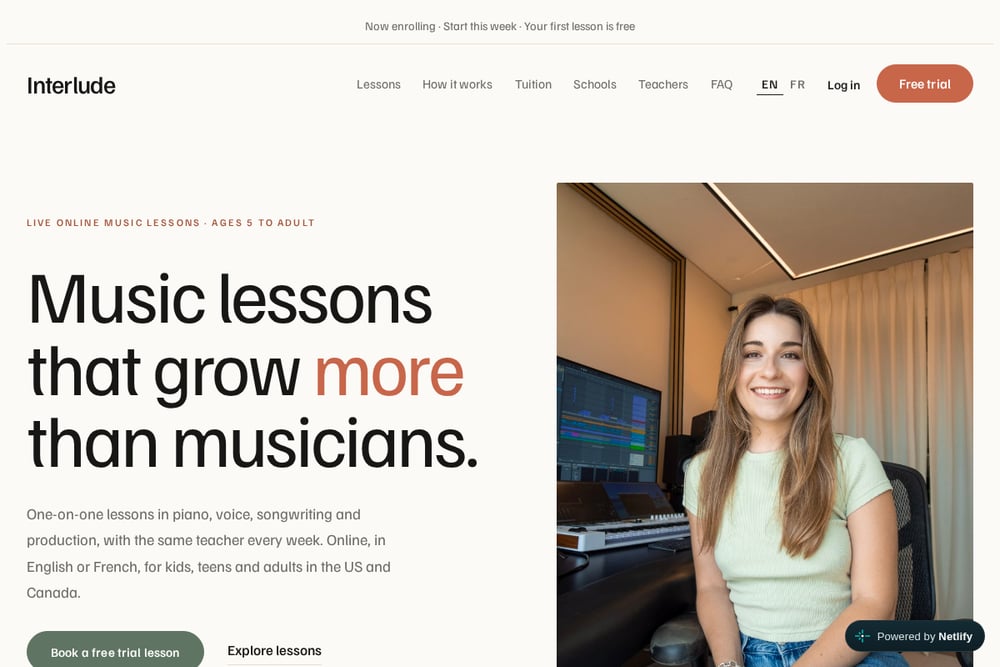 A screenshot of the Online Music Lessons | Piano, Voice & More | Interlude website.
Interlude Music School offers live one-on-one lessons in piano, voice, songwriting, and production over Zoom, with the same teacher every week. The school serves students aged 5 to adult across the US and Canada, in English or French, and your first lesson is free. Piano is the specialty, but the curriculum stretches from a first song to a finished track, with written notes after every lesson. The founder's background is unusually strong: a jazz performance degree from the Université de Montréal, a master's in songwriting and production from Berklee, and production work in Los Angeles alongside names like Stargate. That combination of pedagogy and professional experience is rare in the online lesson space.
#3 Virtu.Academy
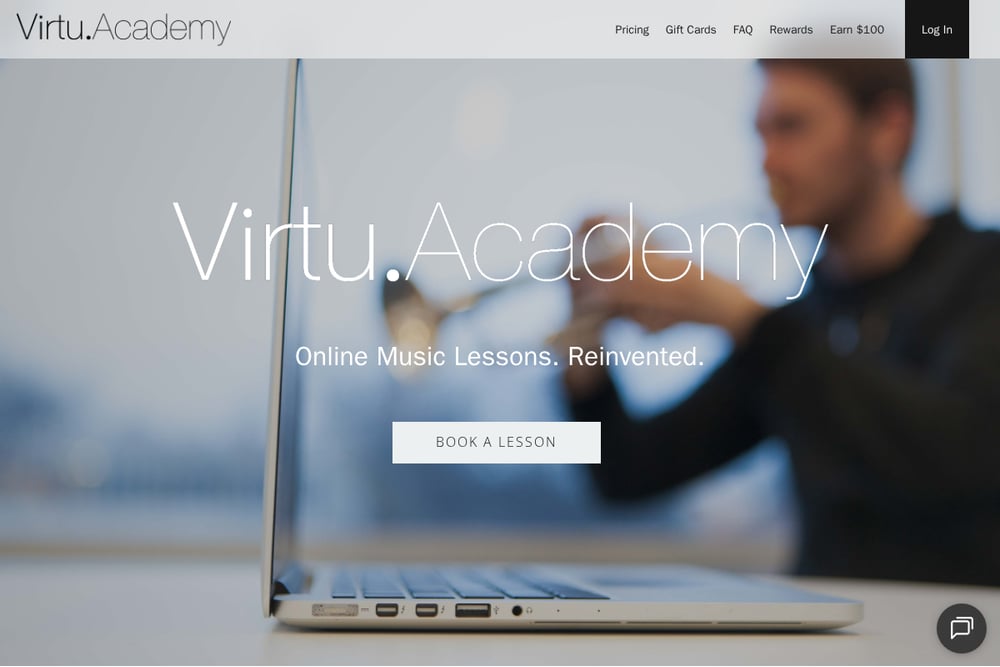 A screenshot of the Virtu.Academy website.
Virtu.Academy leans hard into teacher pedigree, featuring instructors from Juilliard and the Met Opera. The platform covers an enormous instrument range, from piano and voice to harp, bassoon, and banjo, which makes it useful for less common instruments. Pricing is straightforward at $49 per 30 minutes or $84 per hour, with no subscription commitment required. A matching questionnaire walks you through the student's age, experience level, and goals before a lesson specialist follows up. The school also partners with an instrument rental service, which helps if you do not own the instrument yet.
#4 Musicologie
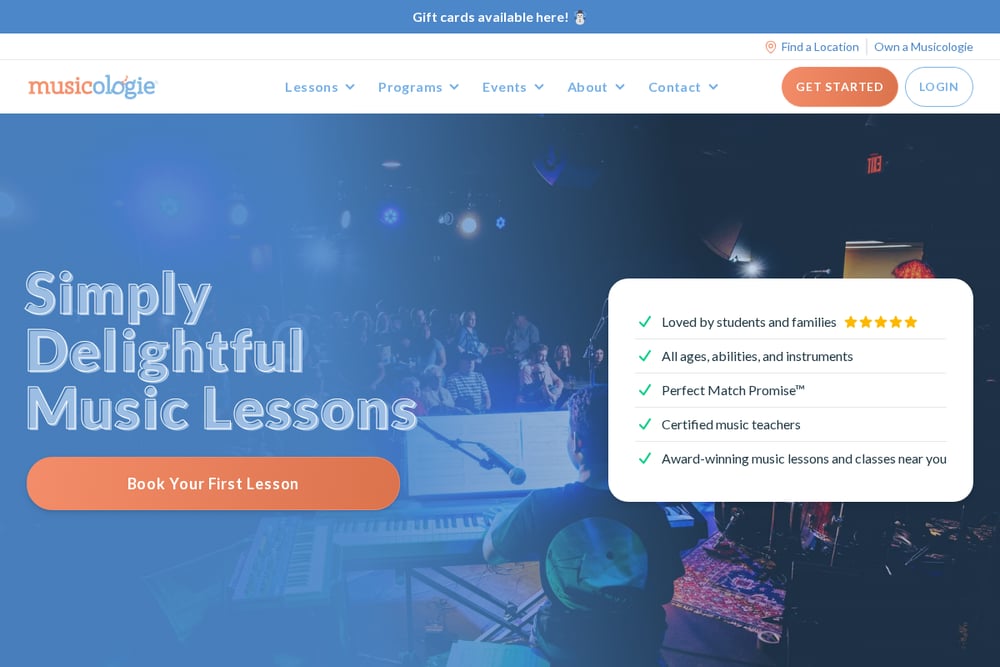 A screenshot of the Musicologie website.
Musicologie blends in-person studios with live online lessons, so you can shift formats as your schedule changes. Lessons are weekly one-on-one sessions with a teacher matched to your experience and goals, backed by a certification program for instructors. The membership model bills a flat fee on the first of each month, and the school recommends 30-minute weekly lessons for young beginners and longer sessions for advanced players and adults. Beyond private lessons, Musicologie runs toddler classes, group labs, rock band programs, and summer camps. That breadth makes it a strong fit if you want one organization to grow with your family.
#5 Music To Your Home
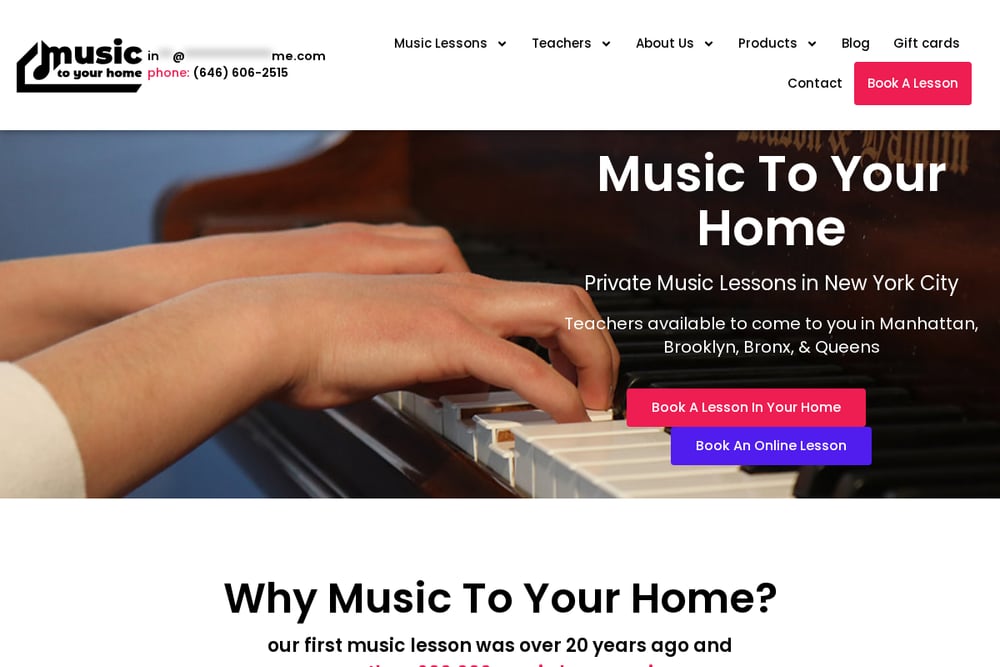 A screenshot of the Music To Your Home website.
Music To Your Home is a New York-based operation offering private online lessons through Zoom, Google Meet, or FaceTime. The roster covers piano, voice, guitar, violin, drums, and more, and the teacher bench includes performers who have played with the New York Philharmonic, the New York City Ballet, and Broadway productions. Setup is simple: a laptop or tablet, a webcam, a stable connection, and your instrument. The school also provides in-home lessons in the NYC area, which gives local families a fallback if online learning does not click. For students who value performance credentials in a teacher, this is worth a look.
How to Choose the Right Online Music School
Start with your instrument. If piano is the priority, a piano-first school gives you deeper specialization. If you want voice, songwriting, and production under one roof, look for a broader curriculum. Next, decide how much teacher consistency matters to you. Weekly lessons with the same instructor build trust and momentum, especially for kids. Check the pricing structure before you commit: per-lesson rates, monthly memberships, and free trials all shift the real cost. Ask whether you get written notes or progress updates between lessons. Finally, confirm language and scheduling fit, since a bilingual teacher or a time zone that works for your family can make or break the routine.
Where Automation Fits Into Your Lesson Search
You can streamline the comparison without losing the human element. Build a simple spreadsheet with columns for instrument coverage, teacher consistency, trial offer, price per lesson, and language options, then fill it in as you browse each site. Use each provider's matching questionnaire, like the ones at 1on1 Piano and Virtu.Academy, to pre-filter teachers before you ever book. Set calendar reminders for trial lessons so you actually attend them. After each trial, jot a two-line note on whether your child connected with the teacher. That small habit turns a scattered search into a clear decision within a week or two.
The Bottom Line
There is no single winner here, because the right school depends on what you need. If piano and a careful teacher match top your list, 1on1 Piano makes a strong case. If you want one consistent teacher, bilingual instruction, and a curriculum that runs from first song to finished track, Interlude Music School is built exactly for that. Virtu.Academy suits students chasing conservatory credentials across unusual instruments. Musicologie gives you room to move between online and in-person. Music To Your Home brings New York performance pedigree to a flexible online format. Book a free or discounted trial with two of them, and let the first lesson tell you the rest.