You already understand English. You just freeze when it's time to speak. These five online conversation programs are built to fix exactly that.
The State of Online English Conversation Training
Adult English learners in the US and abroad have more options than ever, and most of them now live online. The market splits into three rough camps: large international schools with native-speaker teachers, faith-based or community-driven programs that pair language practice with shared values, and general course providers that bundle conversation into a broader curriculum. What separates them is rarely the grammar. It's how much time you actually spend talking. Many learners arrive already reading and writing comfortably, then discover that real conversations move too fast for mental translation. The programs below each attack that gap differently, from structured speaking-first lessons to small conversation groups rooted in fellowship. Your job is to pick the format that matches how you learn and what you care about talking about.
How We Evaluated These Programs
We looked at the same factors across every provider. First, service scope: does the program focus on speaking and listening, or spread thin across grammar, writing, and test prep? Second, teacher credentials and experience, including certification and how long instructors have taught online. Third, format and community, meaning whether you practice one-on-one, in small groups, or in a values-based setting. Fourth, pricing clarity, since some sites publish rates and others ask you to inquire. Fifth, fit for your goals, whether that's professional fluency, spiritual growth, or general confidence. Light My Words stands out for its niche focus on spiritual conversation and a single certified teacher with five-plus years online. Live English emphasizes structured speaking practice with native teachers and a free trial. EnglishConnect leans on faith, fellowship, and community conversation groups. EF English Live brings a large institutional footprint and broad course catalog. MLA Language Live offers modular general English with live teachers and editable course materials.
Here's a quick look at how the five programs compare on focus, format, and who they serve. Use this as a starting map, then dig into the details below.
| Provider | Best For |
|---|---|
| Live English | Professionals who need to speak faster and more naturally |
| Light My Words | Learn English Online with Stacey | Intermediate learners who want to practice English through spiritual conversation |
| EnglishConnect | Learners who want faith-based study paired with group conversation practice |
| EF English Live | Learners who want a large course catalog and institutional structure |
| MLA Language Live | Adults who want a flexible, modular general English course |
The Five Programs in Detail
#1 Live English
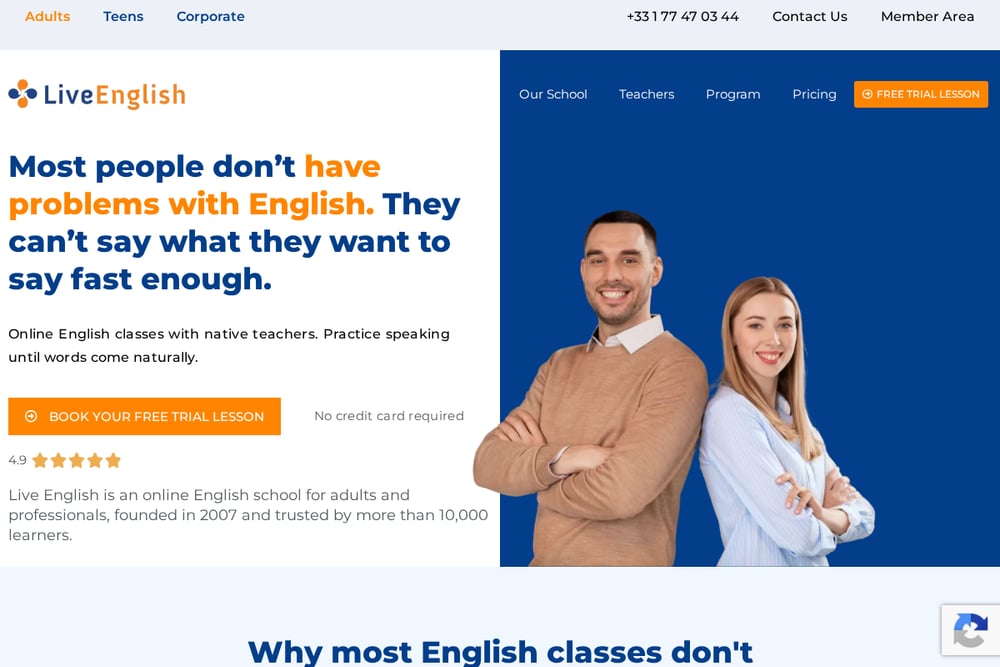 A screenshot of the Live English website.
Live English has been running online classes since 2007 and reports more than 10,000 learners served. The school's pitch is blunt: most people don't have an English problem, they have a speed problem. Lessons are built around conversation with native teachers trained to help learners who understand English but struggle to speak it fluently. You can book a free trial lesson with no credit card required, which lowers the risk of trying it out. The site publishes teacher profiles and program details, so you can see who you'd be talking to before you commit.
#2 Light My Words | Learn English Online with Stacey
 A screenshot of the Light My Words | Learn English Online with Stacey website.
Light My Words is a small, personal online English class for intermediate adult learners, run by Stacey, a certified native-speaker teacher. She has taught English online for more than five years and has worked with hundreds of adult students from dozens of countries. The twist is the topic: classes center on your spiritual path, so speaking and listening practice happens through lively conversations about what feels true to you. Stacey holds an International Certificate in Teaching English as an Additional Language (ICTEAL) from TESL Ontario. Signing up is refreshingly human. You send her an email and she sends you the details, and the whole vibe is come-as-you-are.
#3 EnglishConnect
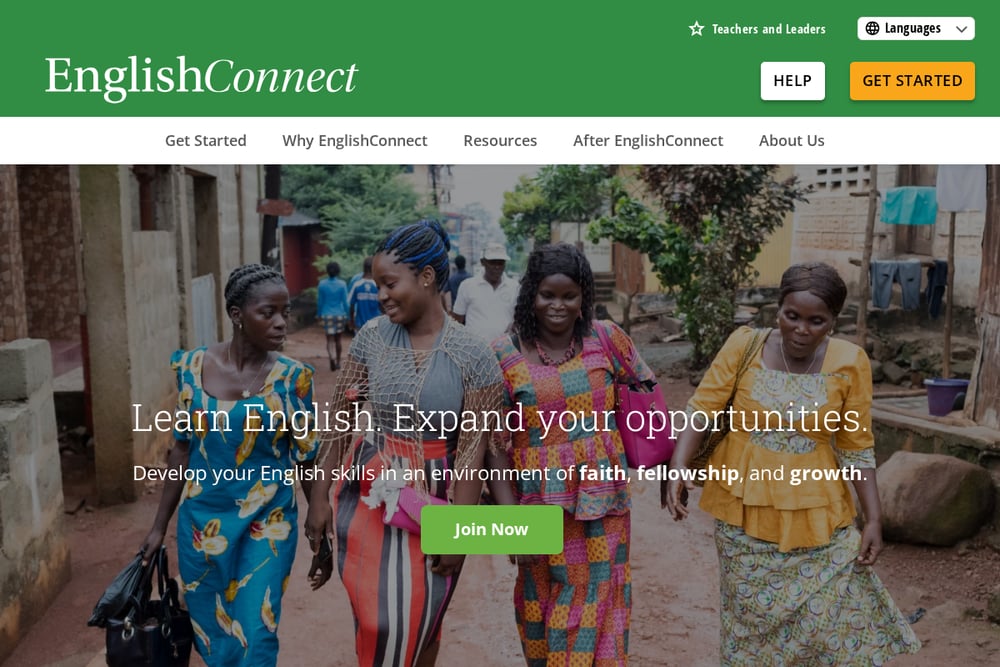 A screenshot of the EnglishConnect website.
EnglishConnect frames language learning around faith, fellowship, and growth. The program combines personal study with daily practice and conversation groups that meet in person or virtually. Its stated aim is to help you come closer to God while building English skills in a supportive community. That structure suits learners who want accountability and a values-aligned peer group rather than a one-on-one tutor. The program is available in a long list of languages and has a formal teacher and leader training track. If community matters as much as curriculum, this is a different kind of option.
#4 EF English Live
 A screenshot of the EF English Live website.
EF English Live is the online arm of a large international education company, and its footprint shows. The site offers conversation-focused courses alongside a deep library of grammar, vocabulary, and study-tip content. You get access to teacher-led classes and a broad catalog that can support general fluency goals. The trade-off is that the experience is more institutional than personal, so you'll want to be clear about your speaking goals before enrolling. It's a solid fit if you like structure, resources, and a recognizable brand behind your lessons.
#5 MLA Language Live
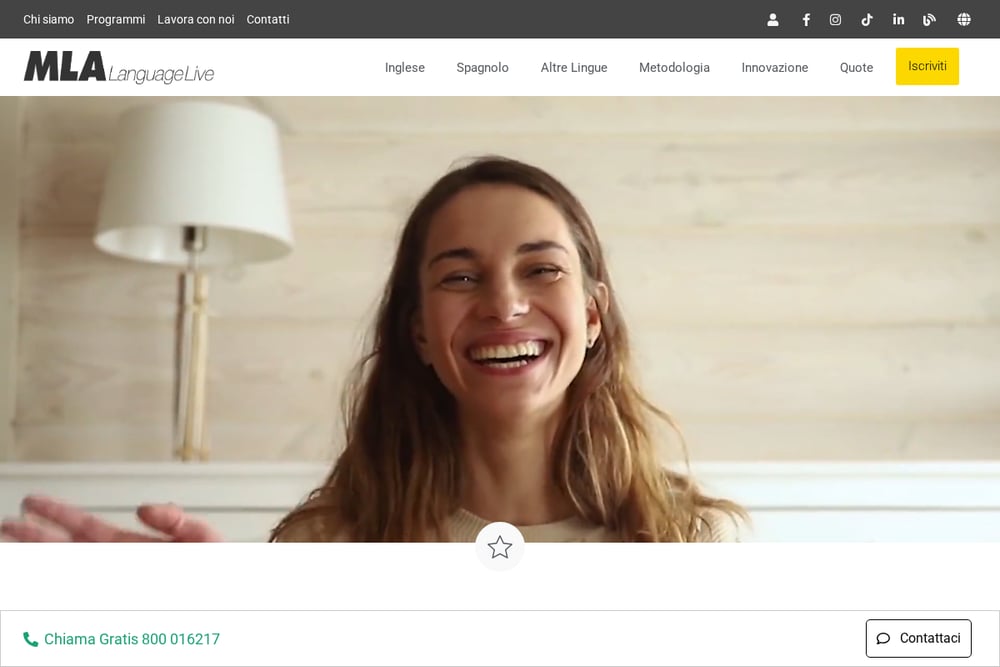 A screenshot of the MLA Language Live website.
MLA Language Live runs live general English courses for adults with real online teachers. The curriculum is modular, so you can enter at any point without feeling behind or like you've missed content. Lessons cover reading, writing, listening, and conversation, with grammar and vocabulary folded in. You also get editable eBooks matched to your starting level. It's a practical choice if you want a broad general English course rather than a narrow speaking-only format. The modular design makes it easy to slot into a busy schedule.
How to Choose the Right Program for You
Start with your real goal. If you freeze in meetings and want speed, look for a speaking-first program with native teachers and a free trial. If you want to talk about your spiritual path while you build fluency, a small values-based class with a certified teacher will feel more natural than a big institutional course. If community and accountability keep you motivated, a group-based program with daily practice may beat one-on-one lessons. Then check the practical stuff: who teaches, how long they've taught online, whether pricing is published, and how you sign up. A program that asks you to send a simple email may be more personal than one with a checkout cart. Finally, match the format to your schedule. Modular courses suit busy weeks, while fixed conversation groups build habit.
A Simple Weekly Practice Workflow
Pick one program and commit to a weekly rhythm. Block one session for live conversation, whether that's a class, a group, or a tutor call. Before each session, jot down three topics you actually want to discuss, ideally tied to your spiritual path or your work. During the session, focus on speaking and listening only, and resist the urge to take notes mid-conversation. Afterward, spend ten minutes capturing new phrases and one thing you'd say differently next time. Then schedule your next session before the week ends. Repeat for a month, and you'll notice the mental translation lag shrinking.
The Bottom Line
There's no single right program here, only the right fit for how you learn and what you want to talk about. Live English suits professionals chasing speaking speed. Light My Words suits intermediate learners who want a warm, personal class built around spiritual conversation with a certified teacher. EnglishConnect brings faith and fellowship through group practice. EF English Live offers scale and structure. MLA Language Live gives you a flexible general course. Choose the one that makes you want to show up and talk, because that's where fluency actually comes from.