
Your business runs on cash flow, and your bank should keep up with it. These five online banking platforms each solve a different piece of that puzzle.
The State of Online Business Banking
Small business banking has moved out of the branch and into the browser. Fintech platforms now bundle checking, payments, cards, and lending into a single dashboard, often with no monthly fees and far fewer hoops than a traditional institution. Owners want clarity: what came in, what went out, and what is safe to spend. The platforms below answer that question in different ways, from community-rooted banking to startup-focused treasury tools. The right pick depends on how you operate, not on who has the flashiest homepage.
How We Evaluated These Platforms
We looked at the same factors across every platform. Service scope mattered: does the product cover checking, transfers, cards, and lending, or just one slice? Pricing clarity mattered: are fees stated plainly, or buried? Local and community fit mattered, especially for owners who want a bank with a human footprint. We also weighed payment rails, international transfer support, and how well the platform serves adjacent needs like invoicing or accounting. Each platform below stood out on a different combination of these factors, which is why they all earned a place here.
Here is a quick look at how the five platforms compare on focus, fee structure, and the type of owner they suit. Use this table as a starting point, then dig into the details below.
| Provider | Best For |
|---|---|
| Novo | Freelancers and independent businesses that want a free, fast setup |
| Home - Hope Credit Union | Owners who want full-service online banking with a community footprint |
| Relay | Owners with payroll and multiple income streams who need cash flow clarity |
| Bluevine | Small businesses that want checking and credit in one relationship |
| Mercury | Startups and scaling companies that need treasury and spend controls |
The Five Platforms in Detail
#1 Novo
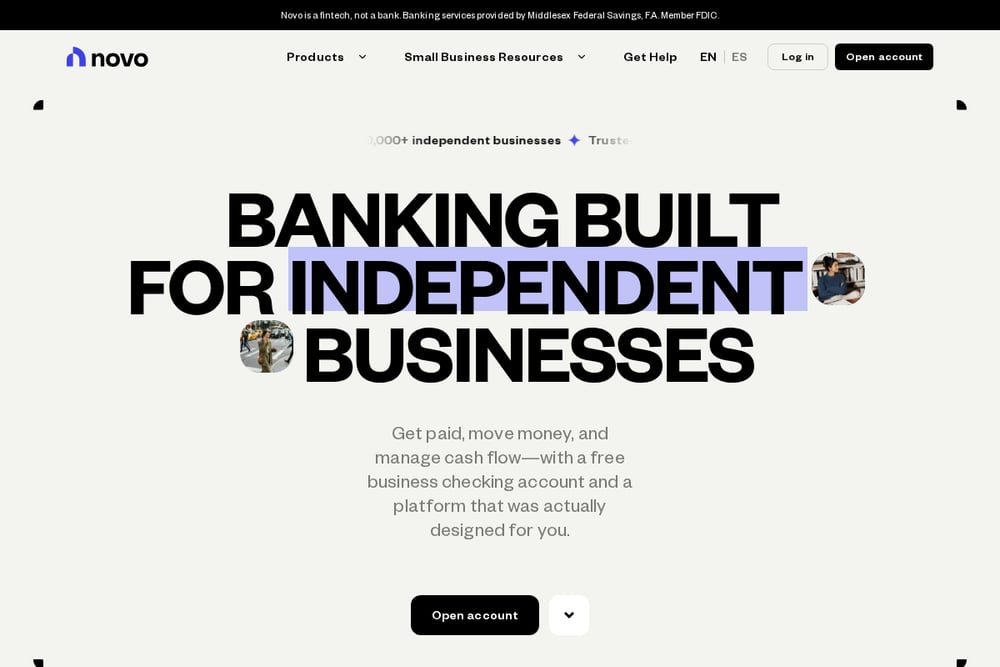 A screenshot of the Novo website.
Novo built its business checking account for independent operators, freelancers, and small teams that do not want a monthly fee eating into margins. You get physical and virtual debit cards, invoicing, bill pay, and expense management in one place, plus integrations that push data into the tools you already use. The platform is a fintech rather than a bank, with banking services provided by Middlesex Federal Savings, F.A., Member FDIC, so your deposits sit behind a regulated institution. It has been adopted by more than 250,000 independent businesses, which says something about how well the no-frills model lands. If you want to open an account in minutes and start getting paid the same day, this is a strong starting point.
#2 Home - Hope Credit Union
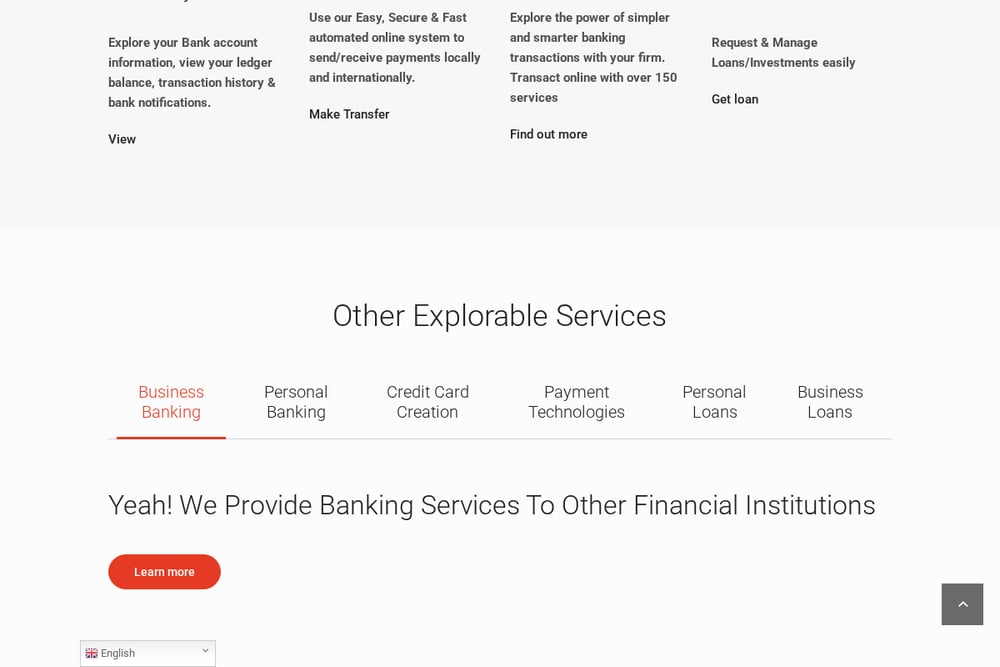 A screenshot of the Home - Hope Credit Union website.
Hope Credit Union pairs a full online banking portal with a community mission you can actually see. The platform covers account summaries, ledger balances, transaction history, and notifications, so you always know where your money stands. Money transfers run through an automated system for both local and international payments, and business banking opens up more than 150 services for firms that need to transact online. Loans, investments, credit cards, and payment technologies round out the offering, and the institution also provides banking services to other financial institutions. Beyond the product set, the site highlights community outreach like a decade of autism advocacy and an annual conference, which matters if you want your deposits to support something local.
#3 Relay
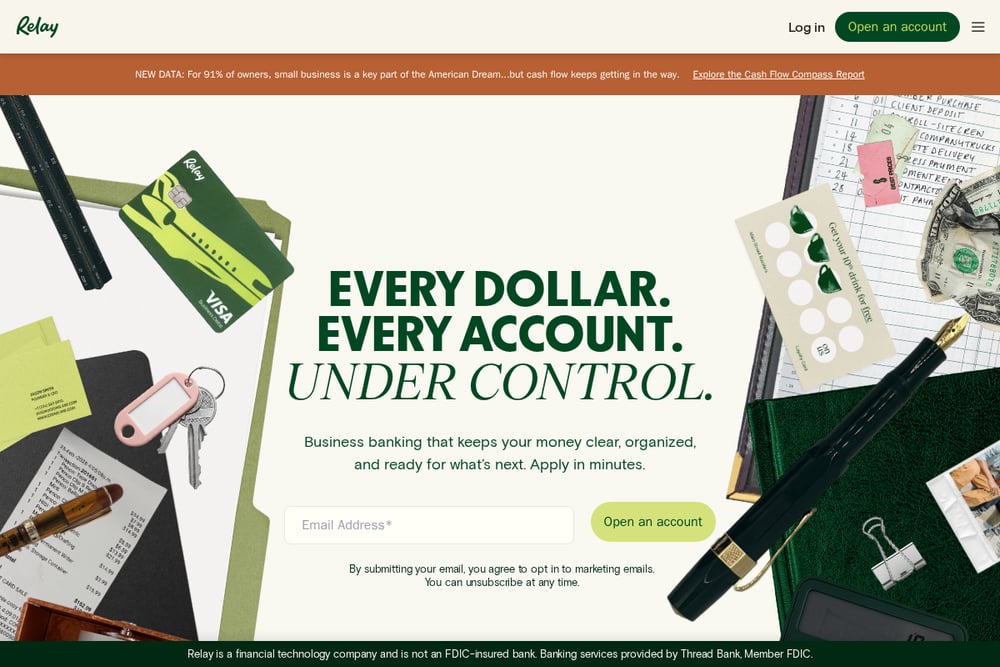 A screenshot of the Relay website.
Relay is built around visibility, and it shows. You can open up to 20 checking accounts and auto-transfer every deposit so you always know what is tied up and what is safe to spend. Savings accounts come with high-yield rates and automated rules that help you build a cushion without thinking about it. The platform reports 110,000+ businesses served, $1 billion+ in managed customer deposits, and $0 hidden fees, ever. Cards are part of the package too, with Visa debit and credit options and controls that keep spending in check. If cash flow clarity is your biggest headache, Relay was designed for exactly that.
#4 Bluevine
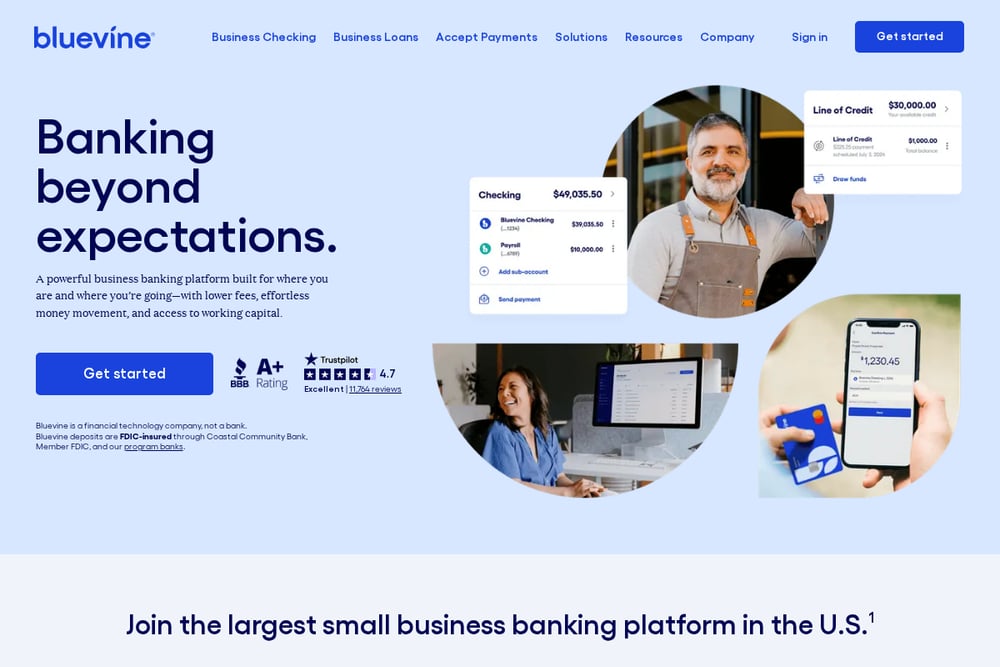 A screenshot of the Bluevine website.
Bluevine combines business checking with a lending arm, which makes it useful when you need capital and a place to park it. Checking comes with no monthly or overdraft fees, free standard ACH transfers, bill pay, and sub-accounts for budgeting. You can earn a high annual percentage yield on checking, described as 18x the national average or more with an upgraded plan. On the lending side, a line of credit goes up to $250K, term loans up to $500K through lending partners, and SBA 7(a) loans up to $350K via connected lenders. International payments can move in as fast as 24 hours, and invoicing plus Tap to Pay let you accept customer payments without extra hardware.
#5 Mercury
 A screenshot of the Mercury website.
Mercury targets startups, scaling companies, and the firms that serve them. Business banking sits alongside working capital loans, venture debt, and treasury, so you can manage finances at every stage of growth. Cards and spend management let you issue cards instantly and control team and agent spending, which is a real advantage once headcount grows. Payments and invoicing sync with your accounting tools, and AI-powered insights plus a command layer help you understand where the money is going. Industry solutions cover tech, ecommerce, agencies, VC funds, crypto, accounting firms, and more. If you are building something that will scale fast, Mercury is built for that trajectory.
How to Choose the Right Platform
Start with your cash flow pattern. If money arrives in bursts and leaves in payroll cycles, look for sub-accounts and automated rules that separate what is safe to spend from what is committed. If you operate internationally, check the transfer rails and how fast payments actually settle. If you expect to borrow within the next year, a platform with a lending arm saves you a second application process. And if community matters to you, weigh whether your deposits support local outreach or sit inside a purely digital fintech. Match the platform to how you actually run the business, not to how you wish you ran it.
Putting Automation to Work
The real payoff comes after you open the account. Route every deposit into a dedicated sub-account so taxes and payroll are funded before you see the balance. Set automated rules to sweep surplus into a high-yield savings account on a schedule you choose. Turn on invoicing and bill pay so outgoing payments clear without manual entry each week. Connect your accounting tools so transactions categorize themselves. Then review the dashboard once a week instead of once a day. That rhythm keeps you informed without turning bookkeeping into a second job.
The Bottom Line
There is no single winner here, because each platform solves a different problem. Novo keeps setup free and fast for independents. Hope Credit Union gives you full-service online banking with a community mission behind it. Relay brings order to messy cash flow. Bluevine pairs checking with lending when you need capital. Mercury scales with startups that need treasury and spend controls. Pick the one that matches your next twelve months, open the account, and let automation handle the rest.