You can be the most competent person in the room and still lose the promotion to someone who simply sounds more certain on camera. These five providers help you close that gap.
The On-Camera Communication Training Landscape
Workplace authority is increasingly performed through a lens. Virtual meetings, recorded updates, and asynchronous video have turned on-camera delivery into a core professional skill, not a media-only specialty. Buyers now range from managers rehearsing a tense conversation with a client to executives preparing for a board presentation. The market splits into three rough camps: live human coaching, cohort-based group programs, and self-serve rehearsal tools. Each solves a different problem. Coaching builds judgment over weeks. Group programs build reps in a structured container. Tools build reflexes in minutes. Your job is to match the format to the urgency of the conversation you are facing.
How We Evaluated These Providers
We looked at five factors across every provider. First, service scope: does the offering cover delivery mechanics, messaging, and high-stakes pushback, or only one slice? Second, format flexibility: live one-to-one, small group, or self-serve, and whether remote delivery is native or bolted on. Third, feedback quality: human expert critique versus automated analysis, and how actionable each is. Fourth, pricing clarity: whether you can see costs, trial options, or free diagnostics before committing. Fifth, fit for workplace scenarios: whether the practice maps to real conversations with bosses, clients, and leadership rather than generic stage presentation. Talk Rightly stood out for browser-based instant audits and a free diagnostic. BeSpoke Coaching stood out for television-background coaches and personalized filmed practice. Dux Communications stood out for Emmy-awarded journalistic feedback and media-pressure realism. Jennifer Hennings stood out for group coaching that targets virtual-meeting nerves. Communispond stood out for a structured, facilitator-led curriculum with recorded takes.
Here is the quick comparison before the deep dive. Each entry notes the format, the core strength, and the scenario it fits.
| Provider | Best For |
|---|---|
| BeSpoke Coaching | Leaders who want media-veteran coaching with filmed practice |
| Talk Rightly: On-Camera Rehearsal for High-Stakes Workplace Conversations | Fast, private reps before a specific high-stakes conversation |
| Dux Communications | Professionals facing media interviews and public scrutiny |
| Jennifer Hennings | Professionals who freeze in virtual meetings and want group accountability |
| Communispond | Teams that need a repeatable, facilitator-led virtual presentation curriculum |
The Five Providers in Detail
#1 BeSpoke Coaching
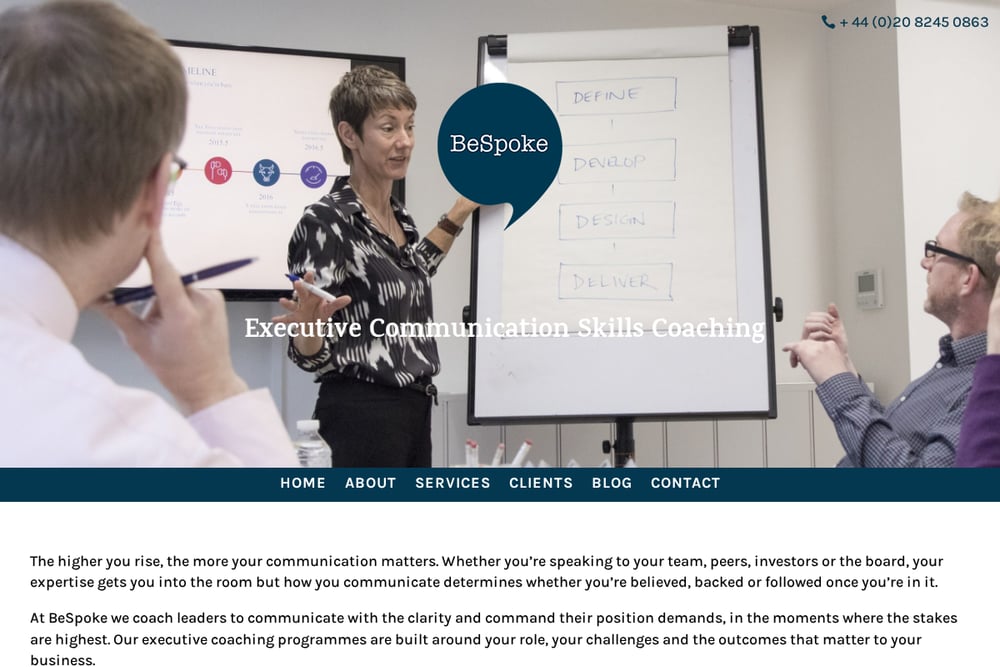 A screenshot of the BeSpoke Coaching website.
BeSpoke Coaching brings television professionals into the room, which changes the texture of the feedback you get. Their speaking-on-camera training is built for people who are comfortable presenting live but freeze once the red light comes on. Sessions are practical and personalized, with filmed practice and detailed critique you can apply immediately. The team works one-to-one or in small groups, online or in person, and clients include CEOs, coaches, and media personalities. If you want a human coach who has actually been on camera for a living, this is a strong fit. See their approach at Speaking On Camera Training.
#2 Talk Rightly: On-Camera Rehearsal for High-Stakes Workplace Conversations
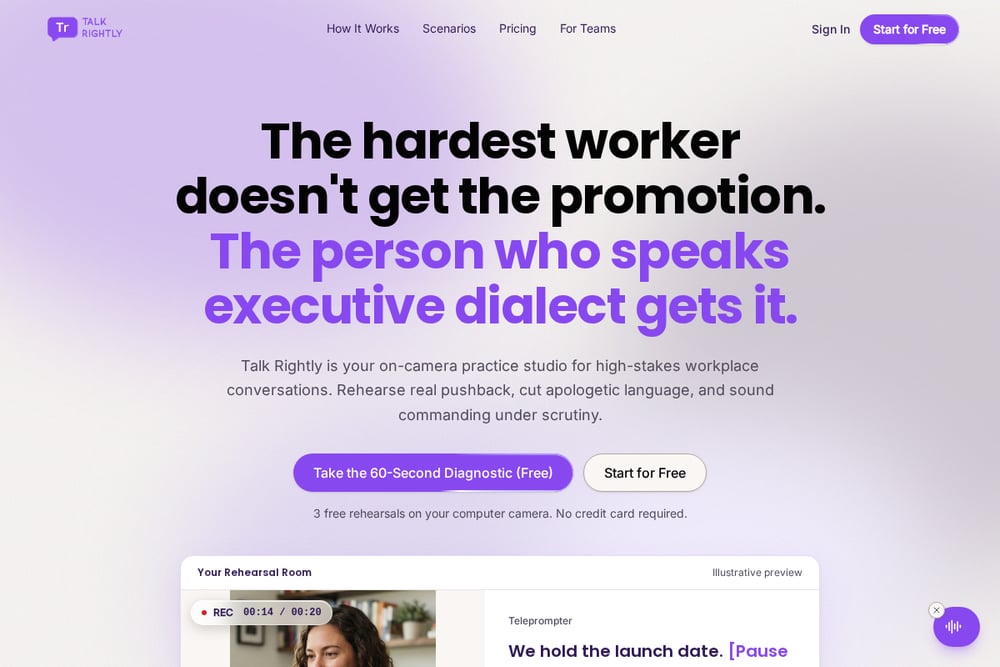 A screenshot of the Talk Rightly website.
Talk Rightly is a self-serve rehearsal studio built specifically for workplace pushback, not stage keynote polish. You face a simulated senior colleague, boss, or client, then deliver a 20-second take against an on-screen teleprompter marked for steady pauses and downward inflections. Browser-based analysis scores your pace, pitch, and steadiness in seconds and tells you exactly what to adjust on the next take. The framing is blunt and useful: competence without executive syntax is invisible, and apologetic openers read as asking for permission. You can start with a free 60-second diagnostic and three rehearsals, no credit card required. It is the fastest loop here if you have a real conversation coming up this week. Try the diagnostic at Talk Rightly.
#3 Dux Communications
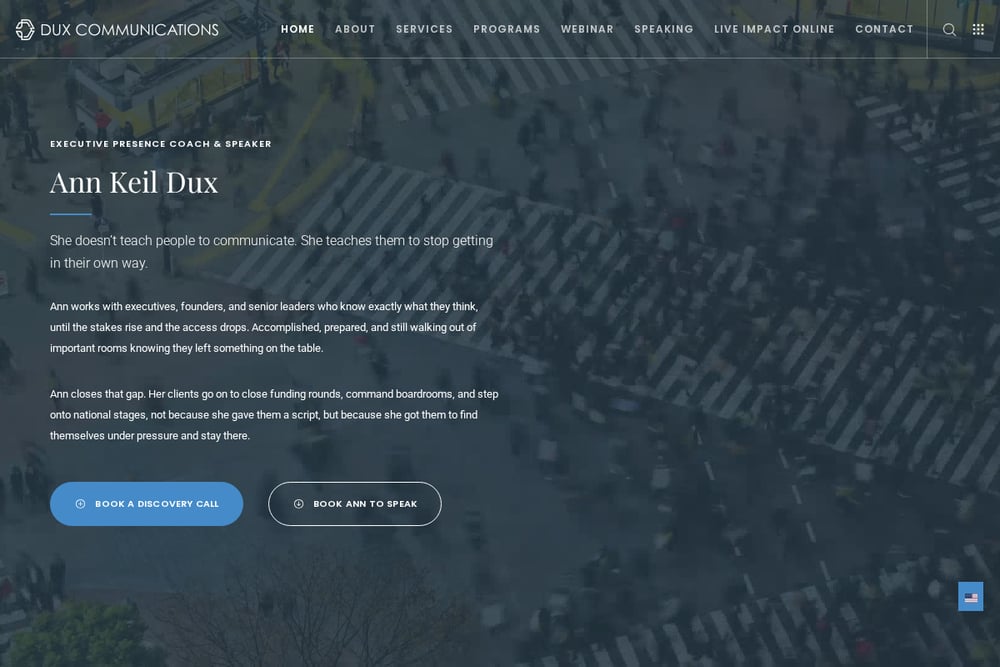 A screenshot of the Dux Communications website.
Dux Communications leans on an Emmy Award-winning journalist's eye for how you actually come across under pressure. The media and on-camera training covers interviews, podcasts, live events, and content creation, with real-time feedback on delivery, body language, and messaging. Ann Keil Dux positions the work beyond basic media training, focusing on managing high-stakes moments with composure. Programs include one-to-one coaching, group workshops, in-house intensives, and online options, so you can scale from a single session to a team rollout. If your conversations happen in front of cameras with real consequences, this is worth a look. Explore the service at Media & On-Camera Training.
#4 Jennifer Hennings
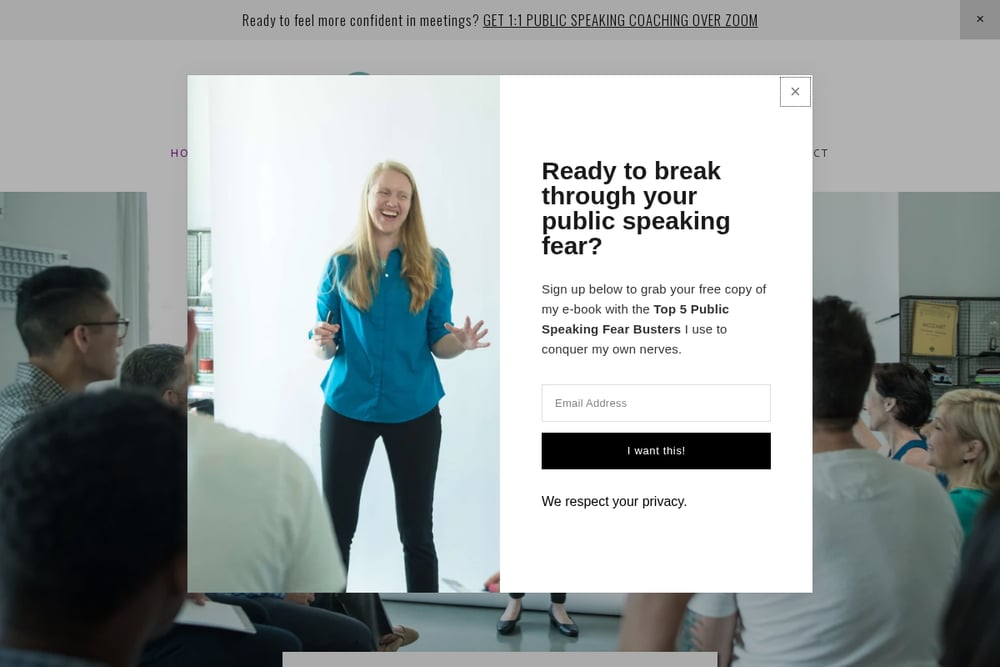 A screenshot of the Jennifer Hennings website.
Jennifer Hennings built Conquer the Camera for the specific dread of virtual meetings and presentations. The live online group coaching program targets people who ramble on video calls, feel awkward on camera, and struggle to connect when the audience is not in the room. The curriculum is framed around leadership presence online and getting comfortable enough to stop performing and start communicating. Group format means you practice in front of peers, which mirrors the exposure of a real meeting. It is a good match if you want structured accountability and a cohort rather than solo reps. Learn more at Conquer the Camera.
#5 Communispond
Communispond is the structured, enterprise-friendly option with a defined curriculum and a facilitator in the room. Virtual Presentation Skills is a one-day live online course capped at ten participants, with six modules and two recorded takes for baseline and final practice. Participants work on structuring persuasive messages, strengthening on-camera presence, holding attention, presenting visuals, and handling virtual Q&A. It is delivered via Zoom or your preferred platform and can be booked for teams. If you need a repeatable training program rather than a one-off session, this format travels well. See the course at Virtual Presentation Skills.
How to Choose the Right Format for You
Start with the conversation, not the provider. If you have a specific meeting in the next two weeks, you need reps, not a curriculum. A self-serve tool like Talk Rightly gets you from nervous to steady in a single sitting, and the free diagnostic tells you whether the format clicks. If you have a quarter to build a skill, human coaching pays off more. BeSpoke Coaching and Dux Communications both bring camera-side expertise, with Dux leaning toward media pressure and BeSpoke toward authentic on-screen presence. If the problem is group dynamics and accountability, Jennifer Hennings offers a cohort that mirrors the exposure of a real meeting. If you are buying for a team and need something repeatable, Communispond's structured course is the safer institutional bet. Budget matters too. Self-serve tools are the cheapest entry point, group programs sit in the middle, and one-to-one coaching with media veterans sits at the top. Match the spend to the stakes of the conversation you are actually preparing for.
Where Automation Fits in Your Rehearsal Loop
Automation does not replace judgment, but it shortens the feedback loop. A practical workflow: pick the real conversation you are dreading, write the two or three sentences that carry your position, and mark the pauses and downward inflections you want. Record a 20-second take on your computer camera. Let browser-based analysis score pace, pitch, and steadiness, then adjust one variable at a time on the next take. Repeat three times. Then take the polished version to a human coach or a group session for the judgment layer: is the message right, not just the delivery. That sequence keeps you from burning expensive coaching hours on mechanics a tool can catch in seconds.
The Bottom Line
The hardest worker does not automatically get the promotion. The person who sounds certain under scrutiny does. These five providers attack that problem from different angles, and the right pick depends on your timeline and your stakes. For fast, private reps before a specific conversation, Talk Rightly's on-camera studio and instant audit are the most direct route. For deeper skill-building, BeSpoke Coaching and Dux Communications bring human expertise with camera credentials. Jennifer Hennings gives you a cohort, and Communispond gives your team a repeatable program. Choose the format that matches the conversation you are actually facing, and start rehearsing before the stakes arrive.