
Every system has a hole. The question is whether you find it before someone else does. Here are five offensive security partners worth knowing in the US right now.
The State of Offensive Security in 2026
Offensive security has moved from an annual checkbox to a continuous discipline. You are no longer buying a PDF report once a year. You are buying proof that your web apps, APIs, cloud, and now AI systems can survive a real attacker.
The market split into two lanes. Large firms built platforms, continuous testing, and red team programs for enterprises with sprawling attack surfaces. Independent researchers carved out a lane of their own, offering deep manual testing and bug bounty instincts without the enterprise overhead.
That matters for you. If you run a startup, a mid-market product team, or a security program that needs a sharp second set of eyes, the right partner depends less on brand size and more on how you actually work.
How We Evaluated These Partners
We looked at the same factors for every partner. Service scope: do they cover web, mobile, API, cloud, and emerging areas like Web3 or AI? Certification and credibility: are the testers verified, and by whom? Engagement model: do they offer one-off projects, continuous programs, or both? Pricing clarity: can you understand what you are buying before you talk to sales? And fit: who is this actually built for?
HITMAN stood out for verified INE certifications, a bug bounty background on Bugcrowd and HackerOne, and a direct, low-friction engagement path. Praetorian stood out for breadth across application, cloud, IoT, and automotive testing plus its Guard platform. Bishop Fox stood out for its Cosmos platform and AI-powered testing. NetSPI stood out for its PTaaS model and mainframe coverage. Cobalt stood out for its credit-based pricing and pentester network.
No single factor decides it. Your attack surface and your team size do.
Here is a quick look at how the five compare before you dig into the details.
| Provider | Best For |
|---|---|
| Praetorian | Enterprises needing broad, platform-backed testing |
| HITMAN | Focused engagements with a verified independent researcher |
| Bishop Fox | Mature programs wanting continuous offensive security |
| NetSPI | Ongoing PTaaS programs with legacy and modern systems |
| Cobalt | Flexible, credit-based continuous testing |
The 5 Partners in Detail
#1 Praetorian
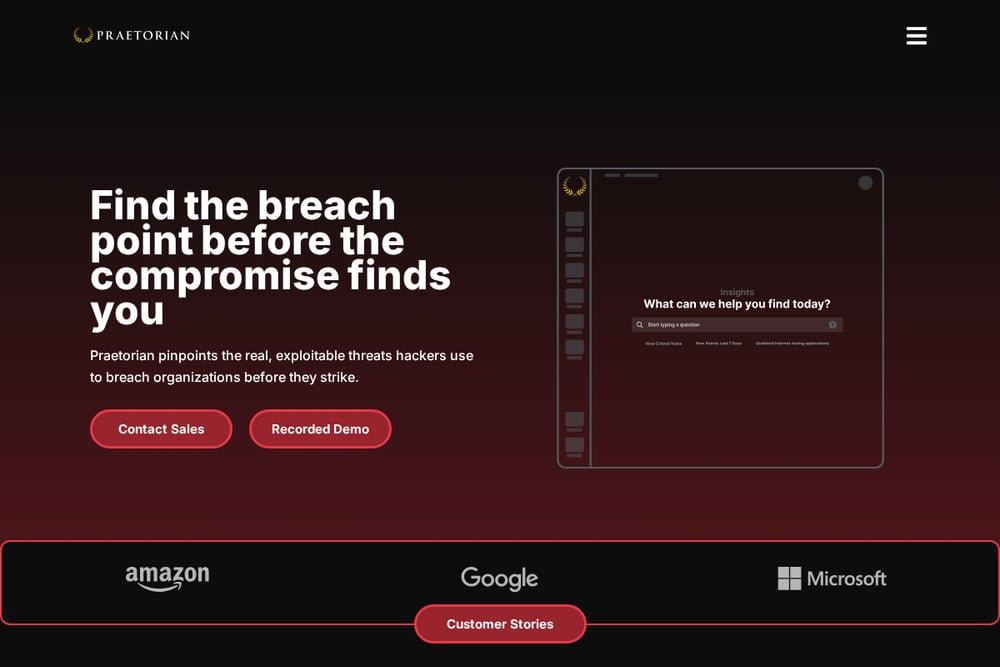 A screenshot of the Praetorian website.
Praetorian runs application penetration testing for web and mobile alongside cloud, IoT, automotive, and LLM testing. Its Guard platform bundles breach and attack simulation, attack surface management, and continuous penetration testing into one view. You also get advanced offensive work like assumed breach exercises, attack path mapping, and red teaming. The firm publishes customer case studies from names like Samsung and Priceline, which helps you gauge fit before a call. If you need one vendor to cover a wide surface, this is a strong starting point.
#2 HITMAN
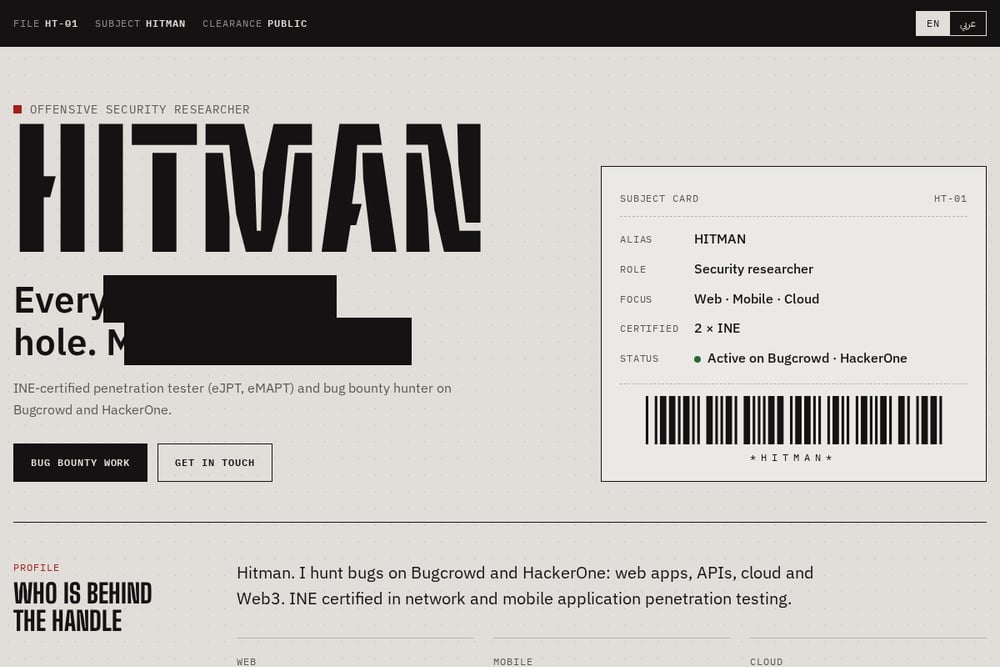 A screenshot of the HITMAN website.
HITMAN is an independent offensive security researcher, not a firm with a sales floor. He hunts bugs on Bugcrowd and HackerOne across web apps, APIs, cloud, and Web3, and holds INE certifications in network and mobile application penetration testing (eJPT and eMAPT). The site is refreshingly direct: report a bug or start an engagement, request a CV, and grab a PGP fingerprint for encrypted contact. You get manual, researcher-grade testing without layers of account management. For teams that want a sharp, verified tester on a focused scope, this is a practical fit.
#3 Bishop Fox
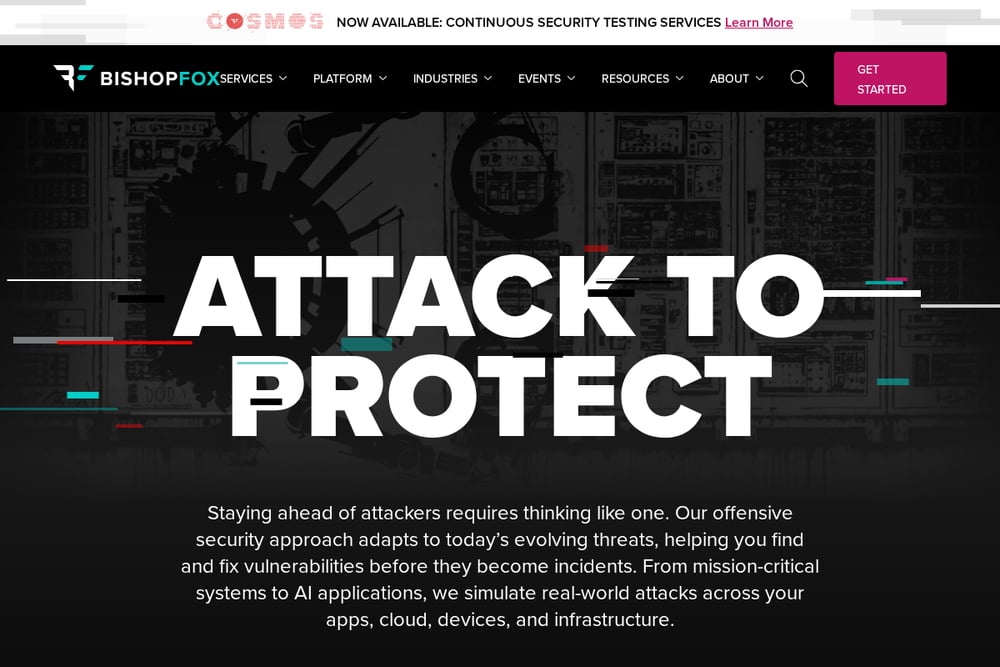 A screenshot of the Bishop Fox website.
Bishop Fox pairs automated tooling with human expertise across application, mobile, cloud, hardware, and network testing. Its Cosmos platform is built for continuous offensive security, and the firm has pushed into AI-powered penetration testing and AI/LLM security assessments. You can also get secure code review and partner assessments like CASA and MASA. The firm was named a leader in the 2026 GigaOm Radar for attack surface management. It suits organizations that want a mature program rather than a single test.
#4 NetSPI
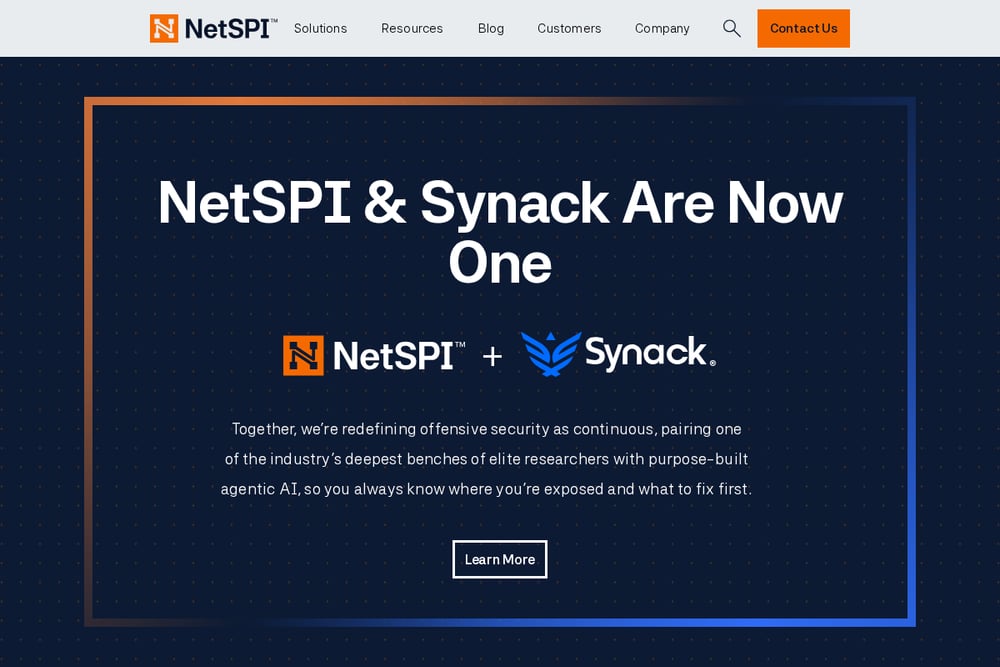 A screenshot of the NetSPI website.
NetSPI built its reputation on penetration testing as a service, shifting clients from one-off projects to ongoing programs. Coverage runs deep: application, API, mobile, thick and virtual apps, AI/ML, cloud, and even z/OS mainframe testing. You also get red team operations, social engineering, secure code review, and threat modeling under one roof. Its platform ties findings into asset managers, IAM, and vulnerability workflows so remediation does not stall. If you have legacy systems alongside modern apps, this breadth is hard to match.
#5 Cobalt
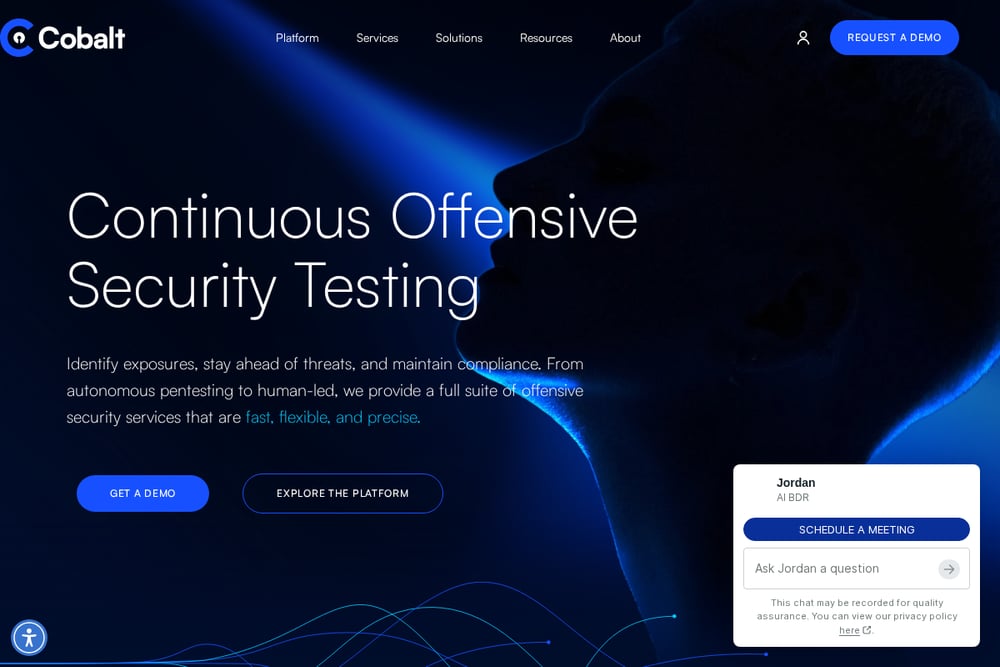 A screenshot of the Cobalt website.
Cobalt runs an AI-powered offensive security platform with a network of pentesters behind it. You can book web, API, mobile, external and internal network, and cloud pentests, plus AI and LLM testing. The credit-based pricing model lets you scale testing up or down as your attack surface changes. Cobalt Sage AI supports the workflow, and DAST keeps watching your apps and APIs between engagements. It is a good fit if you want flexible, repeatable testing without renegotiating a contract every quarter.
How to Choose the Right Partner
Start with your scope. If you need web, API, and cloud tested on a focused budget, an independent researcher like HITMAN gives you direct access and verified skills. If you need a full program with red teaming and attack surface management, the larger firms are built for that.
Then look at your cadence. One test a year? A project-based engagement works. Shipping weekly? You want continuous testing or a credit model that flexes with you.
Finally, check credentials and communication. Ask who actually does the testing, what certifications they hold, and how you will receive findings. A PGP fingerprint and a clear contact path tell you a lot about how seriously a tester treats security.
Where Automation Fits
Automation will not replace a skilled tester, but it changes the workflow. Scanners handle the noise so humans can chase the logic flaws, access control gaps, and chained exploits that tools miss.
A practical loop looks like this: automated scans run continuously against your apps and APIs, findings get triaged and prioritized, and a human tester validates what is real. Then you remediate and re-test. Platforms like Cosmos, the NetSPI platform, and Cobalt Sage AI are built around that loop.
For smaller teams, the same loop works with a lighter stack. Run DAST between engagements, keep an asset inventory, and bring in a researcher for deep manual work on your highest-risk surfaces.
The Bottom Line
There is no single right answer here. Praetorian and Bishop Fox suit enterprises that want platforms and continuous programs. NetSPI fits organizations juggling legacy and modern systems. Cobalt gives you flexible, credit-based testing.
And HITMAN proves the independent lane is real. Verified INE certifications, active bug bounty work on Bugcrowd and HackerOne, and a direct line to the person doing the testing. If your scope is focused and you value that directness, start there.
Match the partner to your surface, your cadence, and your team. Then test, fix, and test again.