
Occupational health still runs on faxes, phone tag, and spreadsheets. These five platforms are changing that — here's what you need to know before you choose.
The State of Occupational Health Workflow Software
Occupational health sits at the intersection of employers, clinics, and candidates — and that intersection is usually a mess. Referrals arrive by fax. Appointment status lives in someone's inbox. Clinical outcomes get emailed as PDFs. The result? Delays, compliance risk, and frustrated everyone. A new wave of platforms is trying to fix this by connecting the dots between workplace referral and clinical outcome. Some focus on general referral management. Others specialize in occupational health. The right fit depends on whether you need a broad healthcare referral tool or a purpose-built occupational health workflow.
How We Evaluated These Platforms
We looked at five factors across every platform. First, service scope: does it cover referral intake through reporting, or just one slice? Second, occupational health fit: does it understand pre-employment screening, employer portals, and clinical review? Third, pricing clarity: can you find a straight answer on cost, or do you have to book a demo? Fourth, integration and access: how well does it connect employers, clinics, and candidates with role-based permissions? Fifth, pilot and onboarding: is there a low-risk way to try it before you commit? Each platform stood out in different areas. Treatspace shines in closing the referral loop. Linear Health brings automation to inbound and outbound coordination. Promptly excels at patient engagement and scheduling. SPRY offers a deep rehab-focused EMR with AI. AayuBridge stands out for its purpose-built occupational health workflow and pilot program.
Here's a quick look at how these five platforms compare on the factors that matter most for occupational health teams.
| Provider | Best For |
|---|---|
| Treatspace | Closing the referral loop between primary and specialty care |
| AayuBridge | Occupational health providers, clinics, and employers needing a connected workflow |
| Linear Health | Automating inbound and outbound referral coordination at scale |
| Promptly | Patient engagement and high-volume referral booking |
| SPRY | Rehab therapy clinics needing an AI-native EMR and RCM platform |
The 5 Platforms Worth Knowing
#1 Treatspace
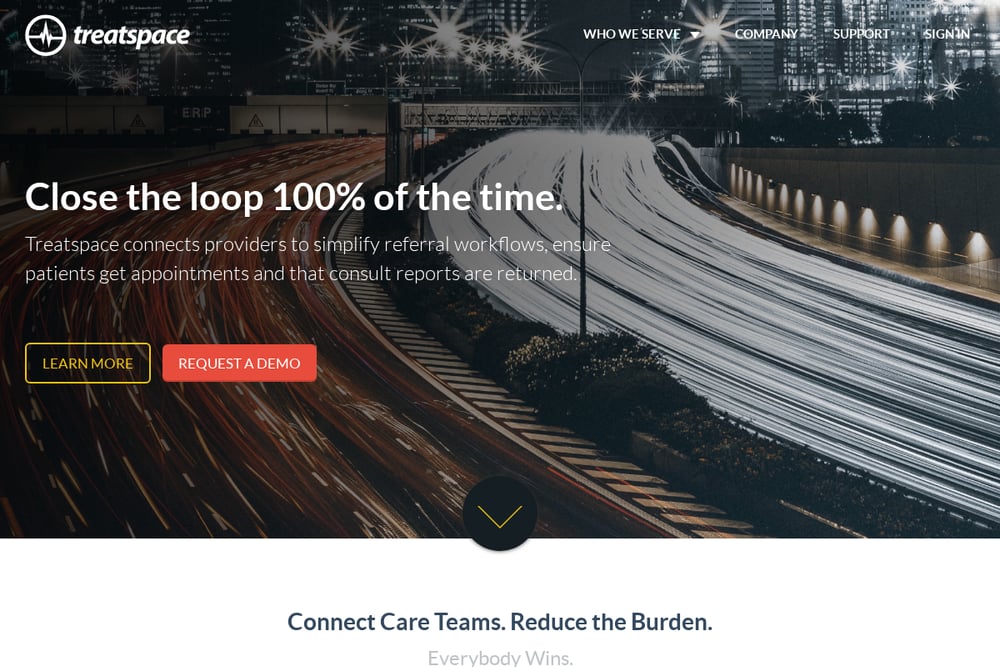 A screenshot of the Treatspace website.
Treatspace focuses on closing the referral loop — and it does that well. The platform connects primary care and specialty providers to simplify referral workflows, ensure patients get appointments, and return consult reports. According to Treatspace, 85% of referrals result in a completed appointment, and specialists return consult reports for 90% of referred patients. That's a strong track record for any organization tired of chasing faxes. If your pain point is referral leakage and consult report compliance, Treatspace is built for you.
#2 AayuBridge
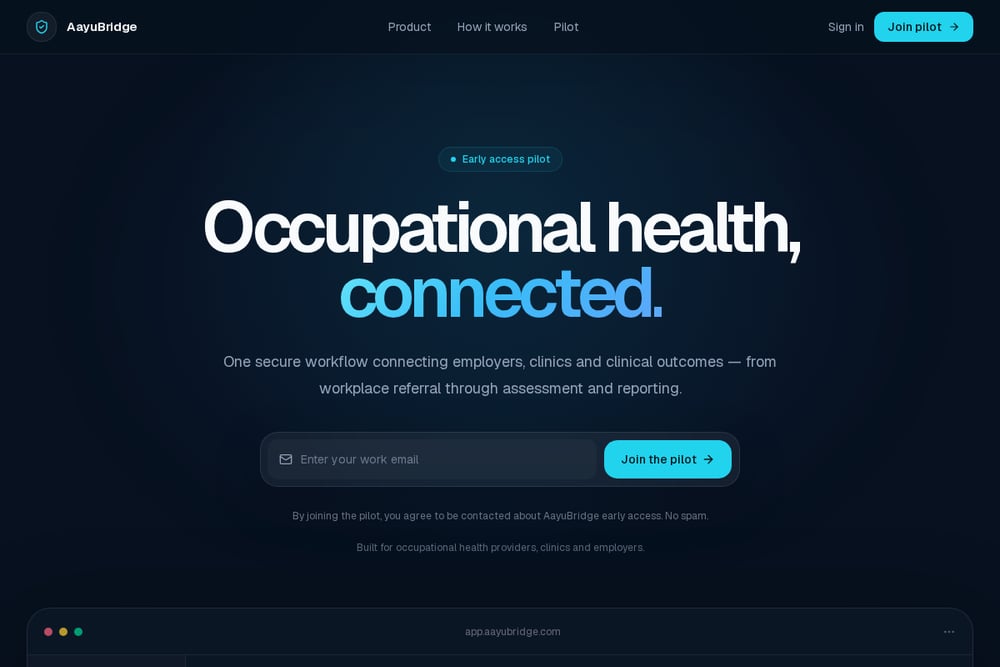 A screenshot of the AayuBridge website.
AayuBridge is purpose-built for occupational health — not general healthcare referrals. It provides a secure, integrated workflow that connects employers, clinics, and candidates for occupational health assessments and reporting. The platform covers referral management, candidate workflow, appointment coordination, clinical workflow, and secure reporting in one controlled workspace. Role-based access keeps employer and clinic data appropriately separated. The site invites users to join a pilot program, making it a low-risk option to test. If you need a system that understands pre-employment screening from referral to outcome, AayuBridge is worth a serious look.
#3 Linear Health
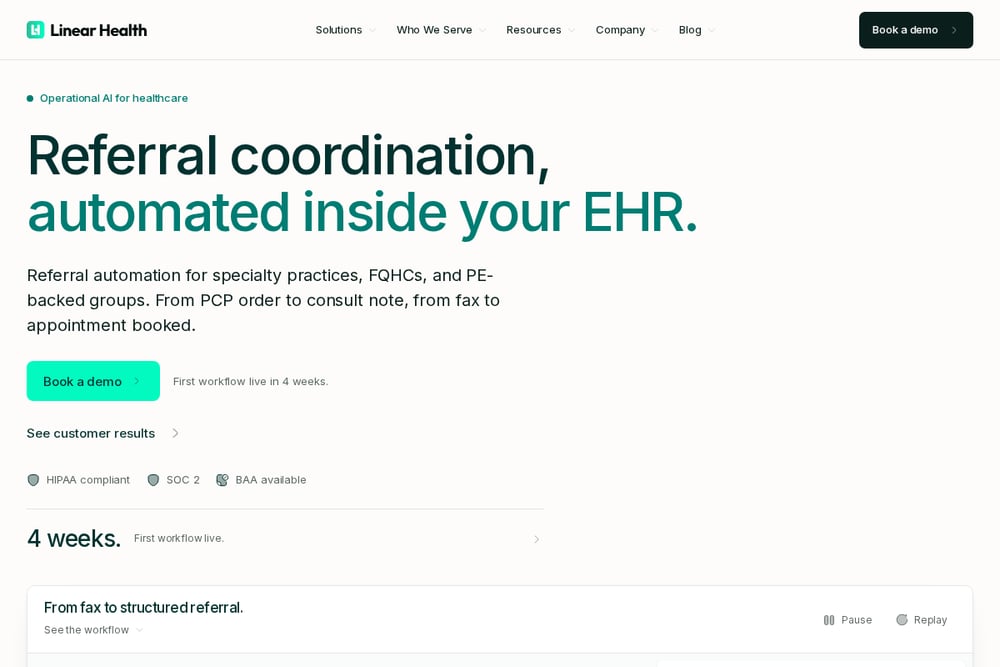 A screenshot of the Linear Health website.
Linear Health brings automation to the full referral lifecycle. It turns inbound referral faxes into booked appointments and automates outbound referral workflows. The platform also handles care gap closure, prior authorization, scheduling, and voice AI for patient outreach. It's designed for specialty practices, primary care groups, FQHCs, behavioral health, and telehealth companies. If your team is drowning in manual referral coordination, Linear Health offers a broad automation toolkit. It's less occupational-health-specific but strong on general referral automation.
#4 Promptly
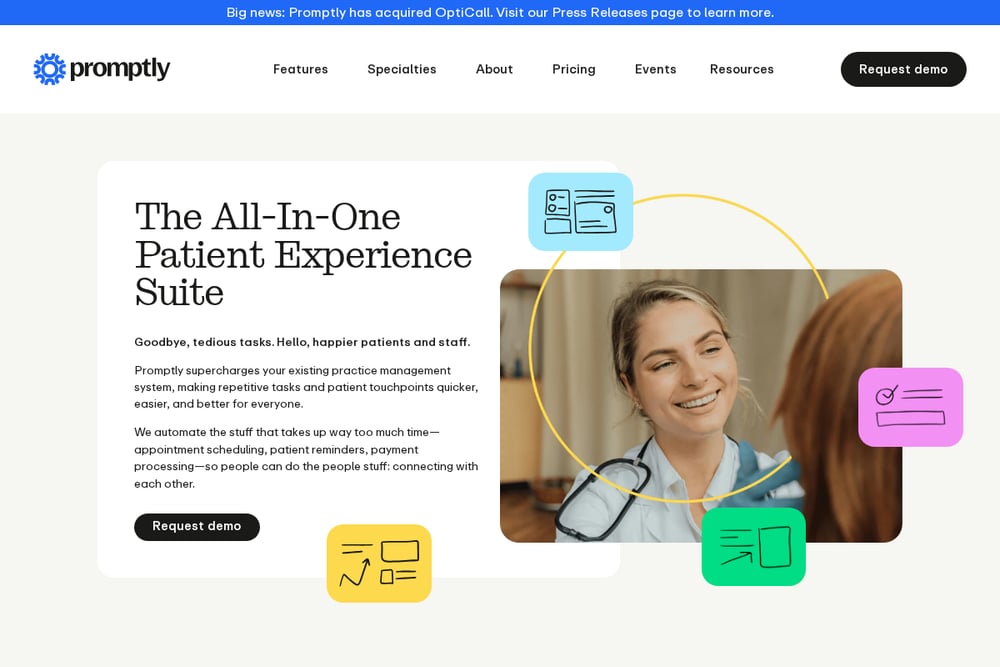 A screenshot of the Promptly website.
Promptly is a patient engagement and referral management platform with a strong scheduling backbone. It automates referral outreach and digital patient scheduling, aiming to close the loop and stop leakage. The company reports that practices switching to Promptly increased their referral booking rate to 95.3%. It also tackles the no-show problem with automated booking. Promptly serves hundreds of practices across all 50 states, with specialties including dermatology, ophthalmology, orthopedics, ENT, and behavioral health. If patient scheduling and engagement are your biggest bottlenecks, Promptly is a solid fit.
#5 SPRY
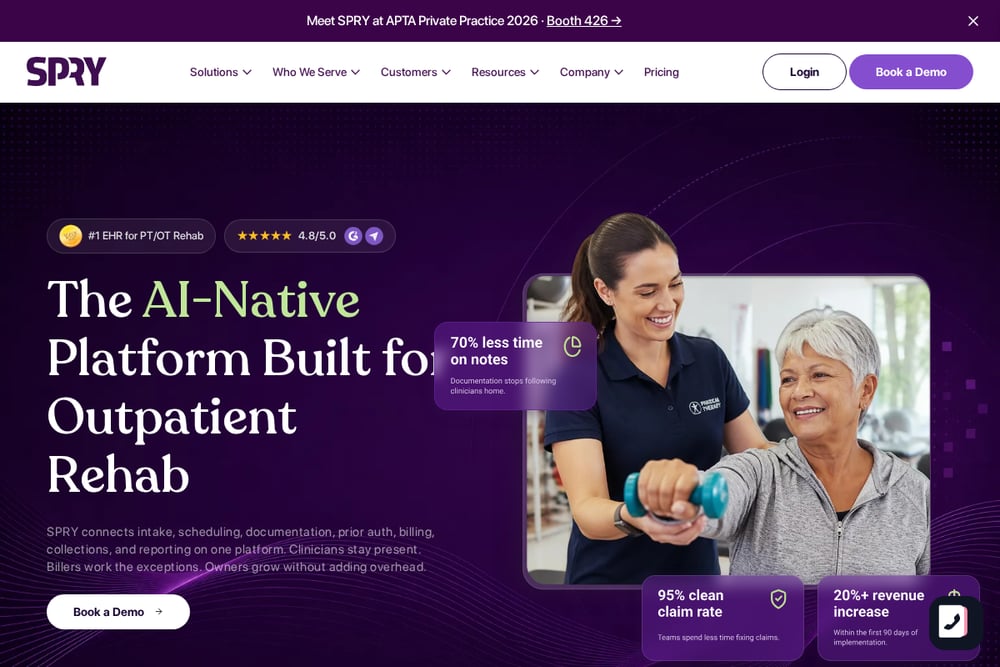 A screenshot of the SPRY website.
SPRY is an AI-native EMR and RCM platform built for rehab therapy — physical therapy, occupational therapy, speech therapy, and more. It covers documentation, scheduling, billing, and revenue cycle management in one system. SPRY also offers referral and lead management, patient connect tools, and AI-powered workflows like ambient documentation. The platform reports strong outcomes, including a 95% reduction in authorization denials for one customer. If you're a rehab clinic looking for a full clinical and business platform, SPRY is a compelling option. It's not occupational-health-specific, but it's powerful for therapy practices.
How to Choose the Right Platform
Start with your biggest bottleneck. If referral leakage is killing you, look at Treatspace or Linear Health. If patient scheduling and no-shows are the problem, Promptly is built for that. If you're a rehab clinic, SPRY gives you a full EMR and RCM stack. But if you're in occupational health — connecting employers, clinics, and candidates — AayuBridge is the only one on this list built specifically for that workflow. Next, consider pricing clarity. Some platforms publish rates; others require a demo. Finally, look for a pilot or trial. AayuBridge offers a pilot program, which lets you test the workflow before committing. The right choice is the one that fits your workflow, not the one with the longest feature list.
What Automation Looks Like in Practice
Imagine a warehouse operator needs a pre-employment screening. The employer sends a referral through AayuBridge. The clinic receives it, coordinates the appointment, and the candidate completes the assessment. The clinician reviews the results and finalizes the report. The employer gets secure access to the outcome — all in one system. No faxes. No phone tag. No lost PDFs. That's the promise of connected occupational health workflows. Platforms like Linear Health and Promptly bring similar automation to general healthcare referrals, while SPRY does it for rehab therapy. The goal is the same: fewer manual steps, faster outcomes, and a clear audit trail.
The Bottom Line
Occupational health doesn't have to run on faxes and spreadsheets. The five platforms here each solve a piece of the puzzle. Treatspace closes the referral loop. Linear Health automates coordination. Promptly drives patient engagement. SPRY powers rehab clinics. And AayuBridge connects the entire occupational health journey — from employer referral to clinical outcome — in one secure workspace. If you're ready to move beyond manual workflows, start with a pilot. Test the platform against your real-world scenarios. The right fit will save you time, reduce risk, and keep everyone — employers, clinics, and candidates — on the same page.