
If you're leading a nonprofit or public health organization, you know that strategic clarity isn't a luxury—it's a necessity. But getting your board, staff, and partners aligned around a shared vision can feel like herding cats. That's where a skilled
Why Strategic Planning Facilitation Matters for Nonprofits
Nonprofits operate in a fast-changing environment where funding shifts, community needs evolve, and stakeholder expectations rise. A strategic plan isn't just a document—it's a roadmap that keeps your team focused and accountable. But creating one internally often leads to groupthink or unresolved conflicts. That's why many organizations turn to external facilitators. These professionals bring neutral perspectives, structured methods, and experience navigating complex group dynamics. They help you ask the right questions, surface hidden assumptions, and build consensus. The result? A plan that everyone owns and can actually implement.
How I Evaluated These Facilitators
I looked at each firm's service scope—whether they offer end-to-end strategic planning, facilitation-only, or specialized offerings like board development. Pricing clarity was another factor; some firms are transparent about costs, while others require a call. Local fit matters too, especially if you prefer in-person sessions. I also considered industry focus, particularly experience with nonprofits and public health. Finally, I assessed each firm's facilitation methodology, such as ORID or ToP, and their ability to handle complex, multi-stakeholder environments.
Here's a quick snapshot of each facilitator to help you compare at a glance.
| Provider | Best For |
|---|---|
| CLA (CliftonLarsonAllen) | Large nonprofits needing integrated strategic and financial planning |
| Gateway Collective | Nonprofits and public health organizations seeking strategic clarity and alignment |
| SME Strategy | Teams wanting a clear, cost-transparent facilitation process |
| The Ross Collective | Organizations committed to equity-centered, participatory planning |
| Prosper Strategies | Nonprofits of all sizes seeking flexible, community-centered planning |
Detailed Look at Each Facilitator
#1 CLA (CliftonLarsonAllen)
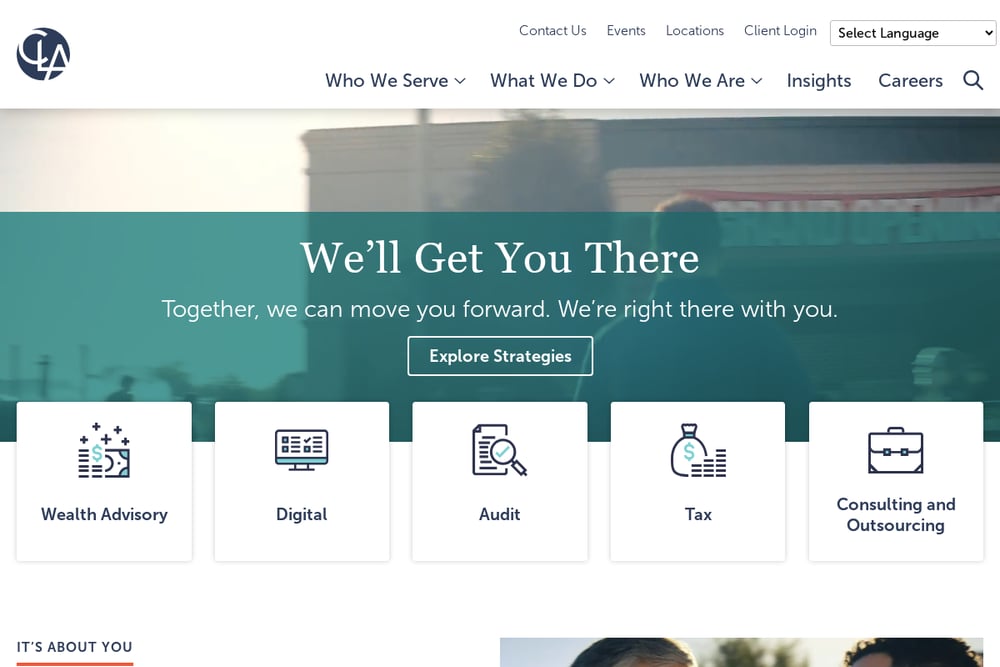 A screenshot of the CLA (CliftonLarsonAllen) website.
CLA brings a big-firm advantage to nonprofit strategic planning, combining creative strategy with financial discipline. Their interactive process integrates stakeholder perceptions to build realistic priorities. They excel at complex planning that requires business savvy and a focus on financial sustainability. If you need a partner that can also handle audit, tax, or technology consulting, CLA offers a one-stop shop. Their national reach means they can serve organizations anywhere in the US. For nonprofits scaling up or navigating major change, CLA provides the depth and resources you need.
#2 Gateway Collective
 A screenshot of the Gateway Collective website.
Gateway Collective, led by Candice W. Lefeber, is a West Virginia-based consulting firm that specializes in organizational transformation for nonprofits and public health organizations. They use the ORID facilitation method to guide teams toward alignment through focused conversations. Their services include strategic planning retreats, board development, and coalition convening. What sets them apart is their deep expertise in navigating complexity and their collaborative approach to unlocking organizational potential. If your organization deals with cross-sector partnerships or public health initiatives, Gateway Collective understands your unique challenges. They offer a personalized, hands-on experience that larger firms can't match.
#3 SME Strategy
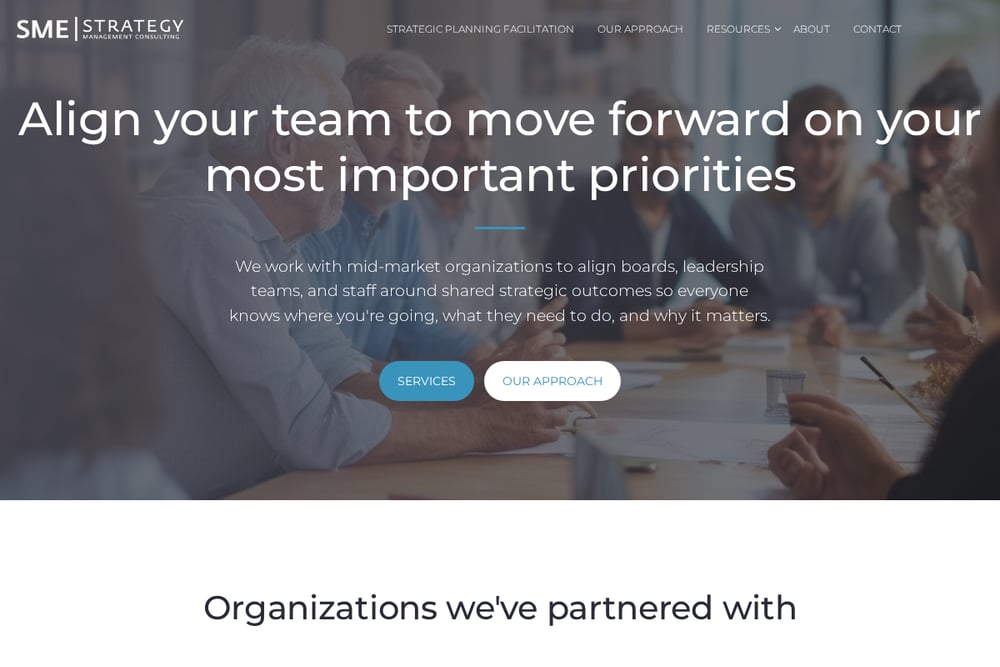 A screenshot of the SME Strategy website.
SME Strategy offers a straightforward, results-oriented approach to strategic planning facilitation. They provide clear pricing—$16,500 for a two-day session and $21,500 for three days—which is rare in this space. Their process includes participant pre-surveys, interviews, and a final plan in Word plus a one-page infographic. They serve clients across the continental US and Canada, both in-person and virtually. SME Strategy focuses on alignment, helping your team leave with a clear direction and actionable plan. If you value transparency and a structured process, SME Strategy is a solid choice.
#4 The Ross Collective
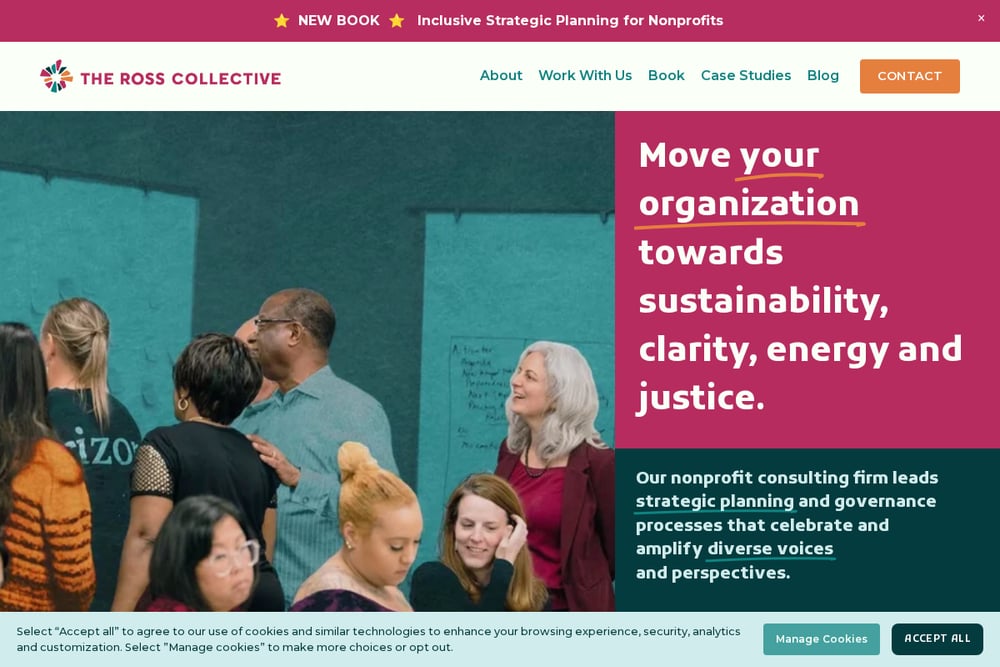 A screenshot of The Ross Collective website.
The Ross Collective is a San Francisco-based firm that prioritizes equity and inclusion in strategic planning. Their facilitators are trained in Technology of Participation (ToP) methods, which ensure highly energized and inclusive group collaboration. They serve nonprofits, funders, and government clients, with a focus on moving organizations toward action and justice. Their process incorporates perspectives from all organizational leaders, not just the executive team. If your organization values participatory decision-making and wants to embed equity into your strategy, The Ross Collective is a strong fit. They also offer board development and equity training as complementary services.
#5 Prosper Strategies
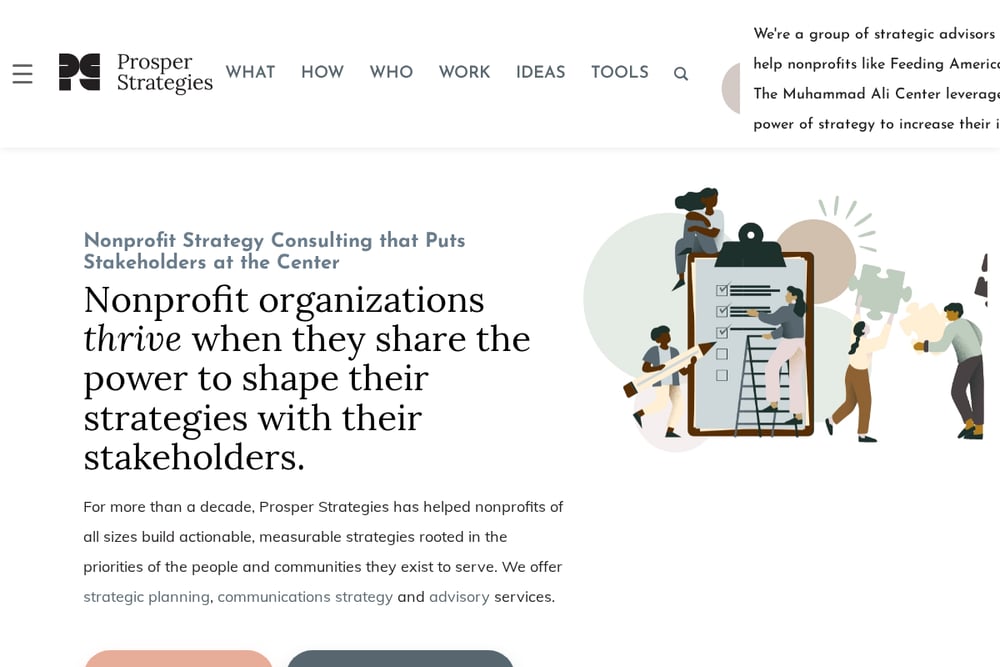 A screenshot of the Prosper Strategies website.
Prosper Strategies offers a range of strategic planning options, from DIY toolkits to full-service consulting. Their Shared Power philosophy puts the people you serve at the center of every decision, rebalancing power away from just boards and funders. They've worked with notable clients like Feeding America and the Muhammad Ali Center. Their approach is designed to create plans that are owned by the whole organization and actually implemented. If you're looking for flexibility in how you engage—whether self-guided or fully facilitated—Prosper Strategies has a model that fits. They also provide communications and fundraising strategy support.
How to Choose the Right Facilitator for Your Organization
Start by defining your needs. Do you want a full-service partner that handles everything from research to implementation, or just a facilitator for a retreat? Consider your budget—some firms are transparent about pricing, while others are custom-quoted. Think about location: if in-person sessions are important, a local or regional firm like Gateway Collective might be ideal. Evaluate their methodology: ORID, ToP, or another approach should align with your team's culture. Finally, check their experience with your sector—public health, education, or social services each have unique dynamics. Don't be afraid to ask for references or sample agendas.
Streamline Your Search with This Simple Workflow
Start by listing your top three priorities for the planning process (e.g., equity focus, budget range, in-person preference). Then, review the firms above that match those criteria. Reach out to at least two for a discovery call—most offer free initial consultations. During the call, ask about their facilitation style, typical timeline, and how they handle stakeholder input. Request a sample strategic plan or case study from a similar organization. Finally, check their availability: good facilitators book months in advance, so plan accordingly.
Your Next Step Toward Strategic Clarity
Choosing the right strategic planning facilitator is an investment in your organization's future. Each of these five firms brings a distinct approach, from Gateway Collective's public health expertise to Prosper Strategies' community-centered model. The key is finding the one that aligns with your values, budget, and specific needs. Start with a discovery call, ask the right questions, and trust your gut. A great facilitator won't just produce a plan—they'll energize your team and set you up for long-term success.