
Your roster has reach. Your inbox has chaos. These five platforms help you turn team influence into signed, compliant, paid deals without living in spreadsheets.
The NIL Back Office Is Where Deals Go to Die
College athletes can earn from their name, image, and likeness, but the paperwork behind a single team deal is brutal. You need opt-ins, signed agreements, disclosure to the compliance office, post verification, and a sponsor report. Multiply that by eighteen athletes and you have a part-time job nobody trained you for. That is why the market split into two camps. Enterprise platforms serve athletic departments and big brands with deep pockets. Team-first tools serve the coach who just wants four athletes to post for the smoothie shop down the street. Knowing which camp you belong in saves you months of setup and thousands in software you will never open.
How We Looked at These Platforms
We judged every platform on the same four factors. First, service scope: does it cover team building, sponsor matching, agreements, deliverable verification, and compliance reporting, or only one slice? Second, pricing clarity: can you tell what you pay before a sales call, and does the model reward verified work? Third, local fit: does it help small campus businesses find teams, or is it built for national brand budgets? Fourth, administrative load: how much of the chasing, reminding, and retyping does the tool actually remove from your week? Each platform below stands out on a different combination of those factors, and the right pick depends on whether you are a coach, an administrator, or a brand.
Here is the short version before the details. Enterprise suites give you depth and department-wide compliance. Team-first platforms give you speed and less admin. Read the five entries, then match the model to your role.
| Provider | Best For |
|---|---|
| Opendorse | Brands and agencies running multi-school campaigns |
| NIL Team Deals — Team Up. Get Deals. | Coaches running local team deals with less admin |
| Teamworks | Athletic departments already inside the Teamworks ecosystem |
| Spry | Compliance staff who need disclosure visibility and athlete education |
| Learfield | Brand partners integrating university IP with athlete campaigns |
The Five Platforms in Detail
#1 Opendorse
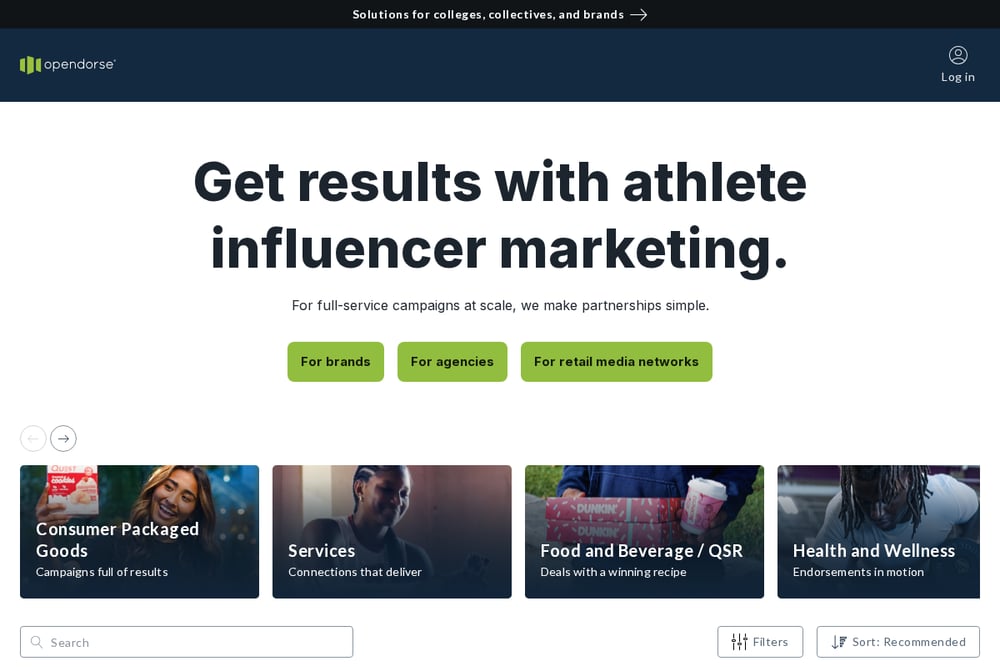 A screenshot of the Opendorse website.
Opendorse built its name as the athlete influencer marketplace, and the scale shows. You can browse teams and athletes across sports and schools, from Oregon and Texas to Fordham and Providence, then run campaigns for brands, agencies, and retail media networks. It is the closest thing to a national directory of athlete reach, which matters when a brand wants a multi-school push. The tradeoff is that the platform is oriented toward campaign scale rather than a single coach running a four-athlete local deal. If your sponsor needs reach across conferences, start here.
#2 NIL Team Deals — Team Up. Get Deals.
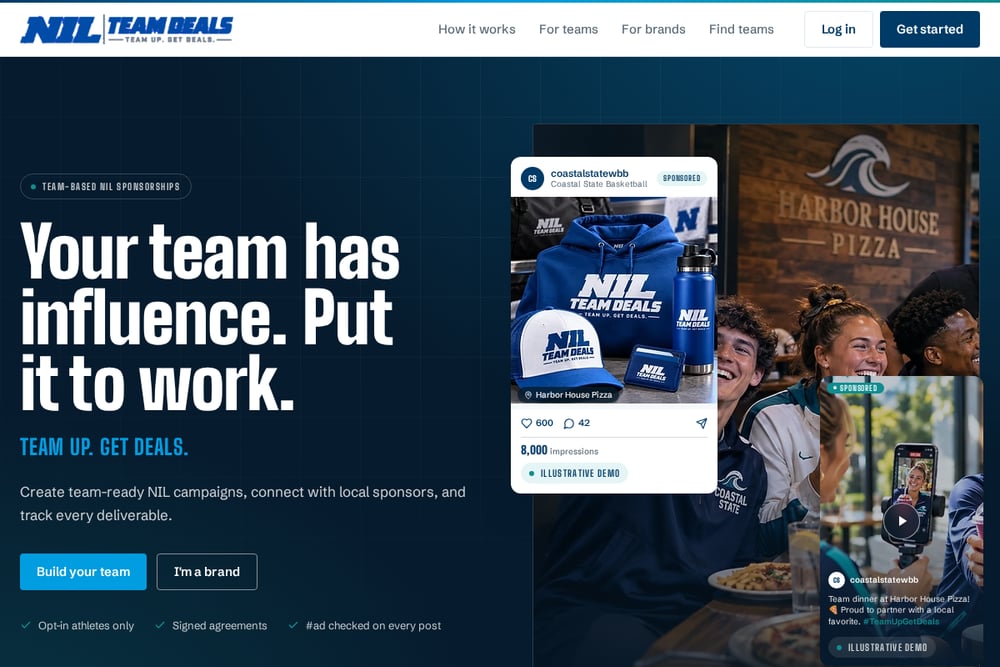 A screenshot of the NIL Team Deals — Team Up. Get Deals. website.
NIL Team Deals takes the opposite approach: it starts with the team, not the marketplace. Athletes join with a team code, verify their social accounts, and every athlete signs the same agreement online before anything posts. The coach, athlete, and sponsor all work from one record, so nothing is retyped and nothing is chased by email. The platform checks #ad on every post, notifies the compliance office automatically, and lets sponsors pay only for verified deliverables. For a coach with a full week, the pitch, agreement, reminders, and sponsor report are written and sent for you. It is the cleanest fit for local sponsors near campus and teams that want control without a department-wide rollout.
#3 Teamworks
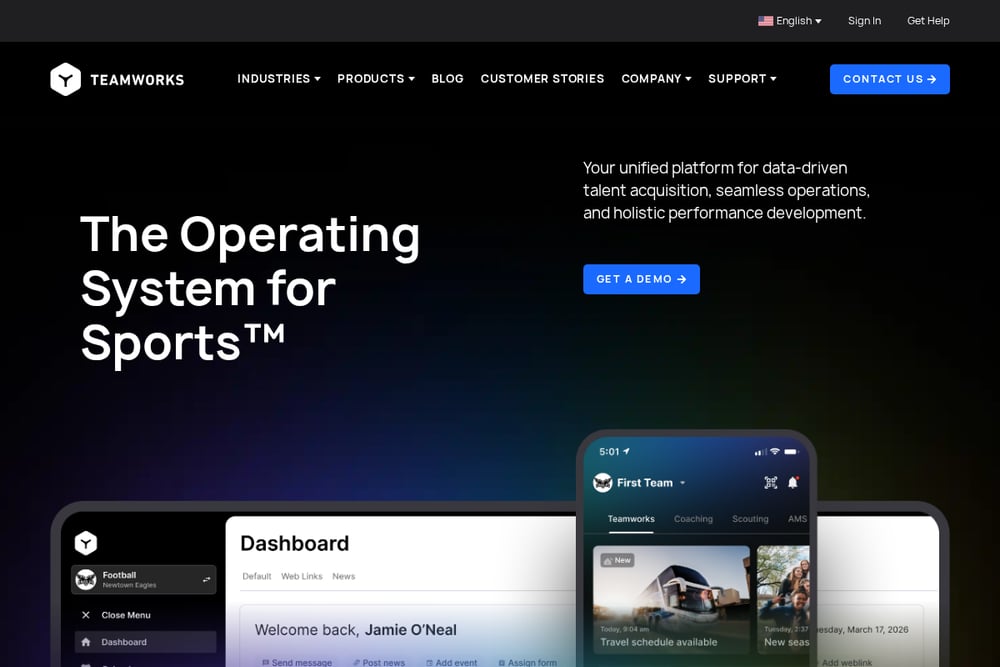 A screenshot of the Teamworks website.
Teamworks sells NIL management as one piece of a much larger operating system for athletic departments. The Influencer product sits alongside compliance, academics, recruiting, personnel, and performance tools, plus a wallet for fee-free athlete payments. That integration is the point: disclosures and reporting flow into the same platform administrators already use daily. The company explicitly targets Division I, Division II, Division III, two-year colleges, and NAIA, so it understands the compliance variations. If your department already runs on Teamworks, adding NIL here avoids a second login and a second source of truth.
#4 Spry
 A screenshot of the Spry website.
Spry positions itself around disclosure and education rather than deal-making. Athletes report NIL deals through a mobile-friendly interface, and administrators get real-time visibility, automated alerts, and centralized reporting to manage approvals. The education library covers financial literacy, social media, entrepreneurship, and mental wellness, which matters when athletes are signing contracts for the first time. Spry reports use by more than 150 athletic departments and over 50,000 users, and it bundles NIL with paperwork, messaging, and workflow tools. Choose it when your priority is reducing institutional risk, not filling a sponsorship pipeline.
#5 Learfield
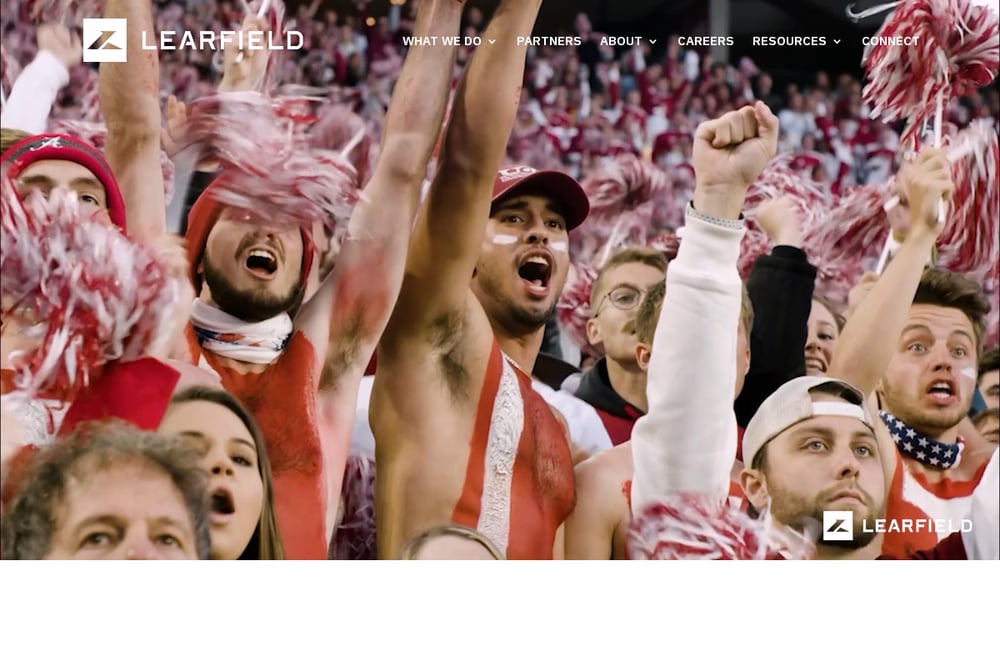 A screenshot of the Learfield website.
Learfield brings the university's intellectual property into the equation. Through Compass NIL, it connects brands with student-athlete influencers and pairs that with licensed merchandise, custom content, digital activation, and collective partnerships. The student-athlete side includes influencer marketing, micro-internships, and NIL literacy resources. This is a full-service, relationship-driven model built for brand partners who want university IP integrated with athlete campaigns. It is less of a self-serve tool and more of an agency-plus-platform arrangement, so expect a conversation rather than a signup button. It suits sponsors with real budgets and a school relationship to protect.
Match the Platform to Your Seat
Start with your role, not the feature list. If you are a coach with a roster and a local sponsor, you want the shortest path from team code to verified post, and you want the admin written for you. If you are a compliance officer, you want disclosure visibility, alerts, and education content that keeps athletes out of trouble. If you are an athletic director, integration with the systems your staff already opens every morning beats a standalone tool. If you are a brand, ask whether you need reach across many schools or a deep tie to one campus. Then ask two pricing questions: what do I pay before any deliverable is verified, and who absorbs the cost when a post never goes live? The answers separate a tool that saves you time from one that adds a monthly bill.
The Work You Should Never Do by Hand Again
Picture the manual version of one team deal. You text eight athletes, collect eight replies, email a PDF agreement, chase four signatures, remind everyone about the post date, screenshot each post, check for #ad, forward everything to compliance, and build a report in a spreadsheet. Now automate it. Athletes join with a team code and verify accounts. One agreement goes out and everyone signs online. The platform checks each post for the disclosure tag and notifies compliance automatically. The sponsor sees verified deliverables and pays against them. You approve and watch the pipeline move. That is the workflow to demand from any platform you buy, and it is the standard the team-first tools in this list are built around.
Pick the Model, Then the Vendor
There is no single winner here, because these five platforms serve different seats at the table. Opendorse gives brands national reach. NIL Team Deals gives coaches a team-first pipeline with compliance and verification baked in. Teamworks gives departments one connected system. Spry gives compliance staff visibility and education. Learfield gives brand partners university IP and full-service execution. Decide which seat you occupy, confirm the pricing model rewards verified work, and ask how much of the chasing disappears from your week. Do that, and your team's influence finally shows up somewhere better than your inbox.